



Incorporation for Dentists in Ontario
We set up Dental Professional Corporations for Ontario dentists. RCDSO compliance, associate and practice owner structures, HST on cosmetic vs. basic dental services, salary vs. dividend optimization, equipment CCA and dentist-specific tax planning. Flat fee. Done by a licensed CPA.
Google Reviews
Dentist Clients
AFFORDABLE Incorporation for Dentists in Ontario
Incorporating a dental practice is not the same as incorporating an ordinary business. A Dental Professional Corporation must satisfy the Royal College of Dental Surgeons of Ontario (RCDSO), carry a Certificate of Authorization, use a specific corporate name format, and restrict who can hold voting and non-voting shares. It also has to be built around the reality that most dental services are HST-exempt, which changes how expenses and equipment are handled.
We set up your DPC correctly from day one: RCDSO-compliant incorporation, the associate-versus-owner structure that fits your situation, the share structure that lets you income split and claim the Lifetime Capital Gains Exemption on a future sale, CRA registration, and the salary-versus-dividend plan that minimises your combined tax. Your annual T2 is filed FREE for bookkeeping clients. As a licensed CPA firm and specialists in accounting for dentists, the same office handles the incorporation and the tax.
Book Free Consultation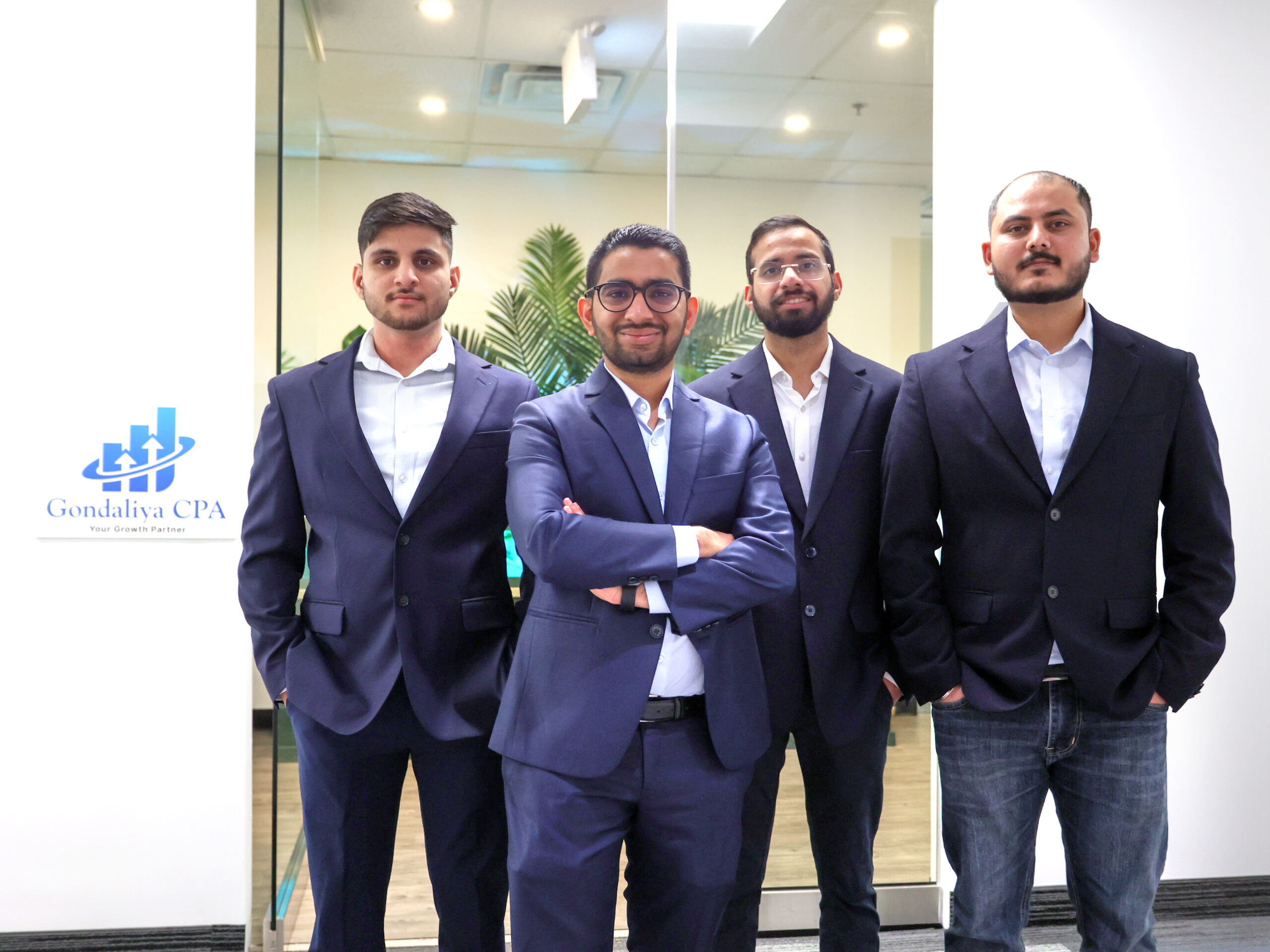
Our Dentist Incorporation Services
DPC Incorporation
Dental Professional Corporation set up under the OBCA with RCDSO-compliant Articles, name and share structure.
RCDSO Authorization
Certificate of Authorization application prepared and submitted so your corporation can legally practise dentistry.
Share Structure Design
Voting shares for the dentist, non-voting for spouse, family or trust, built for income splitting and the LCGE.
Associate vs Owner Setup
Structured for an associate billing through the DPC or a practice owner holding the lease, staff and equipment.
Salary vs Dividend Plan
The optimal mix modelled to minimise combined tax while preserving RRSP room, CPP and benefit eligibility.
HST & Equipment CCA
Exempt-versus-taxable HST handled, ITC allocation calculated, and dental equipment CCA and expensing claimed.
Dentist Incorporation by a Licensed CPA
Every part of setting up a Dental Professional Corporation handled correctly. From RCDSO compliance to your first tax plan. AFFORDABLE flat-fee pricing.
RCDSO-Compliant Incorporation
The DPC has to satisfy the RCDSO, not just the corporations act.
- Incorporate the DPC federally or provincially with the correct dental professional-corporation structure.
- Draft Articles with mandatory voting-share restrictions and the practice-of-dentistry activity restriction.
- Format the corporate name to RCDSO requirements to avoid a rejected authorization.
- Prepare a complete minute book: bylaws, resolutions, share certificates and registers.
- Set everything up so the Certificate of Authorization application is accepted the first time.
Certificate of Authorization
Your corporation cannot practise dentistry without it.
- Prepare the RCDSO Certificate of Authorization application and all supporting documents.
- Confirm share ownership, activity restrictions, good standing and professional liability insurance.
- Guide you through the submission and any RCDSO follow-up questions.
- Set up the annual renewal so the certificate never lapses.
- Coordinate timing so the certificate is in place before you bill through the DPC.
Associate vs Practice Owner Structure
The right structure depends on how you practise.
- Structure an associate DPC to receive billings directed by the practice owner.
- Structure a practice-owner DPC to hold the lease, employ staff and own the equipment.
- Document the associate billing arrangement so the CRA does not reclassify you as an employee.
- Match deductible expenses to the structure so nothing eligible is missed.
- Advise on the liability differences between the two models.
Share Structure for Splitting and Sale
The structure that decides your planning and your exit.
- Design voting common shares held by the dentist and non-voting shares for eligible family.
- Build in classes for a family trust or holding company where appropriate.
- Structure dividends to comply with the Tax on Split Income (TOSI) excluded-amount rules where eligible.
- Position the shares for the Lifetime Capital Gains Exemption on a future practice sale.
- Avoid the single-class structure that blocks splitting and costs thousands to fix later.
HST, Equipment and CRA Setup
The dental-specific tax mechanics handled properly.
- Register the Business Number and Corporate Tax, Payroll and HST accounts as needed.
- Determine the exempt-versus-taxable split and calculate the ITC allocation for cosmetic revenue.
- Budget the non-recoverable HST on exempt-service expenses so cash flow is realistic.
- Claim CCA and immediate expensing on chairs, imaging, sterilisation and build-out.
- Set the fiscal year-end that maximises deferral for your situation.
Holdco, Investments and Estate Planning
Keeping the DPC clean and your wealth protected.
- Set up a holding company for investment assets so passive income does not claw back the SBD.
- Move surplus cash to the holdco as tax-free inter-corporate dividends.
- Keep the DPC restricted to dental practice as the RCDSO requires.
- Plan an estate freeze to lock in share value for the next generation.
- Position qualifying shares for the Lifetime Capital Gains Exemption on a future sale.
Free Dentist Incorporation Consultation
Free Dentist Incorporation Consultation
Case Studies: Dentist Incorporation
Practice Owner, Mississauga (First-Year Deferral)
A dentist running a two-operatory practice billing $650,000 with $280,000 of expenses was taking everything personally at top rates. We incorporated the DPC, set a salary of $180,000 to preserve RRSP room and CPP, and retained $190,000 in the corporation at 12.2%. The first-year tax deferral was roughly $64,960. The figures here are illustrative of the work we do, not a specific client file. Dentist Accounting →
Associate Dentist, Markham (Should-I-Incorporate)
An associate billing $250,000 after the owner's split assumed incorporation was only for practice owners. We incorporated the DPC, documented the billing arrangement so the CRA would not reclassify the associate as an employee, and retained $80,000 at 12.2%, deferring roughly $27,040 a year. The figures here are illustrative of the work we do, not a specific client file. Get Started →
Cosmetic-Focused Dentist, Ottawa (HST Allocation)
A dentist with significant cosmetic (taxable) revenue alongside basic (exempt) services had never separated the two or claimed the partial ITCs available. We registered the DPC for HST, calculated the exempt-versus-taxable allocation, claimed the proportional ITCs, and brought the filings current. The figures here are illustrative of the work we do, not a specific client file. HST Filing →
Selling Dentist, Ontario (LCGE on Practice Sale)
A dentist approaching a $1,500,000 practice sale had a single-class share structure that blocked the Lifetime Capital Gains Exemption. We reorganised the shares with the dentist and spouse well before the sale, positioning qualifying shares for the LCGE and structuring the deal as a share sale. The figures here are illustrative of the work we do, not a specific client file.
What Is Included in Our Dentist Incorporation Service
Everything you need to incorporate as a dentist in Ontario. No hourly billing. No hidden fees.
| Included | What We Do |
|---|---|
| Dental Professional Corporation (DPC) setup | We incorporate your DPC under the Ontario Business Corporations Act with the share structure, restrictions and corporate name requirements specific to dental professional corporations. |
| RCDSO Certificate of Authorization application | We prepare the application and supporting documents for the Royal College of Dental Surgeons of Ontario (RCDSO) Certificate of Authorization, which permits your corporation to practise dentistry. |
| Articles of Incorporation with dental-specific restrictions | We draft Articles with the mandatory share ownership restrictions (only the dentist can hold voting shares), activity restrictions (practice of dentistry only) and corporate name format required by RCDSO. |
| Corporate minute book | Complete minute book with bylaws, organizational resolutions, share certificates, director and officer appointments and registers of shareholders and directors. |
| Share structure design | We configure the optimal share structure: voting common shares (dentist only), non-voting shares (spouse, family trust, holdco) for income splitting and estate planning. Multiple classes available. |
| CRA Business Number and program accounts | We register your BN and all required accounts: Corporate Tax (RC), Payroll (RP) and GST/HST (RT) if applicable. |
| Associate vs. practice owner structure advice | We advise on whether to incorporate as an associate dentist (billing through the DPC) or as a practice owner (DPC owns the practice, employs staff, holds the lease). The structure affects liability, expenses and tax planning. |
| Salary vs. dividend optimization | We model the optimal mix of salary and dividends to minimize combined corporate and personal tax while maintaining CPP contributions, RRSP room and government benefit eligibility. |
| Fiscal year-end selection | We select the fiscal year-end that maximizes tax deferral based on your personal tax situation and income patterns. |
| Annual T2 corporate tax return | Filed FREE for every dentist bookkeeping client. No additional charge. |
For ongoing dental practice accounting, bookkeeping, payroll and tax planning, please see our dedicated accounting services for dentists. For details on our full incorporation process, visit our incorporation services page.
How Dentist Incorporation Works
Four steps. We handle the paperwork. You focus on your patients.
Incorporate
We incorporate your Dental Professional Corporation with RCDSO-compliant Articles, share structure and corporate name. Federal or Ontario.
RCDSO Authorization
We prepare your RCDSO Certificate of Authorization application. The certificate permits your corporation to practise dentistry in Ontario.
CRA Registration
We register your Business Number, Corporate Tax, Payroll and HST accounts with CRA. Associate or practice owner structure configured.
Tax Strategy
We configure salary vs. dividend, set the fiscal year-end, design share classes for income splitting and project your first-year tax savings.
Dental Professional Corporation from $35
$35 professional fees. Government filing fee payable separately. RCDSO-compliant Articles, minute book, CRA registration and salary vs. dividend analysis.
Why Dentists in Ontario Incorporate
| Benefit | How It Works for Dentists | Dollar Impact |
|---|---|---|
| Small Business Deduction (12.2% tax rate) | Your DPC pays 12.2% combined federal and Ontario tax on the first $500,000 of active business income vs. personal rates of 29% to 53.53%. | $500,000 practice revenue, $200,000 expenses, $300,000 net. Retain $150,000 in DPC: $46,000 annual tax deferral. |
| Income splitting with family members | Issue non-voting shares to your spouse or a family trust. Pay dividends to family members in lower tax brackets. TOSI rules apply: the spouse must be over 18 and dividends must qualify under excluded amount provisions. | $60,000 in dividends to a spouse in a lower bracket: up to $14,000 in combined family tax savings per year. |
| Creditor protection | Assets retained in the DPC (investments, retained earnings, equipment) are separate from personal assets. Malpractice claims are covered by your professional liability insurance, but non-dental creditors cannot access corporate assets. | $400,000 retained in the DPC is protected from personal creditors. |
| LCGE (Lifetime Capital Gains Exemption) | On the future sale of qualifying DPC shares, each shareholder can claim up to $1,016,836 in capital gains tax-free. A dentist and spouse can shelter up to $2,033,672. | $2,033,672 in tax-free capital gains when you sell your dental practice. |
| Equipment and build-out CCA | Dental chairs, X-ray machines, CBCT scanners, sterilization equipment, operatory build-out and IT infrastructure are all depreciable assets inside the DPC. Immediate Expensing up to $1.5M for CCPCs. | $200,000 in dental equipment fully expensed in year one = $24,400 tax savings at 12.2%. |
| Retirement and estate planning | Retain earnings in the DPC at 12.2% and invest inside the corporation or transfer to a holdco. Withdraw gradually over retirement when personal income is lower. Estate freeze to lock in current share value. | $150,000/year retained over 15 years at 12.2% vs. 53.53% = $930,000+ in additional retained capital. |
Real Dentist Example: A dentist operating a two-operatory practice in Mississauga generates $650,000 in revenue with $280,000 in expenses (staff, rent, supplies, lab fees). Net income: $370,000. They pay a salary of $180,000 (generating maximum RRSP room and CPP) and retain $190,000 in the DPC. Tax on the retained $190,000 at 12.2% is $23,180 vs. $88,140 at the top personal rate. Annual deferral: $64,960. Over 10 years: $649,600 working inside the DPC for practice expansion, associate hiring or retirement savings. Incorporation cost: $35.
RCDSO Requirements for Dental Professional Corporations
| Requirement | Details |
|---|---|
| Certificate of Authorization | Every DPC must hold a valid Certificate of Authorization issued by the RCDSO before it can practise dentistry in Ontario. The application is submitted to RCDSO after incorporation. |
| Corporate name format | The corporate name must include the dentist's surname and the words "Dentistry Professional Corporation" or an approved abbreviation. Example: "Dr. Patel Dentistry Professional Corporation." |
| Voting share ownership | All voting shares must be held by the dentist who holds the Certificate of Authorization. If two dentists co-own a practice, each must hold their own DPC or the DPC must be structured with both as voting shareholders (both must hold RCDSO certificates). |
| Non-voting share holders | Non-voting shares can be held by the dentist's spouse, children (over 18), parents, a family trust or a holding company owned by the dentist and/or eligible family members. |
| Activity restrictions | The DPC can only carry on the practice of dentistry and activities related to or ancillary to the practice. Non-dental business activities (real estate investment, retail) must be conducted through a separate holding company. |
| Annual RCDSO renewal | The Certificate of Authorization must be renewed annually with RCDSO. The dentist must confirm that all conditions (share ownership, activity restrictions, good standing, professional liability insurance) continue to be met. |
| Professional liability | Incorporation does NOT protect the dentist from personal liability for dental malpractice, negligence or professional misconduct. RCDSO and civil courts hold the individual dentist personally responsible. The DPC protects against non-dental commercial liabilities only. |
Incorporation Does Not Shield Against Malpractice: A Dental Professional Corporation protects your personal assets from business creditors (landlords, suppliers, lenders). It does NOT protect you from personal liability for dental malpractice, treatment errors or professional misconduct. Your professional liability insurance covers these claims personally. The DPC's protection applies to commercial and non-dental liabilities: lease defaults, equipment financing, employment disputes and personal creditors.
Associate Dentist vs. Practice Owner: How Incorporation Works for Each
| Factor | Associate Dentist with DPC | Practice Owner with DPC |
|---|---|---|
| Revenue source | Billings directed through your DPC by the practice owner. Typically 40% to 50% of collections on patients you treat. | DPC owns the practice. All patient billings flow to the DPC. You hire associates, staff and manage operations. |
| Expenses deductible in the DPC | Limited: professional dues, CE courses, professional liability insurance, personal equipment. Most overhead (rent, staff, supplies) is the practice owner's expense. | Full overhead: rent, staff wages, dental supplies, lab fees, equipment, marketing, insurance, utilities, IT. All deductible in the DPC. |
| SBD benefit | Applies to the associate's share of billings after expenses. Deferral is significant if retaining $30,000+ in the DPC. | Applies to the full net income of the practice. Deferral is substantial: $50,000 to $200,000+ per year depending on practice size. |
| Liability exposure | Lower commercial liability. No lease, no employees (in the DPC), no equipment financing. Malpractice is personal regardless. | Higher commercial liability: lease obligations, employee claims, equipment financing, supplier debts. DPC isolates these from personal assets. |
| Payroll complexity | Minimal. The DPC pays you (the dentist) a salary and/or dividends. No other employees in the DPC. | Full payroll: dental hygienists, assistants, receptionists, office manager. CPP, EI, income tax, WSIB for all staff. |
| When to incorporate | When associate billings consistently exceed $150,000 and you can retain at least $30,000 in the DPC after paying yourself. | At practice acquisition or startup. The practice should be owned by the DPC from day one for liability protection and tax efficiency. |
Associates Should Incorporate Too: Many associate dentists assume incorporation is only for practice owners. An associate earning $250,000 in billings (after the practice owner's split) with $20,000 in personal professional expenses can retain $80,000 in the DPC at 12.2% instead of paying 46%+ personally. Annual deferral: $27,040. Over 5 years, that is $135,200 available to invest, save for a future practice purchase or fund retirement. The $35 incorporation cost is recovered in the first day. We help associate dentists across Ontario incorporate and structure their billing arrangements with practice owners. Learn more about our dentist-specific accounting services.
HST Rules for Incorporated Dentists
| Service Type | HST Status | Key Detail |
|---|---|---|
| Basic dental services (exams, cleanings, fillings, extractions, root canals, crowns, bridges, dentures) | Exempt | Dental services performed by a licensed dentist for the maintenance, prevention or restoration of oral health are exempt from GST/HST. No HST charged to the patient or insurance company. |
| Orthodontics (braces, Invisalign for dental health reasons) | Exempt | Orthodontic treatment prescribed for dental health purposes is exempt. Purely cosmetic orthodontics may be taxable (see below). |
| Dental implants (for functional restoration) | Exempt | Implants prescribed to restore oral function (chewing, speech) are exempt. Purely cosmetic implants may be taxable. |
| Cosmetic dental services (veneers for appearance only, teeth whitening, cosmetic bonding) | Taxable at 13% | Dental services performed solely for cosmetic purposes with no underlying health reason are taxable. The DPC must charge 13% HST on cosmetic procedures. |
| Dental products sold to patients (electric toothbrushes, whitening kits, mouthguards sold separately) | Taxable at 13% | Retail dental products sold to patients are taxable supplies. The DPC charges HST and claims ITCs on the cost of these products. |
| Lab fees paid to dental laboratories | Exempt (if the lab is providing an exempt health care service) | Most dental lab services (crowns, bridges, dentures fabricated for a patient) are exempt. Verify with each lab. |
| Equipment, supplies and office expenses | No ITCs on expenses related to exempt services | Because basic dental services are exempt (not zero-rated), the DPC cannot claim ITCs on expenses used to provide exempt services. HST on rent, equipment and supplies is a permanent cost. |
Exempt Means No ITCs on Most Expenses: This is the most important financial planning point for dental practices. Because basic dental services are GST/HST exempt (not zero-rated), your DPC cannot claim Input Tax Credits on business purchases related to those services. The HST you pay on rent, dental chairs, X-ray machines, supplies and professional fees is a cost, not a recoverable credit. At $300,000 in annual operating expenses, the embedded non-recoverable HST is approximately $34,500. Budget for this. If your practice has significant cosmetic revenue (veneers, whitening), you may be able to claim partial ITCs proportional to the taxable revenue. We calculate the ITC allocation for every dental practice client.
Need Help with Dental Practice HST? We Handle It.
We determine your HST registration requirement, calculate the exempt vs. taxable split and file your return correctly.
Salary vs. Dividend for Incorporated Dentists
| Factor | Salary | Dividend |
|---|---|---|
| Tax treatment | Deductible to the DPC. Taxable as employment income to the dentist. CPP contributions required (employee and employer share). | Paid from after-tax corporate income. Eligible dividend tax credit reduces personal tax. No CPP contribution generated. |
| RRSP room | Generates RRSP room (18% of employment income, max $32,490 for 2026). Essential for long-term retirement savings. | Does NOT generate RRSP room. A dividend-only strategy forfeits RRSP contribution room permanently. |
| CPP contributions | Yes. Maximum combined employee and employer: $8,068.20 for 2026. Builds CPP retirement pension. | No CPP. Saves $8,068.20 per year but forfeits CPP retirement benefits. |
| Childcare benefits (CCB) | Counts as net income. Higher salary reduces CCB eligibility. | Grossed-up dividend amount counts as net income. Impact on CCB depends on gross-up and family income. |
| Optimal strategy for most dentists | A combination of salary (to generate maximum RRSP room and CPP) and dividends (for remaining personal cash needs) produces the lowest combined tax. The optimal split depends on practice revenue, family situation and retirement goals. We model this for every dentist client annually. | |
Selling Your Dental Practice: How the DPC Protects Your Proceeds
| Sale Structure | Tax Treatment | LCGE Available? |
|---|---|---|
| Share sale (buyer purchases your DPC shares) | Capital gain on the sale of shares. 50% inclusion rate. Taxed at personal rates on the included amount. | Yes. Up to $1,016,836 per shareholder. Dentist + spouse on non-voting shares = $2,033,672 sheltered. |
| Asset sale (buyer purchases equipment, goodwill, patient lists from the DPC) | DPC receives sale proceeds. Recapture on depreciable assets (taxed as income). Goodwill is an eligible capital property (50% inclusion). Proceeds distributed to shareholders as dividends. | No. LCGE does not apply to asset sales. Proceeds flow through the DPC and are taxed on distribution. |
| Goodwill (most of the practice value) | In an asset sale: goodwill taxed at capital gains rates inside the DPC. In a share sale: included in the share price, eligible for LCGE. | Only on share sale. Structure the sale as a share deal to access LCGE on the goodwill component. |
Plan the Exit at Incorporation: A dental practice selling for $1,500,000 with properly structured DPC shares can shelter up to $2,033,672 through LCGE (dentist + spouse). Without a DPC, the dentist pays tax on the full capital gain at personal rates. The LCGE alone can save $250,000 to $450,000 in tax on the sale. Share structure, holding period and TOSI compliance must be configured at incorporation, not at the time of sale. We design the share structure for LCGE eligibility from day one.
The 10 Incorporation Errors We Prevent for Dentist Clients
| # | Error | What It Costs | How We Prevent It |
|---|---|---|---|
| 1 | Wrong share structure (single class common only) | Cannot income split with spouse. Cannot implement estate freeze for practice sale. Restructuring later costs $2,000 to $5,000. | Multi-class share structure at incorporation: voting common (dentist), non-voting preferred (spouse, family trust). |
| 2 | Non-voting shares held by ineligible persons | RCDSO can revoke the Certificate of Authorization. DPC cannot practise dentistry. | Share register verified against RCDSO eligible holder list: dentist, spouse, children 18+, parents, family trust, holdco. |
| 3 | Corporate name does not meet RCDSO format | RCDSO rejects the Certificate of Authorization application. Articles must be amended ($200 fee + professional time). | Name formatted per RCDSO guidelines before filing: "Dr. [Surname] Dentistry Professional Corporation." |
| 4 | Not selecting the optimal fiscal year-end | December 31 year-end limits deferral to 3 months. A strategic year-end can provide 11+ months of salary deferral. | Fiscal year-end selected based on personal tax situation, practice cash flow and income patterns. |
| 5 | Paying only dividends (no salary) | Zero RRSP room generated. Forfeits $32,490/year permanently. No CPP pension accumulation. | Salary/dividend mix modelled annually. Salary set to generate maximum RRSP room. |
| 6 | Not budgeting for non-recoverable HST on exempt dental services | $34,500+ per year in HST on a $300,000 expense base that cannot be claimed as an ITC. | Non-recoverable HST calculated at practice setup and included in cash flow projections from day one. |
| 7 | Running non-dental investments inside the DPC | Passive investment income above $50,000 claws back the SBD. RCDSO restricts DPC to dental practice only. | Holdco setup recommended for investment assets. DPC limited to dental revenue and working capital. |
| 8 | Not filing the annual RCDSO renewal | Certificate of Authorization lapses. DPC cannot legally practise dentistry. Revenue earned during lapse is uninsured. | RCDSO renewal deadline tracked and completed annually for every dentist client. |
| 9 | Associate not structuring billing arrangement correctly | CRA reclassifies the associate as an employee of the practice owner. Retroactive CPP, EI and payroll tax owing for both parties. | Associate billing agreement reviewed at incorporation. Independent contractor criteria documented and maintained. |
| 10 | No bookkeeping system from day one | $5,000+ year-end cleanup, incorrect T2, missed deductions and late filing penalties. | QBO or Xero configured for dental practice at incorporation with chart of accounts for patient revenue, lab fees, supply costs, staff payroll and equipment CCA. |
Why Choose Gondaliya CPA for Dentist Incorporation?
Dental Specialists
DPC structure, RCDSO authorization, associate-versus-owner setup and exempt-HST planning built into every incorporation.
Licensed CPA Firm
Your incorporation, tax planning and annual T2 are handled by a licensed CPA firm, not a paralegal filing service.
Full Tax Strategy
Share structure, holdco, RRSP and CPP, equipment CCA, estate freeze and the LCGE on a future sale, all from day one.
AFFORDABLE Flat Fee
From $35. No hourly billing. T2 filed FREE for bookkeeping clients. 30-Day Money-Back Guarantee. 60-Day Fees-Matching Policy.








Transparent Flat-Fee Pricing for Dentist Incorporation
No hourly billing. No hidden fees. Every component included.
| Service | Fee | Includes |
|---|---|---|
| Dental Professional Corporation incorporation (federal) | $35 + $200 government fee | NUANS, RCDSO-compliant Articles, minute book, bylaws, share certificates, CRA registration (BN, RC, RP, RT) |
| Dental Professional Corporation incorporation (Ontario provincial) | $35 + $300 government fee | Same as federal with Ontario-specific filing |
| RCDSO Certificate of Authorization application preparation | FREE | Application forms, supporting documentation and submission guidance included with every dentist incorporation |
| Salary vs. dividend optimization (first year) | FREE | Modelled at incorporation and recalculated annually for bookkeeping clients |
| Monthly bookkeeping for dental practice | From $200/month | Bank reconciliation, patient revenue tracking, lab fee and supply cost management, staff payroll, HST filing (if applicable), equipment CCA |
| Annual T2 corporate tax return | FREE | Included for every dentist bookkeeping client at no additional charge |
| Holdco setup (for investment assets) | $35 | Separate holding company for non-dental investments, inter-company dividends, creditor separation |
For a complete overview of our dental practice accounting, including associate structures, payroll for dental staff and ongoing tax planning, visit our dentist accounting services page.
Know Your Exact Fee Before We Start
Flat fee, fixed in advance. 30-Day Money-Back Guarantee. 60-Day Fees-Matching Policy.
Dentist Incorporation: Cities We Serve
We incorporate dentists across every Ontario city and Canada. No distance limits, no extra fees.
Frequently Asked Questions: Dentist Incorporation
Meet Your Dentist Incorporation Specialists

Sharad Gondaliya, CPA
Founder & Managing Director
Gondaliya CPA Professional Corporation
Sharad leads dental incorporations, RCDSO structuring, associate arrangements, salary-versus-dividend planning and corporate tax.
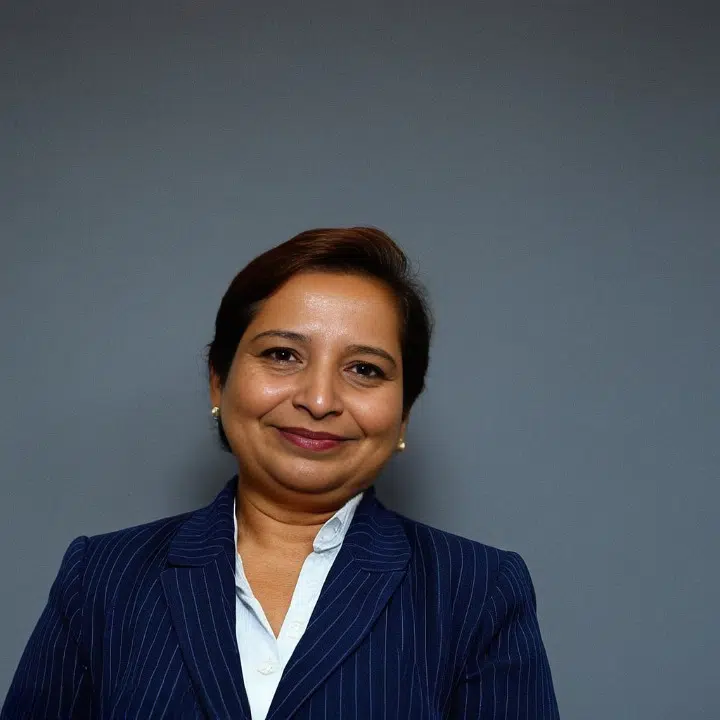
Vandana Goel, CPA
Senior Accountant
Gondaliya CPA Professional Corporation
Vandana handles the minute book, CRA registration, dental practice bookkeeping, HST allocation and T2 preparation.
What Our Clients Say
1300+ five-star reviews from business owners and professionals across Ontario and Canada.
Related Industries We Serve
Accounting for Healthcare
- Corporate tax planning
- Business tax filing
- Payroll services
- Incorporation & Bookkeeping
Accounting for Dentists
- Corporate tax planning
- Business tax filing
- Payroll services
- Incorporation & Bookkeeping
Incorporation Services
- Professional corporations
- Business tax filing
- Payroll services
- Incorporation & Bookkeeping
Incorporate Your Dental Practice for $35 Professional Fees.
Gondaliya CPA incorporates Dental Professional Corporations for Ontario dentists. RCDSO-compliant Articles, minute book, CRA registration, salary vs. dividend strategy. From $35. 1300+ five-star reviews.