



Corporate Tax Planning in Mississauga
Mississauga corporate tax planning by a licensed CPA. We structure your corporation to pay the lowest legal tax: Small Business Deduction optimization, salary vs. dividend mix, holding company strategies, passive income planning, GRIP and LRIP management, associated corporation rules and year-round tax structure reviews. Office at 2100 Camilla Rd. 900+ five-star reviews.
AFFORDABLE Corporate Tax Planning for Mississauga Businesses
Mississauga corporations pay thousands more in tax every year than they need to. The difference between 12.2% and 26.5% on $500,000 of active business income is $71,500. Salary vs. dividend decisions, passive income thresholds, holding company timing and associated corporation rules all determine which rate your corporation pays. Most Mississauga business owners do not have a written tax structure. We build one for every client.
We serve corporations in logistics, pharma, IT, construction, restaurants and professional services. Two mandatory tax planning reviews per year. Every recommendation includes the dollar impact. No hourly billing. Fixed flat fee.
Book Free Consultation
Why Corporate Tax Planning Matters for Mississauga Businesses
| Without Tax Planning | With Tax Planning |
|---|---|
| You pay the general corporate rate (26.5% combined federal + Ontario) on all taxable income. | The first $500,000 of active business income is taxed at 12.2% (Small Business Deduction rate). Proper planning keeps your income within this threshold. |
| Salary and dividends are paid without calculating the optimal mix. You overpay personal tax or miss CPP/RRSP contribution room. | Salary and dividends are split to minimize the combined corporate + personal tax. RRSP room is preserved. CPP contributions are optimized for retirement benefit access. |
| Passive investment income inside the corporation erodes the SBD. Every $1 of passive income above $50,000 reduces the SBD by $5. | Passive income is managed through a holding company. The operating company retains the full $500,000 SBD. The holding company invests separately. |
| Multiple related corporations share the $500,000 SBD limit. Income is spread inefficiently. Tax is higher than necessary. | Associated corporation rules are reviewed. The SBD is allocated to the highest-income corporation. Corporate structures are simplified where possible to avoid unnecessary sharing. |
| Retained earnings accumulate in the operating company with no plan for extraction. Shareholder loans create section 15(2) benefit risks. | Retained earnings are extracted through a planned combination of salary, dividends, capital dividends (from the CDA) and inter-company dividends. Shareholder loan balances are managed within the 1-year repayment rule. |
The Difference Between 12.2% and 26.5% on $500,000: A Mississauga corporation earning $500,000 in active business income pays $61,000 at the SBD rate (12.2%) or $132,500 at the general rate (26.5%). The difference is $71,500 in tax on the same income. Tax planning is the process of legally ensuring your corporation qualifies for the lower rate and stays within the thresholds that protect it. For a full overview of our tax planning services, visit our tax planning page.
What Corporate Tax Planning Includes
| Tax Planning Strategy | What We Do | Who It Benefits |
|---|---|---|
| Small Business Deduction (SBD) optimization | We ensure your CCPC qualifies for the SBD on the first $500,000 of active business income (12.2% vs. 26.5%). We monitor passive income, associated corporation rules and taxable capital thresholds that can reduce or eliminate the SBD. | Every CCPC. If your corporation earns active business income, this is the foundation of tax planning. |
| Salary vs. dividend optimization | We calculate the optimal salary/dividend split each year based on your personal tax bracket, RRSP contribution room, CPP benefit access, childcare deductions and spousal income. The split changes annually as your income and circumstances change. | Every incorporated business owner who pays themselves from the corporation. |
| Holding company structure | We set up and manage a holding company (holdco) to receive inter-company dividends tax-free from the operating company. The holdco invests separately, protecting investments from operating company creditors and isolating passive income from the operating company's SBD calculation. | Mississauga business owners with retained earnings exceeding $200,000 or passive investment income approaching $50,000 per year. |
| Passive income management | Passive investment income above $50,000 reduces the SBD by $5 for every $1 of excess. At $150,000 of passive income, the SBD is fully eliminated. We implement the annual sell-and-rebuy strategy and holdco dividend flows to keep the operating company's passive income below $50,000. | Corporations with investment portfolios, rental properties or interest income inside the corporation. |
| GRIP and LRIP management | We track the General Rate Income Pool (GRIP) and Low Rate Income Pool (LRIP) to determine whether dividends should be designated as eligible or non-eligible. Incorrect designation triggers Part III.1 tax (20% on excess eligible dividends). We calculate the GRIP balance before every dividend declaration. | Corporations that pay eligible dividends. Particularly important for corporations with income taxed at both the SBD rate and the general rate. |
| Lifetime Capital Gains Exemption (LCGE) planning | We structure qualifying small business corporation shares so that on a future sale, each shareholder can claim the LCGE ($1,281,866 in 2025, indexed annually). Family members holding separate share classes can each claim their own LCGE, multiplying the total exemption. A family of three with non-voting shares can shelter up to $3.8 million in capital gains. | Mississauga business owners planning to sell their business within the next 1 to 10 years. |
| Associated corporation rules | We review all related corporations owned by you and your family. Associated corporations share the $500,000 SBD limit. We allocate the SBD to the highest-income corporation and evaluate whether corporate structures should be simplified, amalgamated or restructured. | Business owners with multiple corporations, family members with corporations, or corporate groups connected by share ownership. |
| Year-end tax structure review | Two mandatory tax planning sessions per year: one mid-year (6 months before year-end) and one pre-year-end (60 days before). We review income projections, adjust salary/dividend payments, manage passive income and confirm all tax strategies are implemented before the fiscal year closes. | Every Mississauga corporate tax planning client. This is how we ensure nothing is missed. |
Mississauga Corporate Tax Planning: Real Client Results
IT Consulting Firm, Hurontario Corridor
A Mississauga IT consulting firm earning $620,000 in active business income was paying the general rate (26.5%) on the $120,000 above the SBD threshold. We restructured the salary/dividend mix to reduce taxable corporate income to $500,000, keeping the full amount within the SBD. The owner took the $120,000 as an optimized salary/dividend combination, reducing total combined tax (corporate + personal).
Logistics Company, Airport Corridor
A Mississauga logistics company with 3 associated corporations was sharing the $500,000 SBD across all three entities. Two of the corporations had minimal income. We allocated the full SBD to the highest-income corporation and restructured the other two to eliminate unnecessary association. Each operating entity now optimizes its own tax position independently.
Pharma Consultant, Meadowvale
A Mississauga pharma consultant with $180,000 in passive investment income inside the operating corporation had completely lost the SBD. We established a holding company, transferred the investment portfolio via tax-free inter-company dividends and implemented the annual sell-and-rebuy strategy. The operating company's passive income dropped below $50,000. The full $500,000 SBD was restored.
Construction Company, East Mississauga
A Mississauga construction company owner planning retirement in 5 years had not prepared qualifying small business corporation shares for the LCGE. We restructured the share capital, issued non-voting shares to the spouse and adult child, purified the corporation's assets (removing non-qualifying investments) and began the 24-month holding period. On a projected $2.8 million sale, the LCGE shelters approximately $3.8 million across three family members.
How Corporate Tax Planning Works
Assess
We review your corporate structure, income, expenses, shareholder loans, passive investments, associated corporations and current salary/dividend strategy. Every tax position is documented.
Plan
We build a written tax plan: salary/dividend split, SBD optimization, holdco strategy (if applicable), GRIP/LRIP calculations, LCGE timeline and passive income management. Every recommendation includes the dollar impact.
Implement
We execute the plan: declare dividends, adjust salary, set up the holding company, transfer investments, file elections and update the corporate minute book. Nothing is left as a recommendation. Everything is implemented.
Review
Two mandatory reviews per year: mid-year and pre-year-end. We adjust the plan based on actual results, income changes and new opportunities. Tax planning is not a one-time event. It is a continuous process.
Mississauga Corporate Tax Planning. Written Tax Structure for Every Client.
SBD optimization, salary/dividend, holdco, LCGE, passive income. Two reviews per year. CRA audit support FREE.
2026 Corporate Tax Rates Every Mississauga Business Owner Should Know
| Income Type | Combined Federal + Ontario Rate | What It Means |
|---|---|---|
| Active business income (first $500,000, CCPC with SBD) | 12.2% | The most AFFORDABLE corporate tax rate in Canada. Available to CCPCs with active business income under $500,000. Tax planning keeps you here. |
| Active business income (above $500,000) | 26.5% | Income above the SBD threshold is taxed at the general rate. The goal of tax planning is to minimize income taxed at this rate through salary, dividends and corporate structure. |
| Passive investment income (inside corporation) | 50.17% (with refundable portion) | Investment income (interest, capital gains, foreign dividends) is taxed at 50.17%. A portion is refundable when taxable dividends are paid out (RDTOH mechanism). This is why holding companies and passive income management are critical. |
| Inter-company dividends (connected corporations) | 0% (tax-free under Part IV) | Dividends paid from the operating company to the holding company are received tax-free (deductible under section 112). This is the mechanism that makes holdco structures work. |
| Capital dividends (from CDA) | 0% (tax-free to shareholders) | The non-taxable portion of capital gains (50%) is tracked in the Capital Dividend Account. Capital dividends paid from the CDA to shareholders are received completely tax-free. We track the CDA for every client. |
Our Mississauga Office
Serving Mississauga, Port Credit, Streetsville, Meadowvale, Cooksville, Malton, Erin Mills, Clarkson, Lorne Park and all of Peel Region. In-person and virtual appointments available.
2100 Camilla Rd #716, Mississauga, ON L5A 2J8
Phone: (647) 212-9559
Industries We Serve for Corporate Tax Planning in Mississauga
Every Mississauga industry has specific tax planning opportunities. Here are the sectors we serve most frequently.
Corporate Tax Planning for Startups
Pre-revenue tax structure. Founder share classes for LCGE eligibility from day one. SR&ED claims for R&D-stage companies. Loss carry-forward management for future SBD benefit.
Corporate Tax Planning for Healthcare
Professional corporation structures for doctors, dentists and specialists. Salary vs dividend for medical professionals. Family member share allocation for LCGE multiplication. Exempt supply planning.
Corporate Tax Planning for Consultants
Salary/dividend optimization for consultants. International zero-rating for US clients. Holdco structures for high-income consultants with passive investment income. LCGE planning for consulting firm exits.
Corporate Tax Planning for Small Businesses
SBD optimization on the first $500,000. Year-round salary/dividend strategy. Passive income management below the $50,000 threshold. Two mandatory tax reviews per year.
Corporate Tax Planning for Restaurants
Multi-location franchise structures. Tip income compliance. Equipment CCA. SBD allocation for restaurant groups. Holdco planning for franchise operators accumulating retained earnings.
Corporate Tax Planning for Franchises
Franchise fee amortization planning. Multi-unit SBD allocation across associated franchise corporations. Holdco structure for royalty income. LCGE planning for franchise resale.
Corporate Tax Planning for Self-Employed
Incorporation timing analysis. Salary vs dividend from day one. RRSP room creation through salary. CPP optimization. Transition from sole proprietorship to corporation with section 85 rollover.
Corporate Tax Planning for Manufacturing
Accelerated CCA and Immediate Expensing on equipment. SR&ED claims for process improvement. Export zero-rating for US sales. Holdco structures for manufacturers with excess retained earnings.
Corporate Tax Planning for Grocery Stores
Zero-rated basic grocery vs taxable prepared food. Inventory valuation methods (FIFO, weighted average). Equipment CCA on refrigeration and POS systems. Multi-location SBD allocation.
Corporate Tax Planning for Import & Export
Multi-currency income planning. Import duty and HST recovery coordination. Transfer pricing compliance for related non-resident suppliers. Cross-border entity structuring.
Frequently Asked Questions: Corporate Tax Planning in Mississauga
Meet Your Mississauga Tax Planning Experts
Your Mississauga corporate tax plan is built and reviewed by licensed CPAs with direct experience across every industry we serve.

Sharad Gondaliya, CPA
Founder and Principal CPA. Leads corporate tax planning for Mississauga clients. Specializes in SBD optimization, holdco structuring, LCGE planning, passive income management and salary/dividend strategies across every industry.
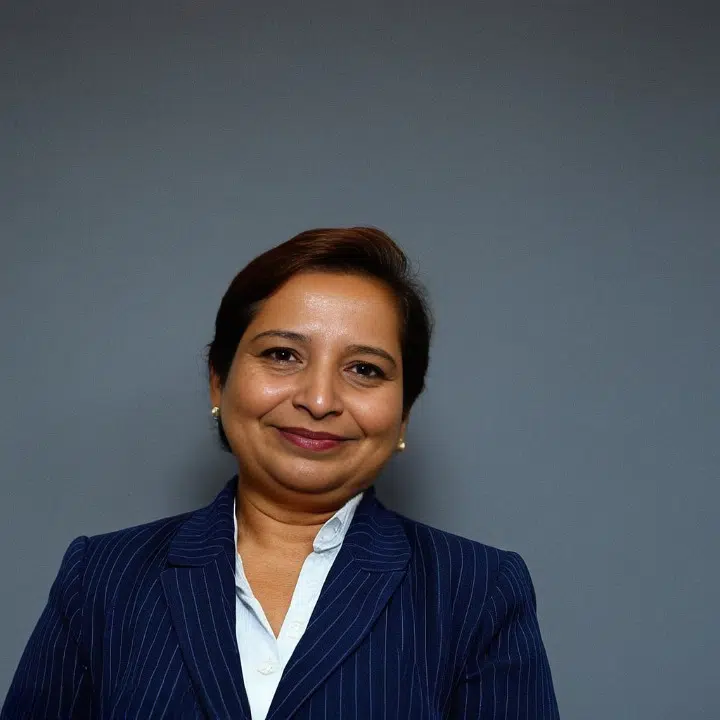
Vandana Goel, CPA
Senior CPA. Manages tax planning for Mississauga logistics, construction, pharma and multi-entity corporate groups. Experienced in associated corporation analysis, GRIP/LRIP calculations and year-end tax structure reviews.
What Mississauga Clients Say About Us
900+ five-star reviews from business owners across Mississauga, Peel Region and Ontario.
10 Advanced Tax Planning Strategies for Mississauga Businesses
1. Optimize the Salary-Dividend Mix Annually
The optimal salary/dividend split changes every year based on your personal tax bracket, RRSP contribution room, CPP benefit goals, childcare deductions, spousal income and the corporation's GRIP balance. Salaries are deductible to the corporation and create RRSP room but trigger CPP/EI contributions. Dividends avoid CPP/EI but do not create RRSP room. We calculate both scenarios annually for every Mississauga client and recommend the combination that produces the lowest combined corporate and personal tax. A Mississauga IT consultant earning $300,000 in corporate income saved $8,200 in combined tax by shifting from a 100% dividend strategy to a 60/40 salary-dividend split that maximized RRSP room while keeping the corporate rate at 12.2%.
2. Protect the Full Small Business Deduction ($500,000 at 12.2%)
The SBD saves $71,500 on $500,000 of active business income compared to the general rate (26.5%). The SBD is reduced or eliminated by passive investment income above $50,000, taxable capital above $10 million, and associated corporation rules. We monitor all three thresholds quarterly. If your Mississauga corporation is approaching any limit, we implement corrective strategies (holdco transfers, salary adjustments, portfolio restructuring) before year-end to preserve the full deduction.
3. Establish a Holding Company for Asset Protection and SBD Preservation
A holding company receives inter-company dividends tax-free from the operating company (section 112). The holdco invests separately, isolating passive income from the operating company's SBD calculation. The holdco also provides creditor protection: if the operating company faces a lawsuit, the investments inside the holdco are not exposed to the operating company's creditors. For Mississauga businesses with retained earnings exceeding $200,000 or passive income approaching $50,000, a holdco is one of the most effective structures available.
4. Implement the Annual Sell-and-Rebuy Strategy for Passive Income
If the operating corporation holds an investment portfolio generating more than $50,000 in annual passive income, the SBD erodes. The sell-and-rebuy strategy involves selling the portfolio before year-end (triggering a realized capital gain) and immediately repurchasing the same or similar investments. Combined with a holdco dividend strategy (moving the portfolio to the holdco via tax-free dividends before year-end), this reduces the operating company's passive income below $50,000 while maintaining the investment position. We implement this annually for qualifying Mississauga clients.
5. Multiply the Lifetime Capital Gains Exemption (LCGE) Through Family Share Classes
Each family member holding qualifying small business corporation shares can claim their own LCGE ($1,281,866 in 2025, indexed annually). A Mississauga business owner who issues non-voting shares to a spouse and an adult child creates three separate LCGE claims on a future sale. On a $3.8 million sale, the combined exemption shelters the full gain from tax. The shares must be held for at least 24 months, and the corporation must meet the 90% active business asset test at the time of sale. We issue the shares and track the holding period and asset purity for every client planning a future exit.
6. Maximize SR&ED Tax Credits
If your Mississauga corporation performs experimental development or technological improvement, file a T661 claim for the Scientific Research and Experimental Development credit. Eligible CCPCs recover up to 35% of qualified SR&ED expenditures as a refundable credit. This applies to software development, engineering process improvement, pharma research and manufacturing innovation. Many Mississauga tech and pharma companies leave significant SR&ED credits unclaimed because the work is not documented in the format CRA requires. We identify eligible activities and prepare the T661 claim.
7. Utilize the Capital Dividend Account (CDA)
Every corporate tax plan should track the CDA balance. When the corporation realizes a capital gain, 50% of the gain is added to the CDA. Life insurance proceeds (less the adjusted cost basis) also increase the CDA. Capital dividends paid from the CDA to shareholders are received completely tax-free. Filing Form T2054 before declaring the dividend is mandatory. Ignoring the CDA means shareholders pay personal tax on amounts they could have received tax-free. We track the CDA for every Mississauga client and file T2054 before every capital dividend declaration.
8. Time Bonus Accruals Across Two Tax Years
Declare a management bonus before the corporation's fiscal year-end and pay it within 179 days. The bonus is deductible in the current corporate tax year but is not included in the owner's personal income until the calendar year in which it is paid. This legally shifts income across two tax years: the corporation gets the deduction in Year 1, and the individual reports the income in Year 2. This is particularly effective for Mississauga business owners whose corporate income fluctuates year to year and who want to smooth both corporate and personal tax obligations.
9. Evaluate an Individual Pension Plan (IPP) for Owners Over 40
An IPP is a defined benefit pension plan for a single employee (the business owner). Contributions are deductible by the corporation and exceed RRSP limits for business owners over 40 with employment income history. A 50-year-old Mississauga business owner can contribute $10,000 to $15,000 more per year through an IPP than through an RRSP. The IPP provides creditor protection under pension legislation and grows tax-deferred. Past service contributions can also be made for prior years of employment, creating a significant one-time deduction. We evaluate IPP suitability for every tax planning client over 40.
10. Review and Restructure Associated Corporations
Corporations connected by share ownership, common control or cross-ownership are associated and must share the $500,000 SBD limit. If you own two corporations, the combined SBD is $500,000, not $500,000 each. Many Mississauga business owners operate multiple corporations without realizing the SBD is being split. We review all corporate relationships, allocate the SBD to the corporation with the highest active business income and evaluate whether corporations should be amalgamated, wound up or restructured to eliminate unnecessary association and maximize the total tax benefit across the group.
Mississauga Corporate Tax Planning. Written Tax Structure. Two Reviews Per Year.
Gondaliya CPA builds corporate tax plans for Mississauga businesses. SBD optimization, salary/dividend, holdco, LCGE, passive income. 900+ five-star reviews. Office at 2100 Camilla Rd.