



Catch-Up Bookkeeping vs Past Account Clean-Up: What Your Business Really Needs
Quick Summary: Catch-Up Bookkeeping vs Past Account Cleanup for Canadian Businesses
If you run a small business in Canada, you might get stuck with your bookkeeping. Sometimes, your books fall behind or get messy. That’s where catch-up bookkeeping and past account cleanup come in. Both fix financial problems, but they do different things.
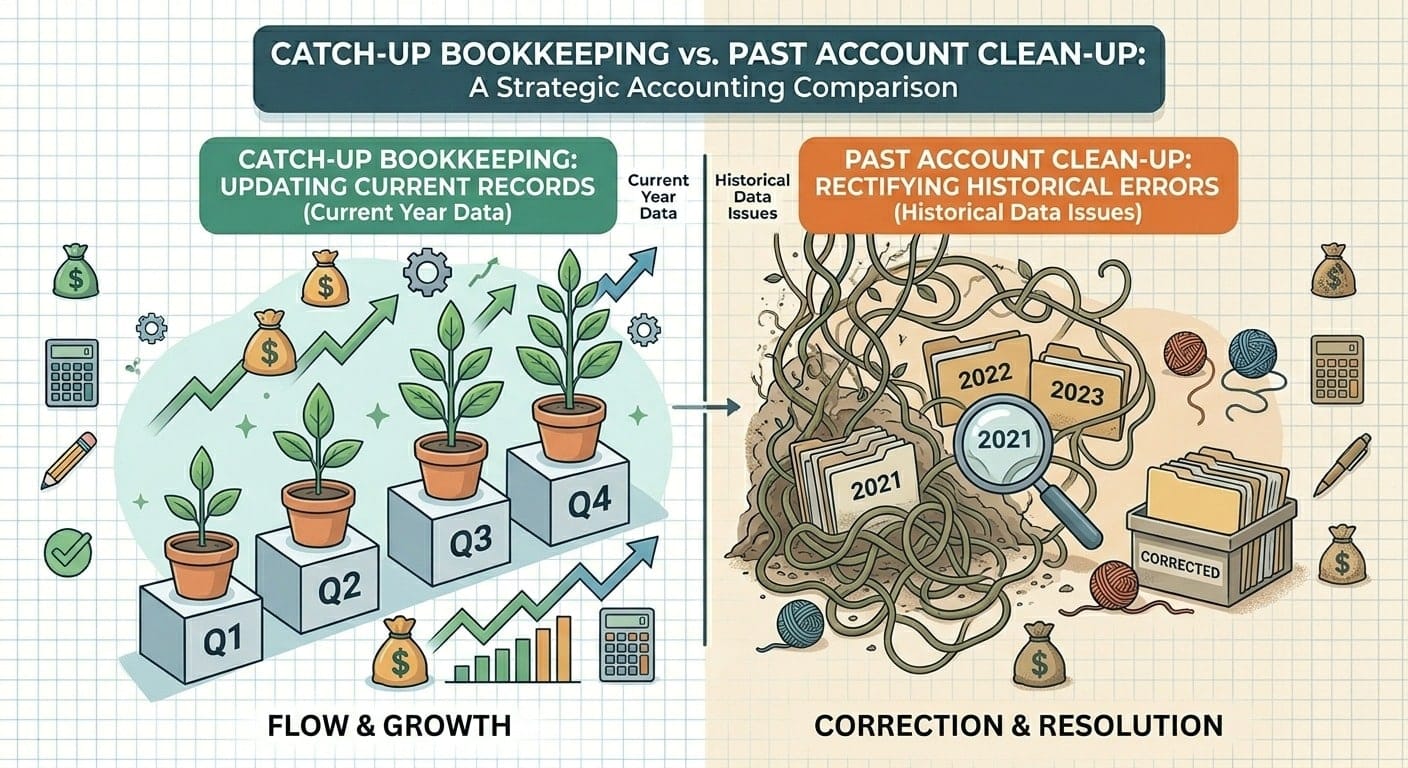
Catch-up bookkeeping means handling overdue records. It gets your current transactions up to date. Past account cleanup focuses on fixing mistakes made earlier. This could be errors or missing info from before.
You’ll want catch-up bookkeeping if your records are just late. But if your books have lots of mistakes or missed entries, cleanup works better.
Table of Contents
- Who Needs Catch-Up and Who Needs Cleanup
- What Is Catch-Up Bookkeeping
- What Is Past Account Cleanup
- Key Differences Between Catch-Up and Cleanup
- When Businesses Need Catch-Up and Cleanup
- DIY vs CPA vs Non-CPA
- Process of Catch-Up Bookkeeping
- Process of Past Account Cleanup
- Financial Reconciliation and Record Correction
- Pricing Factors for Backlog and Cleanup
- Risks and CRA Compliance
- Checklist for Choosing the Right Service
- Industry Use Cases
- How to Choose a CPA
- Why Trust Gondaliya CPA
- Frequently Asked Questions
Catch-Up vs Cleanup at a Glance
Comparison Table: Catch-Up Bookkeeping and Past Account Cleanup
| Feature | Catch-Up Bookkeeping | Past Account Cleanup |
|---|---|---|
| Purpose | Update overdue records | Fix past errors in financial records |
| Focus | Current, ongoing tasks | Correcting old mistakes |
| Common Issues | Backlog of transactions | Missing entries, payroll corrections |
| Compliance | Follows GST/HST rules | Fixes tax filing errors |
| Ideal For | Small businesses needing updates | Businesses with messy or incomplete books |
Both help fix bookkeeping errors correction and financial record cleanup. But catch-up keeps you current, while cleanup repairs past problems. Both aim to keep your business record correction on track and meet CRA compliance.
Who Needs Catch-Up Bookkeeping and Who Needs Past Account Cleanup
Pick The Right Service
Catch-Up Bookkeeping suits small businesses behind on their books. Maybe rapid growth or lack of time caused backlog bookkeeping. If many transactions wait to be entered, this service helps clear the pile.
Past Account Cleanup fits when there are big errors in your books. Missing transactions or payroll corrections often need fixing here. It also helps with Canadian GST and HST regulations issues.
If your books look messy or full of mistakes from before, you need cleanup to restore order. This service handles overdue bookkeeping and accounting cleanup so you can meet tax rules.
Here’s a quick checklist:
- Pick Catch-Up Bookkeeping if you just need to update overdue records.
- Choose Past Account Cleanup if your old financial data has errors needing fixing.
Both keep your bookkeeping services Canada compliant and ready for tax filing corrections. So, decide based on whether you’re behind now or correcting past messes.
What Is Catch-Up Bookkeeping
Bring Overdue Records Current
Catch-up bookkeeping means getting your financial records up to date when they’ve fallen behind. This backlog bookkeeping handles overdue bookkeeping work so all transactions get recorded the right way and on time. Sometimes, businesses need catch-up bookkeeping after busy times or staff changes slow things down.
The main job here is missing transactions correction. You find and enter sales, expenses, payroll, or bank entries that were missed. This fixes your books and helps bookkeeping maintenance keep going without problems.
Financial reconciliation is a big part of catch-up bookkeeping. It matches bank statements with accounting records. This shows mistakes early and stops errors from piling up later. Timely reconciliation lowers risks linked to wrong reports or tax problems.
You need expert assistance for catch-up bookkeeping. It takes skill in accounting rules and software know-how. Pros make sure you follow Canadian tax laws and get your accounts current fast.
In short, catch-up bookkeeping clears transaction backlogs by fixing missed entries and balancing accounts fast. This sets up your business for clean and accurate records going forward.
What Is Past Account Cleanup
Deep Fix For Audit-Ready Books
Past account cleanup digs deeper than just catching up on missing entries. It looks closely at old financial data to fix bigger problems in your books. Also called bookkeeping cleanup or accounting cleanup, it finds errors that can mess with financial accuracy and CRA compliance.
A full financial record cleanup finds things like duplicate transactions, wrong expense types, lost invoices, or bad balances carried from before. These mistakes can skew how your business looks if you don’t fix them.
Tax filing corrections matter a lot in past account cleanup. Mistakes in past filings might cause CRA audits or fines. Cleanup checks GST/HST cleanup by comparing collected taxes with payments to avoid costly CRA issues.
Payroll corrections are another key piece. The service reviews past pay runs for correct deductions and contributions based on current rules. Fixing these helps keep employee payments legal without future risks.
Overall, past account cleanup gives your books a deep fix not just to solve current issues but also to get ready for audits with clear and accurate records.
Key Differences Between Catch-Up Bookkeeping and Cleanup
Side-By-Side Breakdown
| Aspect | Catch-Up Bookkeeping | Past Account Cleanup |
|---|---|---|
| Purpose | Update recent overdue records | Correct deep-rooted historical errors |
| Scope | Focuses on recording missing transactions | Involves complex error correction & reclassification |
| CRA Compliance Impact | Ensures timely submission & basic compliance | Addresses potential audit triggers & regulatory gaps |
| Audit Readiness | Prepares books for current period review | Makes entire history transparent & defensible |
| Error Correction Level | Basic fixes like transaction entry | Detailed resolution including reconciliations & adjustments |
| Complexity | Moderate – mostly transactional updates | High – requires analysis across multiple periods |
Knowing these differences helps you pick the right service based on how far behind your records are and what kind of fix you need to meet CRA rules fully.
When Businesses Need Catch-Up Bookkeeping and Past Account Cleanup
Know The Warning Signs
When Businesses Need Catch-Up Bookkeeping: Catch-up bookkeeping happens when a business falls behind on recording its financial transactions. This backlog bookkeeping usually comes from busy times, staff changes, or unexpected issues. Overdue bookkeeping can cause stress and confusion. It makes it hard to see where your money stands. You need to reconcile accounts on time for smooth tax filing and correct reports. Fixing missing transactions makes sure every sale and expense is counted before deadlines like GST/HST payments or year-end taxes.
Here are signs you might need catch-up bookkeeping:
- Financial records haven’t been updated in months.
- Bank or credit card statements and invoices are not entered.
- You need tax filing corrections due to missing data.
- Late submissions risk penalties because of overdue books.
Fixing these fast helps avoid costly tax mistakes. It also gives you clear info to make smart business choices.
Recognizing Overdue Bookkeeping Symptoms: Look out for these signs of overdue bookkeeping:
- Messy books with mixed-up entries.
- Stress from racing deadlines without ready documents.
- Trouble gathering receipts, invoices, or bank papers.
If you spot these, consider getting professional help to tidy things up quickly.
Preparing for Tax Season: Tax season surprises often come from last-minute money organizing. Without catching up early—like GST/HST cleanup—businesses face avoidable stress. A good catch-up job means a stress-free tax season. You’ll have all transactions recorded right. This lowers audit risks and makes you feel confident about your taxes.
Urgent Financial Reconciliation Needs: Financial reconciliation means matching bank statements with sales and expenses records. Urgent needs pop up when numbers don’t line up, like:
- Delays in matching bank statements cause wrong balances.
- Missing expenses from credit card statement mismatches.
Fixing these quickly stops errors from messing with profit checks or rules compliance.
When Businesses Need Past Account Cleanup: Past account cleanup is more than just catching up; it fixes big problems in old financial data stored over many months or years. This involves deep bookkeeping cleanup to fix all accounting errors. Fixing bookkeeping errors is key here—this means removing duplicate entries, completing unfinished transactions, and checking odd results that might show fraud or mistakes.
This service fits businesses with problems like:
- Disorganized financial files needing sorting.
- Fixing business records after mergers or system moves.
- Correcting taxes because earlier reports were wrong.
Cleanup also readies your books for audits by making sure they meet CRA rules fully.
Identifying Bookkeeping Errors:
| Error Type | Description |
|---|---|
| Duplicate Entries | Transactions entered more than once |
| Incomplete Transactions | Missing info causing balances to be off |
| Suspicious Results | Strange differences hinting at risks |
Fixing these makes financial reports more trustworthy for planning ahead.
Correcting Historical Data: Organizing old financial papers takes focus: matching past bank records to ledgers, fixing payroll issues, updating old customer info—all needed for accurate business record correction. These steps help future tax filings go smoother and boost audit readiness by keeping clear trails that CRA expects.
Audit Preparation and CRA Compliance: CRA compliance needs careful record keeping—especially for GST/HST cleanup and payroll fixes where mistakes often happen. Good control lowers the chance of penalties from the Canada Revenue Agency (CRA). Focus on:
- Making payroll rules match federal and provincial laws
- Keeping clear records showing each transaction
- Protecting sensitive data from leaks or loss
DIY vs CPA vs Non-CPA for Bookkeeping Services
Who Should Handle It
Who handles your backlog matters—it affects accuracy, risks, costs, and peace of mind.
| Aspect | DIY | Non-CPA Professional | CPA Professional |
|---|---|---|---|
| Accounting Knowledge | Limited | Moderate | Advanced |
| Risk of Errors | High | Medium | Low |
| Expertise in CRA Compliance | Minimal | Basic | Comprehensive |
| Digital Record Keeping | Varies | Standard Software Use | Advanced Tools & Integration |
| Pricing Model | Low upfront but hidden | Variable fees | Fair flat-fee + refund policy |
| Support & Training | Self-guided | Some training available | Ongoing expert guidance |
DIY might cost less at first but risks errors that hurt taxes later—especially if you don’t know Canadian GST/HST or payroll rules well. Non-CPAs know more than DIY but may miss tough cases needing strong standards for big cleanups. CPAs bring top knowledge plus strict ethics to keep things accurate and legal the whole way through. If your books are behind or messy, working with CPAs who get Canadian small businesses like Gondaliya CPA can help you fix things right. They offer clear pricing and processes made for firms in Ontario.
Ready To Resolve Your Backlog?
Process of Catch-Up Bookkeeping
Step-By-Step Workflow
Catch-up bookkeeping means fixing overdue bookkeeping and backlog bookkeeping. It brings your records up to date step by step. This includes entering missing transactions, sorting them properly, matching bank statements, reconciling credit card statements, and managing accounts payable and receivable.
Initial Assessment: The first thing is an initial assessment. Use a bookkeeping checklist to check your books carefully. Find missing entries or wrong classifications that block accurate bookkeeping. This helps spot what’s missing before you start fixing things. This step lays the ground for clear records by showing what needs fixing and which documents you have or need.
Gathering Financial Records: Next, gather all your financial papers. Collect bank statements, credit card bills, invoices, receipts, payroll info, and other important documents. Good document assembly makes the next steps easier. When files are organized well, it cuts errors and speeds up the work.
Entering Missing Transactions: A key part is fixing missing transactions. Enter them in order as they happened using your accounting software. This fills gaps and keeps your financial timeline straight. You also must classify each transaction right—like sales income or expenses. Proper classification helps keep reports reliable later.
Bank Statement Reconciliation: Finally, reconcile your bank statements by comparing them to your records. Bank reconciliation confirms deposits and withdrawals match what the bank says. Don’t forget credit card statement reconciliation too. This ensures expenses charged fit your records and policies.
Process of Past Account Cleanup
Remove Duplicates & Errors
Past account cleanup focuses on fixing old errors in your books. Sometimes called bookkeeping cleanup or accounting cleanup, it removes duplicates and wrong balances that confuse reports.
Analyzing Bookkeeping Errors: Start by finding common mistakes like duplicate entries from repeated input or incomplete transactions missing details (like invoice numbers). Fixing these clears up confusion in ledgers and helps audits go smoothly.
Correcting Transaction Categories: Next, review how past transactions were categorized. Sometimes expenses are placed in wrong groups by accident or business changes over time caused shifts. Fix transaction categorization to make sure reports reflect real costs and revenues clearly.
Adjusting Financial Records Across Accounts: At last, clean up related accounts affected by past mistakes:
- Do a full financial record cleanup
- Fix payroll errors
- Clear GST/HST issues with targeted adjustments
These steps keep you compliant with CRA rules and match good practices for Canadian small businesses.
Financial Reconciliation and Record Correction in Bookkeeping Services
Match Every Dollar
Financial reconciliation covers several checks to keep books trustworthy:
- Matching each bank statement line
- Reconciling credit card charges
- Reviewing payroll records carefully
- Checking accounts payable (bills due)
- Verifying accounts receivable (money owed)
This thorough process makes sure no unpaid bills or uncollected income slip through — both affect cash flow.
Pricing Factors for Backlog and Cleanup Services
What Drives The Cost
| Pricing Factor | Description |
|---|---|
| Volume of backlog transactions | More overdue items mean more work |
| Years of records requiring cleanup | Longer time frames need deeper reviews |
| Depth of cleanup needed | Simple fixes cost less than complex error corrections |
| Payroll corrections required | Extra work if pay details need fixing |
| GST/HST & tax filing issues | These require special know-how |
| Software integration complexity | Hard-to-match systems slow down work |
| Ongoing support & training | Help after cleanup can add to total price |
Flat-fee pricing often applies but depends on the scope found after looking at your case.
Pricing Table: Factors Affecting Cost of Bookkeeping Services in Canada
| Factor | Impact Level | Notes |
|---|---|---|
| Number of months/years behind | High | Big backlogs take lots of time |
| Complexity & volume | Medium | Many transaction types need careful handling |
| Payroll involvement | Medium | Fixing payroll adds more work |
| Tax-related adjustments | High | Expertise needed adds value |
| Maximizing software automation | Minimal | Smoother systems cut manual effort |
Knowing these helps businesses plan budgets right while staying compliant.
Risks and CRA Compliance in Backlog Bookkeeping and Cleanup Services
Avoid CRA Penalties & Audits
Backlog bookkeeping and past account cleanup keep your financial records on track. But if you mess these up, problems pop up—especially with Canada Revenue Agency (CRA) rules. Errors in GST/HST cleanup, payroll fixes, or tax filings can bring penalties or audits. Knowing Canadian tax laws helps avoid costly mistakes.
Your bookkeeping must meet CRA standards for audit readiness. Missing or wrong data raises red flags during CRA audits. Payroll remittance errors or late GST/HST filings often lead to penalties that good bookkeeping could stop.
CRA Compliance Table: Common Risks in Financial Record Cleanup
| Risk Area | What Happens | Possible Results |
|---|---|---|
| Errors Leading to Penalties | Wrong entries misstate income or costs | Fines, interest charges |
| Late Filing/Payment | Missed deadlines for GST/HST or payroll taxes | Late fees, more CRA attention |
| Payroll Remittance Errors | Wrong employee deductions or contributions | Penalties and employee disputes |
| GST/HST Filing Compliance | Incorrect input/output tax reports | Audits, reassessments |
| Data Security & Privacy | Poor handling of sensitive financial info | Legal trouble under privacy laws |
These risks show why experts matter when fixing overdue bookkeeping.
Checklist for Choosing the Right Service for Your Business Records
Quick Decision Checklist
- Make sure they know Canadian small business bookkeeping.
- Check they understand current GST/HST and payroll rules.
- Look for clear pricing with no hidden fees.
- Prefer flat-fee plans for steady costs.
- See if they offer refund policies like 30-day money-back.
- Find out if ongoing support is available after cleanup.
- Choose firms giving advice tailored to your industry.
This checklist helps match your needs with expert services made for Canadian SMBs.
Decision Table: Selecting the Right Backlog or Cleanup Solution
| Service Type | Best For | Key Benefits | Risks Controlled |
|---|---|---|---|
| Catch-Up Bookkeeping | Businesses behind on entries | Timely transaction recording; books up-to-date | Missed deadlines; incomplete data entry |
| Past Account Cleanup | Fixing errors & reconciling old data | Detailed review of missing transactions | Reduces audit triggers from past mistakes |
| GST/HST Cleanup | Firms with sales tax issues | Corrects input/output reporting | Avoids reassessments |
| Payroll Corrections | Companies with pay mismatches | Fixes employee pay records | Stops penalty notices from CRA |
Choosing by need lowers risk and boosts accuracy under Canadian law.
Industry Use Cases for Backlog Bookkeeping and Accounting Cleanup in Canada
Use Cases By Industry
Doctors: Medical offices need precise payroll corrections to pay staff right. GST/HST cleanup prevents overpaying on exempt medical supplies. Clean statements help with loans and partnerships.
Dentists: Late bookkeeping causes billing gaps. Catch-up services fix things fast before tax time, reducing chances of CRA reassessments.
Daycare: Payroll must track changing staff levels tied to enrollment. Subsidy tracking needs detailed records matching government programs plus ongoing compliance checks.
Real Estate: Sales tax backfiling fixes missed payments on commissions, avoiding fines later. Commission tracking clarifies revenue, helping cash flow forecasts.
Property Developers & Builders: Complex projects need thorough cleanup of subcontractor invoices against budgets—critical before year-end reports required by regulators.
Construction & Skilled Trades: Job schedules vary, causing backlog delays that hurt invoicing speed—key for trades relying on steady cash flow. GST/HST cleanup stops wrong claims adding payment burdens.
Startups: Early-stage startups often fall behind without finance staff. CPA-led training plus catch-up services build strong books ready for growth and investors.
E-commerce: High transaction volume needs automation in catch-up work to finish before quarterly sales tax filings — helping businesses stay compliant fast.
Restaurants: Seasonal hiring means payroll corrections happen often. Expense tracking is tricky with food cost changes that need constant attention to keep profits clear.
Transportation: Fuel taxes require special handling best done through catch-up bookkeeping combined with invoice checks—reducing costly mistakes during reviews.
Numeric Example: Cost Difference and CRA Impact of Each Approach Imagine two businesses fixing six months backlog including PST/GST cleanup:
- DIY costs almost nothing but risks $5K+ in penalties if errors slip past audits.
- Non-CPA bookkeepers charge $3K-$4K flat fee but might miss problems causing future extra costs.
- CPA firms like Gondaliya CPA offer $4K-$5K flat fees covering full reviews and corrections by experts up-to-date with rules—with perks like fee matching plus a 30-day refund policy for peace of mind.
Spending upfront avoids bigger costs caused by CRA enforcement later on.
How to Choose a CPA for Bookkeeping Services in Canada
Choosing The Right CPA
Picking the right CPA for bookkeeping can feel tricky. If you need catch-up bookkeeping or past account cleanup, you want someone who knows their stuff. A CPA with knowledge of CRA compliance and Canadian tax rules makes all the difference. Whether your business is small or medium-sized, a skilled pro helps you avoid mistakes and keeps your financial records clean.
Evaluating Expertise in Financial Reconciliation: Financial reconciliation means checking that your books match real transactions. A good CPA should be able to:
- Match bank statements with your records (bank reconciliation).
- Check credit card statements carefully.
- Review general ledgers for balanced accounts.
Ask CPAs about their work with backlog bookkeeping and fixing missing entries. Their skills help prevent errors and get your books ready for taxes fast.
Understanding CRA-Compliant Bookkeeping Services: Following the rules set by the Canada Revenue Agency (CRA) is a must. Your CPA should know how to:
- Handle Canadian GST and HST regulations properly.
- Keep track of tax filing deadlines to avoid fees.
- Fix payroll records according to CRA rules.
Make sure your CPA stays updated on CRA changes or checks directly when unsure. This keeps you safe from penalties during bookkeeping cleanup.
Importance of Local Experts: Local knowledge counts because provinces can have different rules. A CPA who knows Ontario’s SMB scene understands special tax credits or industry needs. Working with local Canadian bookkeepers means faster answers, personal attention, and they get the challenges businesses like yours face—whether you’re just starting or already established.
Benefits of CPA for Comprehensive Cleanup: CPA-led bookkeeping does more than just add numbers up:
- They find and fix past mistakes.
- Clean up your financial records thoroughly.
- Prepare statements that follow Canadian rules.
- Give advice based on deep analysis.
This work lowers audit risks and improves your data quality — benefits non-certified bookkeepers may not offer.
Why Trust Gondaliya CPA With Your Financial Record Cleanup Needs
Flat-Fee & 1300+ Reviews
Gondaliya CPA helps Canadian SMBs with expert catch-up bookkeeping and past account cleanup services made for their needs.
Our Flat-Fee Commitment: We keep pricing simple and clear. You pay one flat fee with no hidden costs, no matter how big your backlog is.
Experience With Backlog and Cleanup Services: With over 1300 good reviews, we know how to handle overdue bookkeeping quickly while following CRA rules closely during cleanup.
Serving Canadian Small-Medium Businesses: We focus on small-medium businesses in Ontario using QuickBooks Online and Xero—making sure tech tools and expert service work together smoothly.
FAQs on Backlog Bookkeeping, Past Account Cleanup, and CRA Compliance
Your Questions Answered
What is the difference between backlog and cleanup?+
How does GST/HST cleanup work?+
Can I do catch-up bookkeeping myself?+
What happens if my books aren’t CRA-compliant?+
Why is timely reconciliation important in bookkeeping?+
How does bookkeeping automation improve efficiency?+
Why is data backup crucial for businesses?+
What role does bookkeeping training play for small businesses?+
How do CPAs help with bookkeeping risk management?+
What is the benefit of a single source of truth in bookkeeping?+
How can small businesses avoid tax season surprises?+
Got more questions? Please reach out anytime—we’re happy to explain every step toward fixing your finances.
Next Steps To Restore Clarity In Your Business Records With Gondaliya CPA
Want better control over your money? Please book a free consultation now. We’ll check if catch-up bookkeeping or account cleanup fits your needs best and plan next steps that follow CRA rules. Please use our free consultation made just for you. We teach clients about their unique cases while offering ongoing help so you understand the process well.
Key Points for Optimizing Bookkeeping Services with Gondaliya CPA
- Employ regular bookkeeping sessions to maintain up-to-date records.
- Use a comprehensive bookkeeping checklist to track transactions systematically.
- Flag unusual transactions quickly using financial anomaly detection tools.
- Separate personal vs business expenses clearly for accurate reporting.
- Implement bookkeeping automation tools like QuickBooks or Xero integration.
- Maintain bookkeeping data security with multi-factor authentication (MFA).
- Use cloud bookkeeping backup for disaster recovery readiness.
- Schedule periodic bookkeeping review schedules to ensure ongoing accuracy.
- Train bookkeeping staff regularly to uphold professional standards.
- Outsource complex tasks to CPA-led services for compliance assurance.
- Manage outstanding invoices proactively to secure timely payments.
- Employ accounts payable and receivable management best practices.
- Perform credit card statement reconciliation alongside bank reconciliation.
- Conduct payroll record review adhering strictly to Canadian payroll management rules.
- Prepare for bookkeeping audits by understanding common audit triggers.
Additional Insights on Bookkeeping Cost & Service Factors
- Pricing depends on volume, complexity, payroll involvement, and tax-related adjustments.
- Flat-fee pricing models provide predictable costs without hidden fees.
- CPA-led services often include refund policies enhancing client trust.
Industry-Specific Bookkeeping Benefits
- Startups gain valuable insights through proactive optimization and smooth tax filing prep.
- Construction businesses benefit from fixed asset review and inventory categorization controls.
- Healthcare professionals rely on accurate payroll management and tax filing deadlines adherence.
- Real estate professionals require sales tax nexus handling and financial statement preparation expertise.
Closing — How to Engage Gondaliya CPA
If your books are months behind, your last filing felt rushed, or your records no longer reconcile, the most cost-effective move is to act before deadlines or a CRA review force your hand. Our team reviews where you stand, tells you plainly whether catch-up or a deeper cleanup fits, and gives you a flat-fee scope to bring everything current and audit-ready. Getting started takes one short conversation, with no obligation to proceed.
Schedule a Free Consultation with Gondaliya CPA

Sharad Gondaliya is a CPA Canada & CPA USA with 15 Years+ experience of Accounting, Tax, Payroll of Corporate Small Businesses as Tax Accountant. He is fully certified CPA Ontario and CPA USA and is well known among corporate small businesses for tax planning, efficient tax solutions, and affordable CPA services. Sharad is the Principal (Director) of Gondaliya CPA – Affordable CPA Firm in Canada. Licenses: CPA Ontario: 61040184 | CPA USA (MT): PAC-CPAP-LIC-033176 | CPA USA (WA): 57629 | CPA Firm License: 61330051 View Full Author Bio