



Corporate Tax Planning in Oakville
Oakville corporate tax planning by a licensed CPA. We structure your corporation to pay the lowest legal tax: Small Business Deduction optimization, salary vs. dividend mix, holding company strategies, passive income planning, GRIP and LRIP management, associated corporation rules and year-round tax structure reviews. Serving Oakville virtually. 900+ five-star reviews.
AFFORDABLE Corporate Tax Planning for Oakville Businesses
We serve Oakville corporations from the Lakeshore Road professional district to Upper Oakville's growing commercial corridor, from Bronte Village to Glen Abbey, River Oaks and the QEW business parks along Trafalgar Road. Oakville has a high concentration of professional services firms, healthcare practices, real estate investment companies, technology consultancies and established family-owned businesses. The corporate structures here often carry significant retained earnings, investment portfolios inside the operating company and salary/dividend arrangements that have never been optimized for the SBD or RRSP contribution room.
We build a written tax structure for every Oakville client. Salary/dividend split calculated to the dollar. Passive income thresholds tracked quarterly. Holdco established before the $50,000 passive income threshold erodes the SBD. Associated corporation allocation reviewed across every related entity. Two mandatory reviews per year. No hourly billing. Fixed flat fee.
Book Free Consultation
Serving Oakville Virtually
| Service | How We Deliver |
|---|---|
| Tax planning sessions | Video call (Zoom, Google Meet, Teams). Screen sharing for real-time review of financial statements, tax projections and salary/dividend scenarios. Recorded if you want to review later. |
| Document exchange | Secure client portal (TaxDome). Upload financial statements, T2 returns, corporate documents and CRA correspondence. Encrypted. Accessible from anywhere. |
| Ongoing communication | Phone (647-212-9559), email (info@gondaliyacpa.ca) and secure portal messaging. Same-day response on business days. |
| Year-end review meetings | Two mandatory virtual sessions per year: mid-year review and pre-year-end review. Written tax plan delivered after each session. |
| CRA correspondence and audit | We handle all CRA communication on your behalf remotely. Notices of assessment, review letters, audit requests and objections managed without requiring any in-person meeting. |
HQ: 168 Simcoe St Unit 1118, Toronto, ON M5H 4C9 · Phone: (647) 212-9559
Why Corporate Tax Planning Matters for Oakville Businesses
| Without Tax Planning | With Tax Planning |
|---|---|
| You pay the general corporate rate (26.5% combined federal + Ontario) on all taxable income. | The first $500,000 of active business income is taxed at 12.2% (Small Business Deduction rate). Proper planning keeps your income within this threshold. |
| Salary and dividends are paid without calculating the optimal mix. You overpay personal tax or miss CPP/RRSP contribution room. | Salary and dividends are split to minimize the combined corporate + personal tax. RRSP room is preserved. CPP contributions are optimized. |
| Passive investment income inside the corporation erodes the SBD. Every $1 above $50,000 reduces the SBD by $5. | Passive income is managed through a holding company. The operating company retains the full $500,000 SBD. |
| Multiple related corporations share the $500,000 SBD limit. | Associated corporation rules are reviewed. The SBD is allocated to the highest-income corporation. Unnecessary entities wound up. |
| Retained earnings accumulate with no extraction plan. Shareholder loans create section 15(2) benefit risks. | Retained earnings extracted through planned salary, dividends, capital dividends (CDA) and inter-company dividends. |
The Difference Between 12.2% and 26.5% on $500,000: An Oakville corporation earning $500,000 in active business income pays $61,000 at the SBD rate or $132,500 at the general rate. The difference is $71,500 in tax on the same income. For a full overview, visit our tax planning page.
What Corporate Tax Planning Includes
| Tax Planning Strategy | What We Do | Who It Benefits |
|---|---|---|
| Small Business Deduction (SBD) optimization | We ensure your CCPC qualifies for the SBD on the first $500,000 of active business income. We monitor passive income, associated corporation rules and taxable capital thresholds. | Every CCPC in Oakville. |
| Salary vs. dividend optimization | We calculate the optimal salary/dividend split each year based on your personal tax bracket, RRSP room, CPP goals, childcare deductions and spousal income. | Every incorporated Oakville business owner. |
| Holding company structure | We set up a holdco to receive inter-company dividends tax-free, invest separately and isolate passive income from the SBD calculation. | Oakville business owners with retained earnings exceeding $200,000 or passive income approaching $50,000/year. |
| Passive income management | Passive income above $50,000 reduces the SBD by $5 for every $1 of excess. At $150,000, the SBD is eliminated. We implement holdco dividend flows and the annual sell-and-rebuy strategy. | Corporations with investment portfolios, rental properties or interest income. Particularly common with established Oakville professional practices and real estate investors. |
| GRIP and LRIP management | We track GRIP and LRIP to determine eligible vs. non-eligible dividend designation. Incorrect designation triggers Part III.1 tax (20%). | Corporations that pay eligible dividends. |
| Lifetime Capital Gains Exemption (LCGE) planning | We structure qualifying shares so each shareholder can claim the LCGE ($1,281,866 in 2025, indexed). Family share classes multiply the exemption. | Oakville business owners planning to sell within the next 1 to 10 years. |
| Associated corporation rules | We review all related corporations and allocate the $500,000 SBD to the highest-income entity. | Oakville owners with multiple corporations. Common with professional services firms, real estate holding structures and family business groups. |
| Year-end tax structure review | Two mandatory sessions per year: mid-year and pre-year-end. Projections reviewed, payments adjusted, strategies confirmed. | Every Oakville corporate tax planning client. |
Oakville Corporate Tax Planning: Real Client Results
Management Consulting Firm, Lakeshore Road
An Oakville management consulting firm owner earning $520,000 was paying herself entirely in dividends. No RRSP room created in 12 years. The corporation held $680,000 in retained earnings invested in a diversified portfolio generating $91,000 in annual passive income. The SBD was reduced by $205,000 ($41,000 excess above $50,000 multiplied by 5). We established a holdco, transferred the investment portfolio via tax-free inter-company dividends, introduced a 60/40 salary-dividend split creating $54,000 in annual RRSP room and fully restored the SBD.
Real Estate Investment Corporation, Upper Oakville
An Oakville real estate investor holding 8 rental units inside the operating corporation had $148,000 in annual passive rental income. The SBD on the owner's active consulting income ($420,000) was effectively eliminated. We separated the rental portfolio into a dedicated property holdco via section 85 rollovers (no land transfer tax triggered), restructured the consulting corporation as a clean active-income entity and restored the full SBD. The holdco now manages all rental income and property equity independently.
Dental Practice, Glen Abbey
An Oakville dentist with a professional corporation and a separate hygienist staffing entity was sharing the $500,000 SBD across both associated corporations. The professional corporation earned $460,000 and the staffing entity earned $95,000. We merged the staffing operations into the professional corporation, allocated the full SBD and redirected the owner from 100% dividends to a 55/45 salary-dividend split. RRSP room of $44,550 was created for the first time. A holdco was established proactively to receive future retained earnings.
Technology Company, QEW Business Park
An Oakville tech company with two founders planning to sell in 3 years had not structured shares for LCGE eligibility. The corporation held $310,000 in non-qualifying passive investments (failing the 90% active asset test). We purified the balance sheet by paying a tax-free inter-company dividend to a new holdco, each founder issued non-voting shares to their spouse and started the 24-month holding period. On a projected $4.2 million sale, four LCGE claims shelter the full gain.
How Corporate Tax Planning Works
Assess
We review your corporate structure, income, expenses, shareholder loans, passive investments, associated corporations and current salary/dividend strategy.
Plan
We build a written tax plan with dollar amounts: salary/dividend split, SBD optimization, holdco strategy, GRIP/LRIP, LCGE timeline and passive income management.
Implement
We execute everything: declare dividends, adjust salary, set up the holdco, transfer investments, file elections and update the corporate minute book.
Review
Two mandatory reviews per year: mid-year and pre-year-end. We adjust based on actual results. Tax planning is continuous.
Oakville Corporate Tax Planning. Written Tax Structure for Every Client.
SBD optimization, salary/dividend, holdco, LCGE, passive income. Two reviews per year. CRA audit support FREE.
2026 Corporate Tax Rates Every Oakville Business Owner Should Know
| Income Type | Combined Federal + Ontario Rate | What It Means |
|---|---|---|
| Active business income (first $500,000, CCPC with SBD) | 12.2% | The most AFFORDABLE corporate tax rate in Canada. Tax planning keeps you here. |
| Active business income (above $500,000) | 26.5% | Income above the SBD threshold. Minimize income taxed at this rate. |
| Passive investment income (inside corporation) | 50.17% (with refundable portion) | Investment income taxed at 50.17%. Portion refundable via RDTOH when dividends paid out. |
| Inter-company dividends (connected corporations) | 0% (tax-free under Part IV) | Dividends from operating company to holding company received tax-free (section 112). |
| Capital dividends (from CDA) | 0% (tax-free to shareholders) | Non-taxable portion of capital gains (50%) distributed tax-free via Form T2054. |
Industries We Serve for Corporate Tax Planning in Oakville
Every Oakville industry has specific tax planning opportunities. Here are the sectors we serve most frequently.
Corporate Tax Planning for Startups
Pre-revenue tax structure. Founder share classes for LCGE from day one. SR&ED claims for Oakville tech startups along the QEW corridor. Loss carry-forward management.
Corporate Tax Planning for Healthcare
Professional corporation structures for dentists, physicians, optometrists and specialists across Oakville. Salary vs dividend optimization. Family share allocation for LCGE multiplication.
Corporate Tax Planning for Consultants
Salary/dividend optimization for Oakville management, financial and IT consultants. Holdco structures for high-income consultants with significant retained earnings. LCGE planning for firm exits.
Corporate Tax Planning for Small Businesses
SBD optimization on the first $500,000. Year-round salary/dividend strategy. Passive income management below $50,000. Two mandatory tax reviews per year.
Corporate Tax Planning for Restaurants
Multi-location structures across Oakville and Halton Region. SBD allocation for restaurant groups along Lakeshore, Kerr Street and Bronte. Holdco planning for operators.
Corporate Tax Planning for Franchises
Franchise fee amortization. Multi-unit SBD allocation across associated franchise corporations. Holdco structure for royalty income. LCGE planning for resale.
Corporate Tax Planning for Self-Employed
Incorporation timing analysis. Salary vs dividend from day one. RRSP room creation. CPP optimization. Section 85 rollover from sole proprietorship to corporation.
Corporate Tax Planning for Manufacturing
Accelerated CCA and Immediate Expensing on equipment. SR&ED claims for process improvement. Holdco structures for Oakville manufacturers along the QEW industrial corridor.
Corporate Tax Planning for Grocery Stores
Zero-rated basic grocery vs taxable prepared food. Inventory valuation. Multi-location SBD allocation. LCGE planning for family-owned Oakville grocery businesses.
Corporate Tax Planning for Import & Export
Multi-currency income planning. Transfer pricing compliance. Cross-border entity structuring for Oakville importers with US and international supply chains.
Frequently Asked Questions: Corporate Tax Planning in Oakville
Meet Your Oakville Tax Planning Experts
Your Oakville corporate tax plan is built and reviewed by licensed CPAs with direct experience across every industry we serve.

Sharad Gondaliya, CPA
Founder and Principal CPA. Leads corporate tax planning for Oakville clients. Specializes in SBD optimization, holdco structuring, LCGE planning, passive income management and salary/dividend strategies for professional services firms, healthcare practices, real estate investors and technology companies.
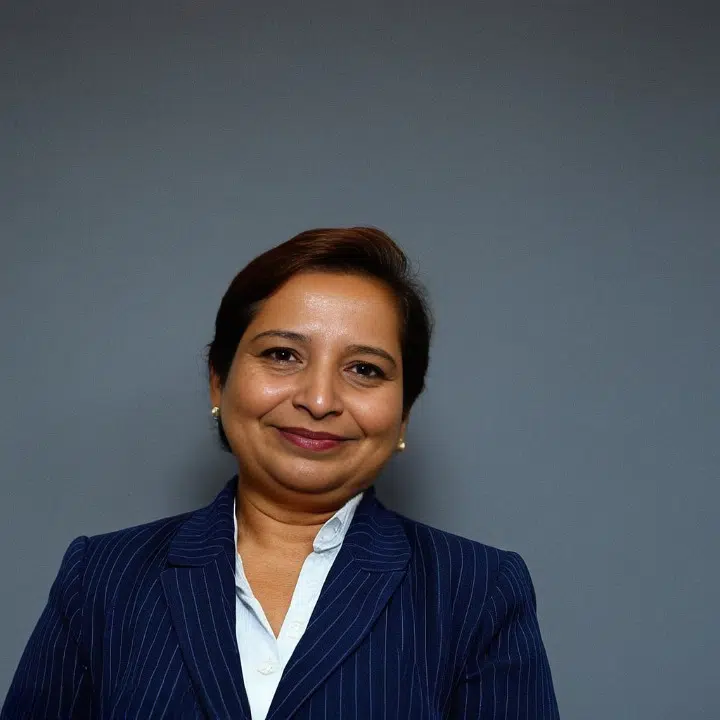
Vandana Goel, CPA
Senior CPA. Manages tax planning for Oakville professional corporations, multi-property real estate structures and family-owned business groups. Experienced in associated corporation analysis, GRIP/LRIP calculations, section 85 rollovers and LCGE preparation for business exits.
What Oakville Clients Say About Us
900+ five-star reviews from business owners across Oakville, Halton Region and Ontario.
10 Advanced Tax Planning Strategies for Oakville Businesses
1. Optimize the Salary-Dividend Mix Annually
The optimal salary/dividend split changes every year. An Oakville management consultant who switched from 100% dividends to a 60/40 salary-dividend split created $54,000 in annual RRSP room after 12 years of zero RRSP contributions, established CPP contribution history and reduced combined corporate and personal tax by $11,400. We calculate both scenarios for every client annually.
2. Protect the Full Small Business Deduction ($500,000 at 12.2%)
The SBD saves $71,500 on $500,000 of active business income. Passive investment income above $50,000, taxable capital above $10 million and associated corporation rules all erode the SBD. Oakville professional practices and consulting firms with significant retained earnings and diversified investment portfolios are the most vulnerable. We monitor all three thresholds quarterly.
3. Establish a Holding Company for Asset Protection and SBD Preservation
A holdco receives inter-company dividends tax-free (section 112), invests them separately and isolates passive income from the SBD. For Oakville professionals, the holdco protects accumulated wealth from malpractice claims and client disputes. For real estate investors, the holdco separates rental properties from operating company creditors. We establish holdco structures for every qualifying Oakville client before the passive income threshold is breached.
4. Implement the Annual Sell-and-Rebuy Strategy for Passive Income
If the operating company holds investments generating more than $50,000 in annual passive income, sell the portfolio before year-end and repurchase immediately. Combined with a holdco dividend strategy, this reduces the operating company's passive income below the $50,000 threshold. We see this most frequently with established Oakville consultants and healthcare professionals who built diversified portfolios inside their professional corporations over 10 to 20 years of practice without anyone flagging the SBD erosion.
5. Multiply the Lifetime Capital Gains Exemption Through Family Share Classes
Each family member holding qualifying shares can claim their own LCGE ($1,281,866 in 2025). An Oakville technology company with two founders who each issue non-voting shares to their spouse creates four LCGE claims. On a $4.2 million sale, the combined exemption shelters the full gain. The shares must be held 24 months and the corporation must pass the 90% active asset test. We prepare shares for LCGE eligibility years before the exit.
6. Maximize SR&ED Tax Credits
Oakville technology companies and engineering firms that develop new products, improve processes or create proprietary software qualify for SR&ED credits. Eligible CCPCs recover up to 35% of qualified expenditures as a refundable credit. An Oakville software company with $95,000 in eligible developer salaries and cloud infrastructure costs recovered $33,250. We identify eligible activities and prepare the T661 claim.
7. Utilize the Capital Dividend Account (CDA)
When the corporation realizes a capital gain, 50% is added to the CDA. Life insurance proceeds also increase the CDA. Capital dividends paid from the CDA to shareholders are received completely tax-free via Form T2054. We track the CDA for every Oakville client. Real estate investors who sell a rental property or business owners who sell a division often generate capital gains without realizing half the gain can be distributed tax-free through the CDA.
8. Time Bonus Accruals Across Two Tax Years
Declare a management bonus before fiscal year-end and pay within 179 days. The bonus is deductible in the current corporate year but included in personal income in the following calendar year. This is particularly effective for Oakville consulting firms and professional practices where annual income is predictable but the owner wants to smooth personal tax obligations across calendar years or time income around a significant RRSP contribution.
9. Evaluate an Individual Pension Plan (IPP) for Owners Over 40
An IPP is a defined benefit pension for a single employee (the business owner). Contributions exceed RRSP limits for owners over 40 with employment income history. A 55-year-old Oakville business owner can contribute $14,000 to $18,000 more per year through an IPP than through an RRSP. Past service contributions create a significant one-time deduction. Creditor protection under pension legislation applies.
10. Review and Restructure Associated Corporations
Oakville business owners frequently operate multiple related entities: professionals with a professional corporation and a separate property holding company, consulting firm partners with one corporation per practice area, real estate investors with one corporation per property group and family businesses with a dormant entity that was never dissolved. Associated corporations share the $500,000 SBD. We review all relationships, allocate the SBD to the highest-income entity and evaluate whether amalgamation or wind-up would maximize the total tax benefit.
Oakville Corporate Tax Planning. Written Tax Structure. Two Reviews Per Year.
Gondaliya CPA builds corporate tax plans for Oakville businesses. SBD optimization, salary/dividend, holdco, LCGE, passive income. Serving Oakville virtually. 900+ five-star reviews.