



Bookkeeping for Healthcare
Monthly bookkeeping built for physicians, dentists, veterinarians, physiotherapists and healthcare clinics. OHIP reconciliation, clinic payroll, HST-exempt classification, equipment tracking, associate compensation, financial statements with healthcare KPIs. From $100/month. 1450+ five-star reviews.
Why Healthcare Bookkeeping Is Different from Every Other Industry
A general bookkeeper records transactions. A healthcare bookkeeper must also reconcile OHIP remittance advice against billings, classify every service as HST-exempt, taxable or zero-rated, track associate compensation by fee-split arrangement, separate personal purchases from clinic expenses, maintain equipment CCA schedules on $50,000+ in dental chairs and imaging machines, and produce financial statements that show overhead ratio, net collection rate and revenue per provider. If any of these are done incorrectly, the consequences range from CRA reassessment to bank loan denial.
We provide bookkeeping services structured specifically for healthcare practices. Every transaction categorized correctly. Every OHIP payment reconciled. Every associate payment documented. Every HST return filed with the correct exempt and taxable classification. Monthly financial statements delivered within 15 days of month-end with healthcare-specific KPIs. CRA audit defence is FREE for every client, every year.
Book Free Consultation
Healthcare Bookkeeping Challenges a General Bookkeeper Cannot Handle
| Challenge | What Goes Wrong with a General Bookkeeper | What We Do Differently |
|---|---|---|
| OHIP billing reconciliation | OHIP payments are recorded as a lump deposit without reconciliation to the billing claim. Clawbacks, threshold adjustments, after-hours premiums and shadow billing amounts are missed. Revenue per books does not match OHIP remittance advice. CRA asks questions. | OHIP remittance advice reconciled to billings monthly. Every clawback tracked. Fee-for-service, capitation and blended payment models categorized correctly. Revenue matches CRA filings. |
| HST-exempt service classification | General bookkeeper claims ITCs on all expenses. Most medical and dental services are HST-exempt: you do not charge HST and you cannot claim ITCs on related expenses. Claiming ITCs on exempt-service expenses creates a CRA reassessment for every dollar claimed incorrectly. | Every service classified as exempt, taxable or zero-rated at setup. Expenses apportioned for mixed practices (e.g., physician with cosmetic procedures). ITCs claimed only on taxable-service-related expenses. HST return filed correctly every period. GST/HST Filing → |
| Associate fee-split tracking | Associate payments recorded as a generic expense without linking to the associate's billings. T4A slips not issued. No documentation supporting the independent contractor classification. CRA reclassification risk for every associate relationship. | Associate billings tracked individually. Fee-split calculated per the associate agreement. Payments recorded and linked to billings. T4A slips issued annually. Employment vs. contractor classification reviewed for each associate. Healthcare Services → |
| Clinic payroll complexity | Receptionists, hygienists, dental assistants, nurses, technicians, lab staff, shift workers. General bookkeeper misses split shifts, overtime calculations, statutory holiday pay for 7-day-a-week clinics, and employer CPP/EI tracking as overhead. | Payroll for all clinic staff processed per pay period. CPP/EI/tax calculated. Remittances filed on time. T4 slips prepared. Split shifts and overtime tracked. ROEs filed for departing or seasonal staff. $125/month first + $75 each additional. |
| Equipment CCA schedules | Dental chairs ($15,000+), X-ray machines ($40,000+), imaging equipment ($80,000+), operatory buildouts ($100,000+). General bookkeeper expenses everything or assigns the wrong CCA class. Immediate Expensing ($1,500,000 CCPC limit) not claimed. | Every asset classified in the correct CCA class. Immediate Expensing claimed on qualifying purchases. Leasehold improvements tracked in Class 13. Disposal gains and recapture calculated on equipment upgrades. |
| Professional fees and regulatory costs | CMPA premiums (physicians), RCDSO annual fees (dentists), CVO fees (vets), liability insurance, professional development costs mixed in with general expenses or missed entirely. These are deductible business expenses that must be categorized correctly. | Regulatory college fees, malpractice premiums (CMPA, CNPS), liability insurance, professional development costs tracked as separate line items. Each expense categorized correctly for the T2 return. |
| Personal expenses through the clinic | Owner's personal groceries, gas, phone, meals, childcare paid through the clinic bank account. General bookkeeper records as a business expense. CRA adds every personal expense to the shareholder's income if not documented as a shareholder loan. | Every personal expense flagged and recorded as a shareholder loan. Shareholder loan balance tracked monthly. Repayment plan established before the s.15(2) deadline. Owner advised of the running balance every month. |
What You Receive Every Month
| Deliverable | Details | Why Healthcare Practices Need This |
|---|---|---|
| Income statement by category | Revenue broken down by: OHIP fee-for-service, OHIP capitation, private pay, cosmetic procedures, associate billings. Expenses broken down by: staff wages, supplies, rent, insurance, regulatory fees, equipment, professional development. | Shows exactly where revenue comes from and where costs accumulate. Identifies if one revenue stream is declining or if a cost category is growing disproportionately. |
| Balance sheet | Current assets, long-term assets (equipment at net book value), current liabilities, long-term liabilities, shareholder equity, retained earnings, shareholder loan balance. | Shows the financial position of the practice. Banks require this for loan applications. The shareholder loan balance tells you exactly how much the owner has withdrawn. |
| Overhead ratio | Total operating expenses (excluding owner compensation) divided by gross revenue. Physician target: 55% to 65%. Dental target: 60% to 70%. | The single most important KPI for healthcare profitability. Above target: costs are eating into income. Below target: the practice is running efficiently. |
| Net collection rate | Amount collected divided by amount billed (after adjustments). Target: above 95%. | Below 95% means revenue is leaking: OHIP clawbacks, uncollected patient balances, insurance denials, billing errors. We identify the source of the leak. |
| Revenue per provider | Total revenue generated by each physician, dentist or provider in a multi-provider clinic. Benchmarked monthly. | Identifies underperforming providers. In a 3-dentist practice, if one dentist generates $180,000 and another generates $90,000, the financial statements show it immediately. |
| Staff cost as % of revenue | Total wages + employer CPP/EI + benefits divided by revenue. Target: 20% to 30%. | Above 30%: overstaffed relative to revenue or paying above market. Below 20%: may be understaffed (burnout risk). We track monthly and flag deviations. |
| OHIP reconciliation summary | OHIP billed vs. OHIP received. Clawbacks itemized. Shadow billing identified. Discrepancies resolved. | OHIP does not always pay what you bill. Without monthly reconciliation, the gap between billed and received grows unnoticed. We catch discrepancies within 30 days. |
| Shareholder loan balance | Running total of all personal withdrawals, personal expenses paid by the clinic, and repayments. Updated monthly. | The owner sees the exact balance every month. No surprises at year-end. Repayment plan triggered before the s.15(2) deadline. Prevents $26,765+ in unexpected personal tax on a $50,000 balance. |
Financial Statements Delivered Within 15 Days of Month-End. Every month. Income statement, balance sheet, overhead ratio, collection rate, revenue per provider, staff cost %, OHIP reconciliation and shareholder loan balance. This is what separates healthcare-specific bookkeeping from a general bookkeeper who sends you a QBO report with no analysis.
HST Classification for Healthcare: The #1 Bookkeeping Mistake
| Service Type | HST Status | Can You Claim ITCs? | Common Error |
|---|---|---|---|
| Physician services (OHIP-insured) | Exempt | No | General bookkeeper claims ITCs on rent, supplies and equipment. CRA reassesses every ITC claimed. |
| Dental services (most treatments) | Exempt | No | Same error. Dental lab fees, supplies, staff wages related to exempt services: no ITCs. |
| Cosmetic procedures (medical/dental) | Taxable (13%) | Yes (on related expenses only) | Not charging HST on cosmetic. Or claiming ITCs on all expenses when only cosmetic-related ITCs qualify. |
| Physiotherapy | Exempt | No | Claiming ITCs on clinic expenses. All ITCs must be reversed if all services are exempt. |
| Veterinary services | Taxable (13%) | Yes (full ITCs) | NOT registering for HST. Vet clinics should always register because full ITCs are available on all expenses. |
| Pharmacy (prescription drugs) | Zero-rated (0%) | Yes (full ITCs) | Not filing monthly for monthly refund cheques. Zero-rated produces refunds. File monthly. |
| Optometry (basic eye exams) | Exempt | No on exams. Yes on taxable eyewear. | Not apportioning expenses between exempt exams and taxable eyewear sales. |
A General Bookkeeper Who Claims ITCs on Exempt Healthcare Services Creates a CRA Liability. If your medical or dental practice provides only exempt services and your bookkeeper has been claiming ITCs, you owe CRA every dollar claimed plus interest. On a practice with $150,000 in annual expenses: $19,500 in incorrectly claimed ITCs per year. Over 3 years before CRA catches it: $58,500 owing plus interest and penalties. We classify every service and expense correctly from day one. Healthcare Services →
Healthcare Bookkeeping Client Results
Family Physician, Toronto (OHIP Reconciliation)
A family physician with $310,000 in OHIP billings was receiving $294,000 in OHIP payments but the previous bookkeeper was recording deposits without reconciliation. We identified $8,200 in unreconciled clawbacks across 2 years: $4,600 in threshold payment adjustments that should have been billed differently and $3,600 in after-hours premiums not captured. After reconciliation, the physician rebilled $4,600 in adjustable claims and documented the remainder. Net recovery: $4,600. Monthly OHIP reconciliation now prevents future discrepancies. Bookkeeping Services →
Dental Practice, Mississauga (HST Correction)
A dental practice with $720,000 in revenue and 5 staff had a general bookkeeper who claimed $14,400/year in ITCs on all clinic expenses. Dental services are HST-exempt: zero ITCs allowed on related expenses. We identified $43,200 in incorrectly claimed ITCs over 3 years. We self-corrected by filing amended HST returns before CRA initiated an audit, avoiding the 5% gross negligence penalty ($2,160). The practice now files HST correctly with $0 ITCs on exempt services. Healthcare Services →
Veterinary Clinic, Guelph (HST Registration + ITCs)
A veterinary clinic with $230,000 in revenue was not registered for HST because the previous accountant told them "healthcare is exempt." Veterinary services are taxable (13% HST), not exempt. The clinic had been absorbing HST on all expenses for 3 years without claiming any ITCs. We registered for HST, filed retroactive returns for 3 years and recovered $28,800 in unclaimed ITCs ($9,600/year on $74,000 in annual expenses). Monthly HST filing now produces regular ITC refund cheques on periods where equipment purchases or large supply orders are made.
Multi-Provider Clinic, Hamilton (Per-Provider Reporting)
A 4-provider medical clinic with $1,200,000 in combined revenue had no per-provider financial tracking. One physician was generating $420,000 in revenue. Another was generating $180,000 but using the same clinic resources. The owners did not know because the general bookkeeper reported total revenue only. We implemented per-provider revenue tracking, overhead allocation and collection rate monitoring. Within 6 months, the underperforming provider increased billings by 35% ($63,000) after seeing the data. The clinic's overall overhead ratio dropped from 72% to 64%. Bookkeeping Services →
Healthcare Bookkeeping Pricing
| Service | Fee | What Is Included |
|---|---|---|
| Monthly bookkeeping | From $100/month | OHIP/fee reconciliation, bank reconciliation, expense categorization (clinic-specific chart of accounts), HST classification and filing, monthly financials with overhead ratio, collection rate, revenue per provider, shareholder loan tracking. |
| Clinic payroll (first employee) | $125/month | Pay stubs, CPP/EI/tax, remittances, T4 prep, ROE. Receptionists, hygienists, assistants, nurses, technicians. |
| Clinic payroll (each additional) | $75/month | Same per additional. Dental clinic with 6 staff: $125 + (5 x $75) = $500/month. |
| Bookkeeping cleanup (catch-up) | From $200/month of backlog | Bank reconciliation, expense categorization, HST correction, OHIP reconciliation, shareholder loan reconstruction for missed months or years. |
| T2 corporate tax return | From $400 | Professional corporation compliance. Equipment CCA. Salary-dividend optimization. LCGE planning. Holdco coordination. |
| CRA audit defence | FREE (all clients) | HST reassessment, income audit, associate classification dispute. Full representation. Every audit, every year. |
Example: Solo Dentist, 4 Clinic Staff. Bookkeeping $100/month + payroll $350/month (1 first + 3 additional) = $450/month. T2 from $400. CRA audit defence FREE. OHIP reconciliation, HST filing, monthly financials with all healthcare KPIs included. The cost of one HST ITC error (see dental case study: $43,200 over 3 years) exceeds 8 years of bookkeeping service. Know Your Exact Fee →
How We Set Up Healthcare Bookkeeping
Assess
Review your practice type, services offered, HST status, OHIP or fee-for-service model, number of providers, staff count, associate arrangements and existing bookkeeping state.
Configure
QBO or Xero set up with healthcare chart of accounts. Revenue categories: OHIP, private pay, cosmetic. Expense categories: staff, supplies, rent, insurance, regulatory, equipment. Bank feeds connected.
Reconcile
Monthly: OHIP remittance to billings. Bank to POS/billing system. Associate payments to agreements. Equipment CCA schedule maintained. Shareholder loan tracked.
Report
Monthly financial package within 15 days: income statement by category, balance sheet, overhead ratio, collection rate, revenue per provider, staff cost %, OHIP reconciliation. CRA audit defence active.
Healthcare Practices We Serve
Frequently Asked Questions: Healthcare Bookkeeping
Meet Your Experts

Sharad Gondaliya, CPA
Founder & Managing Director
Gondaliya CPA Professional Corporation
Sharad leads healthcare accounting strategy: MPC/DPC/VPC incorporation, salary-dividend optimization, holdco planning, CRA audit defence and associate compensation structuring for healthcare practices.
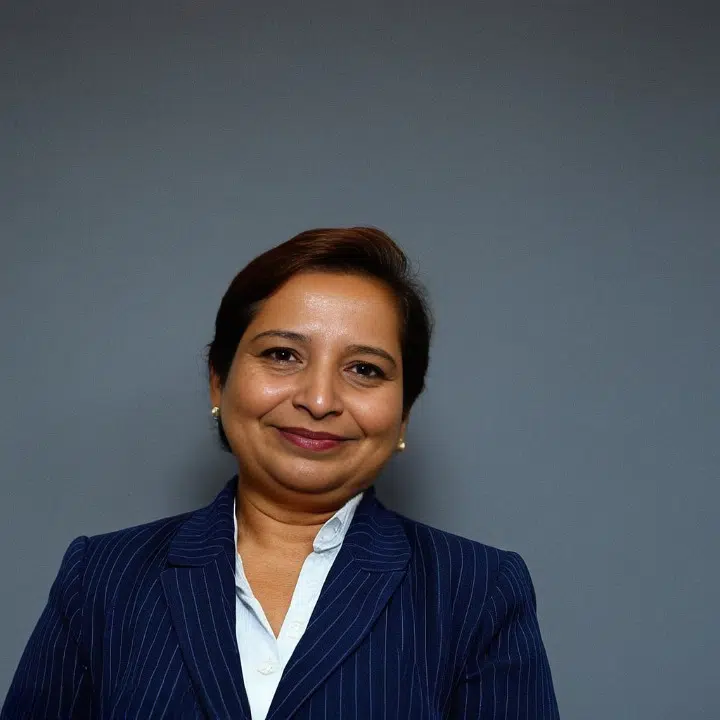
Vandana Goel, CPA
Senior Accountant
Gondaliya CPA Professional Corporation
Vandana manages monthly bookkeeping, OHIP reconciliation, HST filing, clinic payroll, equipment CCA schedules and financial statement preparation for healthcare clients.
What Our Clients Say
1450+ five-star reviews from business owners across Ontario and Canada.
Healthcare Bookkeeping from $100/Month.
OHIP reconciliation, clinic payroll, HST-exempt classification, equipment tracking, monthly financials with healthcare KPIs. Everything your practice needs. 1450+ five-star reviews.