



Tax Accountant for Driving Schools in Ontario and Across Canada
We charge HST correctly across your mixed instruction — standard car lessons and MTO-approved BDE courses are taxable at 13%, while a commercial or truck-driving course that leads to a vocational licence can be exempt — so we split your taxable and exempt revenue and apportion your input tax credits, put your dual-control training cars in the accelerated CCA Class 16 at 40% instead of the ordinary Class 10 at 30%, defer your prepaid BDE course and lesson-package fees until the lessons are actually delivered, run your instructor payroll with WSIB and MTO records straight, and plan the tax on your school. Whether you run an in-car and classroom BDE school, a truck or commercial driver-training academy, a motorcycle or defensive-driving school or a multi-instructor operation, we handle the school books, the taxable-versus-exempt HST split with full input tax credits, the Class 16 vehicle depreciation, the deferred course-fee accounting and the instructor payroll, and plan the salary, dividends and eventual sale of your company — with AFFORDABLE flat fees.
AFFORDABLE Driving School Tax Accountant
A driving school has two tax quirks most accountants miss. Your HST is not one rate for everything: standard car lessons and BDE courses are taxable at 13%, but a commercial or truck-driving course that leads to a vocational licence can be exempt under Schedule V, Part III of the Excise Tax Act, so a school running both must split its revenue and apportion input tax credits. And your dual-control training cars are specifically named in CCA Class 16 at 40%, a much faster write-off than the ordinary Class 10 at 30% most preparers default to. That is why you need a driving school accountant who knows the trade. At Gondaliya CPA, we specialize in taxable-versus-exempt HST, Class 16 vehicle depreciation, deferred course-fee accounting and corporate tax planning for driving schools, providing AFFORDABLE flat-fee support that keeps you CRA-compliant and stops you paying more tax than you owe.
As an in-car, classroom and commercial driver-training accountant, we work with BDE schools, truck and motorcycle training academies, defensive-driving schools and multi-instructor operations across Ontario, with year-round support rather than a once-a-year scramble. We tell you plainly what you can deduct, what you cannot, and where the real profit sits on each course and lesson package.
Let us handle the numbers so you can focus on the work that actually pays you.
Our Official Partners









Accounting That Understands How a Driving School Actually Works
Running a driving school comes with financial pressures a desk-bound company never faces. Your standard car lessons and BDE courses are taxable while a commercial course leading to a vocational licence can be exempt, your prepaid course and package fees are collected long before the lessons are delivered, and your dual-control cars, fuel, maintenance, commercial insurance and licensed instructors all have to be costed and classed. At Gondaliya CPA, we understand the financial reality of a driving school and provide practical, trade-focused solutions across the GTA and all of Ontario.
Stay Compliant and Minimize Your Driving School Tax
For a driving school, staying onside with CRA, MTO and WSIB and paying the least legal tax are the same job. We keep every filing on schedule while claiming every vehicle, fuel and instruction dollar the T2 allows, so nothing is missed and nothing invites a reassessment.
Accounting & Tax Experts for Driving Schools
- AFFORDABLE + Registered CPA Firm
- Business and Corporate Tax Expert
- Small & Medium Business Expert
- Accounting, bookkeeping, and tax filing
- CPA (Chartered Professional Accountant)
- 1450+ 5-star Google reviews
- 30-Day Money-Back Guarantee
- 60-Day Fees Matching Policy
Why Choose Our Accounting Services for Driving Schools?
Tax Planning — Vehicles & Class 16
We know the fleet: dual-control instruction cars in CCA Class 16 at 40% rather than the ordinary Class 10 at 30%, classroom leaseholds in Class 13, and the fuel, maintenance and commercial insurance that carry input tax credits. We protect the $500,000 Small Business Deduction and the near-11.2% Ontario rate (from July 1, 2026).
Consulting — HST Split & Deferred Revenue
Our bookkeeping splits taxable car lessons from exempt commercial courses, apportions input tax credits, and holds prepaid BDE course and package fees in deferred revenue until the lessons are delivered. We tie your HST to revenue and show the real margin on each package.
CRA Representation — Cash-Lesson & HST Audit
When CRA reviews your cash lessons, your taxable-versus-exempt HST split, or your Class 16 vehicle claim, we prepare the response, reconcile WSIB, and pursue relief on Form RC4288 where penalties came from a prior error.
Bookkeeping — Payroll, Incorporation & Sale
We run your instructor payroll with WSIB, settle worker status under RC4110, and get you ready to scale. We model the profit level where incorporating pays off, handle the section 85 rollover, and plan the eventual sale of your school.
Google Reviews
Driving School Clients
Driving School Tax and Accounting Services in Ontario
Corporate Tax Filing (T2) for Driving Schools
Professional T2 preparation with Schedule 8 CCA on your Class 16 training cars, deferred course revenue, and CRA compliance on every line.
Bookkeeping & Accounting for Driving Schools
Taxable-versus-exempt HST, deferred course-fee and lesson-package bookkeeping with financial statements, clean records, and monthly reporting built for a driving school.
Payroll Services for Driving Schools
Licensed-instructor payroll with WSIB, PD7A remittances and T4s, plus employee-versus-contractor status under RC4110 handled correctly.
GST/HST Filing for Driving Schools
AFFORDABLE HST filing that splits taxable lessons from exempt commercial courses and apportions input tax credits, matched to your T2 to avoid CRA penalties.
Tax Planning for Driving Schools
Smart tax planning to protect the Small Business Deduction, accelerate Class 16 vehicle depreciation, time fleet purchases, and plan salary, dividends and sale.
Corporate Catch-Up Filing for Driving Schools
File overdue T2 and HST years, rebuild missing lesson, course and vehicle records, and get back into CRA compliance with accurate catch-up support.
CRA Audit Resolution for Driving Schools
Expert support for cash-lesson, HST-split and deferred-revenue audits, with indirect-verification-of-income reviews handled with confidence.
CPA Financial Statements (Notice to Reader) for Driving Schools
CPA-compiled financial statements that vehicle lenders and banks accept for your driving school corporation.
Incorporation Services for Driving Schools
Full incorporation including NUANS, articles, share structure, and the section 85 rollover from your unincorporated driving school.
Catch-Up Bookkeeping Services for Driving Schools
Rebuild months of unrecorded lesson income, prepaid BDE package fees and vehicle expenses into clean, deferred-revenue-ready books your T2 and 13% HST returns can rely on.
US Corporation & LLC Tax Filing for Driving Schools
Cross-border filing of Forms 1120, 1120-F and 5472 for driving schools with US owners or a US branch, keeping the IRS and CRA in sync.
Voluntary Disclosure Program for Driving Schools
Correct unreported cash lessons or unfiled HST through a Form RC199 disclosure before CRA calls, cancelling penalties and easing interest on prior driving-school years.
Accounting & Tax Services Tailored for Driving Schools
Real, practitioner-level CPA expertise for in-car and classroom BDE schools, truck and commercial driver-training academies, motorcycle and defensive-driving schools and multi-instructor operations across Ontario — built for how a driving school actually runs.
- We prepare your T2 with GIFI on Schedule 125 and Schedule 100, reporting taxable car-lesson revenue and exempt commercial-course fees on separate lines, so CRA’s automated matching does not flag your school and assess back tax that can run into the thousands.
- We claim capital cost allowance on Schedule 8 with your dual-control instruction cars in CCA Class 16 at 40% rather than the ordinary Class 10 at 30%; on one school this accelerated roughly $15,000 of first-year depreciation and cut the tax bill.
- Your T2 is due six months after your fiscal year-end but any balance owing is due two or three months after, so we file early and you avoid CRA arrears interest that compounds daily on a five-figure balance owing.
- We recognize prepaid BDE course and lesson-package fees as deferred revenue released as lessons are delivered, not on the sale date, so a school holding $26,000 of unearned package fees at year-end is not taxed on money it has not yet earned.
- We add your classroom or multi-location lease improvements to CCA Class 13 over the lease term and place scheduling software and office computers in Class 50 at 55%, so a $12,000 classroom build-out is deducted correctly instead of being lost.
- We set your books up in QuickBooks Online or Xero with separate revenue accounts for taxable car lessons, BDE courses and exempt commercial training, so your 13% HST ties to the right sales and you keep the six years of records section 230 requires.
- We hold prepaid course and package fees in a deferred-revenue liability in QuickBooks and release them to income as lessons are taught, because booking a $2,500 ten-lesson package as income on the sale date overstates this year’s profit and the tax on it.
- We reconcile your Square or Stripe deposits to gross lesson revenue rather than net payouts, so the processor fees of several hundred dollars a month are captured as a deduction and the 13% HST on those fees is recovered as an input tax credit.
- We capture fuel, maintenance, commercial-insurance and dual-control-equipment receipts through Dext and attach them to each vehicle, so the input tax credits on the taxable side, worth thousands a year, are never lost to a missing receipt.
- We build your chart of accounts mapped to the T2 GIFI lines and keep exempt commercial-course revenue in its own account, so year-end filing is clean and the ITC apportionment between taxable and exempt supplies survives a CRA review worth hundreds in credits.
- We set up licensed-instructor payroll in Wagepoint, withholding income tax, CPP and EI and remitting on the PD7A by the 15th of the following month, so a busy school never eats CRA’s 10% penalty on late source deductions.
- We register and reconcile your WSIB coverage where instructors are employees, filing premiums on assessable wages, so an unregistered school does not face retroactive premiums going back two years plus penalties that can exceed $10,000.
- We settle whether each instructor is an employee or an independent contractor using the CRA RC4110 factors, because misclassifying a driver CRA later rules an employee triggers back CPP, EI and penalties that can top $8,000 per worker.
- We file your T4 and T4 Summary by the last day of February and reconcile them to the PD7A, and we manage Ontario Employer Health Tax once annual payroll passes the $1,000,000 exemption, so year-end slips never trip a CRA earnings review.
- We handle the taxable-benefit and standby-charge reporting where an instructor or owner drives a school car for personal trips, so personal use of a Class 16 vehicle is added to the T4 correctly instead of being reassessed with interest on a $3,000 benefit.
- Standard car lessons and MTO-approved BDE courses are taxable at 13% HST, so we set the right code on every lesson and package and confirm you charge it, because CRA will assess tax you should have collected, with interest, on a five-figure shortfall.
- A commercial or truck-driving course leading to a vocational licence can be exempt under Schedule V, Part III of the Excise Tax Act, so we split your taxable and exempt supplies and stop you over-remitting HST — on one school this recovered $7,200.
- Because your exempt commercial courses carry no input tax credits, we apportion the 13% HST on shared fuel, insurance and premises between the taxable and exempt sides, so you claim only what the rules allow and do not hand back thousands on a CRA reassessment.
- You must register for HST once taxable revenue passes the $30,000 small-supplier threshold across four consecutive quarters, and we track the exact quarter you cross so CRA cannot assess back tax on lessons where you never charged the 13%.
- We claim the input tax credits your dual-control cars, fuel, maintenance and commercial insurance carry on the taxable side, recovering the 13% on line 108 of your return — on one school we recovered $9,400 of ITCs on two new training cars.
- We set the salary-versus-dividend mix for the owners, paying enough T4 salary to build RRSP room while the balance flows as dividends, so combined tax stays near the 11.2% Ontario small-business rate rather than your 53.53% personal rate.
- We keep your active income under the $500,000 Small Business Deduction limit using section 125, and we watch the passive-income and associated-corporation rules that can grind the limit and push income toward the higher general corporate rate.
- We time your training-car and dual-control-equipment purchases before your fiscal year-end so the Class 16 40% rate and the half-year rule give the largest first-year deduction — buying a $34,000 car in the right month can shelter over $6,000 of tax.
- We plan at least two years ahead so your shares qualify for the $1.275M Lifetime Capital Gains Exemption, purifying the company of surplus cash and non-active assets so selling your school defers tax CRA would otherwise collect on the gain.
- We use the section 85 rollover on Form T2057 when you incorporate, transferring your training fleet and goodwill at elected amounts, so a $40,000 accrued gain on the cars is deferred rather than taxed the day the corporation takes them over.
- We reconstruct lesson, course and commercial-training revenue from bank deposits, e-transfers and your scheduling software across your unfiled years and file a defensible T2 for each, so CRA cannot arbitrarily assess your school on its own estimate and overcharge you by thousands.
- Late T2 filing costs 5% of the balance owing plus 1% per month up to twelve months, so we file your oldest unfiled year first to stop the penalty compounding and limit the arrears interest CRA charges on a five-figure balance.
- We rebuild the undepreciated capital cost pools across the unfiled years so missed CCA on your Class 16 training cars, Class 13 classroom leaseholds and Class 50 software is recovered instead of surfacing later as a $10,000 reassessment.
- We file the missing HST returns and reconcile the 13% you charged on car lessons and BDE courses against what you actually remitted, so tax you collected is accounted for and CRA cannot add back tax with interest on a gap of several thousand dollars.
- We file a Voluntary Disclosures Program application on Form RC199 before CRA contacts you, because a disclosure accepted under the general program cancels penalties in full and gives 50% interest relief on the older years, often saving thousands.
- When CRA opens an audit, we manage the whole file and answer the HST-split, deferred-revenue and Class 16 vehicle queries inside the deadlines, so a review of one year does not expand into a reassessment of three prior years and a five-figure bill.
- When CRA runs indirect verification of income on a cash-heavy school, comparing bank deposits and lifestyle to reported lesson revenue, we prepare the source-and-application-of-funds reconciliation within the 30-day deadline before CRA assesses a gap that can top $20,000.
- We defend your taxable-versus-exempt HST position when CRA challenges whether a course is a genuine exempt vocational program under Schedule V, Part III, so your school is not reassessed 13% on courses that were correctly exempt, protecting thousands in tax.
- We answer deferred-revenue and cash-lesson reviews with your scheduling records, deposit history and the released-as-taught revenue schedule, because a timing position disallowed for missing records cannot be restored later at the objection stage, and the tax can reach $15,000.
- We file the Notice of Objection on Form T400A within 90 days of a reassessment and pursue taxpayer relief on Form RC4288 where a prior accountant’s error caused the penalties, protecting your right to the Tax Court on a five-figure assessment.
- We prepare the CSRS 4200 compilation engagement financial statements, the Notice to Reader a vehicle lender and a bank require across two fiscal years before they approve the $120,000-plus financing on a fleet of new dual-control training cars.
- Your compiled statement of financial position presents the deferred-revenue liability on unearned course fees, the training fleet at net book value and shareholder loans, giving a lender the working-capital picture a bare T2 cannot, so a $200,000 line is approved faster.
- We build the statement of operations with taxable lesson revenue, BDE course fees and exempt commercial-course income classified consistently across two years and tied to the T2 filed with CRA, so a lender approves the six-figure operating line rather than declining on reclassified noise.
- The CSRS 4200 communication discloses that no audit or review was performed, and without it a bank and the Business Development Bank of Canada reject the file and the $150,000 equipment loan your school needs before the lender’s conditional offer expires.
- We deliver the compiled statements within 30 days of receiving your records and the year’s T2 figures, all compiled under CSRS 4200, because a school’s vehicle-financing or lease approval collapses when the conditional offer expires first, costing you a $50,000 deal.
- We incorporate your school under the Ontario Business Corporations Act, giving you limited liability and the roughly 11.2% Ontario small-business rate on the first $500,000 of active income against the collision and liability exposure an unincorporated in-car operation never sheltered you from.
- We complete the section 85 rollover on Form T2057, transferring your dual-control cars, classroom fit-out and goodwill into the corporation at elected amounts, deferring the capital gain and recapture a straight sale of a $60,000 fleet would trigger for CRA.
- We register your WSIB coverage before the first instructor starts and confirm your MTO Driving School Licence and BDE certification carry into the corporation, because coverage is mandatory and an unregistered school faces retroactive premiums going back two years topping $10,000.
- We open the corporation’s CRA Business Number, HST and payroll accounts within the first 30 days, set the source-deduction remittance schedule, and close the old accounts so your school never remits the same lesson revenue twice or double-pays a $5,000 balance.
- We structure common and non-voting share classes and set the first fiscal year-end up to 53 weeks after incorporation, so dividends can later be split among family shareholders and the first T2 and CRA balance-due date are deferred, saving several thousand dollars.
- We rebuild months or years of missing driving-school books from bank deposits, e-transfers and your scheduling app, sorting taxable car lessons, MTO-approved BDE courses and exempt commercial training so your catch-up ledgers reconcile to the 13% HST you handled.
- We reconstruct the deferred-revenue liability for prepaid lesson packages and unearned BDE course fees, so a school sitting on $24,000 of unearned packages when the books were abandoned is not back-taxed on income it had not yet earned.
- We recover the vehicle, fuel, commercial-insurance and dual-control-equipment receipts that were never entered through Dext, so the input tax credits on the taxable side, often thousands of dollars a year, are captured before the catch-up HST returns are filed.
- We reconcile abandoned Square and Stripe payout records back to gross lesson revenue rather than net deposits, so several hundred dollars a month of processor fees are booked as a deduction and the 13% HST on them is reclaimed.
- We hand back a clean set of monthly financial statements and a chart of accounts mapped to the T2 GIFI lines, so your driving school walks into year-end filing current, audit-ready and confident the six-year record rule under section 230 is met.
- If your driving school is a US C-corporation, we prepare Form 1120 and reconcile it to your Canadian T2, so income from cross-border lesson and BDE course operations is reported once and neither the IRS nor CRA double-taxes the same dollar.
- Where a Canadian driving school runs a US branch or teaches lessons across the border, we file Form 1120-F to report US-effectively-connected income and claim treaty protection, so only the profit truly earned in the United States is taxed there.
- When a US parent or US shareholder owns your school, we file Form 5472 to disclose reportable transactions such as intercompany loans and management fees, because a missed 5472 carries a $25,000 IRS penalty per form that dwarfs the filing cost.
- We claim foreign tax credits on both returns so US tax paid on your driving-school income offsets Canadian tax, and we set the dual-control fleet’s US depreciation against its Class 16 CCA so the vehicles are not written down twice incorrectly.
- If you teach through a US LLC, we handle its hybrid treatment, because an entity CRA sees as a corporation and the IRS treats as flow-through can strand your foreign tax credits and expose several thousand dollars of driving-school income to double tax.
- We prepare your Voluntary Disclosures Program submission on Form RC199 and get it in before CRA opens a review, because a valid disclosure under the general program wipes out penalties entirely and cuts the interest on your school’s older unreported years in half.
- We disclose unreported cash lessons and under-the-table BDE course fees with a reconstructed source-and-application-of-funds schedule, so a school that under-reported roughly $40,000 of cash income comes clean on its own terms instead of facing an indirect-income CRA audit.
- We correct unfiled or understated HST where you charged 13% on car lessons and BDE courses but never remitted it, disclosing the shortfall through the VDP so the tax you collected is settled without the steep penalties a CRA discovery would add.
- We assess whether your situation belongs in the general program or the limited program that still charges some penalties, so your driving school’s disclosure is pitched correctly the first time and is not rejected for being incomplete or not truly voluntary.
- We can open the disclosure on a no-names basis to gauge CRA’s position first, then file the corrected T2 and HST returns and unreported vehicle and payroll amounts together, so your school resolves several years of exposure in one controlled filing.
Driving School Tax & HST Check
Six quick questions on your taxable-versus-exempt courses, HST, Class 16 vehicles, prepaid course fees, instructor pay and whether it is time to incorporate. No fee shown.
1. Do you split taxable car lessons from exempt commercial courses?
2. Are you registered for HST and charging 13% on car lessons?
3. Are your dual-control training cars in CCA Class 16?
4. Are prepaid BDE course and package fees held as deferred revenue?
5. Are your instructors set up correctly as T4 employees or contractors?
6. Is your driving school incorporated?
Free CPA Consultation for Driving Schools
Case Studies: Driving School Accounting & Tax
Toronto Driving School — Class 16 Vehicles & Deferred Fees
The problem: A Toronto in-car and classroom school was depreciating its dual-control training cars as ordinary Class 10 vehicles at 30%, missing the accelerated Class 16 rate of 40% written for driving-instruction cars, and had never claimed the input tax credits on fuel, maintenance and commercial insurance. Prepaid BDE course and lesson-package fees were booked as income on the day the student paid, inflating profit and the tax on it.
What we did: We reclassified the fleet to CCA Class 16 at 40%, captured the missed 13% ITCs on fuel, insurance and dual-control equipment, and moved prepaid course fees into a deferred-revenue liability released as lessons were actually delivered.
The result:
- Accelerated about $15,000 of first-year CCA on the fleet
- Recovered $6,300 of previously missed input tax credits
- Deferred $26,000 of prepaid BDE fees to the right year
Mississauga Driving School with Truck Training — HST Split & Incorporation
The problem: A Mississauga school offering both car lessons and commercial truck-driving courses was charging 13% HST on every course, including the commercial truck-driving program that led to a vocational licence and qualified as exempt vocational training under Schedule V, Part III of the Excise Tax Act. It was over-remitting HST, claiming input tax credits with no apportionment, and running as a sole proprietor with margins taxed at the top personal rate.
What we did: We split taxable car lessons from the exempt commercial courses, corrected the HST filings, apportioned the ITCs, and incorporated the school via a section 85 rollover so active income fell under the $500,000 Small Business Deduction near 12.2%.
The result:
- Recovered $7,200 of over-remitted HST on exempt courses
- Corrected ITC apportionment across taxable and exempt sides
- Incorporated at the 12.2% small-business rate
Ottawa Multi-Instructor School — Worker Status & Clean Books
The problem: An Ottawa multi-instructor school was paying all of its instructors as “contractors” with no basis for the call, exposing the corporation to back CPP, EI and penalties if CRA reclassified them, and had no WSIB coverage in place. Cash lessons went untracked, prepaid packages were booked on payment, and the books could not stand up to an indirect-verification-of-income review.
What we did: We assessed each instructor against the CRA RC4110 factors and set the correct employee-versus-contractor status, registered WSIB, and rebuilt clean cash and deferred-revenue books in QuickBooks Online with every lesson deposit and package captured, so the file is audit-ready.
The result:
- Worker status set under RC4110 with WSIB registered
- Cash lessons and deposits fully reconciled
- Deferred-revenue books built and audit-ready
Our clear, efficient process ensures every step is transparent, building trust and long-term client relationships.
Kickoff (Document Request)
Collect prior T2 returns, HST filings, course and lesson price lists, prepaid-package records, training-vehicle and equipment list, instructor payroll and MTO/BDE records, and bank statements.
First 30 Days (Cleanup & Setup)
Set up QuickBooks Online or Xero, split taxable and exempt revenue, build deferred-revenue and Class 16 vehicle schedules, and configure payroll and WSIB tracking.
Monthly Close
Monthly reconciliations, receipt capture, HST split and ITC apportionment, and deferred course-fee tracking.
Quarterly Planning Review
Salary and dividend mix, HST and deferred-revenue review, Class 16 vehicle purchase timing, and incorporation break-even check.
Year-End Close & T2 Filing
Trial balance, financial statements with deferred revenue and the training fleet, T2 with GIFI, and CRA preparation.
Get Your Driving School Taxes Done Right Today
Affordable Pricing for Driving Schools
We believe in clear, upfront pricing so you know exactly what to expect. All fees include HST.
- Tax Preparation (Corporation) — From $400
- Tax Return Filing (Corporation) — From $400
- Tax Compliance Audit — FREE CRA audit support for our clients
- Tax Strategy — FREE for our clients
- Accounting Base Plan — From $100 per month
- Bookkeeping Management — Free for our Accounting clients
- Financial Reporting — Free for our Accounting clients
- Business Formation — Flat $35
- Incorporation Process — Flat $35
- Entity Setup Assistance — Flat $35
- Full-Service Payroll — From $125 per month
Payment is by Interac e-Transfer to info@gondaliyacpa.ca only. Security question: Not Applicable, as auto-deposit is enabled.
Read our Pricing Transparency Promise — full and final flat fees, HST included, shown in 2 minutes.
Meet Your Lead Driving School Accountant
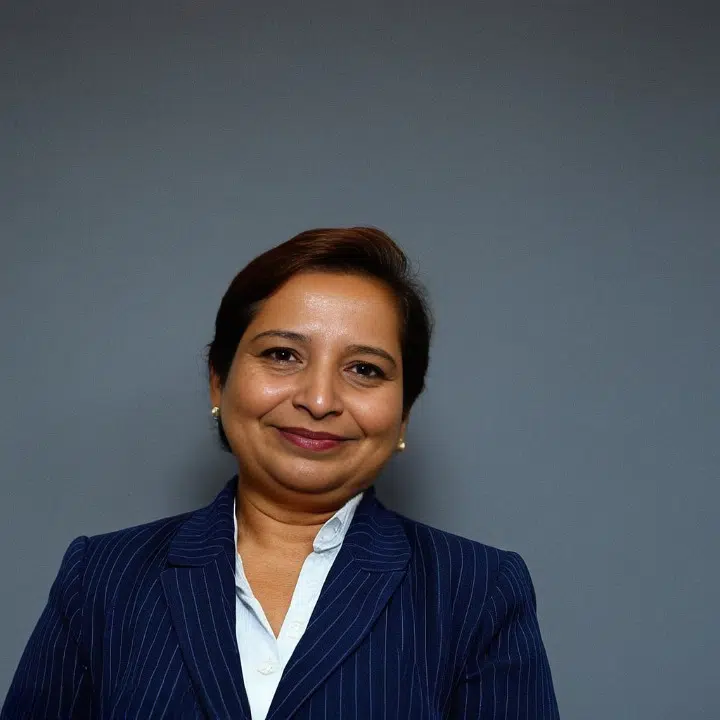
Meet your lead driving school accountant. As your driving school and corporate tax adviser, you deal with the same two people every year.

What Our Clients Say
1450+ five-star reviews from driving school and small-business owners across Ontario and Canada.
Serving Driving Schools Across Ontario
Our CPA team provides specialized accounting and tax solutions for driving schools throughout Ontario. We understand how taxable car lessons, exempt commercial courses, prepaid packages and a training-vehicle fleet actually flow through a school, what CRA looks at on a cash-intensive file, and how to put your instruction cars in the right CCA class.
Toronto (ON)
55 Queen St E Ste 1205, Toronto, ON M5C 1R6, Canada
+1 (647) 212-9559
9:00 AM – 8:30 PM (Mon – Sun)
Mississauga (ON)
2100 Camilla Rd #716, Mississauga, ON L5A 2J8
+1 (647) 212-9559
9:00 AM – 8:30 PM (Mon – Sun)
Brampton (ON)
4 Starhill Crescent, Brampton, ON L6R 2P9, Canada
+1 (647) 212-9559
9:00 AM – 8:30 PM (Mon – Sun)
Scarborough (ON)
24 Clementine Square, Scarborough, ON M1G 2V7, Canada
+1 (647) 212-9559
9:00 AM – 8:30 PM (Mon – Sun)
Vaughan (ON)
19 Cabinet Crescent, Woodbridge, ON L4L 6H9, Canada
+1 (647) 212-9559
9:00 AM – 8:30 PM (Mon – Sun)
Oshawa (ON)
210 Durham St, Oshawa, ON L1J 5R3, Canada
+1 (647) 212-9559
9:00 AM – 8:30 PM (Mon – Sun)
Ottawa (ON)
2090 Neepawa Ave a314, Ottawa, ON K2A 3L6, Canada
+1 (647) 212-9559
9:00 AM – 8:30 PM (Mon – Sun)
Etobicoke (ON)
60 Stevenson Rd #1601, Etobicoke, ON M9V 2B4, Canada
+1 (647) 212-9559
9:00 AM – 8:30 PM (Mon – Sun)
Hamilton (ON)
70 Starling Dr, Hamilton, ON L9A 0C5, Canada
+1 (647) 212-9559
9:00 AM – 8:30 PM (Mon – Sun)
Guelph (ON)
1155 Gordon St, Guelph, ON N1L 1S8, Canada
+1 (647) 212-9559
9:00 AM – 8:30 PM (Mon – Sun)
Windsor (ON)
4387 Guppy Ct, Windsor, ON N9G 2N8, Canada
+1 (647) 212-9559
9:00 AM – 8:30 PM (Mon – Sun)
North York (ON)
150 Graydon Hall Dr #912, North York, ON M3A 3B2, Canada
+1 (647) 212-9559
9:00 AM – 8:30 PM (Mon – Sun)
Driving School Accounting & Tax FAQs
Related Industries We Serve
Accountant for Car Rental Businesses
- Vehicle fleet CCA and financing
- HST, ITCs and bookkeeping
- Corporate tax planning and filing
Accounting for Small Businesses
- Corporate tax planning for small businesses
- Business tax filing and financial statements
- Payroll and bookkeeping services
Accountant for Incorporated Businesses
- T2 corporate returns and GIFI
- Salary, dividend and SBD planning
- Compilation statements and incorporation
Accounting for Self-Employed
- Tax planning for self-employed owners
- T2125 filing and CRA compliance
- Bookkeeping and HST support
Driving School Accounting & Tax Done Right.
T2 filing, taxable-versus-exempt HST with ITC apportionment, Class 16 training-vehicle CCA, deferred course and package revenue, instructor payroll with WSIB and worker-status calls, and the incorporation decision under one roof. AFFORDABLE flat fees, no hourly billing. Registered CPA Ontario. 1450+ five-star reviews. 30-Day Money-Back Guarantee.