



Tax Accountant for Adventure Tourism Businesses in Ontario and Across Canada
An adventure tourism business is a fleet of depreciating gear and a payroll of seasonal people, and both have to be paid for out of a season that might run fourteen weeks. We carry twelve months of insurance, storage, lease and financing against the weeks that actually earn, report revenue per guide day and utilisation for every major asset, and split the boats, racks and base equipment into Class 8 at 20% while the booking computers sit in Class 50 at 55%. We hold booking deposits as deferred revenue until the trip runs, send a weather cancellation back against that liability rather than against the month’s sales, keep an unused guest credit on the books as the obligation it is, and test your guides on the employee-versus-contractor factors before CRA does. Whether you run paddling and rafting, climbing and backcountry guiding, snowmobile and winter touring, or multi-day expeditions, we handle the fleet, the crew and the season — with AFFORDABLE flat fees.
AFFORDABLE Adventure Tourism Tax Accountant
An adventure tourism business is two things at once, and the accounting has to see both. It is a fleet: the kayaks, the climbing racks, the sleds, the trailer and the van cost money whether or not a single guest books, and they keep costing it through every week of the off-season. It is also a payroll of people who arrive in May and are gone by October. Both have to be paid for out of a season that might be fourteen weeks long, and none of the twelve-month costs shorten themselves to match. Everything else follows from that compression: what the gear is actually earning, what a guide day costs once training and certification are loaded in, and whether the shoulder weeks are carrying the winter or quietly being paid for by it. At Gondaliya CPA, we build the costing around the season and the fleet, with AFFORDABLE flat-fee support that keeps you CRA-compliant and stops you paying more tax than you owe.
Then there are the two entries that trip almost every set of books in this trade. Deposits arrive long before a trip runs and are not income until it does, and when weather cancels a departure the reversal belongs against that deferred revenue rather than against a month of sales. We work with paddling and rafting outfitters, climbing and backcountry guiding operations, snowmobile and winter touring businesses, and multi-day expedition companies across Ontario, year round rather than once a year.
Give us the ledger and keep your attention on the water, the weather window and the crew.
Our Official Partners









Accounting That Understands How an Adventure Tourism Business Actually Works
Compression is the defining feature of this trade. Twelve months of fixed cost have to be recovered inside fourteen weeks of trading, guests hand over money long before they travel, the crew turns over every autumn, and the fleet loses value whether or not it ever leaves the yard. Gondaliya CPA builds the bookkeeping around that shape, for outfitters and guiding operations right across Ontario.
Stay Compliant and Minimize Your Adventure Tourism Tax
For an adventure tourism business, filing on time and paying the least legal tax are the same job. Every return goes in on time, every legitimate fleet, crew and season cost is claimed, and nothing on the file is left looking like an invitation to reassess.
Accounting & Tax Experts for Adventure Tourism Businesses

- AFFORDABLE + Fully Registered CPA Firm
- Business and Corporate Tax Expert
- Small & Medium Business Expert
- Accounting, bookkeeping, and tax filing
- Certified CPA
- 1300+ 5-star Google reviews
- 30-Day Money-Back Guarantee
- 60-Day Fees Matching Policy
Why Choose Our Accounting Services for Adventure Tourism Businesses?
Tax Planning — Gear Pools & Season Timing
We know the trade: Class 8 at 20% on boats and base equipment, Class 50 at 55% on computers, recapture on a trade-in, and purchase timing set against your year-end. We protect the $500,000 Small Business Deduction.
Consulting — Departure Costing & Utilisation
Our bookkeeping costs each departure as a job, reports revenue per guide day, and tracks utilisation per major asset so you know which gear is earning and which is being insured for nothing.
CRA Representation — Crew & Disposal Reviews
Where CRA puts questions to the seasonal crew total or to a disposal nobody booked, we draft the reply and take relief on Form RC4288 when the penalties trace back to a previous adviser.
Bookkeeping — Off-Season Cash Flow
We build the cash flow that carries the months with no departures, produce the statements your equipment lender reads, and model the exit years before you want it.
Google Reviews
Adventure Tourism Clients
Adventure Tourism Tax and Accounting Services in Ontario
Corporate Tax Filing (T2) for Adventure Tourism Businesses
Professional T2 preparation with the gear split across its correct capital cost allowance classes, deposits carried as deferred revenue, and recapture settled on every disposal.
Bookkeeping & Accounting for Adventure Tourism Businesses
Departure-by-departure costing with guide wages, fuel and consumables loaded against the trip price, deposits held separately, and statements built from clean records.
Payroll Services for Adventure Tourism Businesses
Seasonal crew payroll with WSIB coverage, PD7A remittances, T4 and T4A slips filed on time, and records of employment issued when the season closes.
GST/HST Filing for Adventure Tourism Businesses
AFFORDABLE HST filing with guided trips taxed at 13% in Ontario, deposits handled under the deposit rules, and every input tax credit on gear and fuel recovered.
Tax Planning for Adventure Tourism Businesses
Smart planning on gear purchase timing, the fiscal year-end against your season, the Small Business Deduction, and the exit structure years ahead.
Corporate Catch-Up Filing for Adventure Tourism Businesses
Overdue T2 and HST years filed, gear pools and deposit ledgers reconstructed for every missing season, and your standing with CRA restored without guesswork.
CRA Audit Resolution for Adventure Tourism Businesses
Expert support on guide classification, gear disposal and deferred revenue reviews, handled with confidence from the first letter CRA sends.
CPA Financial Statements (Notice to Reader) for Adventure Tourism Businesses
CPA-compiled financial statements that equipment lenders accept, carrying the fleet at net book value by class and the deposits held as a liability.
Incorporation Services for Adventure Tourism Businesses
NUANS search, articles and share structure, plus the section 85 rollover that moves the fleet, the vehicles and the booking list inside the new corporation.
Catch-Up Bookkeeping Services for Adventure Tourism Businesses
Seasons of trip invoices, deposits, guide payments and gear purchases reconstructed and reconciled, so your asset schedule and deferred revenue are finally accurate.
US Corporation & LLC Tax Filing for Adventure Tourism Businesses
Filing for American guest revenue, non-resident shareholders and US-citizen owners, including dividend withholding, NR4 slips and T1135 reporting.
Voluntary Disclosure Program for Adventure Tourism Businesses
Come forward on unfiled slips, unreported recapture or HST never charged after the threshold was passed, cancelling penalties through a Voluntary Disclosures Program application.
Accounting & Tax Services Tailored for Adventure Tourism Businesses
Real, practitioner-level CPA expertise for paddling and rafting outfitters, climbing and backcountry guiding operations, snowmobile and winter touring businesses, and multi-day expedition companies across Ontario — built for a business that has to earn a full year out of a short season.
- We prepare your T2 with GIFI on Schedule 100 and Schedule 125, separating guided trip revenue, instruction fees, equipment rental and retail sales onto their own lines so a fourteen-week season reads properly to CRA.
- We claim capital cost allowance on Schedule 8 with kayaks, canoes, climbing racks, base equipment and rescue kit in Class 8 at 20%, vans and trailers in Class 10, and booking computers in Class 50 at 55%.
- We carry booking deposits as deferred revenue rather than income, so a forward book taken in February is not taxed as though the departures it pays for had already run and already been delivered.
- When a snowmobile, a raft or a shuttle van is sold or traded, we calculate recapture under ITA 13(1) where proceeds exceed undepreciated capital cost, and claim the terminal loss where a class empties for less.
- We load twelve months of insurance, storage, lease and financing against the weeks that actually earn, which on a $420,000 season is the difference between a defensible margin and a figure the owner cannot use.
- We cost every departure as a job with guide wages, fuel, food, shuttle and gear consumables loaded against the trip price, so a full calendar never hides the dates that quietly ran at a loss.
- We report revenue per guide day and utilisation per major asset, because a $28,000 raft trailer that leaves the yard nine days a summer is the most expensive line on an outfitting balance sheet.
- We hold deposits in a deferred revenue account and release them on the day the trip runs, so monthly income reflects work delivered rather than money that simply happened to land that week.
- We spread the twelve months of insurance, storage and lease cost across the weeks that earn, producing a shoulder-week figure that shows whether early May carries itself or is being paid for by July.
- Fuel, repair, gear and supplier paperwork goes through Dext and is reconciled every month, which keeps the six-year retention under ITA section 230 intact and stops credits dying in a glovebox or a dry bag.
- We test each guide against the employee-versus-contractor factors CRA applies, control, tools, chance of profit and integration into the business, because a large seasonal contractor line with no analysis behind it draws review.
- We file T4 slips for the guides who are employees and T4A slips for the genuine contractors, and we issue records of employment at season end so nobody is chasing paperwork in November.
- Seasonal payroll runs through Wagepoint with income tax, CPP and EI withheld and the PD7A paid by the 15th of the month after, since the graduated penalty on late source deductions reaches 10%.
- We register your WSIB coverage before the first guide is hired rather than after the first payroll run, so coverage is in place from the day the season opens rather than backdated later.
- Slips and the T4 Summary are lodged before the end of February and agreed to the remittances CRA actually received, while your Ontario payroll is measured against the $1,000,000 Employer Health Tax exemption.
- Guided trips, instruction and equipment rental are taxable supplies at 13% HST in Ontario, so we set the treatment once at the contract stage rather than arguing about it after the guest has paid.
- Once taxable revenue crosses $30,000 across four consecutive calendar quarters, registration stops being optional, and we follow that rolling total through the summer instead of finding it at a later year-end.
- A deposit is not consideration while it merely sits on account; ETA subsection 168(9) places the tax at the moment it is applied to the invoice, which for most operators is the week the guests travel.
- We recover input tax credits in full on gear, vehicles, fuel, insurance and base facilities, which for an outfitter adding $90,000 of boats and a trailer is a five-figure refund in one filing period.
- Where a departure is cancelled and an applied deposit refunded, we adjust the tax on the return for the period the refund is issued rather than leaving it sitting against a trip that never ran.
- Where a purchase falls relative to your year-end changes what the write-off is worth, so we schedule it with the 20% pool holding boats and base equipment and the 55% pool holding computers both in view.
- We set the salary and dividend mix for the owners, paying enough T4 salary to build RRSP room while the balance flows as dividends, keeping combined tax near 12.2% rather than 53.53% personally.
- Active income is held below the $500,000 Small Business Deduction ceiling under ITA section 125, and we watch the associated-corporation tests whenever the base property or the vehicles sit in a separate company the same owner controls.
- We look at where your fiscal year-end sits against the season, because a year-end falling inside the booked months leaves deposits, undelivered departures and gear purchases straddling two returns for no benefit.
- We plan at least two years ahead so your shares can reach the $1.25M Lifetime Capital Gains Exemption under ITA 110.6, purifying a balance sheet that has quietly accumulated cash and unrelated assets.
- We reconstruct trip revenue, instruction fees and rental income from bank deposits, the booking system and issued invoices across your unfiled years, rebuilding the six years of records ITA section 230 calls for.
- The penalty runs at 5% of the balance owing plus a further 1% for each month outstanding, capped at twelve, so the earliest missing T2 goes in first and arrears interest stops building behind it.
- We rebuild the capital cost pools across the missing years and separate the Class 8 boats and base equipment from the Class 50 computers and the Class 10 vehicles that were dropped into one heap.
- Deposits recorded in the wrong year are moved into the year the departures actually ran, which on an operator carrying a $300,000 forward book shifts genuine money between two separate returns.
- A Voluntary Disclosures Program submission goes in on Form RC199 while the file is still voluntary, since acceptance under the general program removes the penalties outright and relieves roughly half the interest on the earliest years.
- When CRA challenges the seasonal contractor line, we produce the agreements, the invoices and the factor analysis for each guide, because that line is where an outfitting audit almost always begins.
- Where a reviewer tests a disposal, we put the recapture arithmetic against the pool balance in front of them, because a sled handed over as part payment on a newer machine is a sale even if nothing was ever journalled.
- When a reviewer questions the deferred revenue balance, we reconcile deposits held to departures still undelivered at the year-end date, so the liability on the balance sheet is supported guest by guest.
- Once a full audit opens we hold the correspondence and answer every revenue, asset and payroll question inside its deadline, which is what stops one year widening into the three CRA is entitled to reopen.
- A Notice of Objection is filed inside the 90 days a reassessment allows, and we press taxpayer relief on Form RC4288 where penalties and interest north of $15,000 trace back to somebody else’s mistake.
- We prepare the CSRS 4200 compilation engagement statements a lender asks for across two fiscal years, whether the ask is a $250,000 fleet finance package or an operating line to carry the empty months.
- Your compiled statement of financial position carries the fleet at net book value by class and shows the deposits held against undelivered departures as the liability they are rather than buried inside revenue.
- We present the seasonal cash cycle honestly, because a lender reading an outfitter’s file needs to see the months that consume cash as clearly as the fourteen weeks that generate it.
- Trip revenue, instruction and rental income are classified identically in both comparative years and agree to the T2 already filed, which is the consistency a credit adjudicator tests before looking at anything else.
- Compiled statements reach you inside 30 days of your records and the year’s T2 numbers arriving, because fleet finance decisions are made in the weeks before an opening weekend and not comfortably afterwards.
- We incorporate your adventure tourism business in Ontario with limited liability and roughly the 12.2% combined small-business rate on the first $500,000 of active income against up to 53.53% personally.
- Form T2057 carries out the section 85 rollover, moving boats, vehicles, base equipment, the booking list and goodwill across at elected amounts so the transfer does not trigger the gain an outright sale would.
- Opening balances for Class 8, Class 10, Class 50 and Class 13 come straight off the rollover, meaning the new company’s asset base is documented on day one instead of being reassembled from memory four seasons later.
- We open the corporation’s CRA Business Number, HST and payroll accounts within the first 30 days and move the insurance, the base lease and the merchant account across to the new entity cleanly.
- We build the chart of accounts with deferred revenue, per-departure costing and the gear classes already in place, so the records accumulate correctly from the very first booking the company takes.
- We rebuild seasons of neglected books from bank deposits, the booking system, guide payment records and gear invoices, so an operator who ran three summers without bookkeeping finally gets a ledger that holds together.
- Every boat, rack, sled and laptop is traced back to its purchase invoice and posted to the pool it actually belongs in, and on an inherited outfitting file that allocation is wrong far more often than right.
- Input tax credits buried in unentered gear, fuel, repair and insurance paperwork are recovered, and an operator who turned over a fleet across two seasons is often sitting on $20,000 or more of them.
- We rebuild the deferred revenue balance season by season, separating money held against future departures from money earned on trips already delivered, which is the entry a bookkeeper without outfitting experience misses.
- Guide wages and contractor payments are tied back to the PD7A totals and to the slips issued, so the caught-up T2 rests on what was genuinely paid out rather than on anybody’s recollection of a season.
- Where American guests book a Canadian departure, we apply the rules to what was actually supplied and where it was delivered, rather than treating a foreign billing address as automatic grounds for zero-rating.
- Dividends leaving Canada for a non-resident shareholder attract withholding at 25% unless a treaty reduces it, and we take care of both the remittance itself and the NR4 slip that has to follow it.
- Form T1135 is filed once the owners’ specified foreign property crosses $100,000, because the penalty for skipping it bites regardless of whether a single dollar of tax was ever owing on the holding.
- A US-citizen shareholder or owner pulls both systems together at once, so we run the Canadian and American filings side by side, because those obligations reach inside a Canadian company further than most families expect.
- Both sets of returns are reconciled against each other so a foreign tax credit is genuinely claimed, and income taxed once on each side of the border does not quietly end up funding two treasuries.
- We bring your company forward on guides paid across several seasons with no slips filed, because the per-slip penalties and the classification exposure both sit behind that one seasonal contractor total.
- Unreported recapture on boats, sleds and vehicles that changed hands goes into the disclosure, since an unrecorded sale surfaces sooner or later and the penalty attached to it is exactly what a disclosure strips away.
- The Form RC199 package carries a complete reconstruction drawn from the booking platform, trip invoices and bank statements, so an operator who outgrew the bookkeeping is met with real figures instead of an arbitrary assessment.
- We correct HST never charged after taxable revenue crossed the $30,000 threshold mid-season, which is a quiet and cumulative error on a growing operator and one CRA finds on its very first review.
- We confirm the disclosure is genuinely voluntary and complete and covers a year at least one filing past due, then secure the roughly 50% interest relief that turns an exposure into a managed correction.
Adventure Tourism Gear & Season Check
Six quick questions on your departure costing, your deposits, your guide classification, your gear pools, your cancellation treatment and whether it is time to incorporate. No fee shown.
1. Do you know what each departure earns once guide wages, fuel and gear are loaded against it?
2. Are booking deposits carried as deferred revenue rather than booked straight to sales?
3. Have your guides been tested on the employee-versus-contractor factors?
4. Is your gear split across the right capital cost allowance classes rather than one pool?
5. Does a weather cancellation reverse against deferred revenue rather than that month’s sales?
6. Is your adventure tourism business incorporated?
Free CPA Consultation for Adventure Tourism Businesses
Case Studies: Adventure Tourism Accounting & Tax
Huntsville Paddling Outfitter — Fourteen Weeks Carrying Twelve Months
The problem: A Huntsville canoe and kayak outfitter ran a fourteen-week summer on a fleet of boats, two shuttle vans and a leased waterfront base. Insurance, storage, the base lease and the financing ran for all twelve months, but the bookkeeping recorded them evenly, so every month outside the season showed a loss and every month inside it showed a profit nobody could explain. The owner had no idea whether the early-May and late-September departures were paying for themselves or being quietly funded by the July weeks.
What we did: We rebuilt the ledger so the full year of fixed cost is carried against the weeks that earn, costed each departure with guide wages, fuel and consumables loaded against the trip price, and produced revenue per guide day and utilisation for each major asset.
The result:
- Shoulder departures repriced on a real cost per guide day
- Fixed costs of $186,000 allocated to the earning weeks
- Two underused trailers sold rather than insured another year
Collingwood Multi-Season Guiding Operation — A Crew That Arrives in May
The problem: A Collingwood operator running guided cycling in summer and backcountry ski touring in winter paid every guide as a contractor. The same nine people came back each season, worked the schedule the office built, used the operator’s equipment and vehicles, and invoiced a day rate. No classification analysis existed, no slips had ever been filed, and no records of employment had been issued when each season closed. The seasonal contractor total was the largest single expense on the return with nothing behind it.
What we did: We ran the analysis guide by guide against control, tools, chance of profit and integration, moved the plain employees onto payroll with WSIB in place before the season opened, filed T4A slips for the genuine contractors, and built a fixed season-end close.
The result:
- Every guide classified on documented factors
- Records of employment issued the week each season closed
- Slips brought forward voluntarily before any review
Thunder Bay Expedition Outfitter — The Credits Nobody Was Tracking
The problem: A Thunder Bay expedition company sold most of its season between January and March. Every deposit went straight to sales the day it cleared, so the winter looked extraordinary and the paddling months looked flat. Worse, when weather cancelled a departure the reversal was posted against that month’s revenue, and when a guest took a credit toward next year instead of a refund, the credit was never recorded at all. Guests were arriving with balances the company had no record of owing.
What we did: We restated deposits as deferred revenue released on the departure date, moved cancellation reversals back against that liability, and opened a tracked credit balance so an unused credit stays on the books until the guest actually travels.
The result:
- $214,000 of deposits restated as deferred revenue
- Instalments reduced once income matched delivered trips
- Outstanding guest credits tracked instead of written off
Our clear, efficient process ensures every step is transparent, building trust and long-term client relationships.
Kickoff (Document Request)
Collect prior T2 returns, gear purchase invoices, the booking system export, the deposit ledger, guide payment records, vehicle and trailer documents, the base lease, insurance schedules, payroll records and bank statements.
First 30 Days (Cleanup & Setup)
Connect QuickBooks Online or Xero to the booking platform, reconstruct every capital cost allowance pool, open the deferred revenue account, and work through the guide classification question person by person.
Monthly Close
Departure costing, revenue per guide day, utilisation per major asset, deposits released as trips run, GST34 filed, and payroll, PD7A and contractor payments reconciled.
Quarterly Planning Review
Salary and dividend mix, gear purchase timing against the year-end, fleet replacement decisions, shoulder-week pricing, and cash flow through the months with no departures on the board.
Year-End Close & T2 Filing
Trial balance, statements showing the fleet by class and the deposits still owed in trips, disposals settled for recapture or terminal loss, GIFI schedules completed, and the T2 lodged.
Get Your Adventure Tourism Taxes Done Right Today
Affordable Pricing for Adventure Tourism Businesses
We believe in clear, upfront pricing so you know exactly what to expect. All fees include HST.
- Tax Preparation (Corporation) — From $400
- Tax Return Filing (Corporation) — From $400
- Tax Compliance Audit — FREE CRA audit support for our clients
- Tax Strategy — FREE for our clients
- Accounting Base Plan — From $100 per month
- Bookkeeping Management — Free for our Accounting clients
- Financial Reporting — Free for our Accounting clients
- Business Formation — Flat $35
- Incorporation Process — Flat $35
- Entity Setup Assistance — Flat $35
- Full-Service Payroll — From $125 per month
Payment is by Interac e-Transfer to info@gondaliyacpa.ca only. Security question: Not Applicable, as auto-deposit is enabled.
Meet Your Lead Adventure Tourism Accountant
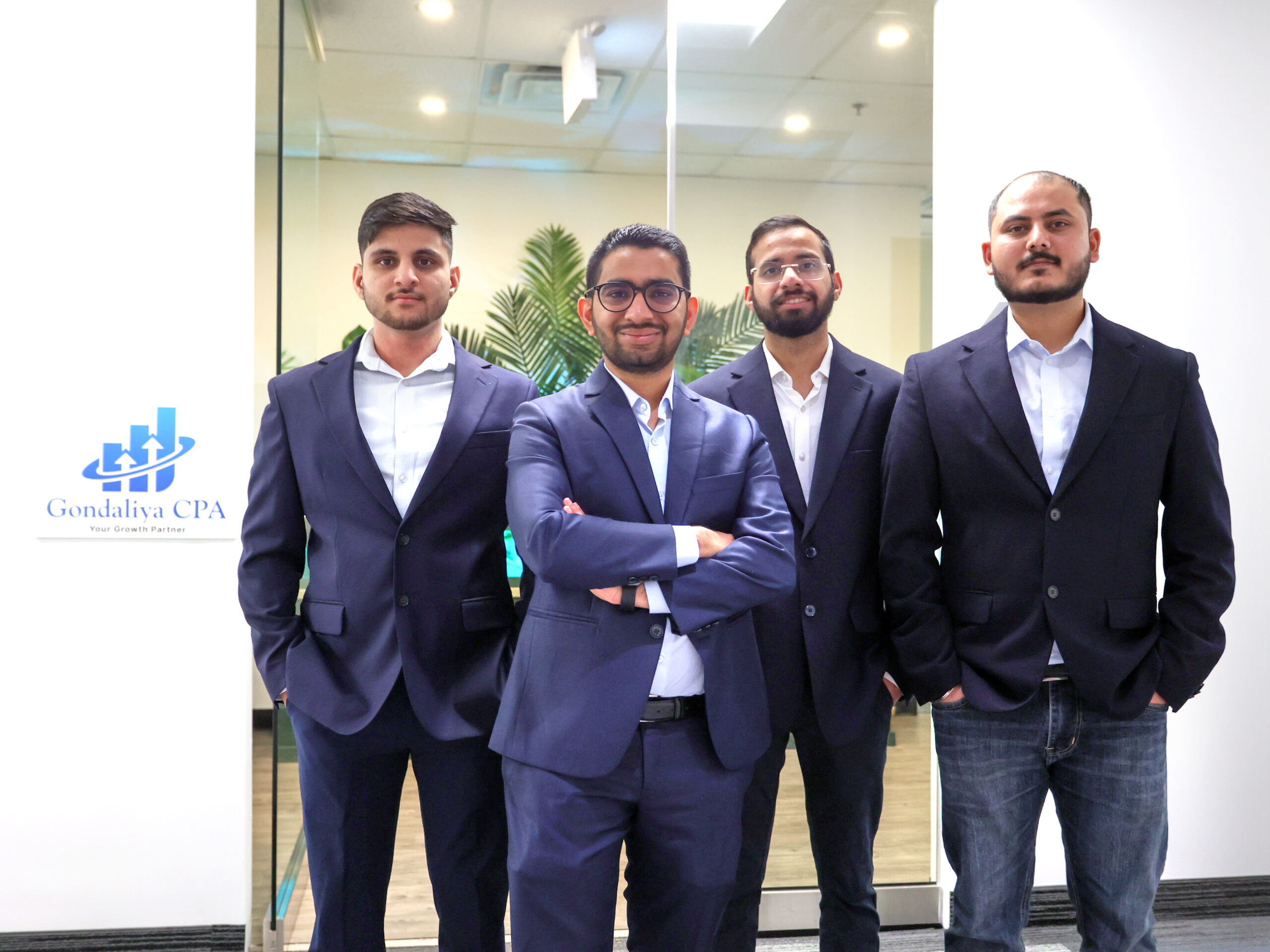
Meet your lead adventure tourism accountant. The same two people handle your season, your payroll and your corporate return, year after year.


What Our Clients Say
1300+ five-star reviews from outfitters, guiding operations and seasonal business owners across Ontario and Canada.
Serving Adventure Tourism Businesses Across Ontario
Our CPA team provides specialized accounting and tax solutions for outfitters, guiding operations and seasonal activity businesses throughout Ontario. We understand what a fleet of gear has to earn inside a short season, why a deposit is not yet income, where the seasonal crew exposure sits, and what CRA looks at first when it opens an outfitting file.
Toronto (ON)
55 Queen St E Ste 1205, Toronto, ON M5C 1R6, Canada
+1 (647) 212-9559
9:00 AM – 8:30 PM (Mon – Sun)
Mississauga (ON)
2100 Camilla Rd #716, Mississauga, ON L5A 2J8
+1 (647) 212-9559
9:00 AM – 8:30 PM (Mon – Sun)
Brampton (ON)
4 Starhill Crescent, Brampton, ON L6R 2P9, Canada
+1 (647) 212-9559
9:00 AM – 8:30 PM (Mon – Sun)
Scarborough (ON)
24 Clementine Square, Scarborough, ON M1G 2V7, Canada
+1 (647) 212-9559
9:00 AM – 8:30 PM (Mon – Sun)
Vaughan (ON)
19 Cabinet Crescent, Woodbridge, ON L4L 6H9, Canada
+1 (647) 212-9559
9:00 AM – 8:30 PM (Mon – Sun)
Oshawa (ON)
210 Durham St, Oshawa, ON L1J 5R3, Canada
+1 (647) 212-9559
9:00 AM – 8:30 PM (Mon – Sun)
Ottawa (ON)
2090 Neepawa Ave a314, Ottawa, ON K2A 3L6, Canada
+1 (647) 212-9559
9:00 AM – 8:30 PM (Mon – Sun)
Etobicoke (ON)
60 Stevenson Rd #1601, Etobicoke, ON M9V 2B4, Canada
+1 (647) 212-9559
9:00 AM – 8:30 PM (Mon – Sun)
Hamilton (ON)
70 Starling Dr, Hamilton, ON L9A 0C5, Canada
+1 (647) 212-9559
9:00 AM – 8:30 PM (Mon – Sun)
Guelph (ON)
1155 Gordon St, Guelph, ON N1L 1S8, Canada
+1 (647) 212-9559
9:00 AM – 8:30 PM (Mon – Sun)
Windsor (ON)
4387 Guppy Ct, Windsor, ON N9G 2N8, Canada
+1 (647) 212-9559
9:00 AM – 8:30 PM (Mon – Sun)
North York (ON)
150 Graydon Hall Dr #912, North York, ON M3A 3B2, Canada
+1 (647) 212-9559
9:00 AM – 8:30 PM (Mon – Sun)
Adventure Tourism Accounting & Tax FAQs
Related Industries We Serve
Accountant for Tour Operators
- Departure costing and margin
- Deposits and deferred revenue
- Corporate tax filing and statements
Accountant for Campgrounds
- Seasonal revenue and fixed costs
- Property and equipment pools
- Corporate tax planning and payroll
Accounting for Small Businesses
- Bookkeeping and HST filing
- Payroll and source deductions
- Corporate tax filing and statements
Accountant for Incorporated Businesses
- T2 filing and GIFI schedules
- Salary and dividend planning
- Notice to Reader financial statements
Adventure Tourism Accounting & Tax Done Right.
T2 filing with the boats, racks and base equipment in Class 8 at 20%, booking computers in Class 50 at 55%, vehicles in Class 10, and recapture under ITA 13(1) settled on every disposal. Booking deposits carried as deferred revenue until the trip runs, weather cancellations reversed against that liability rather than the month’s sales, guides tested on the employee-versus-contractor factors with T4 or T4A slips filed and records of employment issued at season end, and twelve months of fixed cost carried against the weeks that earn. AFFORDABLE flat fees, no hourly billing. Licensed CPA Ontario. 1300+ five-star reviews. 30-Day Money-Back Guarantee.