



Tax Accountant for Lash and Brow Studios in Ontario and Across Canada
You run two businesses in one room. The adhesives, lash trays, tints and removers you use up on a client are supplies expensed as you consume them; the aftercare products on the shelf behind reception are inventory under ITA section 10, valued consistently and carrying input tax credits on purchase. A studio that puts both into one products account can neither value its stock nor price its service, and it is the error we inherit most often. Then there is the third person in the room: a technician you employ brings WSIB, PD7A remittances by the 15th of the following month, T4 slips by the last day of February and Ontario Employer Health Tax past the $1,000,000 exemption, while a technician who rents your chair makes your revenue rent rather than service fees. Which one is actually happening is tested on the Form RC4110 factors and on the written arrangement, never on what the parties called it. We reserve prepaid fills under ITA paragraph 20(1)(m), handle gift certificates under ETA section 181.2, review forfeited deposits under ETA section 182, and rebuild your revenue from gross sales rather than from what the booking platform deposited — with AFFORDABLE flat fees.
AFFORDABLE Lash and Brow Studio Tax Accountant
The decision that defines a lash and brow studio is not the service menu, it is the arrangement with the technician in the second chair. A studio can employ its technicians, it can rent space to self-employed technicians who keep their own revenue, or it can do both at once, and those are completely different businesses for tax purposes. Employment brings a WSIB account, source deductions and a PD7A remittance due by the 15th of the following month with a late-remittance penalty that is graduated and reaches 10%, T4 and T4 Summary filings by the last day of February, and Ontario Employer Health Tax once the wage base passes the $1,000,000 exemption. Rent brings none of that, but it changes what your top line is: the studio’s revenue becomes rent for premises rather than fees for a service, and the characterization of that rent as a taxable supply of real property, a licence to occupy, or something else again is a question reviewed on its facts. What decides it is the Form RC4110 factors and the written arrangement, not the label on the agreement, and a studio that calls a technician a renter while setting her hours, her prices and her client list is the reassessment we are called in to defend. At Gondaliya CPA, we specialize in studio structure, worker classification and the two-sided bookkeeping this business needs, providing AFFORDABLE flat-fee support that keeps you CRA-compliant and stops you paying more tax than you owe.
As a lash and brow studios accountant, we work with single-room lash studios, multi-chair lash and brow studios with a retail counter, chair-rental and suite-rental studios, and studios that teach alongside the service floor, across Ontario and with year-round support rather than a once-a-year scramble. We tell you how many appointments you have already been paid for and not yet performed, what the shelf actually earns against what the chair earns, and where your classification exposure sits before CRA finds it.
Let us handle the numbers so you can stay at the bed with your clients.
Our Official Partners









Accounting That Understands How a Lash and Brow Studio Actually Works
A studio is a service business and a retailer at the same time, and often a training provider as well. The same brand of product can be a consumable on one side of the room and stock on the other, the money frequently arrives before the appointment does, and the deposit that lands in your bank has already had a fee taken out of it. At Gondaliya CPA, we understand that reality and provide practical, industry-focused solutions across Ontario.
Stay Compliant and Minimize Your Lash and Brow Studio Tax
For a studio owner, staying onside with CRA and knowing which authority actually governs your premises are both part of the same job as paying the least legal tax. We keep every filing on schedule while claiming every supply, fixture, leasehold and payroll dollar the T2 allows, so nothing is missed and nothing invites a reassessment.
Accounting & Tax Experts for Lash and Brow Studios

- AFFORDABLE + Fully Registered CPA Firm
- Business and Corporate Tax Expert
- Small & Medium Business Expert
- Accounting, bookkeeping, and tax filing
- Certified CPA
- 1300+ 5-star Google reviews
- 30-Day Money-Back Guarantee
- 60-Day Fees Matching Policy
Why Choose Our Accounting Services for Lash and Brow Studios?
Tax Planning — Structure & Pools
We model employing a technician against renting her the chair, split the Class 13 leasehold from Class 8 fixtures and Class 50 equipment, and protect the $500,000 Small Business Deduction.
Consulting — Chair, Shelf & Course
Our bookkeeping shows what the chair earns, what the shelf earns and what the training arm earns, each with its own cost base, so you price from numbers instead of instinct.
CRA Representation — Classification & Credits
When CRA challenges a technician arrangement, a revenue figure or an input tax credit claim, we prepare the response and pursue relief on Form RC4288 where a prior error caused the penalties.
Bookkeeping — Liability & Sale
We carry your unredeemed packages and gift certificates as the liability they are, produce the statements your lender reads, and model the sale of the client list years ahead.
Google Reviews
Lash and Brow Studio Clients
Lash and Brow Studio Tax and Accounting Services in Ontario
Corporate Tax Filing (T2) for Lash and Brow Studios
Professional T2 preparation with retail stock valued under ITA section 10, supplies expensed as used, the build-out in Class 13, and CRA compliance on every line.
Bookkeeping & Accounting for Lash and Brow Studios
Books built from gross service and retail sales rather than the booking platform deposit, with consumables and shelf stock in separate accounts from day one.
Payroll Services for Lash and Brow Studios
Technician and reception payroll handled properly, with PD7A remittances, WSIB, T4 and T4A slips filed on time and classification tested against Form RC4110.
GST/HST Filing for Lash and Brow Studios
AFFORDABLE HST filing with service fees, retail sales and chair rental each on their own footing, gift certificates under ETA section 181.2, and credits allocated where needed.
Tax Planning for Lash and Brow Studios
Smart tax planning on the chair-rental decision, build-out and equipment timing across Class 13, Class 8 and Class 50, the Small Business Deduction, and the exit structure.
Corporate Catch-Up Filing for Lash and Brow Studios
File overdue T2 and HST years, rebuild the inventory, package liability and capital pools you never had, and get back into CRA compliance with accurate catch-up support.
CRA Audit Resolution for Lash and Brow Studios
Expert support on revenue completeness, worker classification and input tax credit audits, handled with confidence from the first letter.
CPA Financial Statements (Notice to Reader) for Lash and Brow Studios
CPA-compiled financial statements that lenders accept, stating unredeemed packages as a liability and the Class 13 leasehold separately from furniture.
Incorporation Services for Lash and Brow Studios
Full incorporation including NUANS, articles, share structure, and the section 85 rollover of your client list, equipment, leasehold and retail stock into the company.
Catch-Up Bookkeeping Services for Lash and Brow Studios
Months or years of platform payouts, card settlements, supply invoices and stock purchases reconstructed and reconciled, so your revenue figure is finally accurate.
US Corporation & LLC Tax Filing for Lash and Brow Studios
Cross-border filing where owners, shareholders, trainers or students sit outside Canada, covering withholding, NR4 reporting and T1135 obligations.
Voluntary Disclosure Program for Lash and Brow Studios
Come forward on unfiled slips, prepaid packages taken into income too early or gift certificates taxed on issue before CRA calls, cancelling penalties through a Voluntary Disclosures Program application.
Accounting & Tax Services Tailored for Lash and Brow Studios
Real, practitioner-level CPA expertise for single-room lash studios, multi-chair lash and brow studios with a retail counter, chair-rental and suite-rental studios, and studios that teach alongside the service floor across Ontario — built for a business that is a service provider and a retailer at the same time.
- We prepare your T2 with GIFI on Schedule 100 and Schedule 125, separating service fees, retail aftercare sales, chair rental income and training tuition onto their own lines so CRA’s matching reads the return the way the business actually runs.
- We carry retail stock as inventory under ITA section 10 and keep the adhesives, trays, tints and removers consumed in performing a service as supplies expensed as used, because the two are different accounts with entirely different consequences.
- We reserve amounts received for fills not yet performed under ITA paragraph 20(1)(m), so a package of six sold in November is not taxed in full in a year when only two of those appointments actually happened.
- We claim capital cost allowance on Schedule 8 with treatment beds, lamps and retail fixtures in Class 8 at 20%, the studio build-out in Class 13 over the lease term, and computers in Class 50 at 55%.
- We build revenue from gross service and retail sales rather than from what the booking platform and the card terminal deposited, because net deposits understate your revenue and every fee you paid on the same return.
- We set up two separate product accounts on the first day: supplies consumed in performing a service, and inventory held for resale at the counter. Blurring the two is the most common bookkeeping error in this industry.
- We reconcile the booking platform payout, the card terminal settlement and the cash drawer to gross sales every month, so the fee deducted before deposit appears as an expense instead of quietly shrinking your revenue line.
- We carry unredeemed prepaid packages, memberships and gift certificates as a liability rather than as profit, and we move each one into income as the appointment behind it is actually performed.
- We track tips received in cash and through the terminal separately from service fees, because a tip routed through the studio’s own float is a payroll and revenue question rather than an invisible pass-through.
- We count retail stock at period end, value it consistently under ITA section 10, and write down what has expired or will never sell, so your gross margin on the shelf is finally a real number.
- Where technicians are employees we run payroll properly: source deductions calculated correctly, PD7A remittances made by the 15th of the following month, and T4 and T4 Summary filings in by the last day of February.
- We test every technician arrangement against the factors in Form RC4110 — control, tools, subcontracting, chance of profit and risk of loss — and against what the written agreement actually says rather than what it is called.
- We register and report WSIB where there are employees, and we reconcile the premium base to the payroll ledger, so an assessment never arrives built on a number nobody at the studio recognises.
- We monitor Ontario Employer Health Tax against the $1,000,000 exemption as the wage base grows, and we flag the point at which the studio crosses it instead of leaving you to discover it in a notice.
- We keep the late-remittance exposure visible, because the payroll penalty is graduated and reaches 10%, and a studio that remits on the wrong cycle pays it on a balance it already had the cash to cover.
- We file GST34 returns with service fees, retail sales and chair rental each treated on their own footing, and we register you once taxable supplies pass $30,000 over four consecutive calendar quarters.
- We handle gift certificates under ETA section 181.2 so nothing is charged on issue and the right amount is charged on redemption, which is the reverse of how most studios have been doing it.
- We review forfeited deposits and cancellation charges under ETA section 182 where an agreement is breached, rather than assuming every no-show fee carries the same treatment as the appointment it replaced.
- Where you teach, we characterize each course against the educational services provisions in Schedule V Part III before any rate is set, and we document the basis instead of asserting an answer in either direction.
- Where the catalogue is not uniform we build an input tax credit allocation under ETA section 141.01, because the tax behind an exempt supply is not recoverable and the two sides cannot share a single claim.
- We model the chair-rental decision properly, so you can see what employing a technician costs in WSIB, Employer Health Tax and employer contributions against what renting the space earns and what each one does to your top line.
- We time the build-out, the beds and the retail fixtures against your year-end, splitting Class 13 from Class 8 and Class 50 so the deduction lands in the year it is actually worth the most to you.
- We protect the $500,000 small business deduction under ITA section 125, and we raise the personal services business test in ITA subsection 125(7) as a question to review wherever a single-client arrangement exists.
- We set the salary and dividend mix against roughly 12.2% Ontario combined on the first $500,000 of active income compared with a top personal rate of 53.53%, and we revisit it as the studio grows.
- We plan the exit years ahead, positioning shares for the $1.25M Lifetime Capital Gains Exemption under ITA 110.6 with purification of retained cash and the two-year runway that the qualification actually requires.
- We file overdue T2 and HST years in order, rebuilding each year’s inventory position, prepaid package liability and capital pools rather than carrying one plug number forward and hoping nobody ever opens it.
- We reconstruct the Class 8, Class 13, Class 50 and Class 12 schedules from invoices and the lease, because a studio that never split its pools has been under-claiming on exactly the assets that depreciate fastest.
- We quantify the late-filing exposure, which runs 5% of the balance owing plus 1% per month to a maximum of twelve months, so you know the number before you decide the order of filing.
- We separate the consumable and retail accounts retroactively across the catch-up years, which usually changes both the cost of goods sold and the recoverable input tax credits in every one of those years.
- We pursue relief on Form RC4288 where penalties and interest arose from circumstances that qualify, and we pursue a Voluntary Disclosures Program application on Form RC199 where coming forward first is the better route.
- When CRA questions revenue completeness we produce the gross-to-net reconciliation between booking platform payouts, card settlements and cash, and show the fee deducted before deposit as an expense rather than as missing sales.
- When a technician arrangement is challenged we assemble the Form RC4110 analysis, the written agreement, the scheduling and pricing evidence and the client-ownership facts, and we argue the arrangement on those factors rather than on its label.
- When input tax credits are reviewed we produce the characterization file behind each supply and the ETA section 141.01 allocation, which is the document whose absence loses the claim before the argument has even started.
- When the inventory position is questioned we produce the count, the valuation method and the write-down support under ITA section 10, plus the separate supplies ledger that shows what was consumed in service.
- We handle the correspondence from the first letter, meet every deadline, and file a Notice of Objection within the 90 days available where the assessment is wrong on the law rather than on the arithmetic.
- We produce CSRS 4200 compilation engagement financial statements that lenders accept, prepared for the build-out loan, the equipment lease on beds and sterilisers, or the purchase of an existing studio and its client list.
- We state unredeemed packages, memberships and gift certificates as a liability on the face of the balance sheet, because a lender that finds that number buried inside sales sends the whole file straight back.
- We show retail inventory valued under ITA section 10 separately from supplies on hand, so the reader can tell what is stock that will still sell from what has already been consumed in the chair.
- We present the Class 13 leasehold separately from Class 8 furniture and Class 50 equipment, which matters because on a fitted-out studio the leasehold is frequently the largest single asset in the whole business.
- We tie the statements to the T2, the GIFI schedules and the HST returns you actually filed, so three documents a reviewer will read side by side all say exactly the same thing.
- We handle the full incorporation: NUANS name search, articles, a share structure built with a possible future sale in view, directors and registers, and the CRA Business Number with the RT and RP accounts opened.
- We roll an existing studio into the company through the section 85 rollover on Form T2057, covering the client list, the goodwill, the beds and lamps, the leasehold and the retail stock on hand.
- We set the share structure with the exit in view, so the $1.25M Lifetime Capital Gains Exemption under ITA 110.6 is available on a share sale rather than discovered too late to be out of reach.
- We assign the lease or the licence to occupy into the corporation correctly, and we review whether the premises are better held outside the operating company where a purchase of the building is in contemplation.
- We advise on the holding company question, the WSIB and payroll registrations that follow the first hire, and the books and records the corporation must keep for six years under ITA section 230.
- We rebuild months or years of booking platform payouts, card settlements, cash deposits, supply invoices and retail stock purchases into a single ledger where the revenue figure is finally the real one.
- We split the historical products account into supplies consumed in service and inventory held for resale, which usually restates both the cost of goods sold and the recoverable input tax credits for every period.
- We reconstruct the prepaid package and gift certificate liability from the booking records, so you learn how many appointments you have already been paid for and have not yet actually performed.
- We rebuild the capital pools from invoices and the lease, moving the build-out to Class 13, computers and point-of-sale hardware to Class 50 at 55%, and furniture and fixtures to Class 8 at 20%.
- We reconcile every HST period against the rebuilt ledger and correct the filings that were wrong, because catch-up bookkeeping that never touches the returns leaves the exposure exactly where it already was.
- Where an owner, a shareholder or a technician lives outside Canada, we handle the cross-border filing position together with the withholding and reporting that attach to payments crossing the border in either direction.
- Where you teach students abroad or ship aftercare product outside Canada, we flag foreign consumption tax and state sales tax as separate regimes for local advisers rather than asserting a threshold we cannot verify.
- We report foreign property over $100,000 on Form T1135 and translate foreign-currency receipts at the rate on the transaction date, so the conversion is defensible rather than averaged after the fact.
- We consider Regulation 105 withholding and T4A-NR or NR4 reporting where a non-resident trainer, educator or contractor performs services in Canada, reviewing each payment on its facts rather than assuming the rule away.
- We coordinate with United States advisers where a cross-border structure already exists, so the Canadian return and the foreign return are built on the same numbers instead of on two incompatible sets.
- We come forward on unfiled T4 or T4A slips for technicians whose arrangement was never tested, before CRA opens the question itself and the penalties stop being cancellable through a disclosure at all.
- We correct HST periods where gift certificates were taxed on issue, where retail and service supplies were merged into one figure, or where credits were claimed across a catalogue that had never been characterized.
- We correct prepaid package and membership revenue taken into income on receipt, restating the reserve under ITA paragraph 20(1)(m) across the open years rather than leaving the same error compounding forward.
- We prepare and file the Voluntary Disclosures Program application on Form RC199 with the supporting schedules, so the disclosure is complete the day it arrives and does not fail on a missing detail.
- We pursue taxpayer relief on Form RC4288 in parallel where penalties and interest arose from circumstances that qualify, and we rebuild the bookkeeping so the same disclosure is never needed a second time.
Lash and Brow Studio Tax & Revenue Check
Six quick questions on your product accounts, your prepaid package liability, your revenue completeness, your technician arrangements, your capital pools and whether it is time to incorporate. No fee shown.
1. Are consumables used in service and retail stock held for resale in separate accounts?
2. Do you carry unredeemed packages and gift certificates as a liability?
3. Are your books built from gross sales rather than the booking platform deposit?
4. Has every technician arrangement been tested against the Form RC4110 factors?
5. Is your studio build-out in Class 13 rather than pooled into Class 8?
6. Is your lash and brow studio incorporated?
Free CPA Consultation for Lash and Brow Studios
Case Studies: Lash and Brow Studio Accounting & Tax
Toronto Lash and Brow Studio — One Products Account for Two Businesses
The problem: A Toronto studio with four beds and a retail wall ran every product purchase through a single account called Products. Adhesives, trays, tints and removers consumed on clients sat in the same place as the cleansers and serums priced on the shelf. There was no inventory count, no valuation under ITA section 10, and no way to know whether the retail wall made money or merely occupied it. The owner had priced her service menu for three years without knowing her own product cost per appointment.
What we did: We split the account into supplies consumed in performing a service, expensed as used, and inventory held for resale, counted and valued consistently under ITA section 10. We rebuilt three years of purchase invoices onto the correct side of that line, restated cost of goods sold, and reallocated the input tax credits accordingly.
The result:
- Product cost per appointment known for the first time
- $19,800 of retail stock properly valued and on the balance sheet
- Service menu repriced from real numbers instead of instinct
Mississauga Chair-Rental Studio — Rent Recorded, the Test Never Run
The problem: A Mississauga studio charged three technicians a weekly amount for a chair and booked the whole of it as rental income. No Form RC4110 analysis had ever been done, there was nothing in writing with any of the three, and the studio set the opening hours, published the price list and owned the booking record. Whether what was happening was a rental of space or something else entirely had never been looked at, and the HST treatment of the amounts charged had simply been assumed to follow the label.
What we did: We ran the Form RC4110 analysis on each of the three arrangements and documented every factor on its own facts. We papered the agreements so that what was written matched what was actually happening, corrected the treatment the analysis supported for each arrangement, and registered the payroll and WSIB accounts that the corrected treatment required.
The result:
- Three arrangements analysed, documented and papered properly
- $14,300 of exposure quantified and resolved before any CRA contact
- Rental income and service revenue reported on separate lines
Ottawa Lash Studio and Training Arm — Paid in November, Taught in March
The problem: An Ottawa studio sold prepaid packages of six fills, monthly memberships and gift certificates, and taught certification courses on Mondays. Every dollar was taken into income the day the card cleared, including packages where one appointment of six had been used and certificates still sitting unredeemed in client wallets. Tax had been charged on gift certificates at the point of issue. The training courses had never been characterized against any provision of the Excise Tax Act, and credits were being claimed in full across everything.
What we did: We rebuilt the package and certificate liability from the booking records, reserved the undelivered portion under ITA paragraph 20(1)(m), corrected the gift certificate treatment under ETA section 181.2, and characterized each course on its own facts against the Schedule V Part III educational services provisions with the basis documented in writing before any rate was applied.
The result:
- $47,500 of prepaid revenue moved to the period it was earned
- Gift certificate treatment corrected and the liability tracked monthly
- Each course characterized and documented before a rate was set
Our clear, efficient process ensures every step is transparent, building trust and long-term client relationships.
Kickoff (Document Request)
Collect prior T2 returns, the booking platform sales export, card terminal settlement reports, supply and retail stock invoices, the lease and build-out costs, any chair-rental agreements, your package and gift certificate records, and bank statements.
First 30 Days (Cleanup & Setup)
Set up the ledger with supplies and retail inventory in separate accounts, rebuild the package and certificate liability, split the Class 13, 8, 50 and 12 schedules, and run the Form RC4110 analysis on every technician arrangement.
Monthly Close
Gross-to-net reconciliation across the platform, the terminal and cash, prepaid package and gift certificate liability updated, retail stock count and margin, service revenue against chair rental, GST34 filed, and payroll reconciled to the PD7A.
Quarterly Planning Review
Salary and dividend mix, the employ-or-rent decision on each chair, equipment and build-out timing across Class 13, Class 8 and Class 50, Employer Health Tax against the exemption, and pricing against your real cost per appointment.
Year-End Close & T2 Filing
Trial balance, financial statements with unredeemed packages stated as a liability and retail inventory shown separately from supplies, the ITA paragraph 20(1)(m) reserve settled, T2 with GIFI, and CRA preparation.
Get Your Lash and Brow Studio Taxes Done Right Today
Affordable Pricing for Lash and Brow Studios
We believe in clear, upfront pricing so you know exactly what to expect. All fees include HST.
- Tax Preparation (Corporation) — From $400
- Tax Return Filing (Corporation) — From $400
- Tax Compliance Audit — FREE CRA audit support for our clients
- Tax Strategy — FREE for our clients
- Accounting Base Plan — From $100 per month
- Bookkeeping Management — Free for our Accounting clients
- Financial Reporting — Free for our Accounting clients
- Business Formation — Flat $35
- Incorporation Process — Flat $35
- Entity Setup Assistance — Flat $35
- Full-Service Payroll — From $125 per month
Payment is by Interac e-Transfer to info@gondaliyacpa.ca only. Security question: Not Applicable, as auto-deposit is enabled.
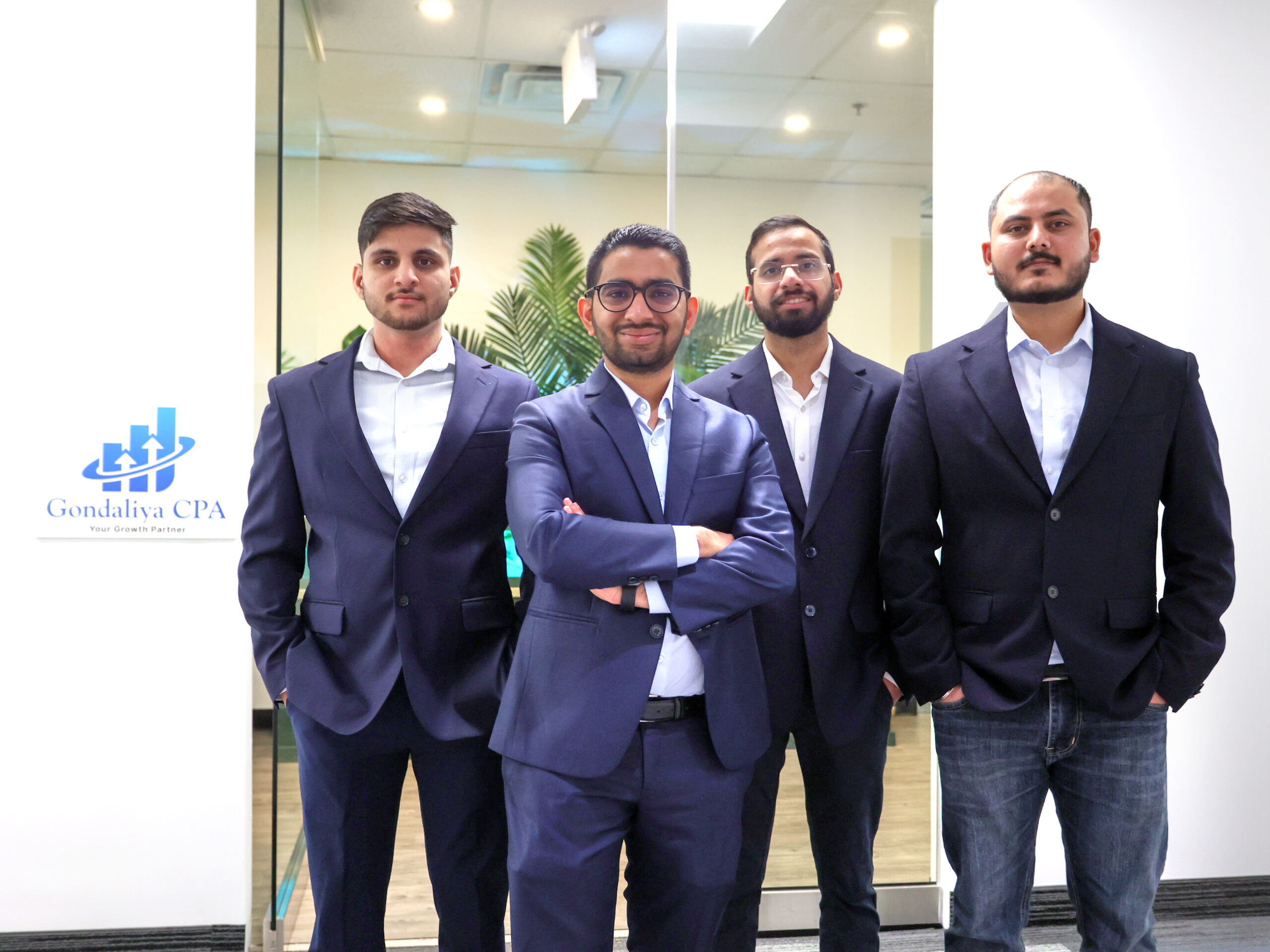
Meet Your Lead Lash and Brow Studio Accountant
Meet your lead lash and brow studio accountant. As your studio and corporate tax adviser, you deal with the same two people every year.


What Our Clients Say
1300+ five-star reviews from studio owners, lash and brow technicians and local service businesses across Ontario and Canada.
Serving Lash and Brow Studios Across Ontario
Our CPA team provides specialized accounting and tax solutions for lash and brow studios, brow bars and lash training studios throughout Ontario. We understand why a product consumed in service is never the same account as the same product sold off the shelf, why the arrangement with the technician in the second chair decides what kind of business you are running, how money taken before an appointment is earned later than it is banked, and what CRA looks at first when it opens a studio file.
Toronto (ON)
55 Queen St E Ste 1205, Toronto, ON M5C 1R6, Canada
+1 (647) 212-9559
9:00 AM – 8:30 PM (Mon – Sun)
Mississauga (ON)
2100 Camilla Rd #716, Mississauga, ON L5A 2J8
+1 (647) 212-9559
9:00 AM – 8:30 PM (Mon – Sun)
Brampton (ON)
4 Starhill Crescent, Brampton, ON L6R 2P9, Canada
+1 (647) 212-9559
9:00 AM – 8:30 PM (Mon – Sun)
Scarborough (ON)
24 Clementine Square, Scarborough, ON M1G 2V7, Canada
+1 (647) 212-9559
9:00 AM – 8:30 PM (Mon – Sun)
Vaughan (ON)
19 Cabinet Crescent, Woodbridge, ON L4L 6H9, Canada
+1 (647) 212-9559
9:00 AM – 8:30 PM (Mon – Sun)
Oshawa (ON)
210 Durham St, Oshawa, ON L1J 5R3, Canada
+1 (647) 212-9559
9:00 AM – 8:30 PM (Mon – Sun)
Ottawa (ON)
2090 Neepawa Ave a314, Ottawa, ON K2A 3L6, Canada
+1 (647) 212-9559
9:00 AM – 8:30 PM (Mon – Sun)
Etobicoke (ON)
60 Stevenson Rd #1601, Etobicoke, ON M9V 2B4, Canada
+1 (647) 212-9559
9:00 AM – 8:30 PM (Mon – Sun)
Hamilton (ON)
70 Starling Dr, Hamilton, ON L9A 0C5, Canada
+1 (647) 212-9559
9:00 AM – 8:30 PM (Mon – Sun)
Guelph (ON)
1155 Gordon St, Guelph, ON N1L 1S8, Canada
+1 (647) 212-9559
9:00 AM – 8:30 PM (Mon – Sun)
Windsor (ON)
4387 Guppy Ct, Windsor, ON N9G 2N8, Canada
+1 (647) 212-9559
9:00 AM – 8:30 PM (Mon – Sun)
North York (ON)
150 Graydon Hall Dr #912, North York, ON M3A 3B2, Canada
+1 (647) 212-9559
9:00 AM – 8:30 PM (Mon – Sun)
Lash and Brow Studio Accounting & Tax FAQs
Related Industries We Serve
Accountant for Nail Salons
- Supplies consumed versus retail stock
- Technician classification and payroll
- Corporate tax filing and statements
Accountant for Barbershops
- Chair rental and commission structures
- Cash and card revenue completeness
- Corporate tax planning and bookkeeping
Accountant for Hair Stylists
- Booth rental and employment tests
- Prepaid packages and gift certificates
- Corporate tax filing and statements
Accountant for Makeup Artists
- Kit costs and capital cost allowance
- Deposits and cancellation charges
- Corporate tax planning and advisory
Lash and Brow Studio Accounting & Tax Done Right.
Product consumed in service expensed as a supply and retail aftercare carried as inventory under ITA section 10, never merged into one account. Every technician arrangement tested against the Form RC4110 factors and the written agreement rather than the label. Prepaid packages and memberships brought into income under ITA paragraph 12(1)(a) and reserved under ITA paragraph 20(1)(m) for appointments not yet performed, gift certificates handled under ETA section 181.2, forfeited deposits reviewed under ETA section 182. Training characterized against the Schedule V Part III educational services provisions before a rate is set, with credits allocated under ETA section 141.01 where the catalogue is mixed. The build-out in Class 13 instead of pooled in Class 8, and revenue built from gross sales because net is not revenue. AFFORDABLE flat fees, no hourly billing. Licensed CPA Ontario. 1300+ five-star reviews. 30-Day Money-Back Guarantee.