



Tax Accountant for Escape Rooms in Ontario and Across Canada
We treat each room as what it really is on your balance sheet: a designed, built asset with a commercial life, capital from the day the set went in rather than an expense in the month the doors opened. We carry the build-out as a leasehold improvement in Class 13 where the premises are leased, put sets, props and furnishings in Class 8 at 20% and the control systems, sensors, screens and point of sale in Class 50 at 55%, and decide project by project whether a refresh is a repair or a new capital asset. We hold prepaid bookings and corporate event money as deferred revenue until the game is played, time deposits under ETA subsection 168(9), keep HST off a gift card until it is redeemed, and report utilisation per room against the slots each room actually had. Whether you run a single-location venue, a multi-room site, a mobile or pop-up game or a franchise group, we handle the rooms, the bookings and the payroll — with AFFORDABLE flat fees.
AFFORDABLE Escape Room Tax Accountant
An escape room owns a handful of assets that are worth a great deal on opening night and very little once the local market has played them, and that one fact decides how the books should be built. A room is designed, constructed, wired and dressed long before it earns anything, it earns for a couple of years, and then it has to be refreshed or replaced. So the question your accounts exist to answer is not what came in last month but what each room has earned against what it cost, and how much commercial life it has left. An operator who put the whole build through repairs in the month the doors opened has taken the deduction in the wrong year and destroyed the only record of what the room cost. The second problem is capacity. Rooms multiplied by slots multiplied by opening hours is a fixed, countable ceiling, and a Tuesday afternoon nobody books cannot be sold twice. At Gondaliya CPA, we specialize in what a room costs, what it earns and what is still owed on the calendar, providing AFFORDABLE flat-fee support that keeps you CRA-compliant and stops you paying more tax than you owe.
As an escape room accountant, we work with single-location venues, multi-room sites, mobile and pop-up game operators and franchise groups across Ontario, with year-round support rather than a once-a-year scramble. We tell you what each room has earned against what it cost, how much of your cash is still owed back in games nobody has played yet, and where the payroll exposure sits on a roster that changes every few months.
Let us handle the numbers so you can focus on the rooms and the booking calendar.
Our Official Partners









Accounting That Understands How an Escape Room Actually Works
Two things here run in opposite directions. The spending lands first and in one lump, when a room is designed and built, and it is capital that has to earn out over several years. The income lands early as well, because games are booked and paid for weeks ahead and gift cards sell steadily through December, so a good share of the cash on hand is still owed in play. Between the two sits a capacity ceiling nobody can stretch and a refresh cycle that decides, every couple of years, whether a room is still an earning asset or a set waiting to be stripped out. At Gondaliya CPA, we understand that reality and provide practical, industry-focused solutions across Ontario.
Stay Compliant and Minimize Your Escape Room Tax
An escape room pays the least legal tax by being accurate rather than clever. We get every return in on its date and claim the whole of what the rooms, the roster and the premises genuinely cost you, so no deduction is quietly abandoned and no figure on the T2 ever has to be explained twice.
Accounting & Tax Experts for Escape Rooms
- AFFORDABLE + Fully Registered CPA Firm
- Business and Corporate Tax Expert
- Small & Medium Business Expert
- Accounting, bookkeeping, and tax filing
- Certified CPA
- 1300+ 5-star Google reviews
- 30-Day Money-Back Guarantee
- 60-Day Fees Matching Policy
Why Choose Our Accounting Services for Escape Rooms?
Tax Planning — The Room as a Wasting Asset
We know the file: builds capitalised across Class 13, Class 8 and Class 50, each refresh decided as capital or repair, build timing set against your year-end. We protect the $500,000 Small Business Deduction.
Consulting — Utilisation Per Room
Our bookkeeping reports games run against slots available, room by room, and the revenue each available slot produced, so a fourth room is an investment decision rather than a hope.
CRA Representation — Capital, Refresh and Retirement
When CRA questions a refresh, a deferred revenue position or what became of a retired room, we prepare the response and pursue relief on Form RC4288 where an earlier error caused the penalties.
Bookkeeping — Cash Against Games Still Owed
We draw the line between cash received and revenue earned, put the unplayed calendar somewhere a reader can find it, and build the cash plan that carries a venue from one build to the next.
Google Reviews
Escape Room Clients
Escape Room Tax and Accounting Services in Ontario
Corporate Tax Filing (T2) for Escape Rooms
Professional T2 preparation with each room capitalised across Class 13, Class 8 and Class 50, unplayed bookings held as deferred revenue, and CRA compliance on every line.
Bookkeeping & Accounting for Escape Rooms
Monthly books that reconcile the booking system to the ledger, report utilisation per room, and keep corporate and team-building work as a revenue line of its own.
Payroll Services for Escape Rooms
Game master and front-of-house payroll on a roster that changes constantly: source deductions remitted on the PD7A, WSIB registered at your first hire, records of employment issued on every exit, and T4 or T4A filed correctly.
GST/HST Filing for Escape Rooms
AFFORDABLE HST filing on bookings, events and merchandise at the Ontario rate, with gift cards taxed only on redemption, deposits timed correctly, and every input tax credit recovered.
Tax Planning for Escape Rooms
Build and refresh timing set against your year-end, the Small Business Deduction protected, the salary and dividend mix settled, and the exit structured years ahead.
Corporate Catch-Up Filing for Escape Rooms
Overdue T2 and HST years brought current, with each room cost pool and the deferred revenue behind every past year-end reconstructed, so the catch-up leaves you accurate as well as up to date.
CRA Audit Resolution for Escape Rooms
Representation when CRA questions how a refresh was coded, how much revenue you deferred, what became of a retired room, or whether your game masters were really employees.
CPA Financial Statements (Notice to Reader) for Escape Rooms
Notice to Reader statements for a landlord, a lender or an incoming partner, showing every room at net book value by class and the deferred revenue stated plainly.
Incorporation Services for Escape Rooms
Incorporation end to end, covering NUANS, articles, minute book, share structure and CRA program accounts, plus the section 85 rollover that moves existing rooms and equipment across at an elected amount.
Catch-Up Bookkeeping Services for Escape Rooms
Months or years of booking exports, point of sale takings, build invoices and supplier bills reconstructed and reconciled, so the asset schedule is finally accurate.
US Corporation & LLC Tax Filing for Escape Rooms
Cross-border compliance for owners who are American or non-resident, for franchise arrangements reaching into the United States, and for T1135 reporting once foreign property crosses the threshold.
Voluntary Disclosure Program for Escape Rooms
Unfiled years, games recorded as revenue before anybody played them, or tax taken on a gift card at the till: raise it with CRA first and the penalties can be cancelled through a Voluntary Disclosures Program application.
Accounting & Tax Services Tailored for Escape Rooms
Real, practitioner-level CPA expertise for single-location venues, multi-room sites, mobile and pop-up game operators and franchise groups across Ontario — built for a business whose assets are the rooms themselves and whose cash arrives before the game is played.
- We prepare your T2 with GIFI on Schedule 100 and Schedule 125, separating public bookings, private group games, corporate and team-building events, gift card value released on redemption and merchandise onto their own lines rather than one blended sales figure.
- We capitalise the design, build-out, sets, props and technology that make a room rather than expensing a $60,000 build in the month the doors opened, because a room is an asset with a commercial life and the deduction has to follow that life.
- We take the capital cost allowance on Schedule 8 with the leased premises build-out in Class 13, sets, props, decor, furnishings and general equipment in Class 8 at 20%, and control systems, sensors, tablets, screens and point of sale in Class 50 at 55%.
- We hold money taken for games that have not been played off the sales line and on the balance sheet, because a return that reports next month’s bookings as this year’s revenue pays tax early on income you have not yet earned.
- When a room is retired or rebuilt, we establish what happens to the undepreciated cost still carried against it, a disposal, a terminal loss, or cost transferred into the replacement asset, on the facts of that project rather than by assumption.
- We build a chart of accounts where unplayed bookings, corporate event deposits and outstanding gift card value each sit in a liability account of their own, and revenue is released only as games are genuinely played.
- We report utilisation per room every month, games run against the slots that room actually had, because capacity here is rooms multiplied by slots multiplied by opening hours and an empty Tuesday afternoon cannot be sold twice.
- We run corporate and team-building work as its own department with its own invoicing and payment terms, so a line invoiced net thirty and a public booking paid at checkout are never blended into a single number.
- We reconcile the booking system to the general ledger monthly, so the deferred revenue on your balance sheet matches the games your calendar still owes rather than the two drifting apart across a year nobody checked.
- We capture supplier, prop, repair and utility invoices through Dext and reconcile every month, keeping the six years of records ITA section 230 requires, so a $4,000 build invoice is never lost and its input tax credit never goes unclaimed.
- We test whether your game masters and front-of-house staff are employees or contractors on the actual facts of the engagement, control, tools, risk and the ability to subcontract, and document the conclusion before a payroll reviewer asks for it.
- We run payroll for a part-time roster in Wagepoint, withholding income tax, CPP and EI and remitting on the PD7A on schedule, because the late-remittance penalty on source deductions is graduated and reaches 10% of the amount.
- We file T4 slips and the T4 Summary by the last day of February and reconcile them to what you remitted across the year, and file T4A slips for anyone genuinely engaged as a contractor rather than leaving the payments unreported.
- We issue records of employment as staff cycle out, which on a roster that turns over two or three times a year is the filing most operators miss, and we register WSIB coverage from your first hire rather than after the first claim.
- We track Ontario employer health tax against the $1,000,000 exemption, so a venue whose payroll is still well under that line is not registering and remitting a tax it does not yet owe on a part-time roster.
- We file GST34 returns with public bookings, private group games, corporate and team-building events and merchandise all taxable at 13% in Ontario, and register you once taxable revenue passes $30,000 over four consecutive calendar quarters.
- We recover input tax credits in full on the build-out, the sets and props, the control technology and the operating costs, which on a room built for $70,000 is several thousand dollars of HST most operators never claim back.
- We keep HST off the sale of a gift card, because nothing taxable has been supplied when the card is bought; the tax applies when the card is redeemed against a booking, an event or a merchandise sale.
- We time deposits under ETA subsection 168(9), which puts the collection point at the moment the deposit is applied against the invoice rather than the day a corporate client holds the date, so nothing is remitted a quarter early.
- We reconcile every HST return to the booking system and the point of sale before it is filed, so the tax you remit matches the games actually played and the cards actually redeemed in the period rather than the cash counted.
- We plan the build and refresh calendar against your year-end, because a room that opens two weeks before the close and one that opens two weeks after sit in different years for capital cost allowance and for the deduction you can use.
- We protect the $500,000 Small Business Deduction, which on active income is roughly a 12.2% combined Ontario rate against a personal rate reaching 53.53%, and set the salary and dividend mix around what you genuinely need to withdraw.
- We model the fourth room before it is built, using revenue per available slot on the rooms you already run, so the decision rests on what your existing capacity earns rather than on the hope that a new room fills itself.
- We decide each refresh as a capital or repair question and document it project by project, because rebuilding a set into a different game is not the same expenditure as repainting a wall or replacing a worn prop, and CRA reads them differently.
- We plan the exit years ahead, including whether your shares could qualify for the $1.25M Lifetime Capital Gains Exemption on a share sale and what the rooms, the build-out and the brand would be worth separately in an asset sale.
- We file overdue T2 and HST years in order, oldest first, so losses, capital cost allowance pools and any unclaimed input tax credits carry forward properly instead of being stranded inside a year that was never filed at all.
- We rebuild the asset schedule from purchase invoices, restoring what each room cost to design, build and fit out, which is usually the single largest number missing from a set of books nobody has kept for three years.
- We reconstruct the deferred revenue position at each past year-end from the booking system, because a catch-up filing that treats every dollar the tills counted as revenue overstates three years of income and the tax that goes with it.
- We apply for taxpayer relief on Form RC4288 where late-filing penalties and arrears interest built up behind a genuine cause, and we have seen that cancel several thousand dollars of penalty on a three-year catch-up.
- We bring the HST returns up to date alongside the T2 years, because unfiled returns and unclaimed credits on a build-out sit on the same file, and CRA reads the two together when it opens an escape room.
- We handle capital-versus-repair challenges on a refresh, which is where most escape room reviews start, by producing the project record, the scope, the quotes, the invoices and a note of what changed, that shows why the expenditure was treated as it was.
- We defend the deferred revenue position when a reviewer compares your bank deposits to your reported sales, which on a prepaid booking model will always differ, and we show the reconciliation that explains the gap line by line.
- We answer worker-status reviews on your game masters with the documented analysis already on file, rather than assembling it under a deadline after CRA has proposed to reassess a whole subcontractor line as employment income.
- We deal with the treatment of a retired room when it is questioned, setting out whether the remaining undepreciated cost was a disposal, a terminal loss or cost carried into the replacement, and the facts that led there.
- We take the correspondence off your desk from the first letter, respond within the deadline and pursue relief on Form RC4288 where an earlier error caused the penalties, which on a reassessment of $40,000 is worth doing properly.
- We prepare Notice to Reader statements a landlord, a lender or an incoming partner will accept, carrying each room’s build-out, sets and control technology at net book value split by class rather than in one undifferentiated fixed-asset line.
- We state unplayed bookings, corporate deposits and outstanding gift card value as deferred revenue on the face of the balance sheet, because the first thing a lender wants to know is how much of your cash is already owed in play.
- We present the leasehold improvements separately from the sets and equipment standing inside them, so a reader can see what belongs to the premises you lease and what you could actually take with you to another building.
- We show corporate and team-building revenue as its own line beside public bookings, gift card redemptions and merchandise, because a statement that blends them tells a reader nothing about which side of the business is growing.
- We tie the statements to the filed T2 and to your HST returns so all three agree, which is what a landlord asking for statements before renewing a lease on a $9,000-a-month unit is really testing.
- We handle the full incorporation: NUANS name search, articles, minute book, share structure and the CRA program accounts for corporate tax, payroll and HST, so you are trading through the company from the first day.
- We run the break-even before you incorporate, because the roughly 12.2% rate on the first $500,000 of active income only saves you money on the profit you leave in the company rather than the profit you draw out to live on.
- We roll your existing rooms, sets, props and equipment into the new corporation under section 85 on Form T2057, so the transfer happens at an elected amount instead of triggering a gain on assets you already own.
- We set a share structure that leaves room for a spouse, a second shareholder or a future buyer, because changing it after the rooms have built up value is far more expensive than getting it right at the start.
- We open the balance sheet properly, with the build-out in Class 13, the sets and props in Class 8 and the control technology in Class 50 from day one, so the pools are never reconstructed later from memory.
- We reconstruct months or years of booking exports, point of sale takings, build invoices and supplier bills, and reconcile them to the bank, so the ledger finally reflects what each room cost and what it has earned.
- We separate the capital from the operating spend as we go, so a $22,000 set build that was posted to repairs moves into the right class and a genuine repair does not end up capitalised and depreciated for years.
- We rebuild the gift card liability from the point of sale history, so outstanding balances sit on the balance sheet where they belong instead of having been counted as revenue on the day each card was sold.
- We recover input tax credits that were never claimed on the build-out, the props and the operating costs, which on a set of books left for two years is routinely the part of the cleanup that pays for itself.
- We hand back a clean trial balance with utilisation per room reported month by month from the reconstructed booking data, so the first thing you get out of the cleanup is the number the business is actually run on.
- We file on the US side where an owner or shareholder is American or non-resident, or where a second location trades across the border, so the same profit is not reported twice without the credit that prevents it.
- We handle withholding on payments to non-resident shareholders and on cross-border management or franchise fees, because tax not withheld at source becomes the corporation’s liability rather than the recipient’s when CRA looks at it.
- We take care of T1135 reporting once the cost of specified foreign property crosses $100,000, a line that is easier to cross than owners assume as soon as a US bank account or a second entity enters the structure.
- We treat a US-incorporated holding structure sitting over a Canadian escape room carefully, because an entity that is transparent for American purposes may not be treated the same way here, and the mismatch is where the cost appears.
- We coordinate the Canadian and US filings so the numbers agree, working from one set of books and one asset schedule rather than two accountants reconstructing the same rooms from different records at different times of year.
- We come forward through the Voluntary Disclosures Program on years never filed, revenue never reported, or HST charged on gift card sales that should not have carried tax until the cards were redeemed.
- We file the application on Form RC199 with the full picture attached, because a disclosure has to be voluntary, complete and relate to information at least one year past due before CRA will accept it at all.
- We move first, because the application stops being voluntary the moment CRA contacts you about the same years, and an operator who waits for the letter loses the relief that was available to him the week before.
- We prepare the corrected returns behind the disclosure, not just the forms, so the years you come forward on are right, which on $180,000 of unreported booking revenue is the difference between closing the file and reopening it.
- We also use Form RC4288 alongside a disclosure where penalties and interest built up on years that were filed but filed late, so both routes to relief are pursued rather than only the one you asked about.
Escape Room Capital & Booking Check
Six quick questions on how your builds are capitalised, how a refresh is treated, whether prepaid bookings are deferred, how gift cards are taxed, whether utilisation is reported per room, and whether it is time to incorporate. No fee shown.
1. Are your room builds capitalised and split across the right classes rather than expensed on completion?
2. Is every refresh project settled as capital or repair before the invoice is coded?
3. Is money taken for games that have not been played held as deferred revenue?
4. Do you leave HST off a gift card sale and charge it only on redemption?
5. Do you report utilisation per room against the slots each room actually had?
6. Is your escape room business incorporated?
Free CPA Consultation for Escape Rooms
Case Studies: Escape Room Accounting & Tax
Kingston Escape Room — A Build Put Through Repairs
The problem: A Kingston operator had opened three rooms across four years and coded every invoice to repairs and maintenance in the month the work finished. Design fees, construction, sets, props and the control hardware, roughly $140,000 in total, had been deducted the year each was paid. Two of those years threw off losses the company could not use, while the years the rooms were genuinely earning carried a full tax bill with almost no capital cost allowance behind it. Nobody could say what any single room had cost.
What we did: We rebuilt the asset schedule from purchase invoices, split each build across Class 13 for the leasehold improvement, Class 8 for sets and props and Class 50 for control systems and screens, restated the capital cost allowance across the open years, and set an intake rule so future build invoices are coded as they arrive.
The result:
- Roughly $140,000 of build cost restored to the correct classes
- Capital cost allowance restated across the open years
- Each room now carries its own recorded cost
St. Catharines Escape Room — Cash Counted as Revenue
The problem: A St. Catharines venue sold most of its games online weeks ahead, invoiced corporate dates months ahead, and sold gift cards steadily through December. Everything the payment processor settled was posted to sales on the day it landed, and HST was charged on every gift card at the point of sale. At the year-end roughly $61,000 of that figure was money held against games nobody had played yet, and a further block of gift card value had been taxed on sale and taxed again on redemption.
What we did: We rebuilt the deferred revenue position from the booking system, moved unplayed bookings and outstanding gift card value onto the balance sheet, corrected the gift card treatment so HST applies only on redemption, set the deposit timing under ETA subsection 168(9), and adjusted the affected returns.
The result:
- About $61,000 moved out of revenue and onto the balance sheet
- HST on gift cards corrected to apply on redemption only
- Deposits now taxed when applied against the invoice
Cambridge Escape Room — Four Rooms, One Number
The problem: A Cambridge operator ran four rooms and read a single revenue figure once a month. The owner believed the newest and most expensive room was carrying the whole site, and a fifth build was being planned on the strength of that belief. Nothing in the books connected a game to the room it had run in, so there was no way to compare what any room earned against what it had cost to build, and no way at all to see which rooms were genuinely full at the hours they were able to be full.
What we did: We rebuilt the booking data room by room, reported games run against slots available for each room every month, and set revenue per available slot beside the recorded build cost of each room, so the fifth build could be assessed against what the existing four actually produce.
The result:
- Utilisation reported per room against available slots
- Revenue per available slot set against each room build cost
- Fifth room decision made on capacity, not assumption
Our clear, efficient process ensures every step is transparent, building trust and long-term client relationships.
Kickoff (Document Request)
Collect prior T2 returns, build and refresh invoices room by room, the booking system export, gift card balances, the premises lease, supplier and prop records, payroll records and bank statements.
First 30 Days (Cleanup & Setup)
Open QuickBooks Online or Xero alongside your booking platform, build out the Class 13, Class 8 and Class 50 schedules room by room from the original invoices, and create the liability accounts that hold unplayed games and gift card value.
Monthly Close
Booking system reconciled to the ledger, utilisation per room reported, corporate and team-building work shown separately, GST34 filed at 13% with credits recovered, and payroll reconciled to the PD7A.
Quarterly Planning Review
Salary and dividend mix, build and refresh timing against the year-end, capital or repair settled on each project, revenue per available slot, and the case for or against another room.
Year-End Close & T2 Filing
Trial balance, financial statements with each room at net book value by class and deferred revenue stated, the treatment of any retired room settled on the facts, T2 with GIFI, and CRA preparation.
Get Your Escape Room Taxes Done Right Today
Affordable Pricing for Escape Rooms
We believe in clear, upfront pricing so you know exactly what to expect. All fees include HST.
- Tax Preparation (Corporation) — From $400
- Tax Return Filing (Corporation) — From $400
- Tax Compliance Audit — FREE CRA audit support for our clients
- Tax Strategy — FREE for our clients
- Accounting Base Plan — From $100 per month
- Bookkeeping Management — Free for our Accounting clients
- Financial Reporting — Free for our Accounting clients
- Business Formation — Flat $35
- Incorporation Process — Flat $35
- Entity Setup Assistance — Flat $35
- Full-Service Payroll — From $125 per month
Payment is by Interac e-Transfer to info@gondaliyacpa.ca only. Security question: Not Applicable, as auto-deposit is enabled.
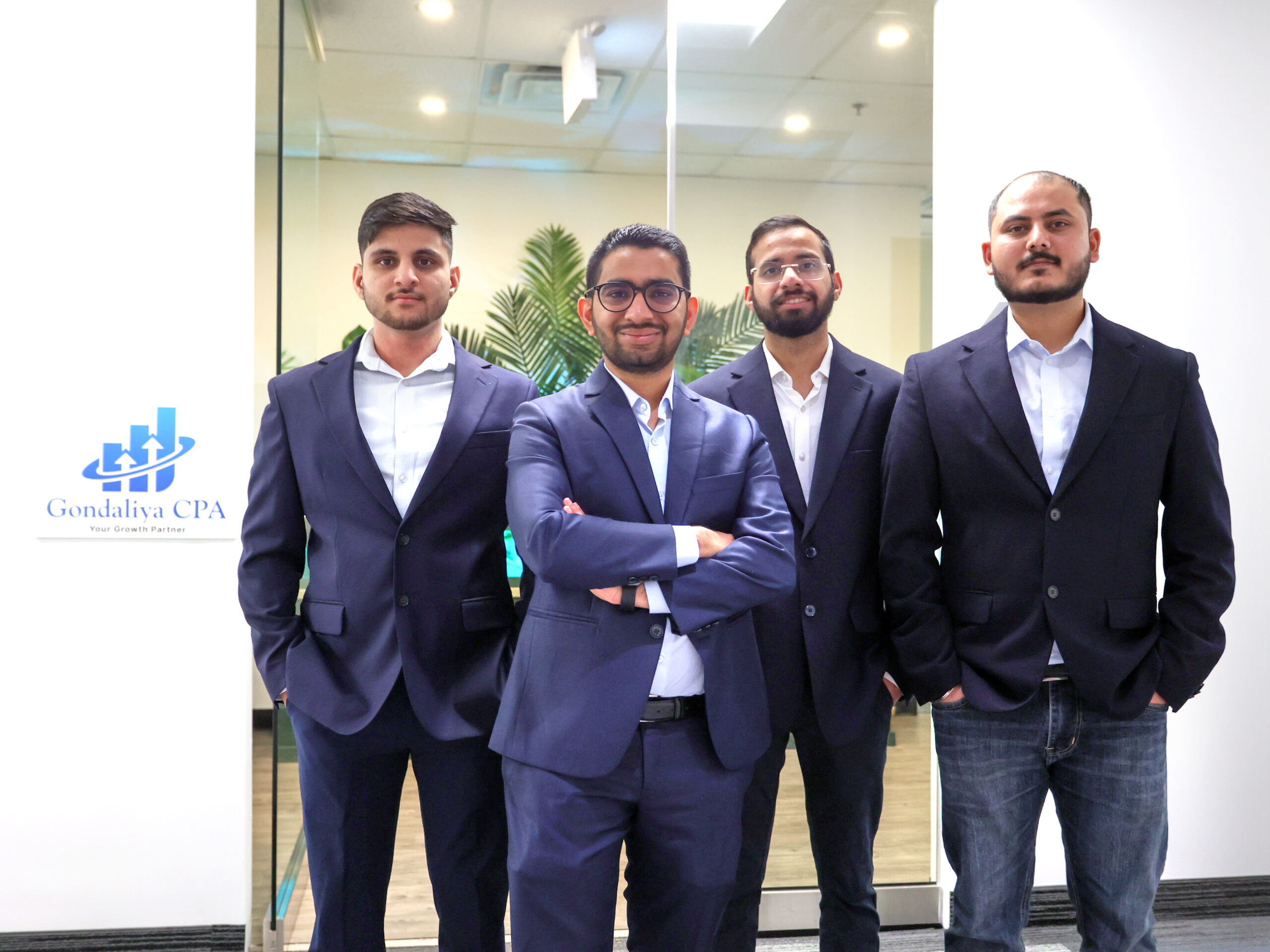
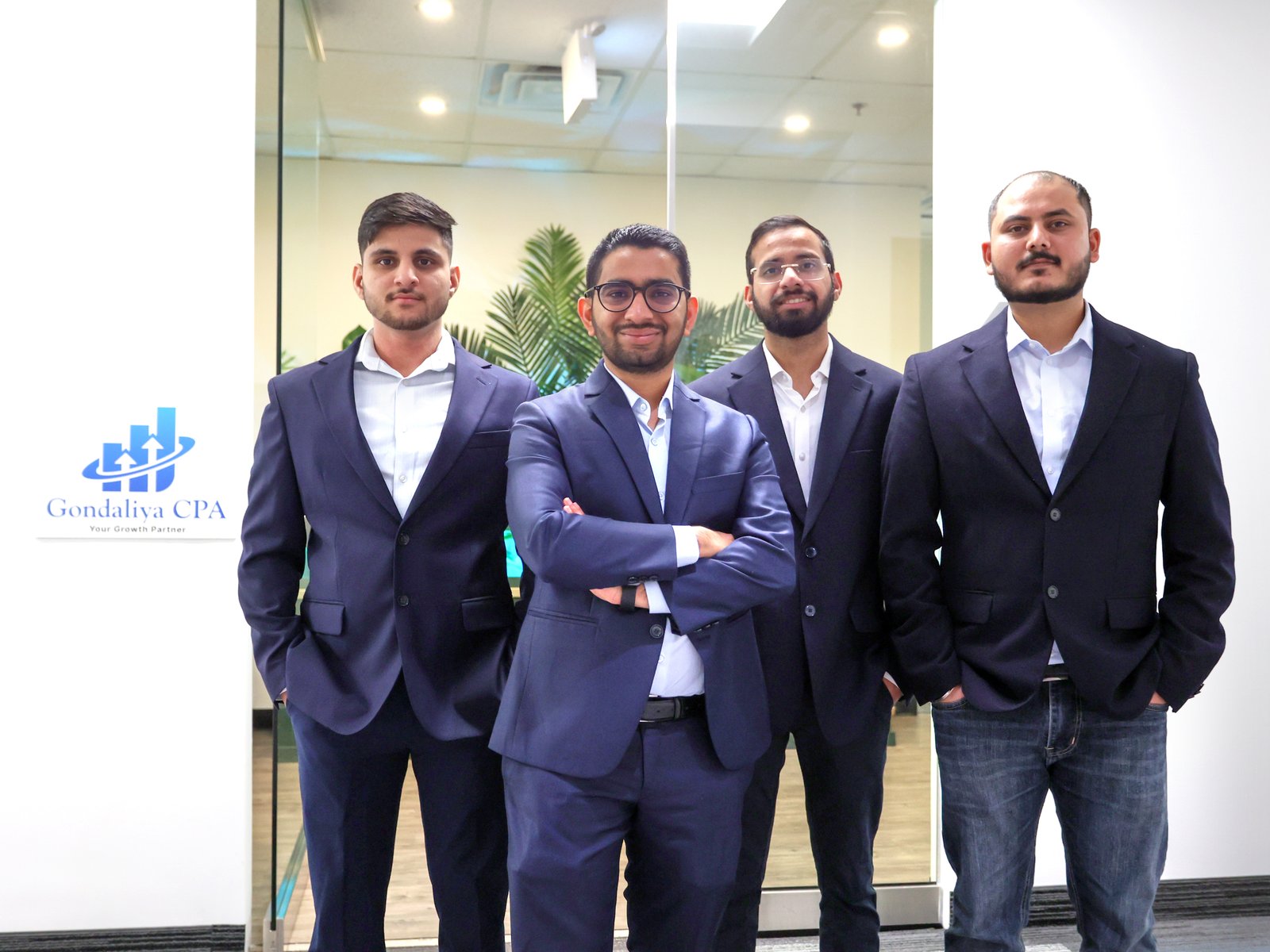
Meet Your Lead Escape Room Accountant
Meet your lead escape room accountant. As your venue and corporate tax adviser, you deal with the same two people every year.

What Our Clients Say
1300+ five-star reviews from attraction, venue and recreation business owners across Ontario and Canada.
Serving Escape Rooms Across Ontario
Our CPA team provides specialized accounting and tax solutions for escape rooms and immersive game venues throughout Ontario. We understand why a room is capital rather than an expense, how a refresh has to be judged project by project, what the deferred revenue behind a full booking calendar really represents, and what CRA looks at first when it opens an escape room file.
Toronto (ON)
55 Queen St E Ste 1205, Toronto, ON M5C 1R6, Canada
+1 (647) 212-9559
9:00 AM – 8:30 PM (Mon – Sun)
Mississauga (ON)
2100 Camilla Rd #716, Mississauga, ON L5A 2J8
+1 (647) 212-9559
9:00 AM – 8:30 PM (Mon – Sun)
Brampton (ON)
4 Starhill Crescent, Brampton, ON L6R 2P9, Canada
+1 (647) 212-9559
9:00 AM – 8:30 PM (Mon – Sun)
Scarborough (ON)
24 Clementine Square, Scarborough, ON M1G 2V7, Canada
+1 (647) 212-9559
9:00 AM – 8:30 PM (Mon – Sun)
Vaughan (ON)
19 Cabinet Crescent, Woodbridge, ON L4L 6H9, Canada
+1 (647) 212-9559
9:00 AM – 8:30 PM (Mon – Sun)
Oshawa (ON)
210 Durham St, Oshawa, ON L1J 5R3, Canada
+1 (647) 212-9559
9:00 AM – 8:30 PM (Mon – Sun)
Ottawa (ON)
2090 Neepawa Ave a314, Ottawa, ON K2A 3L6, Canada
+1 (647) 212-9559
9:00 AM – 8:30 PM (Mon – Sun)
Etobicoke (ON)
60 Stevenson Rd #1601, Etobicoke, ON M9V 2B4, Canada
+1 (647) 212-9559
9:00 AM – 8:30 PM (Mon – Sun)
Hamilton (ON)
70 Starling Dr, Hamilton, ON L9A 0C5, Canada
+1 (647) 212-9559
9:00 AM – 8:30 PM (Mon – Sun)
Guelph (ON)
1155 Gordon St, Guelph, ON N1L 1S8, Canada
+1 (647) 212-9559
9:00 AM – 8:30 PM (Mon – Sun)
Windsor (ON)
4387 Guppy Ct, Windsor, ON N9G 2N8, Canada
+1 (647) 212-9559
9:00 AM – 8:30 PM (Mon – Sun)
North York (ON)
150 Graydon Hall Dr #912, North York, ON M3A 3B2, Canada
+1 (647) 212-9559
9:00 AM – 8:30 PM (Mon – Sun)
Escape Room Accounting & Tax FAQs
Related Industries We Serve
Accountant for Family Entertainment Centres
- Prepaid balances and deferred revenue
- Attraction assets by capital cost class
- Corporate tax filing and statements
Accountant for Event Venues
- Deposits and forward booking calendars
- Fit-out as a leasehold improvement
- Corporate tax planning and payroll
Accounting for Small Businesses
- Bookkeeping, HST and year-end filing
- Owner salary and dividend planning
- CRA correspondence handled for you
Accountant for Incorporated Businesses
- T2 filing with GIFI and Schedule 8
- Small Business Deduction protected
- Notice to Reader financial statements
Escape Room Accounting & Tax Done Right.
T2 filing that treats each room as the capital asset it is, with the build-out carried as a leasehold improvement in Class 13, sets and props in Class 8 at 20% and control systems and point of sale in Class 50 at 55%, every refresh settled as capital or repair on the facts of the project and documented, the undepreciated cost of a retired or rebuilt room determined rather than assumed, prepaid bookings and gift cards held as deferred revenue until the game is played or the card redeemed, deposits timed under ETA subsection 168(9), and utilisation reported room by room against the slots you actually have. AFFORDABLE flat fees, no hourly billing. Licensed CPA Ontario. 1300+ five-star reviews. 30-Day Money-Back Guarantee.