



Tax Accountant for Healthtech Companies in Ontario and Across Canada
Every healthtech founder we meet assumes the product is an exempt health care service under Part II of Schedule V to the Excise Tax Act. That assumption is usually wrong, and if it were right it would be bad news: an exempt supplier cannot claim input tax credits, so the tax on your developers, your cloud bill and your whole software stack becomes a permanent cost instead of a refund. In practice software licensed to a clinic is generally taxable, which is the better answer — but it has to be established, not assumed. Then there is SR&ED, where healthtech has two problems other software companies do not: grants that reduce the claim under ITA subsection 127(11.1), and clinical validation that usually is not the eligible part. AFFORDABLE flat fees, and the credits claimed while the company still needs the cash.
AFFORDABLE Tax Accountant for Healthtech Companies
Healthtech sits in the gap between two kinds of accountant. The ones who know healthcare know practices and practitioners, not product companies. The ones who know software have never had to work out whether a supply is an exempt health care service — the question that decides whether your input tax credits exist at all. At Gondaliya CPA we do the work that gap leaves undone: the supply characterisation settled and documented, the credits claimed while you are still pre-revenue, and an SR&ED claim that survives contact with a technical reviewer. AFFORDABLE flat-fee support, no hourly billing.
We work with clinical software companies, patient portals and telehealth platforms, remote monitoring and medical device software companies, electronic records and practice management vendors, health data analytics teams, and pre-revenue startups running their first hospital pilot. If you build physical devices, our page for hardware startups covers the manufacturing side; if you run infrastructure or managed IT rather than a health product, see our cloud service providers and managed service providers pages.
Three lines we draw plainly. We will not tell you on a web page whether your product is exempt or taxable — it turns on your actual supply and your actual supplier. We state no SR&ED credit rate and no expenditure limit, because those are specific and a claim built on a number from a website unravels at review. And we give no advice on device classification, regulatory pathway or clinical strategy; that is not accounting work.
Our Official Partners








Accounting That Understands the Exemption Question
Four things make healthtech different from every other software file, and a preparer who treats you as an ordinary SaaS company will get at least two of them wrong. At Gondaliya CPA we set them out plainly and say which questions are matters of fact rather than rules.
Stay Compliant While You Are Still Burning Cash
The exposure on a healthtech file is rarely the income, because for years there is not much. It is the sales tax characterisation, the credits you did or did not claim, and an SR&ED claim nobody documented while the work was happening.
Accounting & Tax Experts for Healthtech Companies
- AFFORDABLE + Registered CPA Firm
- Business and Corporate Tax Expert
- Small & Medium Business Expert
- Accounting, bookkeeping, and tax filing
- CPA (Chartered Professional Accountant)
- 1300+ 5-star Google reviews
- 30-Day Money-Back Guarantee
- 60-Day Fees Matching Policy
Why Choose Our Accounting Services for Healthtech Companies?
Tax Planning — The Supply First
We settle exempt against taxable before anything else, because that one answer decides whether your input tax credits exist and whether you have been charging tax correctly all along.
Consulting — The SR&ED Record
We set up the project record in the first month, because it only works kept contemporaneously and cannot be reconstructed convincingly once the build has moved on.
CRA Representation — Technical Review
When a claim goes to technical review or a characterisation is challenged, we produce the records and the analysis and handle the correspondence from the first letter.
Bookkeeping — Diligence-Ready
Deferred revenue, recurring revenue and burn kept correctly month by month, so a funding round is never held up while someone rebuilds two years of books.
Google Reviews
Healthtech Clients
Healthtech Tax and Accounting Services in Ontario
Corporate Tax Filing
Your T2 with the small business deduction applied properly, non-capital losses carried forward, and instalments set only once the tax owing actually justifies them.
Exempt or Taxable Supply Review
Whether your product is an exempt health care service under Part II of Schedule V or a taxable supply, settled on your facts and documented when we adopt it.
Input Tax Credits and Apportionment
Credits claimed on the costs that carried tax, and apportioned on a documented basis where the company makes both exempt and taxable supplies.
SR&ED Claims
The ITA section 37 pool and ITA section 127 credits, built from contemporaneous project records rather than a narrative assembled the month before filing.
Grants and Assistance Review
How provincial health innovation funding, hospital partnership payments and accelerator money reduce your claim under ITA subsection 127(11.1).
Regulatory Spend Treatment
Whether Health Canada licensing and quality system costs are current or capital against ITA paragraph 18(1)(b), and where Class 14.1 applies.
Revenue and Deferred Revenue
Annual licences earned across the period they cover, setup fees separated from subscription, and pilot agreements treated on what they actually are.
Hospital and Public Sector Sales
Why a supply to a hospital is still taxable, and a working capital model built around procurement cycles that run months rather than weeks.
Registration and Place of Supply
When you crossed $30,000, the rate by your customer’s province, zero-rated exports, and whether the simplified non-resident regime reaches you.
Payroll for Developers
Source deductions from the first hire, the contractor-versus-employee question answered honestly, and time records that support the SR&ED claim.
Structure and Funding Rounds
Salary against dividends for founders, year end chosen deliberately, and the statements a diligence team will ask for prepared before they ask.
CRA Audit Resolution
Expert support on SR&ED technical reviews, input tax credit examinations and characterisation challenges, handled with confidence from the first letter.
Accounting & Tax Services Tailored for Healthtech Companies
Real, practitioner-level CPA expertise for clinical software companies, patient portals and telehealth platforms, remote monitoring and medical device software, records and practice management vendors, health data analytics teams, and pre-revenue startups running a first hospital pilot.
- We prepare your corporation’s T2 with the small business deduction under ITA section 125 applied against the $500,000 limit, tracked across any associated corporations a founder has left over from a previous venture.
- We carry non-capital losses forward properly, which matters more here than almost anywhere else, because a healthtech company usually spends three or four years in loss before the first real revenue arrives.
- We set instalments once the tax owing justifies them, and not before, since a company burning investor cash should not be paying instalments on profit it has not yet earned.
- We claim business-use-of-home under ITA subsection 18(12) where founders are still working from home, limited to the income from the business with the excess carried forward rather than lost.
- We keep the six years of records ITA section 230 requires, and we keep them in the shape an acquirer’s diligence team will ask for, because that request arrives with no notice.
- Part II of Schedule V to the Excise Tax Act exempts certain health care services, and almost every founder we meet assumes their product is inside it. That assumption is usually both wrong and unwelcome.
- Unwelcome because being exempt is bad news. An exempt supplier cannot claim input tax credits, so the tax on your developers, your cloud bill and your software stack becomes a permanent cost.
- The exemptions turn on both what the supply is and who makes it: an institutional health care service by a facility, or a diagnostic or treatment service rendered to an individual by a listed practitioner.
- A licence of software to a clinic is generally none of those, which means it is a taxable supply and your credits are available. That is the right answer for most healthtech, and it is worth real money.
- We will not tell you on a web page which side your product falls on, because it turns on your actual supply and your actual supplier. We work it out, write down the reasoning, and keep it on file.
- For a pre-revenue healthtech company the input tax credit is often the only cash coming in from anywhere other than investors, so getting the registration and the claims right is a cash-flow question first.
- We register voluntarily before the $30,000 threshold where it pays to, which on a company with a large taxable cost base and little revenue it almost always does.
- We claim the credits on the costs that actually carried tax: Canadian contractors, cloud and hosting, software subscriptions, office and equipment, and the professional fees that come with a funding round.
- Where the company makes both exempt and taxable supplies, the credits are apportioned to the extent the inputs are used in commercial activity, on a fair and reasonable basis applied the same way every period.
- We document the apportionment method when we adopt it rather than reconstructing it under review, because a percentage nobody can account for is the first thing a sales tax auditor takes apart.
- Qualifying work goes into the expenditure pool under ITA section 37 and generates investment tax credits under ITA section 127, refundable at an enhanced rate for a Canadian-controlled private corporation up to its expenditure limit.
- We state no rate and no limit on this page. Those figures move, they are specific, and a claim built from a number someone read on a website is the kind that unravels at the technical review.
- The eligible work is the systematic investigation that resolved a technological uncertainty. Not the feature you shipped, not the clinical trial that confirmed it worked, and not the data you collected along the way.
- That distinction is where nearly every first healthtech claim we review goes wrong, because clinical validation feels like the hardest part of the project and is usually the part that does not qualify.
- So we set up contemporaneous records while the work happens: what was uncertain, what was tried, what failed and why. You can model the arithmetic yourself with our SR&ED calculator first.
- This is the healthtech-specific trap. ITA subsection 127(11.1) reduces your qualified expenditures by government and non-government assistance received or entitled to be received, and healthtech takes more assistance than most sectors.
- Provincial health innovation funding, a hospital partnership payment, accelerator money, a university collaboration grant — each one has to be tested against the agreement to see whether it reduces the claim.
- A company that claimed the full expenditure and ignored a grant it had already banked gets the reduction applied on review, with the credit clawed back in a year when the cash is long spent.
- We read the funding agreements before the claim rather than after, and we model the net benefit of taking a particular grant against the credit it will cost you, which is a conversation worth having early.
- We also keep the claim and the grant reporting consistent with each other, because the same project described two different ways in two different submissions is how a technical review starts badly.
- Software as a medical device brings a Health Canada class determination, a device licence and a quality management system, and every one of those costs money before a single dollar of revenue arrives.
- The accounting question nobody asks is whether that spend is deductible now. ITA paragraph 18(1)(b) bars a deduction for a capital outlay, and a licence with enduring value looks a lot like one.
- Where the expenditure is capital and the asset is an eligible intangible, it generally falls into Class 14.1 and is written off over time rather than claimed in the year the cheque cleared.
- We make that call deliberately and on the facts, separating ongoing compliance cost — which is ordinary and current — from the one-off spend that bought an approval the company will hold for years.
- What we do not do is tell you your device class, your licence pathway or your regulatory timeline. That is a regulatory question, we are not regulatory consultants, and we will say so plainly.
- An annual licence invoiced in January is not January’s revenue. It is earned across the twelve months it covers, with the unearned balance carried as deferred revenue rather than taken to income on invoicing.
- This matters beyond tidiness. A healthtech company that books annual contracts on signature looks profitable in the quarter it closes a deal and broke in the three that follow, which misleads its own board.
- Implementation and setup fees are separated from the subscription rather than lumped in, because they are earned when the work is done and they distort the recurring revenue figure investors actually look at.
- Pilot agreements get their own treatment. A paid pilot is revenue; an unpaid one that may convert is not, and a letter of intent from a hospital is neither revenue nor a contract however encouraging it reads.
- We keep usage-based billing reconciled to the underlying meter rather than to the invoice run, so a billing error does not quietly become a revenue error that nobody finds until diligence.
- Here is the thing founders get backwards: the customer’s status does not exempt the supply. Selling to a public hospital or a provincial health authority does not make a taxable supply exempt.
- Only the nature of what you supply can do that, so a platform licensed to a hospital is generally taxable even though everything around the transaction feels like the public health system.
- The second public-sector problem is timing. Procurement cycles run months, purchase orders arrive before contracts, and payment lands long after the revenue was earned and the tax on it became payable.
- We build the working capital model around that gap rather than discovering it, because a company that recognises revenue on delivery and collects in ninety days needs to have planned for the ninety days.
- We also treat your data residency and privacy compliance spend as the ordinary deductible operating cost it is, while being clear that whether you are compliant is a question for your counsel and not for us.
- Registration is required once worldwide taxable supplies exceed $30,000 in a single calendar quarter or over four consecutive calendar quarters, and exempt supplies do not count toward that figure while zero-rated ones do.
- Canadian sales carry the rate for the customer’s province under the place of supply rules, with Ontario at 13%, which for software licensed across the country means several rates in the same month.
- Supplies to customers outside Canada are generally zero-rated under Schedule VI Part V of the Excise Tax Act, so no tax is charged while the supply still counts as taxable for your credits.
- If the company is a non-resident supplying Canadian consumers, the simplified registration regime may reach you, and our registration checker will tell you whether it does before you call us.
- We flag where separate provincial registrations can arise in Quebec, British Columbia, Saskatchewan and Manitoba rather than describing those regimes here, and we state no foreign sales tax rule at all.
- We set up payroll properly from the first hire, with source deductions remitted on the right schedule, because a new employer that is days late rather than months late still collects a penalty.
- We work through the contractor-versus-employee question honestly rather than labelling every developer a contractor for convenience, because a wrong call there is assessed against the company with interest and penalties.
- That question is sharper in healthtech than elsewhere, because the same person is often a part-time clinical adviser, a contractor on the build and a shareholder, all in one relationship.
- We keep the payroll records SR&ED needs, which means time allocated to eligible work as it happens rather than an estimate assembled in the week before the claim is filed.
- We handle the reporting that comes with a stock option or share plan, and we prepare the T4 and T4A slips on time, including for the contractors working outside Canada.
- Most healthtech is incorporated from the start because investors require it, so the useful work is not whether to incorporate but getting the structure right before anyone puts money in.
- We model salary against dividends for the founders, including the effect on RRSP room and on whether anyone is building the income record a mortgage lender will want to see.
- We flag where a holding company or a share reorganisation is worth considering, and where it is premature, and we are plain that the legal work belongs to your corporate counsel rather than to us.
- We choose a fiscal year end deliberately, which for a company planning a raise is a real lever: closing the year before or after a round changes what the statements in the data room show.
- And we prepare the statements diligence will actually ask for, with a compilation engagement where that is the right level, so a raise is not held up while someone rebuilds two years of books.
- When the CRA questions your exempt-or-taxable characterisation, we produce the analysis of the actual supply and the contracts behind it, which is exactly why we write that reasoning down when we adopt it.
- When your input tax credits or your apportionment method are reviewed, we produce the invoices showing which costs carried tax and the documented basis on which the split was made.
- When an SR&ED claim goes to technical review, we produce the contemporaneous project records and we handle the correspondence, including the awkward part where some of the claim was clinical validation.
- When a grant is raised against the claim, we produce the funding agreement and the ITA subsection 127(11.1) analysis rather than arguing about it, which is a shorter and cheaper conversation.
- We file the Notice of Objection within 90 days of a reassessment and pursue taxpayer relief on Form RC4288, cancelling penalties and interest where a prior preparer’s error was the cause.
Healthtech Tax Check
Six quick questions on your supply characterisation, your input tax credits, your SR&ED records, your grants, your deferred revenue and your diligence readiness. No fee shown.
1. Has anyone settled in writing whether your supply is exempt or taxable?
2. Are you claiming input tax credits on contractors, cloud and software?
3. Do you record SR&ED project work as it happens rather than before filing?
4. Have your grants been tested against your SR&ED claim?
5. Is annual contract revenue deferred across the period it covers?
6. Could you hand an investor two clean years of statements this week?
Free CPA Consultation for Healthtech Companies
Case Studies: Healthtech Companies
Toronto Clinical Software — Three Years of Unclaimed Credits
The problem: A Toronto company licensing scheduling and charting software to clinics had never registered for GST/HST. A previous adviser had told the founders that because they sold into healthcare their supplies were exempt, so they charged no tax and claimed nothing back. They had spent three years paying HST on Canadian contractors, cloud hosting and a full software stack, and had recovered none of it.
What we did: We worked through the actual supply against Part II of Schedule V and concluded a licence of software to a clinic was not an exempt health care service. We registered them from the correct date, quantified and dealt with the period in which tax should have been charged, and claimed the input tax credits available on the open periods, with the reasoning documented on file.
The result:
- Characterisation settled in writing, not assumed
- Input tax credits recovered for the open periods
- Registration corrected from the proper effective date
Waterloo Remote Monitoring — A Grant Nobody Mentioned
The problem: A remote patient monitoring company had filed two SR&ED claims prepared by a contingency-fee firm. Neither claim mentioned the provincial health innovation funding and hospital partnership payments the company had received across the same periods. The claims had been paid, the cash had been spent on payroll, and a review had just opened on the second year.
What we did: We read the funding agreements, applied ITA subsection 127(11.1) to work out which payments were assistance and by how much they reduced the qualified expenditures, and put a corrected position forward ourselves rather than waiting to be told. We then rebuilt the project records so the third claim separated the systematic investigation from the clinical validation work.
The result:
- Assistance reduction quantified and disclosed proactively
- Third claim filed with validation work properly excluded
- Contemporaneous project records in place from that quarter
Ottawa Telehealth Platform — Revenue That Was Not Revenue Yet
The problem: An Ottawa telehealth company had booked three multi-year hospital contracts in full in the month each was signed, and had treated a signed letter of intent as revenue as well. Its statements showed a profitable year followed by two terrible quarters for no commercial reason. A funding round was in progress and the investor’s diligence team had started asking questions the founders could not answer.
What we did: We restated the contracts so each was earned across the period it covered with the unearned balance carried as deferred revenue, removed the letter of intent entirely, separated implementation fees from subscription, and rebuilt two years of monthly statements with recurring revenue and burn shown separately.
The result:
- Multi-year contracts deferred across their actual terms
- Recurring revenue and implementation fees shown separately
- Two years of statements rebuilt in time for the data room
Our clear, efficient process ensures every step is transparent, building trust and long-term client relationships.
Kickoff (Document Request)
Collect your customer contracts and terms, every funding and grant agreement, prior returns and SR&ED claims, payroll and contractor records, and your GST/HST registration details.
First 30 Days (Two Records)
Settle the exempt-or-taxable characterisation in writing and start the contemporaneous SR&ED project record, then reconstruct any input tax credits still available.
Position Review
Grants tested against ITA subsection 127(11.1), regulatory spend split between capital and current, registration date confirmed, and deferred revenue restated.
Annual Planning Review
Structure and year end, salary against dividends, loss carryforwards, SR&ED cash flow timing, and the statements your next round will need.
Year-End Close & Filing
T2 with the small business deduction, the SR&ED claim filed with its records, credits claimed and apportioned, instalments set, CRA correspondence handled.
Get Your Healthtech Tax Position Reviewed Today
Affordable Pricing for Healthtech Companies
We believe in clear, upfront pricing so you know exactly what to expect. All fees include HST.
- Tax Preparation (Corporation) — From $400
- Tax Return Filing (Corporation) — From $400
- Tax Compliance Audit — FREE CRA audit support for our clients
- Tax Strategy — FREE for our clients
- Accounting Base Plan — From $100 per month
- Bookkeeping Management — Free for our Accounting clients
- Financial Reporting — Free for our Accounting clients
- Business Formation — Flat $35
- Incorporation Process — Flat $35
- Entity Setup Assistance — Flat $35
- Full-Service Payroll — From $125 per month
Payment is by Interac e-Transfer to info@gondaliyacpa.ca only. Security question: Not Applicable, as auto-deposit is enabled.
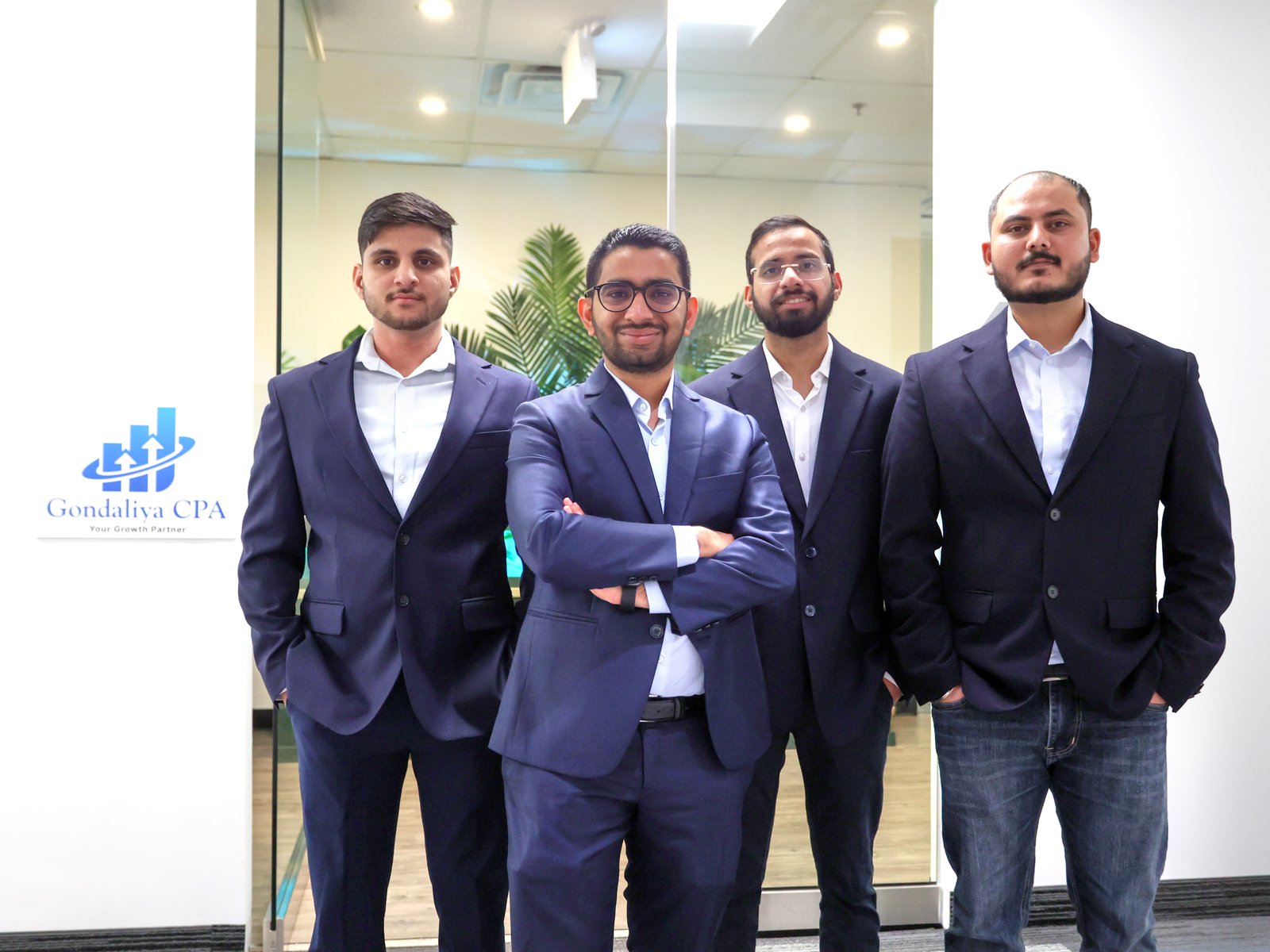
Meet Your Lead Accountant
Meet your lead accountant. As your business and technology tax adviser, you deal with the same two people every year.


What Our Clients Say
1300+ five-star reviews from healthtech companies, software businesses and technology startups across Ontario and Canada.
Serving Healthtech Companies Across Ontario
Our CPA team provides specialized accounting and tax solutions for healthtech companies across Ontario. We understand why the exempt-or-taxable question under Part II of Schedule V decides whether your input tax credits exist at all, why being exempt is bad news rather than good, why ITA subsection 127(11.1) means a health innovation grant can quietly reduce your SR&ED claim, and why clinical validation is usually not the part of the project that qualifies.
Toronto (ON)
55 Queen St E Ste 1205, Toronto, ON M5C 1R6, Canada
+1 (647) 212-9559
9:00 AM – 8:30 PM (Mon – Sun)
Mississauga (ON)
2100 Camilla Rd #716, Mississauga, ON L5A 2J8
+1 (647) 212-9559
9:00 AM – 8:30 PM (Mon – Sun)
Brampton (ON)
4 Starhill Crescent, Brampton, ON L6R 2P9, Canada
+1 (647) 212-9559
9:00 AM – 8:30 PM (Mon – Sun)
Scarborough (ON)
24 Clementine Square, Scarborough, ON M1G 2V7, Canada
+1 (647) 212-9559
9:00 AM – 8:30 PM (Mon – Sun)
Vaughan (ON)
19 Cabinet Crescent, Woodbridge, ON L4L 6H9, Canada
+1 (647) 212-9559
9:00 AM – 8:30 PM (Mon – Sun)
Oshawa (ON)
210 Durham St, Oshawa, ON L1J 5R3, Canada
+1 (647) 212-9559
9:00 AM – 8:30 PM (Mon – Sun)
Ottawa (ON)
2090 Neepawa Ave a314, Ottawa, ON K2A 3L6, Canada
+1 (647) 212-9559
9:00 AM – 8:30 PM (Mon – Sun)
Etobicoke (ON)
60 Stevenson Rd #1601, Etobicoke, ON M9V 2B4, Canada
+1 (647) 212-9559
9:00 AM – 8:30 PM (Mon – Sun)
Hamilton (ON)
70 Starling Dr, Hamilton, ON L9A 0C5, Canada
+1 (647) 212-9559
9:00 AM – 8:30 PM (Mon – Sun)
Guelph (ON)
1155 Gordon St, Guelph, ON N1L 1S8, Canada
+1 (647) 212-9559
9:00 AM – 8:30 PM (Mon – Sun)
Windsor (ON)
4387 Guppy Ct, Windsor, ON N9G 2N8, Canada
+1 (647) 212-9559
9:00 AM – 8:30 PM (Mon – Sun)
North York (ON)
150 Graydon Hall Dr #912, North York, ON M3A 3B2, Canada
+1 (647) 212-9559
9:00 AM – 8:30 PM (Mon – Sun)
Healthtech Accounting & Tax FAQs
Related Industries We Serve
Accountant for Digital Platforms
- Intermediary rather than product
- Agent against principal on tax
- Part XX platform reporting
Accountant for Hardware Startups
- Physical device manufacture
- Inventory and tooling costs
- Prototype and production runs
Accountant for Cloud Service Providers
- Infrastructure and hosting margin
- No health exemption question
- Usage-based billing records
Accountant for Managed Service Providers
- Ongoing IT service delivery
- Contracted support agreements
- Service rather than product
Healthtech Tax Done Right.
Built for the company sitting between healthcare and software, where neither kind of accountant has done the work. The exempt-or-taxable question under Part II of Schedule V settled on your actual supply and written down — because being exempt is bad news, not good, and an exempt supplier claims no input tax credits at all. Those credits claimed while you are still pre-revenue, apportioned on a documented basis where your supplies are mixed. An SR&ED claim under ITA sections 37 and 127 built from contemporaneous records, with the systematic investigation separated from the clinical validation that usually does not qualify, and your grants tested against ITA subsection 127(11.1) before the claim rather than after. Plus regulatory spend split properly against ITA paragraph 18(1)(b), deferred revenue restated, and the statements a diligence team will ask for ready before they ask. AFFORDABLE flat fees, no hourly billing. Licensed CPA Ontario. 1300+ five-star reviews. 30-Day Money-Back Guarantee.