



Tax Accountant for Photo Booth Businesses in Ontario and Across Canada
A photo booth is a capital asset with a finite number of earning dates in a year, so we measure what each unit earned against what it cost to own before you buy the next one. Booking deposits are held as deferred revenue until the event is delivered, and under ETA subsection 168(9) the tax goes on the return when the deposit is applied against the invoice, not when the client reserves the date. We put booths, printers, lighting, backdrops and props in Class 8 at 20% and the tablets and computers that run them in Class 50 at 55%, cost prints, media and ink against the bookings that consumed them, and test your attendants on the employee-versus-contractor factors. Open-air, enclosed, mirror or roaming 360 units, one booth or eight — we handle the numbers, with AFFORDABLE flat fees.
AFFORDABLE Photo Booth Business Tax Accountant
A photo booth business is a small fleet of capital assets that can only earn money on Saturdays, and nearly every accounting problem in the trade traces back to that one fact. A unit costs real money, it depreciates whether or not it leaves the storage unit, and it has perhaps fifty realistic earning dates in a calendar year, most of them between May and October, and a large share of them the same date as every other enquiry the owner had to turn away. Until you know what one booth earned in a year against what it cost to own, you cannot honestly say whether the second unit was an investment or an ornament. Sitting underneath that is a cash pattern that flatters the books: deposits land months before the work, and an owner who counts them as income reports a profitable spring and a hollow autumn. Gondaliya CPA works on exactly those three things: utilisation per unit, deposits held against deferred revenue, and costing per event, on an AFFORDABLE flat fee that keeps the CRA side clean and your tax bill no larger than it has to be.
As a photo booth accountant, we look after wedding and event booth operators, corporate activation specialists, roaming 360 businesses and multi-unit owners across Ontario, with year-round support instead of a once-a-year scramble. We tell you what each unit earned, what a booking actually cost once prints, media and attendant hours were attached to it, and where your worker-status exposure sits.
Leave the books to us, and keep your attention on the diary that pays for everything.
Our Official Partners









Accounting That Understands How a Photo Booth Business Actually Works
A booth operator carries pressures a general equipment business never meets. The earning dates are finite and clustered into six months, the money arrives long before the work is done, the consumables disappear into overhead where no booking can see them, and the people on site sit on a line CRA takes a close interest in. We know that reality from the inside and give Ontario operators practical, trade-specific answers.
Stay Compliant and Minimize Your Photo Booth Business Tax
For a booth operator, meeting every CRA deadline and paying the least legal tax are one piece of work, not two. We hold the filing calendar and claim every booth, consumable, attendant and venue-travel dollar the return allows, which is how a file stays complete and unremarkable at the same time.
Accounting & Tax Experts for Photo Booth Businesses
- AFFORDABLE + Fully Registered CPA Firm
- Business and Corporate Tax Expert
- Small & Medium Business Expert
- Accounting, bookkeeping, and tax filing
- Certified CPA
- 1300+ 5-star Google reviews
- 30-Day Money-Back Guarantee
- 60-Day Fees Matching Policy
Why Choose Our Accounting Services for Photo Booth Businesses?
Tax Planning — Booth Pools & Timing
Class 8 at 20% on booths, printers and props, Class 50 at 55% on tablets and computers, recapture when a unit is sold, and the $500,000 Small Business Deduction protected.
Consulting — Utilisation & Margin
Revenue per booth per year set against the cost of owning it, and per-event margin with prints, media and attendant hours loaded, so the next purchase is a calculation.
CRA Representation — Worker Status & Disposals
If CRA asks about attendant payments or a unit you sold, we build the answer and apply for relief on Form RC4288 where an earlier error created the penalty.
Bookkeeping — Deferred Revenue & Cash
Deposits held kept apart from income earned, the forward book visible on the balance sheet, and a cash plan that carries the business through a quiet January.
Google Reviews
Photo Booth Clients
Photo Booth Business Tax and Accounting Services in Ontario
Corporate Tax Filing (T2) for Photo Booth Businesses
Professional T2 preparation with booths and props in Class 8, tablets and computers in Class 50, deposits held as deferred revenue, and CRA compliance on every line.
Bookkeeping & Accounting for Photo Booth Businesses
Per-event costing with prints, media and attendant hours loaded, deposits released as bookings are delivered, and revenue tracked per booth per year.
Payroll Services for Photo Booth Businesses
Attendant payroll with WSIB from the first hire, PD7A remittances, T4 and T4A slips by the last day of February, and worker status documented.
GST/HST Filing for Photo Booth Businesses
AFFORDABLE HST filing with 13% on booth hire and attendant labour, deposits taxed when they are applied, and every input tax credit recovered.
Tax Planning for Photo Booth Businesses
Purchase timing across Class 8 and Class 50, the small-business limit, a seasonal instalment plan, and an exit structure set up years before you need it.
Corporate Catch-Up Filing for Photo Booth Businesses
Overdue T2 and HST years filed, the capital cost pools and deposit records rebuilt behind them, and your company returned to CRA compliance.
CRA Audit Resolution for Photo Booth Businesses
Expert support on attendant classification, booth disposals and out-of-province rate reviews, handled with confidence from the first letter.
CPA Financial Statements (Notice to Reader) for Photo Booth Businesses
Compilation engagement statements a lender or landlord will accept, with booths carried at net book value by class and deposits held shown as deferred revenue.
Incorporation Services for Photo Booth Businesses
Incorporation end to end: NUANS search, articles and share structure, plus the section 85 rollover that moves booths, printers, the vehicle and your client list into the new corporation at elected amounts.
Catch-Up Bookkeeping Services for Photo Booth Businesses
Bookings, deposits, consumable orders and equipment invoices rebuilt and reconciled across the missing months, until the asset schedule and the deferred revenue balance are both right.
US Corporation & LLC Tax Filing for Photo Booth Businesses
Cross-border filing where the work, the owners or the shareholders touch the United States, covering Part XIII withholding and T1135 reporting.
Voluntary Disclosure Program for Photo Booth Businesses
Come forward on missing slips, unreported recapture or HST charged wrongly on an out-of-province booking, cancelling penalties through a Voluntary Disclosures Program application.
Accounting & Tax Services Tailored for Photo Booth Businesses
Real, practitioner-level CPA expertise for wedding and event booth operators, corporate activation specialists, roaming 360 businesses and multi-unit owners across Ontario — built for a business whose assets can only earn on a finite number of dates.
- Your T2 goes out with GIFI on Schedule 100 and Schedule 125 and booth hire, attendant labour, print sales and travel recovery split onto their own lines, so CRA’s matching reads the return the way the business actually earns.
- Capital cost allowance goes on Schedule 8 with the booths themselves, printers, lighting, backdrops and props in Class 8 at 20%, and the tablets, laptops and the computers that run them in Class 50 at 55%.
- A delivery van or trailer used to move units between venues is depreciated in its appropriate vehicle class rather than thrown into the same pool as the booths, because the rate and the recapture calculation differ.
- Selling a unit or trading it toward a newer one is a disposal: proceeds above the undepreciated capital cost of the class come back into income as recapture, and an emptied class short of its balance gives a terminal loss.
- A booth business that had put $14,000 of tablets and laptops into Class 8 was deducting them at 20% when 55% was available; correcting the pools released several thousand dollars of deduction that had simply been sitting unused.
- Every booking is costed as an event: prints and media consumed, attendant hours, kilometres to the venue and the share of booth ownership it carried, so a busy Saturday that lost money cannot hide inside a good month.
- We hold every deposit as deferred revenue on the balance sheet and release it to income only when the event is delivered, which is what stops a full spring diary reading as profit the business has not yet earned.
- We track revenue per booth per year against what that booth costs to own, because a $6,500 unit that goes out eighteen times a year and one that goes out forty-two times are different businesses entirely.
- Consumables are posted to cost of sale against the events that consumed them rather than swept into overhead, because prints, media, ink, guest books and backdrop materials are the difference between a real per-event margin and a guess.
- Supplier, consumable and vehicle invoices are captured through Dext and reconciled monthly in QuickBooks Online or Xero, so the six-year retention ITA section 230 demands is met and no input tax credit quietly goes unclaimed.
- We test each attendant against the employee-versus-contractor factors — control over how and when the work is done, who supplies the booth and the vehicle, the ability to subcontract, and the chance of profit against the risk of loss.
- Attendants who are employees go on payroll in Wagepoint with income tax, CPP and EI withheld and remitted on the PD7A by the fifteenth of the following month, because CRA’s graduated late-remittance penalty on source deductions reaches 10%.
- Genuine contractors receive a T4A so the payments you deducted are reported the way CRA expects, instead of sitting in an unsupported subcontractor total that a payroll reviewer will ask you to substantiate line by line.
- We register your WSIB coverage before the first hire, because an attendant lifting a booth out of a van at a venue door is exactly the injury an unregistered employer cannot afford to have happen.
- Slip filing is a hard date: the T4 set and its Summary must reach CRA by the last day of February, reconciled against what was actually remitted on the PD7A, with Ontario payroll monitored for the $1,000,000 Employer Health Tax exemption.
- Booth hire and attendant labour are both taxable supplies at 13% HST in Ontario, so the tax on a standard package is straightforward; the work is in charging it on the deposit at the right moment rather than the wrong one.
- Under ETA subsection 168(9), a deposit is not treated as consideration until it is applied, so no tax goes on the return when the client reserves the date — the tax arrives in the period the deposit is credited to the invoice.
- Input tax credits are recoverable in full on booth purchases, printers, props, prints and media, backdrop stock, software subscriptions and the vehicle costs of getting a unit to a venue, which on a purchase year is a substantial recovery.
- Registration is required once taxable revenue passes $30,000 over four consecutive calendar quarters, and we usually register earlier than that, because a business buying $9,000 booths cannot recover the tax on them until it holds a number.
- An event booked outside Ontario raises the place of supply question, so the rate has to be determined for that particular booking rather than assumed from your own address, and we settle it before the invoice goes out rather than after.
- A tablet bought in the last week of your fiscal year opens a Class 50 pool at 55% while the booth it sits in opens a Class 8 pool at 20%, so purchase timing is a decision rather than an accident.
- The owner’s remuneration is set deliberately: enough T4 salary to create RRSP room and CPP coverage, the rest as dividends, so income that stays in the company is taxed near 12.2% rather than at a personal rate reaching 53.53%.
- The associated-corporation rules get watched where the same owner runs a second event company or holds the vehicles personally, because they share one $500,000 small-business limit under ITA section 125.
- Seasonality is planned rather than survived: with most earning dates between May and October, we build the instalment schedule and the owner’s draw against a year where six months carry twelve, instead of leaving January to chance.
- Qualifying for the $1.25M Lifetime Capital Gains Exemption in ITA 110.6 takes a two-year runway, so we clear the retained cash and passive holdings off the balance sheet well before you ever put the business up for sale.
- Booth hire, package fees, print sales and travel recovery are rebuilt from bank deposits, the booking system and the signed contracts, year by unfiled year, until the six-year record ITA section 230 requires actually exists.
- The penalty for filing a T2 late starts at 5% of the balance owing and adds 1% for each month it stays outstanding, to a maximum of twelve, which is why the earliest missing year is the one we file first.
- Capital cost pools are rebuilt across the missing years, with tablets and laptops lifted from Class 8 into Class 50 — on one three-year catch-up that single correction was worth about $7,000 of deduction nobody had claimed.
- Deposits taken in the unfiled years are re-sorted between revenue earned and money still held against dates not yet worked, because a catch-up that books every deposit as income overstates tax in one year and understates it in the next.
- Where the exposure warrants it, we file a Voluntary Disclosures Program application on Form RC199 before CRA makes contact, because a disclosure that is voluntary, complete and at least one year past due can cancel penalties in full.
- When CRA questions the attendant line, we produce the contracts, the invoices and the worker-status analysis for each person paid, because a large payment total with nothing documented behind it is where this audit usually begins.
- A booth sold privately or traded toward a newer model is a disposal whether or not anybody wrote it down, so we hand the auditor the recapture calculation and the pool balance rather than arguing about it.
- We answer HST queries with the contracts and client addresses behind each rate applied, so a reviewer looking at an out-of-province booking is not left to assume every event should have carried the Ontario rate.
- A full audit is managed as a project on our side: revenue, asset and payroll queries answered inside the deadlines and in one voice, so a single-year review does not quietly widen into the years behind it.
- An objection has to reach CRA within 90 days of the reassessment, and alongside it we apply for taxpayer relief on Form RC4288 where an earlier bookkeeper’s error created penalties and interest that had already passed $15,000.
- We prepare CSRS 4200 compilation engagement financial statements across two fiscal years, which is what an equipment lender asks for when you finance a second booth and what a landlord asks for on a storage lease.
- Your statement of financial position carries the booths at net book value by class, separating the Class 8 units, printers and props from the Class 50 tablets and computers that lose value at a very different speed.
- Deposits held against dates not yet worked are presented as deferred revenue rather than buried in the bank balance, because a lender reading $40,000 of cash needs to know how much of it is already spoken for.
- The statement of operations separates booth hire, attendant labour, print sales and travel recovery consistently across both years and ties to the T2 filed with CRA, so the bank accepts the package without a second request.
- Compiled statements land within 30 days of us receiving your records and the year’s T2 figures, because financing approved ahead of a booked season is worth nothing if it arrives in the middle of August.
- We incorporate under the Ontario Business Corporations Act, which gives you limited liability at a venue and roughly the 12.2% Ontario combined rate on the first $500,000 of active income instead of a personal rate that tops out at 53.53%.
- Existing booths, printers, props, the vehicle and the client list move into the company on a section 85 rollover, filed on Form T2057 at elected amounts so the capital gain a plain sale would trigger is deferred instead.
- Rollover values set the opening Class 8 and Class 50 balances, so the new corporation begins with an asset schedule that is right on day one instead of reconstructed from memory three years later.
- We open the corporation’s CRA Business Number, HST and payroll accounts within the first 30 days and make sure the insurance certificates venues ask for are issued in the new company’s name rather than the old one.
- The chart of accounts is set with deferred revenue, consumables in cost of sale and a revenue and cost tag per booth built in from the first booking, so the records accumulate correctly instead of being fixed later.
- Years of neglected books get reconstructed from bank deposits, e-transfer histories, the booking system and supplier invoices, so an operator who ran three seasons on a shoebox ends up with a ledger a T2 can be filed from.
- The booth schedule is rebuilt unit by unit from purchase invoices and split across Class 8 and Class 50, which is almost always wrong when we inherit a file that was kept on a spreadsheet.
- We recover the input tax credits buried in unentered booth purchases, print and media orders, software subscriptions and vehicle costs — on two $9,000 units bought in one year that is over $2,300 of credits alone.
- Deposits are separated from earned revenue across the backlog so the caught-up statements show what was actually delivered in each year, rather than a spring that looks profitable because the autumn’s money arrived early.
- Every payment made to somebody on site is traced back to the PD7A and to the T4 and T4A slips issued, month by caught-up month, so the T2 that follows is built on figures rather than recollection.
- Where you take a booking across the border for a US client or a US venue, we review what was actually supplied and where before any Canadian tax treatment is applied, rather than letting a foreign billing address decide it.
- A non-resident shareholder changes what leaves the company: dividends paid out of Canada carry Part XIII withholding at 25% or the lower treaty rate, and the NR4 reporting behind them has to be filed on time.
- Specified foreign property above the $100,000 threshold pulls the owners into Form T1135, and the penalty regime behind that form applies whether or not a dollar of tax was ever owing on the holding.
- An owner or shareholder who holds US citizenship brings a second set of filing obligations that reach right into a Canadian corporation, so we run the two countries’ returns together rather than discovering the overlap years afterwards.
- The two returns are reconciled against each other so a foreign tax credit genuinely lands, because tax paid twice on one dollar of income is a cost most owners simply absorb without noticing they had a claim.
- Attendants paid cash for years with nothing issued to them are disclosed first, because two separate problems hide behind that one expense line: the missing slips themselves, and whether those people were employees all along.
- We disclose recapture that was never reported when older booths were sold off or traded toward newer units, because a disposal nobody recorded does not go away and the penalty for catching it late is what a disclosure removes.
- The submission itself is built on Form RC199 around a full reconstruction from the booking system, the signed contracts and the bank feed, so nobody ends up arguing with an arbitrary assessment raised on $180,000 of deposits.
- Charging the wrong rate on events held outside Ontario is a quiet, cumulative error that repeats on every booking a travelling client makes, and correcting several years of it is exactly what a disclosure exists for.
- We confirm the disclosure is genuinely voluntary, complete and at least one year past due before CRA makes contact, because those conditions are what turn a five-figure penalty exposure into a managed correction rather than a prosecution risk.
Photo Booth Utilisation & Tax Check
Six quick questions on per-booth utilisation, your deposits and deferred revenue, consumable costing, your capital cost allowance classes, attendant status and whether it is time to incorporate. No fee shown.
1. Do you know what each booth earned last year against what it cost to own?
2. Are booking deposits held as deferred revenue until the event is delivered?
3. Are prints, media and ink costed against the bookings that consumed them?
4. Do the tablets and laptops sit in Class 50 instead of the Class 8 booth pool?
5. Have your attendants been tested on the employee-versus-contractor factors?
6. Is your photo booth business incorporated?
Free CPA Consultation for Photo Booth Businesses
Case Studies: Photo Booth Accounting & Tax
London Wedding Booth Operator — A Year of Deposits Booked as Income
The problem: A London operator running two booths took a deposit on every booking and posted each one straight to sales the day it cleared. Spring looked excellent, autumn looked broken, and instalments had been built on revenue not yet earned. At the year-end roughly $46,000 of the bank balance was money held against dates in the next season, and none of it sat on the balance sheet.
What we did: We restated those deposits as deferred revenue, released them to income as each booking was delivered, corrected the HST so tax followed the deposit being applied against the invoice under ETA subsection 168(9), and rebuilt the instalment base.
The result:
- $46,000 moved from revenue into deferred revenue
- HST timed to the applied deposit
- Instalments rebuilt on income actually earned
Oshawa Photo Booth Company — Booths and Tablets in One Pool
The problem: An Oshawa company had bought four booths, six tablets, two printers and a set of props over five years, and every item landed in Class 8 at 20%. The tablets were replaced roughly every second season while still carrying most of their undepreciated cost, and two older booths had been sold privately with nothing recorded against the pool. Tax was being paid on profit the quickest-wearing equipment should have sheltered.
What we did: We rebuilt the schedule from purchase invoices, moved about $19,000 of tablets and computers into Class 50 at 55%, recorded both disposals against the Class 8 pool, and restated the capital cost allowance across the open years.
The result:
- About $19,000 moved to Class 50
- Two unrecorded booth disposals brought onto the pool
- New purchases classified the day they arrive
Barrie Event Booth Business — Fifty Dates and Nobody Counting
The problem: A Barrie operator ran three booths and could not say which of them earned. Bookings rose every year and the bank balance did not. The owner assumed the third unit, bought to stop turning Saturdays away, had paid for itself. Once we tagged revenue and cost to each unit and loaded prints, media, attendant hours and kilometres against every booking, that third booth turned out to have gone out nine times in a year against a full year of ownership cost.
What we did: We built per-booth utilisation reporting and per-event costing, moved consumables into cost of sale, and gave the owner a revenue-per-booth figure before the next season’s diary opened.
The result:
- Utilisation reported per booth per year
- Consumables costed against the bookings that used them
- The third unit’s ownership cost finally visible
Our clear, efficient process ensures every step is transparent, building trust and long-term client relationships.
Kickoff (Document Request)
Collect prior T2 returns, booth and equipment purchase invoices, the booking system export, signed contracts and deposit records, consumable and print supplier invoices, vehicle and travel logs, payroll records, and bank statements.
First 30 Days (Cleanup & Setup)
Set up QuickBooks Online or Xero alongside your booking system, rebuild the Class 8 and Class 50 schedules, open a deferred revenue account for deposits held, and run the worker-status analysis on every attendant.
Monthly Close
Per-event costing with prints, media and attendant hours loaded, deposits released to income as bookings are delivered, revenue per booth updated, GST34 prepared, and payroll reconciled to the PD7A.
Quarterly Planning Review
Salary and dividend mix, purchase timing across Class 50 and Class 8, revenue per booth against ownership cost before the next unit is bought, and cash planned across the quiet months.
Year-End Close & T2 Filing
Trial balance, deposits held reconciled to deferred revenue, booths carried at net book value by class, recapture or terminal loss settled on any unit sold, T2 with GIFI, and the file readied for CRA.
Get Your Photo Booth Business Taxes Done Right Today
Affordable Pricing for Photo Booth Businesses
We believe in clear, upfront pricing so you know exactly what to expect. All fees include HST.
- Tax Preparation (Corporation) — From $400
- Tax Return Filing (Corporation) — From $400
- Tax Compliance Audit — FREE CRA audit support for our clients
- Tax Strategy — FREE for our clients
- Accounting Base Plan — From $100 per month
- Bookkeeping Management — Free for our Accounting clients
- Financial Reporting — Free for our Accounting clients
- Business Formation — Flat $35
- Incorporation Process — Flat $35
- Entity Setup Assistance — Flat $35
- Full-Service Payroll — From $125 per month
Payment is by Interac e-Transfer to info@gondaliyacpa.ca only. Security question: Not Applicable, as auto-deposit is enabled.
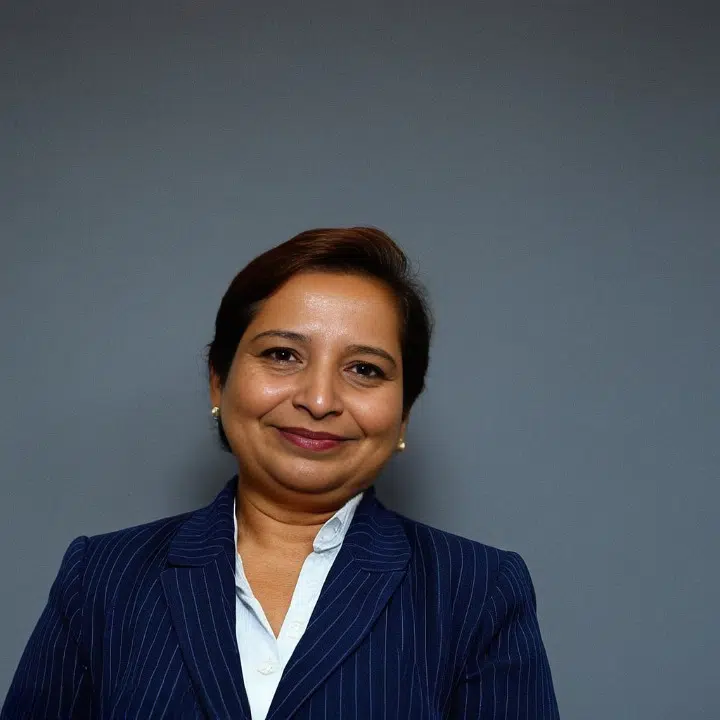
Meet Your Lead Photo Booth Accountant
Meet your lead photo booth accountant. The same two people handle your file every year, so nobody has to re-learn your business each spring.

What Our Clients Say
Over 1300 five-star Google reviews, left by owners of event, rental and service businesses right across Ontario and Canada.
Serving Photo Booth Businesses Across Ontario
We give Ontario photo booth operators and event equipment businesses accounting and tax work built around how the trade actually earns. We understand how a unit earns, why a deposit is not income until the date is worked, where consumables have to land for a per-event margin to mean anything, and what CRA looks at first when it opens an event-services file.
Toronto (ON)
55 Queen St E Ste 1205, Toronto, ON M5C 1R6, Canada
+1 (647) 212-9559
9:00 AM – 8:30 PM (Mon – Sun)
Mississauga (ON)
2100 Camilla Rd #716, Mississauga, ON L5A 2J8
+1 (647) 212-9559
9:00 AM – 8:30 PM (Mon – Sun)
Brampton (ON)
4 Starhill Crescent, Brampton, ON L6R 2P9, Canada
+1 (647) 212-9559
9:00 AM – 8:30 PM (Mon – Sun)
Scarborough (ON)
24 Clementine Square, Scarborough, ON M1G 2V7, Canada
+1 (647) 212-9559
9:00 AM – 8:30 PM (Mon – Sun)
Vaughan (ON)
19 Cabinet Crescent, Woodbridge, ON L4L 6H9, Canada
+1 (647) 212-9559
9:00 AM – 8:30 PM (Mon – Sun)
Oshawa (ON)
210 Durham St, Oshawa, ON L1J 5R3, Canada
+1 (647) 212-9559
9:00 AM – 8:30 PM (Mon – Sun)
Ottawa (ON)
2090 Neepawa Ave a314, Ottawa, ON K2A 3L6, Canada
+1 (647) 212-9559
9:00 AM – 8:30 PM (Mon – Sun)
Etobicoke (ON)
60 Stevenson Rd #1601, Etobicoke, ON M9V 2B4, Canada
+1 (647) 212-9559
9:00 AM – 8:30 PM (Mon – Sun)
Hamilton (ON)
70 Starling Dr, Hamilton, ON L9A 0C5, Canada
+1 (647) 212-9559
9:00 AM – 8:30 PM (Mon – Sun)
Guelph (ON)
1155 Gordon St, Guelph, ON N1L 1S8, Canada
+1 (647) 212-9559
9:00 AM – 8:30 PM (Mon – Sun)
Windsor (ON)
4387 Guppy Ct, Windsor, ON N9G 2N8, Canada
+1 (647) 212-9559
9:00 AM – 8:30 PM (Mon – Sun)
North York (ON)
150 Graydon Hall Dr #912, North York, ON M3A 3B2, Canada
+1 (647) 212-9559
9:00 AM – 8:30 PM (Mon – Sun)
Photo Booth Accounting & Tax FAQs
Related Industries We Serve
Accountant for Audio Visual Companies
- Equipment classes and recapture
- Deposits and deferred revenue
- Corporate tax filing and statements
Accountant for Party Rental Businesses
- Rental fleet as capital property
- Utilisation per unit
- Corporate tax filing and payroll
Accountant for Wedding Venues
- Deposits held against future dates
- Event costing and staff payroll
- Corporate tax planning and statements
Accountant for Small Businesses
- T2 filing and year-end statements
- Bookkeeping, HST and payroll
- Incorporation and tax planning
Photo Booth Accounting & Tax Done Right.
T2 filing with booths, printers, lighting, backdrops and props in Class 8 at 20% and the tablets and computers that run them in Class 50 at 55%, booking deposits held as deferred revenue and taxed under ETA subsection 168(9) only when they are applied against the invoice, consumables costed against the bookings that used them, revenue per booth measured against the cost of owning it, attendants tested on the employee-versus-contractor factors with T4 or T4A slips filed, and the HST rate determined per booking on events outside Ontario. AFFORDABLE flat fees, no hourly billing. Licensed CPA Ontario. 1300+ five-star reviews. 30-Day Money-Back Guarantee.