



Tax Accountant for Translation Services in Ontario and Across Canada
We zero-rate the work you do for non-resident clients instead of charging them 13% they should never have paid, keep the input tax credits that zero-rating protects so your firm sits in the refund position it is entitled to, apply the place-of-supply rules so a client in another province is billed at their rate and not Ontario’s, count your zero-rated sales toward the $30,000 registration threshold so you do not lose years of credits by never registering, settle the employee-versus-contractor question on your freelance linguist pool, and put your CAT tool licences in Class 12 and your workstations in Class 50. Whether you run a translation agency, work as a freelance certified translator, run a localization company, or provide court and medical interpreting, we handle the HST, the subcontractor reporting and the multi-currency bookkeeping, and plan the salary, dividends and eventual sale of your company — with AFFORDABLE flat fees.
AFFORDABLE Translation Services Tax Accountant
A translation business is an export business, and almost nothing about its sales tax works the way a local shop’s does. Work supplied to a non-resident client who is not registered for GST/HST is generally zero-rated as an export of services. Zero-rated is not exempt — the supply stays taxable at 0% — and that single distinction is what keeps your input tax credits on CAT tool licences, subcontractor invoices, software and rent fully claimable. It is why a firm billing mostly foreign clients sits in a permanent HST refund position rather than a payment position. It also catches people out at the other end: zero-rated sales still count toward the $30,000 registration threshold, so a translator with only overseas clients still crosses it, and every year spent unregistered is a year of credits gone. For Canadian clients the place-of-supply rules set the rate by the client’s address, not yours. That is why you need an accountant who knows the trade. At Gondaliya CPA, we specialize in export HST, subcontractor reporting and multi-currency bookkeeping for language businesses, providing AFFORDABLE flat-fee support that keeps you CRA-compliant and stops you paying more tax than you owe.
As a language-services accountant, we work with translation agencies, freelance certified translators, localization companies, and court and medical interpreting providers across Ontario, with year-round support rather than a once-a-year scramble. We tell you plainly what you can deduct, what you cannot, and where the real margin sits between the work you do yourself and the work you send out.
Let us handle the numbers so you can focus on the languages and the clients who actually pay you.
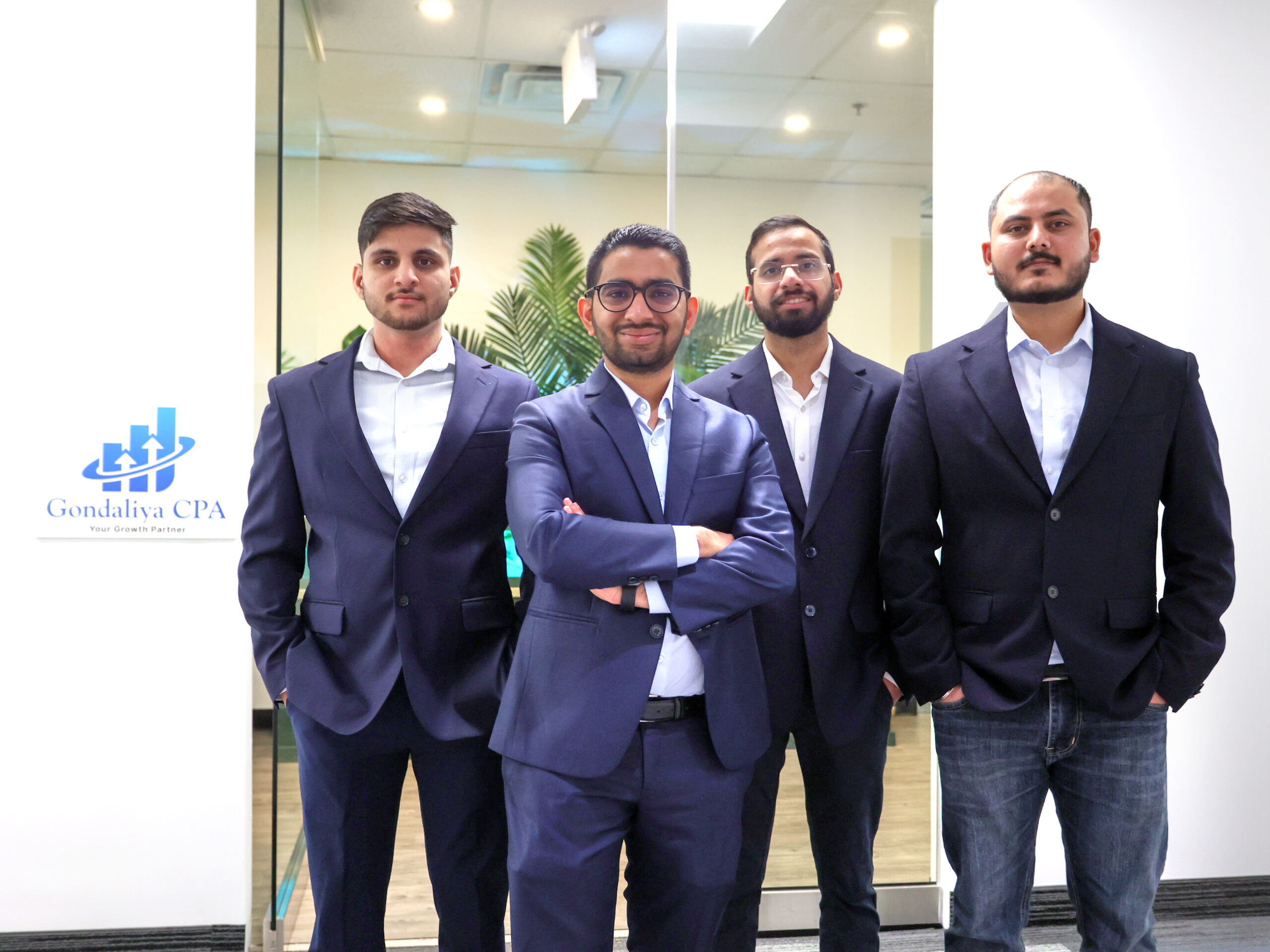
Our Official Partners









Accounting That Understands How a Translation Business Actually Works
Running a translation business comes with financial questions a domestic service firm never faces. Most of your clients may be outside Canada, most of your production may be subcontracted to freelancers you have never met in person, you are paid in three currencies through platforms that take a cut, and your largest asset is a translation memory that does not appear anywhere on your balance sheet. At Gondaliya CPA, we understand that reality and provide practical, trade-focused solutions across the GTA and all of Ontario.
Stay Compliant and Minimize Your Translation Business Tax
For a translation business, staying onside with CRA and paying the least legal tax are the same job. We keep every filing on schedule while claiming every credit the export rules preserve, so nothing is missed and nothing invites a reassessment.
Accounting & Tax Experts for Translation Services

- AFFORDABLE + Registered CPA Firm
- Business and Corporate Tax Expert
- Small & Medium Business Expert
- Accounting, bookkeeping, and tax filing
- CPA (Chartered Professional Accountant)
- 1300+ 5-star Google reviews
- 30-Day Money-Back Guarantee
- 60-Day Fees Matching Policy
Why Choose Our Accounting Services for Translation Services?
Tax Planning — Export & Equipment Expertise
We know the trade: CAT tool licences in Class 12 at 100%, workstations in Class 50 at 55%, interpreting equipment in Class 8. We protect the credits zero-rating preserves and the $500,000 Small Business Deduction.
Consulting — Export HST & Multi-Currency Bookkeeping
Our bookkeeping separates zero-rated export work from domestic supplies, records revenue in the currency it was earned, and reconciles Wise, Stripe and PayPal payouts so the fees do not quietly eat your margin.
CRA Representation — Refund & Contractor Audit
When CRA reviews your refund position, asks for proof your clients are non-residents, or challenges your freelance linguists’ status, we prepare the response and pursue relief on Form RC4288 where a prior error caused penalties.
Bookkeeping — Subcontractors, Cash Flow & Sale
We handle T4A reporting on your linguist pool, build a cash-flow plan that survives 60 to 90 day agency terms, and get you ready to sell. We model the profit level where incorporating pays off.
Google Reviews
Translation Services Clients
Translation Services Tax and Accounting Services in Ontario
Corporate Tax Filing (T2) for Translation Services
Professional T2 preparation with Schedule 8 CCA on your workstations, CAT tool licences and interpreting equipment, work in progress carried properly, and CRA compliance on every line.
Bookkeeping & Accounting for Translation Services
Export HST, multi-currency and subcontractor bookkeeping with financial statements, clean records, and monthly reporting built for a language business.
Payroll Services for Translation Services
Staff payroll with PD7A remittances, T4s filed by the last day of February, T4A slips on your freelance linguists, and Employer Health Tax tracking.
GST/HST Filing for Translation Services
AFFORDABLE HST filing with exported services zero-rated, place of supply applied to Canadian clients, and full input tax credits recovered on every return.
Tax Planning for Translation Services
Smart tax planning to protect the Small Business Deduction, time your software and equipment purchases, and plan salary, dividends and the sale of your agency.
Corporate Catch-Up Filing for Translation Services
File overdue T2 and HST years, rebuild missing invoice, platform and subcontractor records, and get back into CRA compliance with accurate catch-up support.
CRA Audit Resolution for Translation Services
Expert support for refund-position reviews, export documentation requests and contractor-classification audits, handled with confidence from the first letter.
CPA Financial Statements (Notice to Reader) for Translation Services
CPA-compiled financial statements that banks accept for a receivables line and that government RFPs accept as proof of financial capacity.
Incorporation Services for Translation Services
Full incorporation including NUANS, articles, share structure, and the section 85 rollover from your freelance practice into the company.
Catch-Up Bookkeeping Services for Translation Services
Months or years of invoices, platform payouts and linguist payments reconstructed and reconciled, so your export split and input tax credits are finally accurate.
US Corporation & LLC Tax Filing for Translation Services
Cross-border filing for agencies with US clients or a US parent, covering 1120/1120-F returns, treaty positions and FBAR reporting.
Voluntary Disclosure Program for Translation Services
Come forward on unreported foreign-client income, missed registration or unfiled T4A slips before CRA calls, cancelling penalties through a Voluntary Disclosures Program application.
Accounting & Tax Services Tailored for Translation Services
Real, practitioner-level CPA expertise for translation agencies, freelance certified translators, localization companies, and court and medical interpreting providers across Ontario — built for how a language business actually runs.
- We prepare your T2 with GIFI on Schedule 100 and Schedule 125, separating translation fees, interpreting revenue, localization projects and subcontracted linguist costs onto their correct lines, so CRA’s automated matching does not misread your file.
- We claim capital cost allowance on Schedule 8 with your Trados and memoQ licences in Class 12 at 100%, your workstations and servers in Class 50 at 55% and interpreting equipment in Class 8 at 20%.
- We carry work in progress on unfinished localization projects rather than recognizing the whole fee on invoice, so a $60,000 project spanning your year-end lands in the year the work was actually performed.
- We translate foreign-currency revenue at the rate in effect on the transaction date rather than the year-end rate, because a US-dollar invoice booked at the wrong rate misstates both revenue and the exchange gain on collection.
- We file Form T1135 where your foreign property, including balances held in overseas payment platforms, passes the $100,000 threshold, avoiding a penalty that starts at $25 a day for a return CRA treats as non-negotiable.
- We separate zero-rated export work from domestic supplies in your chart of accounts from the first invoice, because that split is the single number CRA will ask about and rebuilding it from a year of invoices afterwards is painful and expensive.
- We reconcile your Plunet or XTRF project data to QuickBooks Online or Xero so every project carries its own linguist cost, revision cost and margin, and on one agency this showed a language pair running consistently below cost.
- We reconcile Wise, Stripe and PayPal payouts to gross invoice value so the platform fees appear as an expense rather than quietly reducing recorded revenue, which is what makes a firm’s real margin invisible.
- We run multi-currency properly in Xero so US-dollar and euro receivables revalue correctly, keeping the unrealized exchange movement out of your operating margin where it distorts every month it appears.
- We capture every linguist invoice, CAT tool renewal and software subscription through Dext and reconcile monthly, keeping the six years of records section 230 requires and making sure no input tax credit is lost.
- We settle the employee-versus-contractor question on your freelance linguist pool using CRA guide RC4110, because a translator working exclusively for you on your schedule looks like an employee to CRA regardless of the contract you both signed.
- We file T4A slips for the linguists you pay, because a six-figure subcontractor expense on your T2 with no slips behind it is one of the easiest mismatches CRA can spot from its own records.
- We set up staff payroll in Wagepoint, withholding income tax, CPP and EI and remitting on the PD7A by the 15th of the following month, because CRA’s late-remittance penalty on source deductions climbs to 10% as the lateness grows.
- We file your T4 slips and T4 Summary by the last day of February and reconcile them to the PD7A remittances actually made, so a small salaried team never generates a penalty for a mismatch nobody noticed.
- We monitor your total Ontario payroll against the $1,000,000 Employer Health Tax exemption, so an agency that grows past it registers and remits in the right year instead of being assessed for it later with interest.
- Translation supplied to a non-resident client who is not registered for GST/HST is generally zero-rated as an export of services, so we stop you charging 13% on work that should carry none and pricing yourself out of foreign markets.
- Zero-rated is not exempt, and the difference is the whole game: because the supply stays taxable at 0%, your input tax credits on CAT tool licences, subcontractors, software and rent remain fully claimable rather than restricted.
- We keep the documentation that proves each client is a non-resident and not registered, because the zero-rating position lives or dies on that evidence and CRA asks for it whenever a refund pattern draws a review.
- Zero-rated sales still count toward the $30,000 small-supplier threshold, so a translator billing only foreign clients still has to register, and every year spent unregistered is a year of input tax credits permanently lost.
- For Canadian clients we apply the place-of-supply rules so the rate follows the client’s address rather than your office, because billing an Alberta client 13% collects tax neither of you owed and invites an adjustment.
- We set the salary-versus-dividend mix for the owners, paying enough T4 salary to build RRSP room while the balance flows as dividends, so combined tax stays near the 12.2% Ontario small-business rate instead of the 53.53% top personal rate.
- We keep your active income under the $500,000 Small Business Deduction limit using section 125, and watch the associated-corporation and passive-income rules that grind the limit toward the higher general corporate rate as surplus builds.
- We time your workstation, server and CAT tool purchases against your fiscal year-end so the Class 50 and Class 12 rates give the largest first-year deduction against a strong contract year.
- We claim work space in the home correctly, whether that is the section 18(12) restriction for an unincorporated translator or a properly documented arrangement between you and your own corporation, because most translators work from home.
- We plan at least two years ahead so your shares qualify for the $1.25M Lifetime Capital Gains Exemption under section 110.6, purifying the company of non-active assets so selling your agency defers tax CRA would otherwise collect.
- We reconstruct translation and interpreting revenue from bank deposits, platform payout reports and issued invoices across your unfiled years, rebuilding the six years of records section 230 requires so CRA cannot arbitrarily assess your income.
- Late filing costs 5% of the balance owing plus 1% per month up to twelve months, so we file your oldest unfiled T2 first to stop the penalty compounding and limit the arrears interest CRA charges your corporation.
- We rebuild the zero-rated and taxable split for every unfiled GST34 period and register you retroactively where the $30,000 threshold was crossed years ago, recovering input tax credits that would otherwise be gone for good.
- We rebuild the undepreciated capital cost pools across the unfiled years so missed CCA on Class 50 workstations and Class 12 CAT tool licences is recovered rather than abandoned along with the years themselves.
- We file a Voluntary Disclosures Program application on Form RC199 before CRA contacts you, because a disclosure accepted under the general program cancels penalties in full and gives roughly 50% interest relief on the older years.
- When CRA reviews the refund position that zero-rated exports naturally produce, we answer with the client-by-client non-residency evidence, contracts and invoices inside the deadline, so a routine review does not become a denial of every credit claimed.
- When CRA challenges the status of your freelance linguists, we defend the contractor position with the control, equipment, profit and risk analysis CRA guide RC4110 sets out, because a reclassification brings back CPP, EI and penalties across every year.
- We answer requests for proof of export with the documentation trail we built as the work was invoiced, because zero-rating disallowed for missing evidence means the tax you never charged is assessed against you with interest.
- When CRA opens an audit, we manage the whole file and answer the revenue, subcontractor and foreign-currency queries inside the deadlines, so a one-year review does not expand across the three prior years CRA can reopen.
- We file the Notice of Objection within 90 days of a reassessment and pursue taxpayer relief on Form RC4288, cancelling penalties and interest that can top $15,000 where a prior accountant’s error caused them, protecting your right to the Tax Court.
- We prepare the CSRS 4200 compilation engagement financial statements a bank requires across two fiscal years before approving the operating line that bridges receivables sitting 60 to 90 days out on agency terms.
- Your compiled statement of financial position presents work in progress, aged receivables, foreign-currency balances, subcontractor accruals and equipment at net book value, giving a lender the working-capital picture a bare T2 cannot.
- We build the statement of operations with translation fees, interpreting revenue and subcontracted linguist costs classified consistently across two years and tied to the T2 filed with CRA, so the lender accepts the file.
- Government RFPs and Translation Bureau standing-offer bids screen for financial capacity, and a bid without compiled statements behind it can be set aside before anyone reads the technical response you spent weeks preparing.
- We deliver the compiled statements within 30 days of receiving your records and the year’s T2 figures, because a bid deadline or a conditional credit offer collapses when the file is not produced in time.
- We incorporate your business under the Ontario Business Corporations Act as an ordinary business corporation, because translators are not on the professional corporation list, and the roughly 12.2% small-business rate beats the 53.53% top personal rate.
- We complete the section 85 rollover on Form T2057, transferring your client relationships, translation memories, equipment and goodwill from your freelance practice into the corporation at elected amounts, deferring the gain a straight sale would trigger.
- We open the corporation’s CRA Business Number, HST and payroll accounts within the first 30 days and register for HST immediately where foreign billings already put you past the $30,000 threshold, so no credits are lost from day one.
- We set up the chart of accounts with the zero-rated and domestic split built in from the first invoice, so the export evidence accumulates as you trade instead of being reconstructed under audit pressure two years later.
- We structure the share classes and set the first fiscal year-end up to 53 weeks after incorporation, so dividends can be split among family shareholders and the first T2 balance-due date is deferred, keeping tax working longer.
- We rebuild months or years of neglected books from bank deposits, platform payout reports, issued invoices and linguist bills, so an agency that let its records slide through two busy years gets a clean ledger.
- We reconstruct the zero-rated and taxable split across the backlog client by client, because that single figure drives every GST34 return in the period and no catch-up filing is defensible without it.
- We recover the input tax credits buried in unentered CAT tool renewals, software subscriptions and subcontractor invoices, because a year of missing paperwork on a subcontractor-heavy firm can hide five figures of credits.
- We rebuild the subcontractor ledger linguist by linguist so the T4A slips that were never filed can be prepared, closing an exposure CRA finds simply by comparing your expense line to its own slip records.
- We restate foreign-currency transactions at the rates actually in effect across the caught-up months, so your revenue, your exchange gains and your receivable balances finally agree with what the bank statements show.
- When most of your clients are American, we determine whether that US-source revenue creates a filing obligation and prepare Form 1120-F, applying the Canada-US treaty so a book of export work is not taxed on both sides of the border.
- We claim treaty protection against a US permanent establishment where your interpreters travel to work on site in the United States, filing the treaty-based return positions that keep occasional US assignments from triggering full corporate tax.
- Where a US parent owns your Canadian agency, we handle the transfer-pricing documentation and Form T106 on intercompany service charges, so CRA cannot reassess the margin shifted across the border on a related-party balance.
- We manage the LLC hybrid-entity mismatch that traps many owners, coordinating the US and Canadian treatment so income taxed once in the US is not stranded, and we file the FBAR and Form T1134 your reporting requires.
- We reconcile the US and Canadian returns so foreign tax credits actually land, ensuring any US tax withheld on your service income offsets Canadian tax on the same income rather than being written off as a cost.
- We bring your company forward on foreign-client income that never reached a return, because a Voluntary Disclosures Program application accepted under the general program cancels the gross-negligence penalty that can reach 50% of the tax.
- We disclose a missed registration where zero-rated foreign billings pushed you past the $30,000 threshold years ago, correcting the record on your terms and opening the door to credits rather than waiting for CRA to find the gap.
- We file your VDP submission on Form RC199 with a full income reconstruction from platform payouts and invoices, so an agency that under-reported over several years is not left facing an arbitrary CRA net-worth assessment.
- We correct unfiled T4A slips on your linguist pool through the same disclosure, sparing your company the per-slip and gross-negligence penalties CRA would otherwise stack once it matches your expense line to its records.
- We confirm your disclosure is genuinely voluntary before CRA contacts you — the single condition that makes it valid — and secure the roughly 50% interest relief on the older years, turning a prosecution risk into a managed correction.
Translation Business HST & Export Check
Six quick questions on your export zero-rating, your input tax credits, your registration threshold, your place-of-supply rates, your freelance linguists and whether it is time to incorporate. No fee shown.
1. Are you zero-rating work for non-resident, non-registered clients?
2. Are you still claiming full input tax credits on that zero-rated work?
3. Do you keep documentation proving each client is a non-resident?
4. Are Canadian clients billed at their province’s rate, not Ontario’s?
5. Do you file T4A slips for the freelance linguists you pay?
6. Is your translation business incorporated?
Free CPA Consultation for Translation Services
Case Studies: Translation Services Accounting & Tax
Mississauga Translation Agency — Zero-Rating and Credits
The problem: A Mississauga translation agency billing mostly European and American clients had been told by a previous bookkeeper that its foreign work was exempt, so it stopped claiming input tax credits altogether. Exempt and zero-rated are not the same thing, and the error cost the agency real money every quarter: the work was zero-rated, the supply stayed taxable at 0%, and every credit on CAT tool licences, subcontractor invoices, software and rent had been claimable the whole time.
What we did: We rebuilt the chart of accounts with the zero-rated and domestic split in place, went back through the open reporting periods to claim the input tax credits that had been abandoned, and assembled the client-by-client non-residency documentation the position needs.
The result:
- Input tax credits recovered across the open periods
- Agency moved to its correct HST refund position
- Export documentation trail now built as work is invoiced
Ottawa Interpreting Provider — Linguists and T4A
The problem: An Ottawa interpreting provider working on government contracts paid a pool of roughly forty freelance interpreters each year and had never filed a single T4A slip. Its subcontractor expense was the largest line on the T2, with nothing behind it in CRA’s records, which is exactly the mismatch CRA finds without having to look. Several interpreters also worked exclusively for the firm on its own schedule, putting their contractor status in real doubt.
What we did: We ran the CRA guide RC4110 control, equipment, profit and risk analysis across the pool, restructured the engagement terms for the genuinely independent interpreters, moved the ones who were employees in substance onto payroll, and filed the outstanding T4A slips.
The result:
- Prior-year T4A slips filed, per-slip penalties avoided
- Contractor status defensible under the RC4110 tests
- Misclassified interpreters moved onto payroll cleanly
Vaughan Freelance Translator — Threshold and Incorporation
The problem: A Vaughan certified translator working almost entirely for overseas agencies had never registered for HST, on the assumption that foreign billings did not count toward the $30,000 small-supplier threshold. They do: zero-rated supplies are taxable supplies and count. She had been past the threshold for three years, which meant three years of input tax credits on Trados licences, a new workstation, software and her home office had simply been lost.
What we did: We registered the business, quantified what had been forfeited, incorporated once the numbers showed the profit level justified it, and completed the section 85 rollover of her client relationships, translation memories and equipment into the new company on Form T2057.
The result:
- Registered and claiming credits from the current period on
- Incorporated at the profit level where it actually pays
- Section 85 rollover completed, gain deferred
Our clear, efficient process ensures every step is transparent, building trust and long-term client relationships.
Kickoff (Document Request)
Collect prior T2 returns, client list with countries of residence, issued invoices, platform payout reports, freelance linguist agreements and payments, CAT tool and software receipts, payroll records, and bank statements.
First 30 Days (Cleanup & Setup)
Set up QuickBooks Online or Xero with multi-currency, connect Plunet or XTRF, build the zero-rated and domestic split, classify CCA, set the export documentation routine, and configure subcontractor reporting.
Monthly Close
Platform payout reconciliation, receipt capture, project margin reporting, GST34 with zero-rated supplies and full credits, and receivables ageing against agency terms.
Quarterly Planning Review
Salary and dividend mix, export and place-of-supply review, contractor status check, and equipment and software purchase timing.
Year-End Close & T2 Filing
Trial balance, financial statements with work in progress, aged receivables and foreign-currency balances, T4A slips, T2 with GIFI, and CRA preparation.
Get Your Translation Business Taxes Done Right Today
Affordable Pricing for Translation Services
We believe in clear, upfront pricing so you know exactly what to expect. All fees include HST.
- Tax Preparation (Corporation) — From $400
- Tax Return Filing (Corporation) — From $400
- Tax Compliance Audit — FREE CRA audit support for our clients
- Tax Strategy — FREE for our clients
- Accounting Base Plan — From $100 per month
- Bookkeeping Management — Free for our Accounting clients
- Financial Reporting — Free for our Accounting clients
- Business Formation — Flat $35
- Incorporation Process — Flat $35
- Entity Setup Assistance — Flat $35
- Full-Service Payroll — From $125 per month
Payment is by Interac e-Transfer to info@gondaliyacpa.ca only. Security question: Not Applicable, as auto-deposit is enabled.
Meet Your Lead Translation Services Accountant
Meet your lead translation services accountant. As your language-business and corporate tax adviser, you deal with the same two people every year.

What Our Clients Say
1300+ five-star reviews from translation, interpreting and professional services owners across Ontario and Canada.
Serving Translation Services Across Ontario
Our CPA team provides specialized accounting and tax solutions for translation and interpreting businesses throughout Ontario. We understand how export zero-rating, place of supply, a freelance linguist pool and multi-currency revenue actually flow through a language business, what CRA looks at on a persistent refund position, and how to keep every credit you are entitled to.
Toronto (ON)
55 Queen St E Ste 1205, Toronto, ON M5C 1R6, Canada
+1 (647) 212-9559
9:00 AM – 8:30 PM (Mon – Sun)
Mississauga (ON)
2100 Camilla Rd #716, Mississauga, ON L5A 2J8
+1 (647) 212-9559
9:00 AM – 8:30 PM (Mon – Sun)
Brampton (ON)
4 Starhill Crescent, Brampton, ON L6R 2P9, Canada
+1 (647) 212-9559
9:00 AM – 8:30 PM (Mon – Sun)
Scarborough (ON)
24 Clementine Square, Scarborough, ON M1G 2V7, Canada
+1 (647) 212-9559
9:00 AM – 8:30 PM (Mon – Sun)
Vaughan (ON)
19 Cabinet Crescent, Woodbridge, ON L4L 6H9, Canada
+1 (647) 212-9559
9:00 AM – 8:30 PM (Mon – Sun)
Oshawa (ON)
210 Durham St, Oshawa, ON L1J 5R3, Canada
+1 (647) 212-9559
9:00 AM – 8:30 PM (Mon – Sun)
Ottawa (ON)
2090 Neepawa Ave a314, Ottawa, ON K2A 3L6, Canada
+1 (647) 212-9559
9:00 AM – 8:30 PM (Mon – Sun)
Etobicoke (ON)
60 Stevenson Rd #1601, Etobicoke, ON M9V 2B4, Canada
+1 (647) 212-9559
9:00 AM – 8:30 PM (Mon – Sun)
Hamilton (ON)
70 Starling Dr, Hamilton, ON L9A 0C5, Canada
+1 (647) 212-9559
9:00 AM – 8:30 PM (Mon – Sun)
Guelph (ON)
1155 Gordon St, Guelph, ON N1L 1S8, Canada
+1 (647) 212-9559
9:00 AM – 8:30 PM (Mon – Sun)
Windsor (ON)
4387 Guppy Ct, Windsor, ON N9G 2N8, Canada
+1 (647) 212-9559
9:00 AM – 8:30 PM (Mon – Sun)
North York (ON)
150 Graydon Hall Dr #912, North York, ON M3A 3B2, Canada
+1 (647) 212-9559
9:00 AM – 8:30 PM (Mon – Sun)
Translation Services Accounting & Tax FAQs
Related Industries We Serve
Accountant for Immigration Consultants
- Retainer and trust-money handling
- Foreign-client billing and HST
- Corporate tax filing and incorporation
Accountant for Publishers
- Royalty and translation rights income
- Freelance contributor reporting
- Corporate tax planning and statements
Accounting for Small Businesses
- Corporate tax planning for small businesses
- Business tax filing and financial statements
- Payroll and bookkeeping services
Accountant for Incorporated Businesses
- T2 corporate returns and GIFI
- Salary, dividend and SBD planning
- Compilation statements and incorporation
Translation Services Accounting & Tax Done Right.
T2 filing, exported services zero-rated with the documentation to prove it, input tax credits claimed in full because zero-rated is not exempt, place of supply applied to Canadian clients, zero-rated sales counted toward the $30,000 threshold so no credits are lost, freelance linguists reviewed on CRA guide RC4110 with T4A slips filed, and CAT tool licences and workstations in the right CCA class under one roof. AFFORDABLE flat fees, no hourly billing. Licensed CPA Ontario. 1300+ five-star reviews. 30-Day Money-Back Guarantee.