



Accounting & Bookkeeping Services for Startups
We handle accounting for startups from incorporation through funding rounds. Investor-ready share structure, SR&ED tax credits, burn rate tracking, runway forecasting, HST on SaaS, payroll setup, financial statements for investors. From $100/month. 1300+ five-star reviews.
Startup Accounting Is Not Small Business Accounting
Startups operate under a different set of rules than established businesses. You burn cash before generating revenue. You issue equity to co-founders, advisors and investors through multiple share classes. You claim SR&ED tax credits worth tens of thousands of dollars on developer salaries. You sell SaaS to US clients with zero-rated HST that produces quarterly refund cheques. You need financial statements that investors trust before they write a cheque. A general bookkeeper cannot handle any of this correctly.
We provide accounting and bookkeeping services specifically structured for startups. From the day you incorporate, we set up the share structure investors expect, track every dollar of burn, file every SR&ED claim on time, and produce the financial statements your investors require. We work with startups at every stage: pre-revenue, seed, Series A and growth. SaaS, fintech, healthtech, agritech, cleantech, AI, e-commerce and deep tech.
Book Free Consultation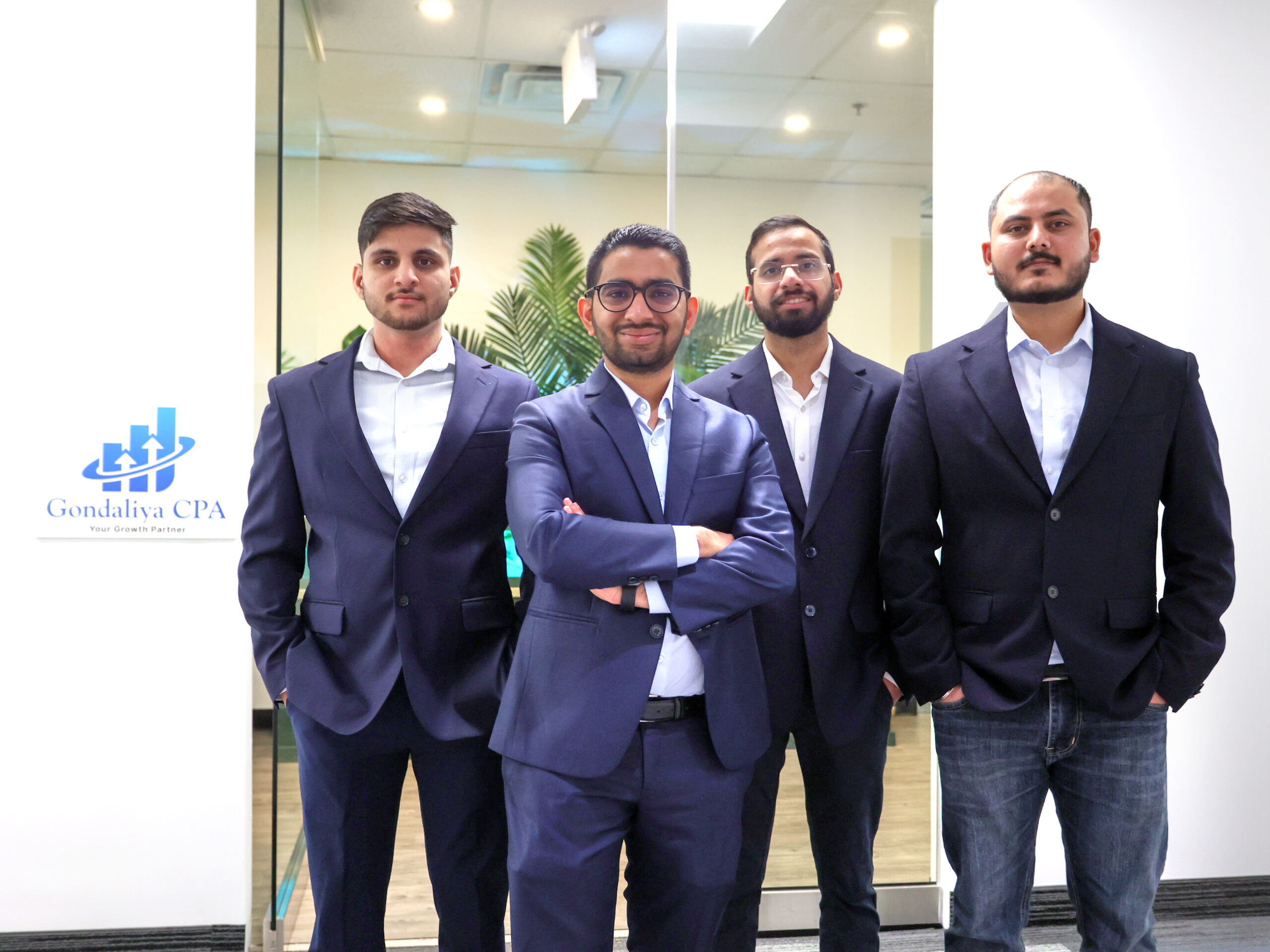
Why Startups Need a Specialized CPA
| Challenge | What Makes Startups Different | What We Do |
|---|---|---|
| Share structure for investment | Investors expect multi-class shares: common for founders, preferred for investors with liquidation preferences, anti-dilution and conversion rights. A single share class at incorporation kills your seed round. | We incorporate with 3+ share classes from day one: Class A voting common (founders), Class B non-voting (family, employees), Class C preferred (investors). Reorganization to add classes later costs $2,000 to $5,000. |
| SR&ED tax credits | The #1 funding source for pre-revenue Canadian tech startups. 35% refundable credit on the first $300,000 in eligible expenditures ($105,000 cash back). Missing the 18-month filing deadline forfeits the entire claim permanently. | We identify eligible expenditures (developer salaries, contractor costs, cloud infrastructure for R&D, materials), prepare the T661 technical narrative and financial schedules, and file within the 18-month absolute deadline. |
| Burn rate and runway | Investors ask: "What is your monthly burn rate?" and "How many months of runway do you have?" If you cannot answer these questions accurately, investors do not invest. A general bookkeeper does not track burn rate. | Monthly burn rate calculated. Runway projected based on current cash and monthly burn. Updated every month. Included in your monthly financial package and investor-ready reporting. |
| HST on SaaS | SaaS sold to US customers is zero-rated (0% HST). You charge $0 in HST but claim full ITCs on all Canadian expenses. This produces quarterly HST refund cheques from CRA. Most startups leave this money on the table. | HST registered at incorporation. US revenue classified as zero-rated. All Canadian expense ITCs claimed. Monthly filing selected for monthly refund cheques. A startup with $200,000 in Canadian expenses recovers $26,000/year in ITCs. |
| Founder compensation | Founders need to pay themselves, but the wrong method creates problems. 100% dividends: zero RRSP room. 100% salary: maximum CPP cost. Draws without proper documentation: shareholder loan triggered under s.15(2). | Salary-dividend split modelled based on your personal situation. RRSP room strategy. CPP optimization. Shareholder loan account tracked from day one. |
| Financial statements for investors | Investors require GAAP-compliant financial statements for due diligence. Revenue recognition, deferred revenue, capitalized development costs and equity transactions must be presented correctly. | Monthly financial statements prepared in QBO or Xero. Investor-ready annual financials. Revenue recognition reviewed. Cap table maintained. Ready for due diligence at any time. |
| Stock options and equity | Employee stock option plans (ESOPs) have complex tax implications for both the company and the employee. The timing of the option grant, vesting schedule and exercise price determine the tax treatment. | We advise on ESOP structure, s.7 tax deferral eligibility, and the $200,000 annual vesting limit for the employee stock option deduction. Option grants documented in the minute book. |
| CRA audit risk | Startups claiming large SR&ED credits relative to revenue are flagged for CRA review. CRA scrutinizes the technical eligibility and financial documentation of every SR&ED claim. | CRA audit defence FREE for all clients. SR&ED claims prepared with CRA-ready technical narratives and financial documentation. We attend every CRA meeting and negotiate every proposed adjustment. |
What Our Startup Accounting Service Includes
| Service | What We Deliver | Frequency |
|---|---|---|
| Incorporation with investor-ready structure | Federal incorporation with 3+ share classes, complete minute book, BN, HST, payroll. Founder vesting structure if multiple co-founders. From $35 service fee (government fee additional). | One-time |
| Monthly bookkeeping | Bank reconciliation, expense categorization, revenue recognition, accounts payable, accounts receivable. Connected to QBO or Xero with automated bank feeds. | Monthly |
| Burn rate and runway tracking | Monthly burn rate calculated from operating expenses. Runway projected based on current cash balance. Updated with every monthly close. Flagged when runway drops below 6 months. | Monthly |
| HST filing (zero-rated SaaS refunds) | HST collected on Canadian sales. Zero-rated treatment on US/international revenue. Full ITCs on all Canadian expenses. Filed monthly for monthly refund cheques from CRA. | Monthly |
| SR&ED claim preparation | Eligible expenditures identified: developer salaries, contractor costs, cloud R&D infrastructure, materials. T661 technical narrative prepared. Financial schedules completed. Filed within the 18-month absolute deadline. | Annual |
| Payroll for founders and employees | Salary-dividend split for founders. CPP/EI calculations (40%+ shareholders exempt from EI). T4 preparation. ROE filing. Payroll remittances. | Per pay period |
| Monthly financial statements | Income statement, balance sheet, cash flow statement. Burn rate, runway, revenue growth rate, gross margin. Investor-ready format delivered within 15 days of month-end. | Monthly |
| Cap table maintenance | Shareholder register updated with every equity event: founder shares, option grants, convertible notes, SAFE conversions, preferred share issuances. Maintained in the minute book. | As needed |
| T2 corporate tax return | From $400. Salary-dividend optimization. CCA on equipment. Immediate Expensing. SR&ED claim integration. Non-capital loss carry-forward tracking. | Annual |
| CRA audit defence | FREE for all clients. SR&ED reviews, T2 audits, HST audits. We respond, attend meetings, negotiate and file objections. Included with every plan. | As needed (FREE) |
SR&ED Tax Credits for Startups
The Scientific Research and Experimental Development (SR&ED) program is the largest source of non-dilutive funding for Canadian tech startups. CCPCs (Canadian-Controlled Private Corporations) receive a 35% refundable Investment Tax Credit on the first $300,000 in eligible expenditures. This means CRA sends you a cheque for up to $105,000 per year for work your developers are already doing. The credit is refundable: you receive cash even if you have zero taxable income.
SR&ED Credit Calculation
| Eligible Expenditure | Amount | Credit Rate | Cash Back from CRA |
|---|---|---|---|
| Developer salaries (first $300,000) | $300,000 | 35% refundable | $105,000 |
| Developer salaries (above $300,000) | $100,000 | 15% non-refundable | $15,000 (applied against tax) |
| Contractor costs (65% proxy) | $80,000 | 35% on first $300K pool | Included in pool above |
| Materials consumed in R&D | $20,000 | 35% on first $300K pool | Included in pool above |
What Qualifies as SR&ED for Software Startups
| Eligible | Not Eligible |
|---|---|
| Developing a new algorithm or data processing method. | Installing or configuring existing commercial software. |
| Building a new software architecture that requires overcoming technological uncertainty. | Routine software development using known methods and established frameworks. |
| Creating a novel machine learning model or training methodology. | Applying an existing ML model to a new dataset without modifying the model itself. |
| Developing a new API integration that requires resolving unknown technical challenges. | Integrating with an API using its published documentation and standard methods. |
| Prototyping hardware with a novel design requiring engineering experimentation. | Manufacturing a product using an established and proven design. |
The 18-Month Deadline Is Absolute. SR&ED claims must be filed within 18 months of the fiscal year-end. There are no extensions. A startup with a December 31, 2025 year-end must file the T661 by June 30, 2027. If the deadline passes, the entire claim is forfeited permanently. We track the deadline for every client and file every claim on time. Startup Services →
Startup Client Results
SaaS Startup, Toronto (Pre-Revenue to Seed)
A 2-founder SaaS startup had incorporated with a single share class and no HST registration. Revenue: $0 (pre-revenue). Monthly burn: $18,000. We reorganized the share structure (section 86 tax-free exchange into 3 classes), registered for HST (zero-rated on planned US revenue), set up payroll for both founders with EI exemption, filed the first SR&ED claim on $210,000 in developer salaries ($73,500 refundable credit), and prepared investor-ready financials. The startup closed a $500,000 seed round 10 weeks later. The SR&ED cheque extended runway by 4 months.
Fintech Startup, Waterloo (Series A Preparation)
A fintech company with $380,000 ARR, 6 employees and $42,000 monthly burn was preparing for Series A. Their bookkeeper was not tracking deferred revenue, had not filed SR&ED for 2 years (within the 18-month window for the most recent year only), and financial statements were not investor-grade. We cleaned up 14 months of bookkeeping, corrected revenue recognition (deferred revenue reclassified), filed the SR&ED claim for the eligible year ($89,250 refundable credit, the prior year was forfeited), implemented monthly financial reporting and prepared the due diligence data room. Series A closed at $2.8M. Startup Services →
E-commerce Startup, Mississauga
An e-commerce startup selling direct-to-consumer with $240,000 in revenue (60% US, 40% Canada) was paying HST on all revenue including US sales. We corrected the HST classification (US sales zero-rated), filed amended HST returns for the prior 4 quarters ($7,800 refund on overcollected HST), implemented proper ITC tracking ($4,200/year in previously unclaimed ITCs on shipping, warehousing and marketing), and incorporated the business (previously sole proprietor at $240,000: $38,000/year tax savings).
AI Startup, Toronto (SR&ED + HST Refunds)
An AI startup with 4 developers, $520,000 in eligible developer salaries and $180,000 in Canadian operating expenses (100% US revenue) was not claiming SR&ED or HST refunds. We filed the SR&ED claim ($105,000 refundable on first $300,000 + $33,000 non-refundable on the remaining $220,000), registered for monthly HST filing ($23,400/year in ITC refunds from zero-rated US revenue), and set up salary-dividend splits for 2 co-founders. Combined annual benefit: $161,400.
Startup KPIs We Track Every Month
| KPI | What It Measures | Why Investors Care |
|---|---|---|
| Monthly Recurring Revenue (MRR) | Predictable monthly revenue from subscriptions. | The #1 metric for SaaS. Growth rate determines valuation. 15% to 20% MoM at seed stage is strong. |
| Annual Recurring Revenue (ARR) | MRR x 12. Annualized subscription revenue. | Seed: $100K+ ARR. Series A: $1M+ ARR. The baseline for funding conversations. |
| Monthly burn rate | Total cash spent per month (operating expenses + payroll + overhead). | Determines how fast you consume capital. Investors compare burn to revenue growth to assess capital efficiency. |
| Runway (months) | Current cash balance divided by monthly burn. | Under 6 months: start fundraising immediately. 12 to 18 months: healthy. Above 18 months: comfortable. |
| Gross margin | Revenue minus cost of goods sold (hosting, infrastructure, direct costs) divided by revenue. | SaaS target: 70% to 85%. Below 60%: concern about scalability. Investors price companies on gross margin. |
| Customer Acquisition Cost (CAC) | Total sales and marketing spend divided by new customers acquired. | Must be recoverable within 12 to 18 months from the customer's revenue (CAC payback period). |
| Churn rate | Percentage of customers or revenue lost per month. | Monthly churn above 3%: investors see a retention problem. Net revenue retention above 100%: expansion revenue exceeds churn. |
| LTV:CAC ratio | Lifetime value of a customer divided by cost to acquire them. | Target: 3:1 or higher. Below 3:1: unit economics may not support growth. Above 5:1: may be underinvesting in growth. |
We Track These KPIs in Your Monthly Financial Package. Every month, you receive a financial report with MRR, ARR, burn, runway, gross margin and the metrics your investors are tracking. When burn accelerates or runway drops below 6 months, you see it in the financials before it becomes a crisis. This is what separates startup-specific accounting and bookkeeping from generic bookkeeping.
Startup Accounting Pricing
| Service | Fee | What Is Included |
|---|---|---|
| Monthly bookkeeping | From $100/month | Bank reconciliation, expense categorization, HST filing, monthly financials with burn rate, runway, MRR, gross margin. Investor-ready format. |
| Payroll (first founder/employee) | $125/month | Pay stubs, CPP/EI calculations, remittances, T4 preparation, ROE filing. EI exemption configured for 40%+ shareholders. |
| Payroll (each additional) | $75/month | Same as above for each additional employee. |
| SR&ED claim (T661) | 15% to 20% contingency + $1,000 retainer | Contingency on the refund received. You pay nothing if the claim is denied. Technical narrative, financial schedules, CRA filing. Retainer applied against the contingency fee. |
| Incorporation | From $35 (one-time) | Articles, 3+ share classes, minute book, BN, HST, payroll. Government fee additional. Bookkeeping clients: incorporation FREE (government fee only). |
| T2 corporate tax return | From $400 | Complete T2. Salary-dividend optimization. CCA, Immediate Expensing. SR&ED integration. Loss carry-forward tracking. |
| CRA audit defence | FREE (all clients) | SR&ED reviews, T2 audits, HST audits. We respond, attend, negotiate, object. Every audit, every year. |
Example: SaaS Startup, 2 Founders + 3 Developers. Bookkeeping $100/month + payroll $425/month (1 first + 4 additional) = $525/month. SR&ED: contingency (you pay only when you receive the credit). T2 from $400. CRA audit defence FREE. Monthly financials with all startup KPIs included. Know Your Exact Fee →
How We Onboard a Startup
Incorporate
Federal incorporation with investor-ready share classes. Minute book, BN, HST (zero-rated for US revenue), payroll. Founder vesting structure if multiple co-founders.
Set Up
QBO or Xero configured with startup chart of accounts. Bank feeds connected. Revenue recognition rules established. Monthly close process defined.
Track
Monthly financials with burn rate, runway, MRR, gross margin. SR&ED eligible expenditures tracked from the first developer hire. Cap table maintained.
Fund
Investor-ready financials prepared for due diligence. SR&ED filed. HST refunds flowing. Clean books that close a round, not delay one.
Startup Types We Serve
Frequently Asked Questions: Startup Accounting
Meet Your Experts

Sharad Gondaliya, CPA
Founder & Managing Director
Gondaliya CPA Professional Corporation
Sharad leads startup accounting strategy: incorporation structuring for investors, SR&ED claims, salary-dividend optimization, CRA audit defence and funding round preparation.
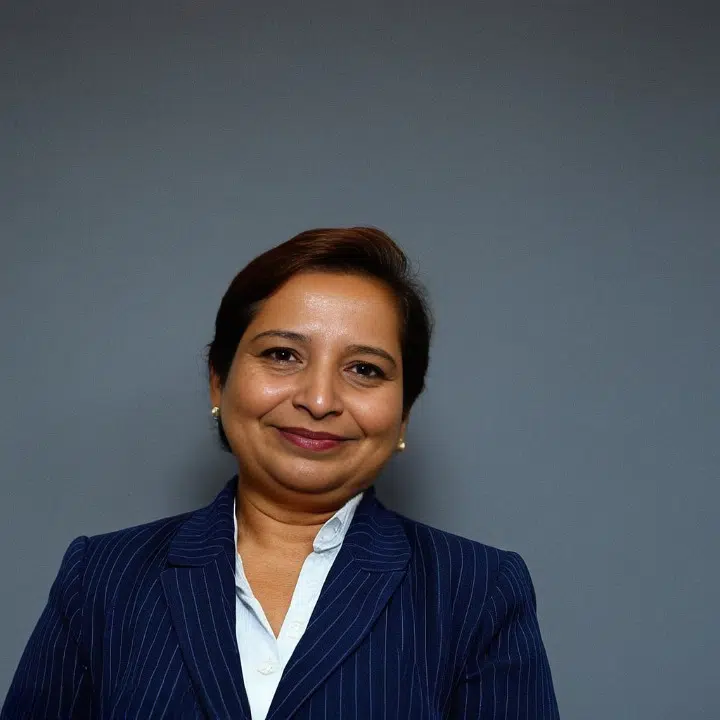
Vandana Goel, CPA
Senior Accountant
Gondaliya CPA Professional Corporation
Vandana manages monthly bookkeeping, HST filing, payroll and financial statement preparation for startup clients. Revenue recognition, burn rate tracking and investor-ready reporting.
What Our Clients Say
1300+ five-star reviews from business owners across Ontario and Canada.
Startup Accounting from $100/Month.
Incorporation, SR&ED, HST refunds, burn rate tracking, investor-ready financials, payroll, CRA audit defence. Everything your startup needs. 1300+ five-star reviews.