

Bookkeeping and Tax Tips for Trades Businesses in Canada
Trades businesses are the backbone of Canada’s economy. From construction services to cleaning services and everything in between, skilled tradespeople keep homes, offices, and public spaces running smoothly. Yet many trade business owners struggle to stay on top of their books and tax obligations. Proper bookkeeping and tax planning can make a dramatic difference in cash flow, compliance, and profitability.
Request a Free Consultation
This guide explores essential bookkeeping and tax tips for trades businesses in Canada, with a focus on construction services, cleaning services, and other skilled trades. By following these practices, you can improve your financial stability, reduce tax stress, and grow your business confidently.
Why Bookkeeping Matters for Trades Businesses
Staying Organized Year-Round
Trades businesses often deal with fluctuating income, seasonal workloads, and varied expenses. Accurate bookkeeping provides a clear picture of where your money comes from and where it’s going, helping you make informed decisions.
Meeting CRA Compliance
Canada Revenue Agency (CRA) regulations require detailed recordkeeping for income and expenses. Good bookkeeping keeps you compliant and avoids penalties, interest, or audits.
Improving Profitability
With proper financial tracking, you can identify which projects or clients are most profitable. This is particularly important in industries like construction services or cleaning services, where costs can vary widely between jobs.
Essential Bookkeeping Tips for Trades Businesses
Separate Personal and Business Finances
Keep your business and personal finances separate by opening a dedicated business bank account. This makes it easier to reconcile your books, track expenses, and demonstrate compliance if audited by the CRA.
Use a Cloud-Based Accounting System
Modern bookkeeping software like QuickBooks Online or Xero helps trades businesses record transactions in real time, send invoices instantly, and capture receipts via mobile devices. This is especially useful for construction and cleaning services owners who are often on the go.
Track Job-Specific Expenses
For construction services and other project-based trades, allocate costs to each project. This includes labour, materials, subcontractors, and overhead. Tracking this way reveals which jobs are profitable and which are draining resources.
Record Expenses Promptly
Don’t wait until tax time to organize receipts. Record expenses daily or weekly to avoid errors and reduce stress. Keep digital copies of invoices and receipts to simplify recordkeeping.
Monitor Accounts Receivable
Many trades businesses struggle with late payments. Regularly review accounts receivable to follow up on unpaid invoices. Prompt collection keeps cash flow healthy and reduces reliance on credit.
Reconcile Bank Statements Monthly
Bank reconciliations ensure your records match your bank’s records. This is a vital step to detect fraud, missing transactions, or errors before they become larger problems.
Tax Tips for Trades Businesses in Canada
Understand Your Tax Obligations
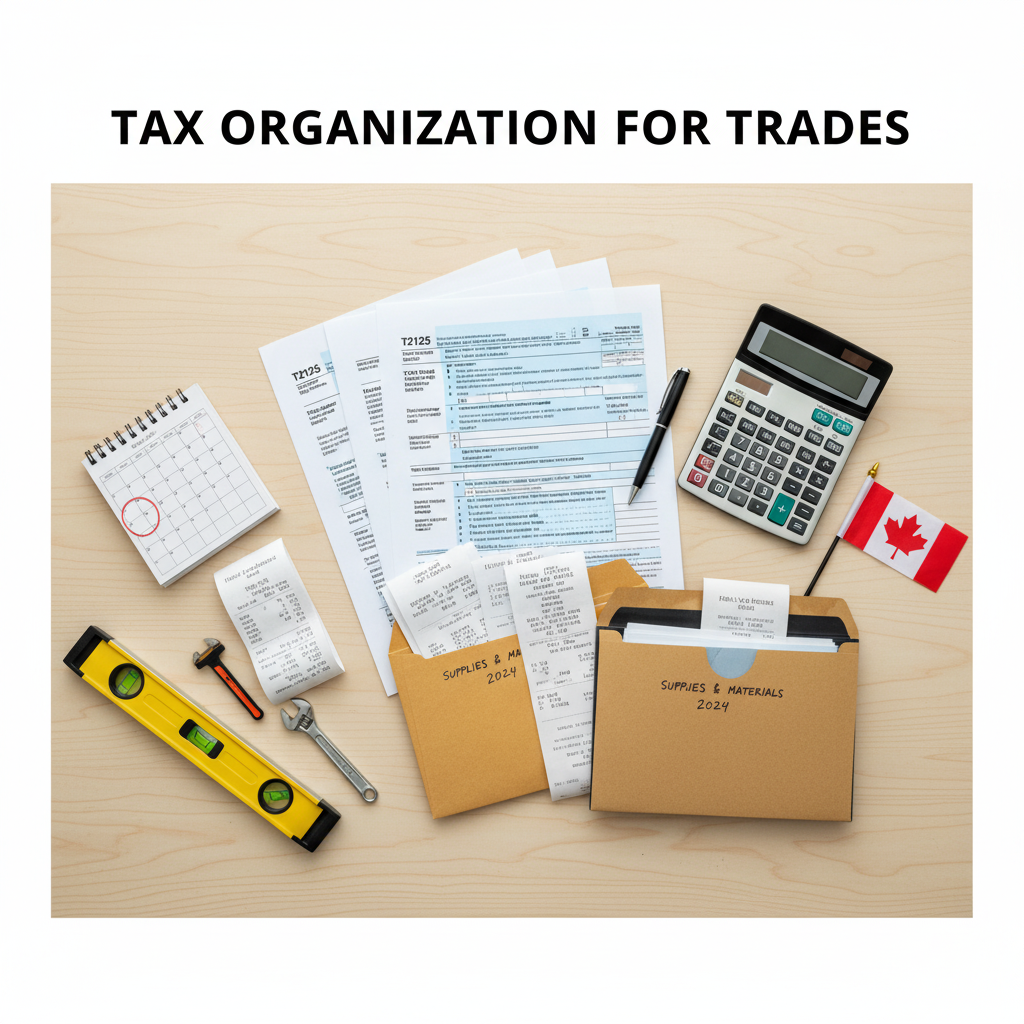
Trades businesses may be structured as sole proprietorships, partnerships, or incorporated companies. Incorporated businesses face corporate tax obligations while sole proprietors report income on their personal tax returns. Knowing your structure determines your tax deadlines and rates.
Register for GST/HST if Required
If your gross revenues exceed $30,000 in a 12-month period, you must register for GST/HST. This is common in construction services and larger cleaning services companies. Charge the correct rate based on your province and remit on time to avoid penalties.
Deduct Business Expenses
Trades businesses can deduct a wide range of legitimate expenses, such as:
- Tools and equipment
- Safety gear and uniforms
- Vehicle expenses
- Office rent or home office space
- Advertising and marketing costs
- Professional fees (accounting, legal, consulting)
Deducting these expenses correctly lowers your taxable income and overall tax bill.
Track Capital Assets Separately
Larger purchases like vehicles, machinery, and computers are considered capital assets and must be depreciated over time rather than expensed immediately. Keep records of purchase dates, costs, and usage to claim capital cost allowance (CCA).
Pay Attention to Payroll Taxes
If you employ staff, you’re responsible for CPP, EI, and income tax withholdings. Stay on top of payroll remittances to avoid penalties. This is especially important for construction services businesses with larger crews or cleaning services firms employing multiple staff.
Consider Incorporation for Tax Efficiency
Incorporating your trades business can provide tax advantages such as lower corporate tax rates, income splitting opportunities, and enhanced credibility. A qualified business accountant can help determine if incorporation is right for you.
Take Advantage of Tax Credits
Explore federal and provincial tax credits for trades businesses, such as apprenticeship tax credits, scientific research credits (if applicable), and eco-friendly upgrades.
Bookkeeping Best Practices by Industry
Construction Services
Accounting for construction businesses is essential because construction companies often juggle multiple projects, complex contracts, and varying timelines. Best practices include:
- Using job costing to allocate expenses to each project.
- Tracking subcontractor invoices and issuing T4A slips where required.
- Maintaining up-to-date insurance and WSIB records.
- Staying on top of holdbacks and progress billing to ensure healthy cash flow.
Cleaning Services
Cleaning services businesses frequently handle recurring contracts, fluctuating staff, and supply costs. Best practices for cleaning business accounting include:
- Setting up automated invoicing for recurring clients.
- Tracking supply purchases and mileage for staff traveling between sites.
- Using scheduling software integrated with your bookkeeping system.
- Monitoring payroll and overtime costs carefully, as margins can be tight.
Managing Cash Flow in Trades Businesses
Running a trades business, whether in construction, electrical, plumbing, HVAC, or cleaning services, requires more than just technical expertise. Managing cash flow effectively is crucial for long-term stability, tax compliance, and sustainable growth. Below are proven strategies and accounting insights that help trades professionals maintain a healthy financial foundation.
Budget for Slow Seasons
Many trades businesses experience seasonal slowdowns, particularly during winter or off-peak construction months. To stay financially secure year-round, build a cash reserve during your busy seasons. This buffer helps you:
- Cover payroll and operating costs when work slows down
- Avoid relying on credit or short-term loans
- Continue marketing your services during quiet months, ensuring a strong comeback in the next busy season
A good rule of thumb is to keep at least three months’ worth of expenses in reserve. Tracking income trends through bookkeeping software helps identify your high and low seasons and plan accordingly.
Negotiate Payment Terms with Clients
Cash flow challenges often arise when payments are delayed. To prevent this:
- Request deposits upfront before starting large projects to cover material costs and initial labour
- Use milestone payments for multi-phase jobs, ensuring steady cash inflow
- Add clear payment terms and late-payment clauses to your contracts to encourage timely payments
This is especially vital in construction and renovation services, where projects may span several months. Having structured payment terms protects your business and ensures you’re not financing the project out of pocket.
Control Inventory and Tools
Over-purchasing materials or losing tools can quietly drain profits. Trades businesses often face unnecessary costs due to disorganized inventory systems. Here’s how to improve control:
- Conduct monthly inventory audits to track tools and supplies
- Use inventory management apps or spreadsheets to record usage and restocking needs
- Label and store tools properly to reduce theft and misplacement
- Purchase materials strategically — in bulk for cost savings, but only for items with steady turnover
A well-managed inventory system helps you save money, improve project cost estimates, and reduce waste.
Common Bookkeeping Mistakes to Avoid
Good bookkeeping practices form the backbone of a healthy trades business. Here are common mistakes to watch out for:
Mixing Personal and Business Finances
Using the same bank account or credit card for personal and business expenses makes it hard to track profitability or prepare accurate tax returns. Always maintain separate accounts to simplify bookkeeping and demonstrate professionalism.
Not Charging GST/HST When Required
Once your business earns over $30,000 in a 12-month period, you must register for a GST/HST number. Failure to collect and remit sales tax can lead to back taxes, penalties, and interest from the CRA.
Ignoring Payroll Obligations
If you employ staff or subcontractors, you must remit CPP, EI, and income tax deductions on time. Late submissions can result in costly penalties. Using payroll software or an outsourced service ensures compliance and accuracy.
Waiting Until Year-End to Organize Records
Leaving bookkeeping until tax season often results in missed deductions, misplaced receipts, and avoidable stress. Update your records regularly — ideally weekly or monthly — to stay ahead.
Benefits of Working with a Professional Accountant
Partnering with a professional accountant who understands trades businesses can be one of the best financial decisions you make.
Expert Guidance on Tax Rules
Canadian tax laws change frequently. A knowledgeable accountant helps ensure compliance with CRA regulations, identifies eligible deductions, and maximizes tax savings specific to your trade, such as vehicle expenses, tool write-offs, or home office deductions.
Time Savings
Outsourcing bookkeeping and tax preparation gives you more time to focus on your craft — whether that’s managing crews, completing projects, or securing new clients.
Strategic Planning
Accountants go beyond compliance. They help you analyze cash flow, profit margins, and pricing structures to make informed business decisions such as when to hire staff, invest in new equipment, or expand services.
Frequently Asked Questions About Bookkeeping and Tax for Trades Businesses in Canada
Do I need separate bookkeeping for each project?
Yes. Especially in construction and contracting services, project-based accounting helps identify which jobs are profitable, where costs are leaking, and how to price future work more accurately.
How often should I update my books?
Weekly updates are ideal. Regular bookkeeping ensures that expenses are tracked in real-time, allowing you to spot cash flow issues early and claim all eligible deductions at tax time.
Can cleaning services claim vehicle expenses?
Yes. If you use your vehicle to travel between client locations or job sites, you can claim mileage, fuel, insurance, maintenance, and depreciation based on your business use percentage. Keep a mileage log and receipts for CRA verification.
When should I register for GST/HST?
You must register once your total revenues exceed $30,000 in any 12-month period. However, many businesses register earlier to claim input tax credits (ITCs) on business purchases, helping reduce overall tax costs.
Is incorporation worth it for a trades business?
It often is. Incorporation offers limited liability protection, tax deferral opportunities, and lower corporate tax rates. It also boosts credibility when bidding for large construction contracts or government tenders.
Can I deduct tools and equipment in the same year?
Small tools can usually be deducted immediately. Larger equipment like trucks, compressors, or heavy machinery must be capitalized and depreciated over several years as Capital Cost Allowance (CCA).
Should I hire a bookkeeper or an accountant?
Many trades businesses benefit from having both.
A bookkeeper manages daily transactions, payroll, and recordkeeping.
An accountant handles tax planning, compliance, and long-term financial strategy.
Together, they ensure accuracy and growth.
Can I claim home office expenses?
Yes, if part of your home is used exclusively for business purposes — for example, storing tools, doing estimates, or handling admin tasks. You can claim a portion of utilities, rent, internet, and maintenance costs.
How can I prepare for CRA audits?
Maintain detailed invoices, receipts, mileage logs, and payroll records. A professional accountant can also review your books annually to ensure compliance and reduce the risk of CRA reassessment.
What bookkeeping software is best for trades businesses?
Tools like QuickBooks Online, Xero, or Wave are great for trades professionals. They allow mobile invoicing, expense tracking, and project-based reporting — features tailored to the on-the-go nature of trades work.
Key Points on Bookkeeping and Tax Tips for Trades Businesses in Canada
- Maintain accurate and up-to-date records of all income and expenses to simplify tax filing and financial tracking.
- Separate business and personal finances by using dedicated bank accounts and credit cards for your trades business.
- Track all receipts and invoices, including materials, tools, and subcontractor costs, to ensure you capture eligible deductions.
- Record vehicle expenses such as fuel, maintenance, and insurance separately if used for business purposes.
- Keep detailed time logs and labor records for employees and subcontractors to support payroll and tax deductions.
- Use accounting software tailored for trades businesses to streamline bookkeeping, invoicing, and expense tracking.
- Understand eligible tax deductions, such as equipment purchases, home office expenses, training costs, and safety gear.
- Consider capital cost allowance (CCA) for depreciable assets like machinery, vehicles, and tools to reduce taxable income.
- Set aside funds regularly for income tax and GST/HST remittances to avoid cash flow issues.
- Track progress payments and retainers accurately for clients to ensure proper income recognition.
- Consider incorporating your business for potential tax advantages and liability protection.
- Stay informed about provincial tax rules and incentives that may apply to trades businesses.
- Work with a CPA or accounting professional familiar with the trades sector to optimize bookkeeping and tax strategies.
- Maintain a backup system for all financial records to prevent data loss and ensure compliance with CRA audits.
- Regularly review your financial statements to monitor profitability, control costs, and make informed business decisions.
How Gondaliya CPA Can Help
Gondaliya CPA specializes in bookkeeping and tax services tailored to trades businesses across Canada. We have deep expertise serving construction contractors, cleaning services, and other skilled trades — helping them streamline their finances, lower taxes, and stay compliant with CRA regulations.
Our services include:
- Bookkeeping for Trades Businesses: Accurate, industry-specific bookkeeping systems to track your income and expenses.
- Tax Planning and Compliance: Helping you minimize taxes, file returns on time, and stay compliant with CRA regulations.
- Incorporation and Business Structure Advice: Guiding you on whether incorporation is right for your trade and setting up your corporation properly.
- Payroll and GST/HST Management: Managing remittances, deductions, and filings to avoid penalties.
- Profitability and Cash Flow Analysis: Identifying which projects or services generate the highest margins so you can grow confidently.
By working with Gondaliya CPA, you’ll gain peace of mind knowing your finances are in expert hands. At Gondaliya CPA, we focus on making accounting simple and effective for the trades. Whether you’re a contractor, a cleaning service provider, or another trade professional, our tailored services free you to focus on your craft while we handle the numbers.

Sharad Gondaliya is a CPA Canada & CPA USA with 14 Years+ experience of Accounting, Tax, Payroll of Corporate Small Businesses as Tax Accountant. He is fully certified CPA Ontario and CPA USA and is well known among corporate small businesses for tax planning, efficient tax solutions, and affordable CPA services. Sharad is the Principal (Director) of Gondaliya CPA – Affordable CPA Firm in Canada. Licenses: CPA Ontario: 61040184 | CPA USA (MT): PAC-CPAP-LIC-033176 | CPA USA (WA): 57629 | CPA Firm License: 61330051 View Full Author Bio