

In-House vs Outsourced Corporate Tax Planning: Toronto CFOs Weigh the Options
In-house vs outsourced corporate tax planning is a key decision for CFOs managing finance departments in Toronto businesses, balancing cost differences like salaries and service fees with control benefits and regulatory knowledge. Gondaliya CPA helps companies save time and money by comparing bookkeeping services Toronto, data security, compliance, and the flexibility of outsourcing firms versus in-house accounting.
Request a Free Consultation
In-House vs Outsourced Corporate Tax Planning in Toronto: A CFO’s Guide
Introduction to Corporate Tax Planning in Toronto
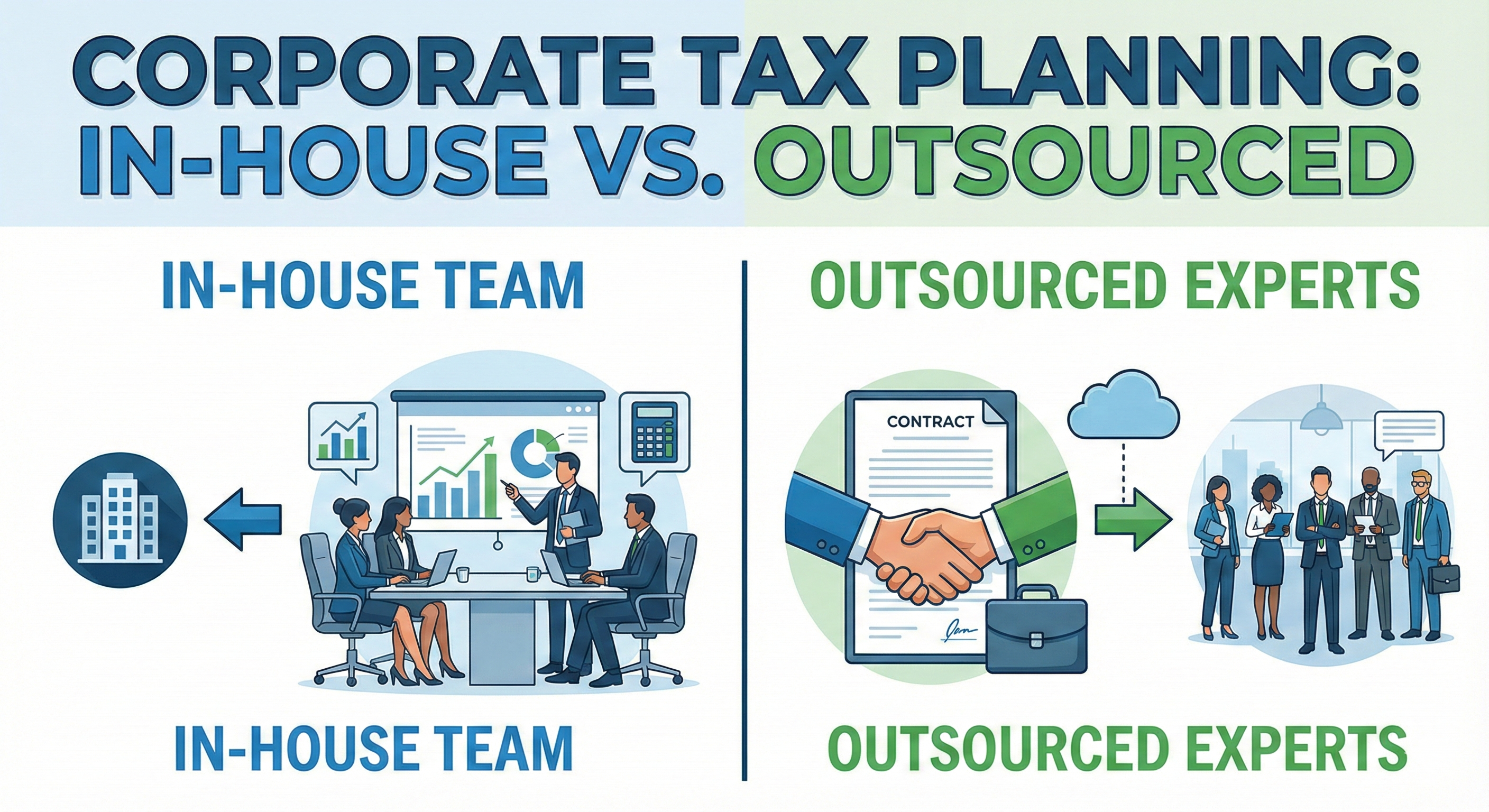
Corporate tax planning matters a lot for businesses in Toronto. It means finding ways to pay less tax while following rules from the Canadian Revenue Agency (CRA). Good corporate tax services improve financial reporting and help keep corporate governance on track.
Why Regulatory Compliance Matters
Regulatory compliance can feel tricky for many CFOs. The CRA sets clear rules, and missing them can cause big fines. Following these rules protects a company’s reputation and its money.
Common Tax Planning Strategies
Tax planning depends on each business’s needs. Some common strategies include:
- Income Splitting: Sharing income between family or shareholders.
- Deferring Income: Delaying when you report income to lower taxes now.
- Using Deductions: Claiming expenses that the CRA allows.
These moves help companies pay less tax legally and stay on the right side of the law.
Financial Reporting Basics
Good financial reports are key for any company, especially during CRA checks or audits. Clear records build trust with investors and partners. Businesses should often check their numbers to make sure they show the true state of things.
Working with Finance Teams
Corporate tax planning works best when it fits with the whole finance team’s goals. CFOs should get everyone involved so that tax plans support what the business wants overall.
So, knowing how corporate tax planning works helps CFOs pick if in-house corporate tax planning Toronto or outsourced corporate tax planning Toronto fits better. This choice also depends on changing CRA rules coming after 2025.
Comparing In-House vs Outsourced Corporate Tax Planning
In-House Corporate Tax Planning: Weighing the Pros and Cons
In-house corporate tax planning Toronto means a hands-on approach with close oversight. Your team gets full control and quick access to financial info. That helps your finance group work closely with tax experts, keeping everyone on the same page.
You get strong internal controls. Employees know the company well and can adjust tax plans to fit the business while following 2025-2026 rules. But, it costs a lot. Salaries, benefits, and training add up fast. Plus, employee turnover can cause problems when people leave.
Keeping up with CPA skills also takes time and money. Smaller Toronto firms might struggle to keep the right expertise in-house without overloading staff.
Here’s a quick look at in-house pros and cons:
- Pros:
- Direct control over tax processes
- Immediate access to financial data
- Stronger teamwork inside finance
- Customized tax plans that match goals
- Cons:
- High salary and benefit expenses
- Risk of staff leaving suddenly
- Need for ongoing training
- Hard to grow fast during busy times
Outsourced Corporate Tax Planning: Weighing the Pros and Cons
Outsourced corporate tax planning connects you to CPA firms in Toronto who focus just on taxes. This often costs less since you pay only for services when you need them—not full-time salaries.
These pros bring deep knowledge and use smart tools to keep numbers right and cut audit risks. Their experience across many industries helps spot deductions you might miss inside.
Scaling is easy here. Outsourced teams handle busy times like year-end or new laws without adding pressure on your staff. You can even mix approaches—keep some work inside, send tough stuff outside.
But be careful—sharing sensitive info means trusting outside groups’ security rules. Pick firms that follow Canadian privacy laws to protect your data well.
Outsourcing benefits and drawbacks:
- Pros:
- More cost-effective than full salaries
- Access to expert CPA knowledge
- Easy to scale up during busy seasons
- Professionals lower audit risks
- Cons:
- Less control over day-to-day tasks
- Data security worries if not handled right
- Possible delays in communication
- Dependence on provider’s reliability
Both in-house and outsourcing have their uses. It depends on your company’s size, budget, and how involved CFOs want to be with finance teams. Many Toronto businesses dealing with 2025-2026 tax changes use a mix of both for balance.
Gondaliya CPA helps CFOs look at these points carefully—deciding if keeping everything inside or working with trusted outsourced partners fits best while aiming for smart corporate tax planning.
Key Considerations for Toronto Businesses: Making the Right Choice
Choosing between in-house corporate tax planning and outsourcing isn’t easy. Toronto businesses face many factors like cost, control, expertise, and flexibility. CFOs need to pick what works best for their company. This guide shows key points that can help you decide smartly and find a solution that fits your needs.
Cost Differences: Salaries, Benefits, and Service Fees
In-house corporate tax planning Toronto means paying more than just salaries. You also cover employee salaries and benefits like health insurance, retirement plans, paid leave, and training. These extras can add 20-30% on top of base pay.
Outsourcing has clear service fee structures. You often pay a fixed monthly or project fee with no extra costs for benefits or training. Here’s a quick look:
- In-house team annual costs:
- Salaries: $80,000 – $120,000
- Benefits & Training: $16,000 – $36,000
- Software & Infrastructure: $5,000 – $10,000
- Total: $101,000 – $166,000
- Outsourced service fee: Usually 25-40% less than in-house
For many Toronto firms wanting cost efficiency with solid CPA firms near me handling CRA rules during 2025–2026 tax changes, outsourcing is often smarter.
Control and Accessibility Benefits: In-House Teams vs. Outsourcing
An in-house team gives you control and real-time access to your financial data. CFOs like this hands-on approach for daily operations.
But watch out:
- In-house teams can get overloaded during busy times.
- Access might be limited to office hours unless remote work is strong.
Outsourcing offers flexible access through cloud platforms. You get secure anytime-anywhere entry plus dedicated contacts to keep communication smooth. This suits businesses wanting expert advice without daily micromanagement.
Flexibility and Scalability: Adapting to Business Growth
Businesses grow or face seasonal ups and downs that change their tax work needs.
In-house teams stay steady but scaling means hiring more people. This can take time and cost extra.
Outsourced services offer big advantages:
- They scale fast with workload.
- Provide expert help instantly.
- Adjust contracts as your business changes without long-term binds.
This lets Toronto companies manage shifts better while keeping costs tied directly to work done—not fixed payroll.
Expertise Level: CPA-Level Skills and Regulatory Knowledge
Corporate tax planning needs strong knowledge of CRA rules and expert skills. These are key for Ontario businesses dealing with complex laws.
Some companies hire corporate tax accountant Toronto or CPAs internally but keeping them current is tough. Changing laws mean ongoing training and big resource use.
Top accounting firms focus on CPA-level review. They offer expert accuracy plus constant updates on regulations—helping avoid mistakes during deadlines or audits for upcoming 2025–2026 tax years.
Data Security and Compliance: Protecting Financial Information
Financial data must stay safe under Canada’s PIPEDA rules about privacy.
In-house setups need big investments in cybersecurity plus regular checks. If controls fail or tech gets old, risk goes up.
Good outsourced providers use layers of security:
- End-to-end encryption
- Secure client portals
- Third-party security tests
These steps keep financial info safe for Toronto businesses managing sensitive or cross-border data.
Seasonal Workload Management: Handling Tax Season Surges
Tax season brings huge spikes in workload that can strain finance teams badly.
Internal groups often struggle juggling daily tasks plus peak demands. This leads to overtime burnout or late filings risking penalties.
Outsourced partners handle seasonal surges by adding temporary staff fast. They also use automated workflows built for busy filing periods common with Ontario corporations.
This breakdown gives Toronto CFOs useful insights on in-house corporate tax planning Toronto vs outsourced options. It matches local business needs closely while preparing you well for regulatory challenges ahead—with trusted advice from Gondaliya CPA experts skilled in strategic corporate taxation tailored to your growth path.
Gondaliya CPA: Your Partner in Corporate Tax Planning
Picking the right corporate tax plan matters a lot for Toronto CFOs. They face tricky rules and money issues. Some handle taxes inside their company. Others hire outside experts. Each choice has pros and cons about cost, control, skill, and rules. Gondaliya CPA helps you make the best call.
Advisory on Choosing the Right Model
Thinking about in-house teams versus outsourcing? You gotta check the costs first. In-house means paying salaries, benefits, training, and software. Outsourcing asks for fixed fees but covers many expert tasks.
| Cost Factor | In-House Team | Outsourcing Firm |
|---|---|---|
| Salaries & Benefits | High (full-time staff) | Included in service fees |
| Training & Development | Ongoing investment | Covered by provider |
| Technology & Software | Company bears full cost | Provider uses advanced systems |
| Flexibility | Limited scalability | Easily scalable based on needs |
CFOs in Toronto must think about control and flexibility too. An inside team gives close watch and quick access to info. But it might struggle during busy times like tax season. Outsourcing lets you add or cut resources fast. They keep good communication going.
Skills differ a lot between these options. Internal folks often have general skills but might miss deep CPA knowledge needed for Ontario’s changing rules. Outside firms have strong tax know-how and stay updated on laws. This helps avoid costly mistakes or audits.
Outsourcing also lowers audit risks with solid checks and rule-following systems that are hard to keep inside smaller teams. For example, a Toronto tech firm cut its audit problems by 40% after hiring outside pros who knew its sector’s tax breaks.
Mixing finance work is another issue CFOs consider. Some want their teams to work closely inside finance departments. Hybrid models mix inside teams with outside help to get best results without losing control.
Data safety stays key since cyber risks grow and laws like PIPEDA require strong protection. Good outsourcing firms invest in secure setups that meet Canadian standards—often better than what’s possible internally.
Busy periods can cause trouble too. Outside partners can flex up during year-end or when new rules hit in 2025–2026.
Hybrid Options: A Tailored Approach for Your Business
Hybrid accounting models combine in-house work with outside experts when things get tricky or need special skills.
This way offers:
- Flexibility to add help during busy times.
- Saves money by not hiring full-time experts.
- Lets you tap into high-level CPA skills when needed.
- Keeps important tasks under your watch.
For example, a Toronto factory has an internal bookkeeper but calls outside advisors yearly for big corporate tax plans that follow new Ontario rules. It keeps costs down while getting expert advice when it counts.
How Gondaliya CPA Can Help
Gondaliya CPA fits right into your planning process by giving advice made just for Toronto businesses facing 2025–2026 changes. Our team works side-by-side with your finance leaders from start to finish, including hybrid choices.
We keep talking with you about law updates that affect your business areas plus ongoing help to stay compliant based on how your company runs.
Our pro tax advisors know local markets well and use tech tools common at Canada’s top firms—we provide steady financial advice so CFOs feel sure making their corporate tax plans.
Table 2: Decision Checklist for Toronto CFOs
| Criteria | Questions to Ask |
|---|---|
| Cost | What are total costs including hidden fees? |
| Control | How much direct oversight do we need? |
| Expertise | Does our team meet current regulatory demands? |
| Scalability | Can we adjust capacity during peak seasons? |
| Data Security | Are data protection measures compliant locally? |
Use this checklist with cost-benefit tables to decide if an in-house team fits better than outsourcing—or if a hybrid model makes more sense.
Working with skilled pros like Gondaliya CPA helps Toronto companies clear up confusion and stand firm against coming fiscal challenges ahead.
Toronto Business Case Study 1: In-House Success
A mid-sized Toronto manufacturing firm picked in-house corporate tax planning Toronto to keep control and detailed oversight of its money. Their internal tax team took a hands-on approach. They worked close with the finance department. This helped with teamwork on bookkeeping and payroll tax filing. They could get financial info fast and react quickly to changes in 2025-2026 corporate tax rules.
Strong internal controls helped reduce mistakes in bookkeeping. This made compliance more accurate. The team had CPA-level knowledge of Ontario’s tax laws. Salaries and benefits cost a lot, but the company liked having full control over important financial tasks.
Here’s what made it work:
- Hands-on approach gave full control
- Close teamwork between finance and tax teams
- Fast access to data and updates
- Strong checks cut down bookkeeping errors
- In-house CPA-level skills kept things current
This shows businesses wanting control and clear views can handle complex corporate taxes by themselves.
Toronto Business Case Study 2: Outsourcing Advantages
A fast-growing tech startup in Toronto chose outsourced corporate tax planning Toronto for better cost efficiency and scaling options. They teamed up with outside accounting firms nearby. This removed the need to hire special staff and cut recruitment costs. They got expert CPA skills suited for Ontario rules.
Outsourcing gave flexible services that grew during busy times like tax season without losing quality or missing tax filing deadlines. Fixed monthly fees made budgeting easier than guessing overtime or training costs.
Outside pros also lowered risks of errors or audits. They used strong tech platforms for safe data handling under Canadian privacy laws. This setup let the startup focus on growing their business instead of tax worries.
Key benefits included:
- Lower costs by skipping hiring expenses
- Flexible support when business needs grow
- Predictable fees help plan budgets
- Pro experts reduce error risks
- Secure tech keeps data safe
Outsourcing gave the startup peace of mind plus expert help whenever needed.
Toronto Business Case Study 3: Hybrid Approach in Action
A big retail chain in Toronto used a hybrid tax planning models setup, mixing in-house and outsourced help. Their own team managed daily bookkeeping while external advisors handled tough filings and strategy for 2025-2026 rules.
This hybrid model gave flexibility:
- Scale outsourcing up during busy times
- Keep steady control with internal staff familiar with the company
Teams talked often to stay ahead of law changes affecting provincial taxes.
They used shared technology systems across locations, making integration smooth. The mix helped accuracy, cut risk from mistakes, and balanced costs well for this multi-location business.
Here’s what stood out:
- Ongoing support from both inside and outside teams
- Proactive communication kept everyone updated
- Easy tech integration linked teams nationwide
- Flexibility to grow services as needed
The hybrid approach blended the best parts of both worlds for this retailer.
| Factor | In-House | Outsourcing |
|---|---|---|
| Cost | Salaries + Benefits | Fixed Service Fees |
| Control & Accessibility | High – Direct oversight | Moderate – Dependent on provider |
| Expertise Level | Internal CPA-level professionals | Access to diverse specialists |
| Risk Management | Risk of human error | Audits mitigated by firm protocols |
| Scalability | Limited by staffing capacity | Easily scalable |
| Technology Integration | Requires own systems | Provider offers advanced tools |
These examples show how CFOs in Toronto can decide what fits their company’s size, budget, complexity, and need for flexibility amid changing rules. Gondaliya CPA helps businesses figure out if an in-house team, outsourcing partner, or hybrid setup works best for their corporate tax planning today.
Cost-Benefit Comparison of In-House vs. Outsourcing Corporate Tax Planning in Toronto
Toronto CFOs often wonder about the costs between in-house and outsourced corporate tax planning. Let’s break it down by salary, benefits, and service fees for 2025-2026.
| Cost Factor | In-House Corporate Tax Planning (Toronto) | Outsourced Corporate Tax Planning (Toronto) |
|---|---|---|
| Salary and Benefits Costs | You pay competitive salaries for CPA-level staff plus benefits like health coverage, bonuses, taxes, and training. This usually costs between $90,000 and $130,000 per employee each year. | Outsourcing fees vary by firm and project but are predictable. They usually run from $3,000 to $8,000 monthly without extra overhead. |
| Cost Efficiency | Fixed costs stay high even during slow periods. Staff might be underused after busy tax seasons. | Outsourcing is cheaper when workloads change. You pay only for services needed, perfect for busy tax times or complex tasks. |
| Control Over Process | You get direct control and can change things quickly but need to manage the team. | You have less direct control but get detailed reports and expert compliance support. |
| Technology Investment | You must spend on software upgrades and security yourself. | Firms include advanced tech in their fees at no extra cost. |
Having an in-house team gives you control tied to your culture. Outsourcing lets you scale easily with clear costs. Many Toronto businesses save money this way while following CRA rules.
Decision Checklist for Toronto CFOs: Choosing Between In-House & Outsourced Models
CFOs in Toronto face choices that mix expertise needs with budget limits. Use this checklist to help decide:
- Look at Business Size & Complexity
- Do you need full-time CPA support all year?
- Are busy seasons big enough to need flexible staff?
- Check Cost Effects
- Compare salaries plus benefits to outsourcing fees including hidden costs like training or software.
- Think About Expertise Required
- Are there new rules that need outside experts?
- Decide Control Needs
- Do you want hands-on control or trust advisors working remotely?
- Consider Team Integration
- Will your finance team work well with the chosen model?
- Plan for Flexibility & Scaling
- Can the setup grow or shrink as business needs change?
- Look Into Hybrid Options
- Could mixing in-house staff with outside experts save money and add skill?
This list helps match financial goals with how things actually work while keeping CRA compliance.
Frequently Asked Questions About Corporate Tax Planning in Toronto
1. What are the main advantages of outsourcing corporate tax planning?
Outsourcing lets you access expert CPAs who know current CRA rules at a lower cost than hiring full-time staff.
2. How does Gondaliya CPA assist companies choosing between models?
We analyze your needs and offer hybrid solutions that blend internal teams with our specialists.
3. What should I consider regarding data security when outsourcing?
Good firms follow Canadian privacy laws and secure your sensitive financial info carefully.
4. How do salary costs compare against service fees?
Salaries include base pay plus benefits that often cost more than fixed monthly outsourcing fees based on workload.
5. Can outsourced providers handle complex multi-jurisdictional filings?
Yes, many have experience with cross-provincial tax issues common for Toronto businesses growing beyond one area.
6. What risks exist if relying solely on an in-house team?
In-house teams may make errors due to less varied exposure; audits might happen more without outside review.
7. Are there hybrid accounting models available?
Yes; using internal accountants for daily tasks plus outside consultants gives flexibility and expert knowledge.
8. How do I ensure CRA compliance using either model?
Pick professionals who keep up with changing rules through ongoing education certified by CPA Ontario standards.
9. When is it better financially to outsource rather than hire internally?
If work varies a lot or isn’t steady enough for full-time hires, outsourcing can save money effectively.
10. Does Gondaliya CPA offer customized plans based on industry type?
Yes—we create strategies that fit industries like manufacturing, retail, or tech startups to maximize savings just right for each client.
Have more questions about corporate tax planning or want help adapting to new regulations? Reach out to Gondaliya CPA’s team—helping Toronto CFOs choose smartly every step of the way!
FAQs on Corporate Tax Planning in Toronto
What is the benefit of integrating bookkeeping and tax planning?
It ensures financial statement accuracy and smooth tax preparation, reducing errors during tax season management Toronto.
How can companies manage the tax season surge effectively?
Using scalable outsourced support or hybrid models helps handle peak workloads with expert tax strategies and flexible resources.
What are key data security concerns in outsourced tax services?
Protecting tax data confidentiality requires encryption, secure portals, and compliance with Canadian privacy laws like PIPEDA.
How does cloud accounting improve corporate tax planning?
Cloud-based platforms offer real-time access, disaster protection, and seamless integration with payroll and tax filing services.
Why is ongoing support important for CFOs during regulatory changes?
It keeps teams updated on tax legislation updates and helps in proactive communication to minimize financial risk management.
What role does a hybrid accounting model play in corporate finance advisory?
It combines internal control with external expertise for strategic decision-making and cost-effective, scalable solutions.
How do professional tax advisors help with audit readiness?
They provide expert-level accuracy, audit mitigation strategies, and ensure compliance with CRA regulations to reduce risk.
Essential Considerations for Toronto CFOs: Tax Planning Insights
- Tailored bookkeeping solutions align accounting software integration with specific industry needs.
- Minimizing tax liability requires expert CPA knowledge on tax credits optimization and business growth tax strategy.
- Financial forecasting and budgeting become more accurate through integrated digital accounting tools.
- Tax audit mitigation benefits from strong internal controls and consistent compliance management.
- Strategic use of cloud accounting tools like QuickBooks Online or Xero boosts efficiency and transparency.
- Payroll tax filing integrates smoothly with overall corporate tax planning for error reduction in bookkeeping.
- Hybrid in-house outsourcing models offer predictable support without operational disruption or high employee turnover risks.
- Proactive management of multi-provincial tax rules helps businesses expand while ensuring local regulatory compliance Toronto.
- Vendor management streamlines collaboration between internal teams and external consultants for seamless integration.
- Management consulting in tax empowers CFO decision-making based on up-to-date knowledge base and risk assessment.

Sharad Gondaliya is a CPA Canada & CPA USA with 14 Years+ experience of Accounting, Tax, Payroll of Corporate Small Businesses as Tax Accountant. He is fully certified CPA Ontario and CPA USA and is well known among corporate small businesses for tax planning, efficient tax solutions, and affordable CPA services. Sharad is the Principal (Director) of Gondaliya CPA – Affordable CPA Firm in Canada. Licenses: CPA Ontario: 61040184 | CPA USA (MT): PAC-CPAP-LIC-033176 | CPA USA (WA): 57629 | CPA Firm License: 61330051 View Full Author Bio