



Self-Employed Tax Returns for IT Consultants
Invoicing clients instead of collecting a T4? We prepare your personal return with the business statement attached, claim the equipment, software, home office and subscription deductions consultants routinely miss, handle GST/HST including zero-rated work for US clients, and review the one question that decides everything: whether the CRA would see a business or an employee. Licensed Ontario CPA. Flat fee. All fees include HST.
Google Reviews
The Return Is the Easy Part. The Classification Is What Costs Money.
An IT consultant's tax file has two halves. One is mechanical: revenue, expenses, capital cost allowance on the hardware, the home office calculation, the GST/HST returns and the instalments. The other is the question underneath all of it, which is whether the CRA would look at your arrangement and see a business or an employee wearing an invoice. For a consultant billing a single client through an agency, on their equipment and their hours, that question is live, and if you have incorporated it carries the personal services business rules with it.
We prepare the return and we answer the harder question first, honestly, including when the honest answer is that your position needs strengthening before it needs optimising. See our self-employed accounting, our consultants accounting service and our guide on starting an IT consulting business in Canada.
Book Free Consultation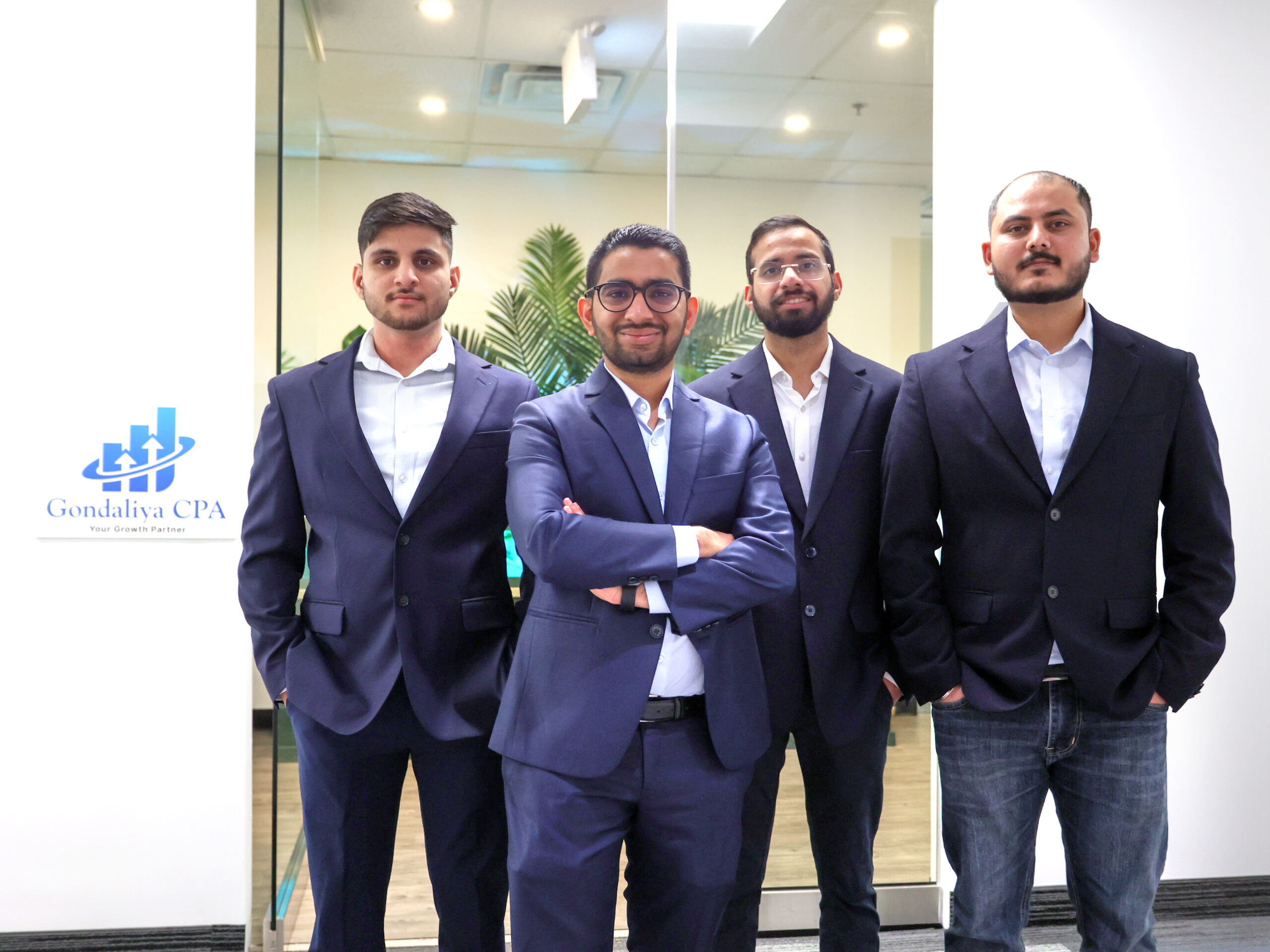
Our Services for Self-Employed IT Consultants
Personal Return With Business Statement
Your T1 prepared with the consulting income and expenses reported properly.
Classification Review
Contractor or employee assessed against the actual tests, before the CRA does it.
Equipment & Software
Hardware pooled correctly, subscriptions and licences captured rather than missed.
Home Office & Vehicle
A defensible workspace claim and a mileage basis that survives a question.
GST/HST Registration & Returns
Threshold monitored, returns filed, exported services treated correctly.
Instalments & Incorporation Timing
The next year forecast, and the incorporation question modelled on your numbers.
How We Handle a Consultant's Return
Six stages, starting with the question most preparers skip. All fees include HST.
Review the Relationship First
Everything else in the file depends on this answer.
- Assess control over how, when and where the work is performed.
- Establish who supplies the equipment, software and workspace.
- Test whether a real chance of profit and risk of loss exists.
- Consider client concentration, contract length and integration into the client's team.
- Say plainly where the position is strong, where it is weak and what would strengthen it.
Build the Revenue Picture
Reported income has to agree with what your clients told the CRA.
- Reconcile invoiced revenue to deposits for the full year.
- Agree the total to any fees-for-services slips your clients issued.
- Separate Canadian client work from services billed to clients abroad.
- Identify reimbursed expenses and disbursements rather than burying them in fees.
- Confirm whether the GST/HST registration threshold was crossed during the year.
Claim What Is Actually Deductible
Consultants underclaim far more often than they overclaim.
- Pool computers, monitors and peripherals into the correct capital cost classes.
- Capture cloud platforms, licences, developer tools and SaaS subscriptions.
- Claim internet and the business portion of the phone on a reasonable basis.
- Include certifications, training, professional dues and technical publications.
- Deduct errors and omissions insurance, accounting fees and subcontractor costs.
Home Office and Travel, Defensibly
The two claims most likely to be questioned, so we document them.
- Calculate the workspace portion on floor area or rooms, applied consistently.
- Apply it to rent or mortgage interest, utilities, insurance and maintenance.
- Respect the rule that the claim cannot create or increase a business loss.
- Separate genuine client travel from ordinary commuting.
- Build the vehicle claim on a logbook rather than a percentage guess.
GST/HST Done Properly
Registration timing and export treatment are where consultants slip.
- Monitor the small supplier threshold across four consecutive quarters.
- Register when it is crossed, or voluntarily where recovering tax on equipment helps.
- Treat services exported to non-resident clients on their correct footing.
- Claim input tax credits on hardware, software, insurance and professional fees.
- File the returns on the assigned cycle rather than at year end.
Plan the Year Ahead
A return that only looks backwards leaves money and surprises on the table.
- Forecast instalments so the second year does not arrive as a double payment.
- Project the CPP cost on self-employment income, both portions included.
- Model incorporation against how much you actually withdraw, not what you earn.
- Coordinate RRSP room created by your net business income.
- Set up the bookkeeping so next year's return is a summary, not a reconstruction.
Free IT Consultant Tax Consultation
Book Your Free Consultant Tax Consultation
Pick a time that suits you. Evenings and weekends are available until 9 PM.
Calendar not loading? Please book your free consultation here or call 647-212-9559.
Case Studies
Incorporated Too Early, Single Client
A developer incorporated on a colleague's advice while working full time through one agency, on the client's laptop, to the client's schedule. The arrangement carried real personal services business exposure and the corporation was costing more than it saved. We set out the risk in writing, restructured what could be restructured and advised on the client mix that would change the answer, rather than filing quietly and hoping. The figures here are illustrative of the work we do, not a specific client file.
Three Years of Subscriptions Never Claimed
A cloud consultant had been claiming only the obvious costs, missing years of developer tooling, cloud platform charges, licences and certifications scattered across personal cards. We reconstructed the spend from statements, classified equipment into the right capital pools, and amended the affected returns to claim what had always been deductible. The figures here are illustrative of the work we do, not a specific client file.
Charging Tax on US Work That Was Zero-Rated
A security consultant billing several American clients had been charging and remitting tax on all of it, having registered without reviewing how exported services are treated. We examined the contracts, corrected the treatment, and dealt with the resulting adjustments on the affected returns while keeping the input tax credits intact. The figures here are illustrative of the work we do, not a specific client file.
Second-Year Instalment Shock
A consultant paid a large balance in their first self-employed year, then received an instalment demand and a second balance the following spring, having budgeted for neither and having overlooked that both halves of CPP were payable. We rebuilt the cash forecast, set the instalments against actual monthly income, and the following year arrived without an emergency. The figures here are illustrative of the work we do, not a specific client file.
Where IT Consultant Returns Go Wrong
What we find most often on a consultant's file, and what each one costs.
| Problem | Why It Matters |
|---|---|
| Classification never reviewed | A single-client arrangement assessed later, with the corporation caught by the personal services rules |
| Equipment expensed outright | Hardware belongs in a capital pool, and the wrong treatment follows the asset for years |
| Subscriptions on personal cards | Small monthly charges scattered across statements go unclaimed entirely |
| Tax charged on exported services | Work for non-resident clients treated as though it were domestic |
| Home office claimed as a round number | An unsupported percentage instead of a documented, consistent basis |
| Instalments and CPP unbudgeted | Year two arrives with a balance, an instalment demand and both halves of CPP |
Consultants underclaim more often than they overclaim. The deductions that get missed are the ordinary ones: tooling subscriptions, certifications, insurance, the workspace and the equipment pools. Filing correctly is usually cheaper than filing cautiously. See our self-employed contractor tax deductions.
Classification and Deductions: The Rules We Apply
The treatments that decide an IT consultant's outcome, and how we apply each one.
| Item | Treatment |
|---|---|
| Contractor or employee | Decided on control, tools, chance of profit, risk of loss and integration, not on the contract wording |
| GST/HST registration | Required once taxable revenue passes $30,000 over four consecutive calendar quarters |
| Services exported to non-residents | Commonly zero-rated, with input tax credits still recoverable on your costs |
| Computers and peripherals | Claimed through capital cost allowance rather than expensed in the year purchased |
| Workspace in the home | A reasonable, documented portion of home costs that cannot create or increase a loss |
| Tax instalments | Generally required once net tax owing exceeds $3,000 in the current and either prior year |
The personal services business rules are the reason we review classification before we discuss incorporation. Where an incorporated consultant would reasonably be regarded as an employee of the client but for the corporation, the company can be treated as a personal services business, which denies almost every ordinary deduction, removes access to the small business rate and applies an additional tax on the income. The outcome is worse than either employment or unincorporated self-employment, and it is assessed years later, with interest, on returns already filed. A consultant with one client, on the client's equipment, integrated into the client's team is exactly the profile the rules were written for.
What Our IT Consultant Return Includes
- A written classification review before anything is prepared or filed
- Your personal return with the business statement completed properly
- Revenue reconciled to deposits and to any fees-for-services slips issued to you
- Computers, monitors and peripherals pooled into the correct capital cost classes
- Cloud platforms, licences, developer tooling and subscriptions captured in full
- A documented home office claim on a consistent, defensible basis
- Certifications, professional dues, insurance and accounting fees deducted
- GST/HST registration monitored, returns filed and exported services treated correctly
- Instalments and both halves of CPP forecast for the year ahead
- The incorporation question modelled on what you actually withdraw
Know Your Exact Fee Before We Start
Flat fee, fixed in advance. All fees include HST. No hourly billing.
Why IT Consultants Choose Gondaliya CPA
Classification First
The question that decides your outcome is answered honestly before the return is prepared.
Licensed CPA Ontario
A certified CPA prepares and signs the work, publicly verifiable on the register.
Flat Fee, Upfront
All fees including HST, no hourly billing, quoted before we begin.
Fully Remote
Everything through our secure portal, with evening and weekend availability.









Transparent Flat-Fee Pricing for IT Consultants
| Service | Fee | Scope | Details |
|---|---|---|---|
| Consultation & Quote | FREE | One-time | Classification reviewed, scope confirmed and a flat fee quoted before any work begins. |
| Self-Employed Personal Return | Quoted upfront | Annual | T1 with the business statement, capital cost pools, home office and vehicle claims. |
| Bookkeeping Add-On | Quoted upfront | Monthly or annual | Transactions categorised through the year so the return is a summary, not a rebuild. |
| GST/HST Registration & Returns | Quoted upfront | Per period | Registration, filing on your cycle and correct treatment of exported services. |
| Prior-Year Catch-Up | Quoted upfront | Per year | Outstanding years reconstructed and filed, with relief requested where grounds exist. |
All fees include HST, so the number quoted is the number you pay. Payment is by Interac e-Transfer to info@gondaliyacpa.ca with auto-deposit enabled and the security question set to Not Applicable. Please use our pricing calculator for an exact figure.
Deadline Approaching? Start This Week.
Flat fee, fixed in advance. All fees include HST. 30-Day Money-Back Guarantee.
Serving IT Consultants Across Ontario
Licensed CPA tax preparation for self-employed technology consultants, delivered virtually.
Frequently Asked Questions
Meet Your Consultant Tax Team

Sharad Gondaliya, CPA
Founder & Managing Director
Gondaliya CPA Professional Corporation
Sharad advises technology consultants on classification risk, incorporation timing, cross-border billing and the deductions their work actually supports.

Vandana Goel, CPA
Senior Accountant
Gondaliya CPA Professional Corporation
Vandana prepares the returns and the bookkeeping behind them: capital pools, subscriptions, home office calculations and the GST/HST filings.
What Our Clients Say
1300+ five-star reviews from business owners across Ontario and Canada.
Related Industries We Serve
Independent professionals and technology businesses we support year round.
Self-Employed Professionals
- Personal returns with business statements
- Deductions documented properly
- Instalments forecast, not discovered
Consultants
- Incorporated contractor structures
- Cross-border service billing handled
- Owner pay planned beside the return
Software Companies
- Development cost treatment
- Subscription revenue and deferrals
- Growth from freelance to company
Startups
- First-year structures and cap tables
- Investor-ready statements and returns
- CRA accounts opened correctly
Invoicing Instead of Collecting a T4? Get the Return Right.
Classification reviewed honestly, every legitimate deduction claimed, GST/HST handled including work billed abroad, and next year forecast before it arrives. Flat fee. All fees include HST.