



Year-End Accounting & T2 Filing for Franchise Owners
The close that produces the numbers your return reports: books reconciled to the franchisor's own record, the franchise fee amortised rather than expensed, royalties and advertising fund contributions costed, the build-out capitalised, and the shareholder loan quantified. T2 from $400. All fees include HST.
Google Reviews
Franchise Corporations
AFFORDABLE Year-End Accounting & T2 Filing for Franchise Owners
Most franchise owners experience year end as a filing. The statements go to the accountant, a return comes back, tax gets paid. But the return only reports what the close decided. Whether your books agree with what the franchisor's system says you sold, whether the fee you paid to open is an asset or an expense, whether the build-out is being written off in the wrong year, whether the money you drew is a loan: all of it is settled during the close, before the T2 is written.
A franchise owner's close is not an ordinary one. Someone else already knows your numbers, because the franchisor's system records your sales and calculates the royalty from them, so your books are measured against a third-party record before you file anything. Your largest costs to open, the fee and the build-out, are capital rather than expenses. We close the year and file the T2 from the same office, which is how our franchise accounting is set up.
Book Free Consultation
Our Year-End Services for Franchise Owners
Franchisor Reconciliation
We tie your books to the franchisor's own sales and royalty record, and explain any gap.
Franchise Fee Amortisation
We treat the initial fee as the capital asset it is, deducted over time rather than expensed.
Royalties & Ad Fund
We cost the ongoing royalty and advertising contributions separately, so you see what they run to.
Build-Out & Equipment
We capitalise leasehold improvements and equipment into the correct classes.
Multi-Location Reporting
We track each location separately as well as in total, so you know which store earns.
T2 Filing
We prepare and file the corporate return from a properly closed year. From $400, including HST.
Year-End Accounting for Franchise Owners by a Licensed CPA
The close that produces the numbers, then the return that reports them. From franchisor reconciliation to filed T2. AFFORDABLE flat-fee pricing.
Reconciling to the Franchisor's Record
Where a franchise close differs most.
- Tie your recorded sales to the franchisor's system for the same periods.
- Reconcile the royalty charged against the sales it was calculated on.
- Explain timing differences between the franchisor's period and your year end.
- Identify unexplained gaps before a franchisor audit or a CRA review does.
- Keep the reconciliation as support behind the revenue figure on your return.
The Franchise Fee and Renewals
Capital, not an expense.
- Treat the initial fee as an intangible asset rather than a cost of the year.
- Amortise it through capital cost allowance over the relevant period.
- Review renewal and transfer fees against what they actually secured.
- Correct prior years where the fee was written off in full.
- Track the unamortised balance so a future sale can be planned.
Royalties, Advertising Fund and Accruals
The running cost of the agreement.
- Record ongoing royalties as the deductible operating cost they are.
- Cost advertising fund contributions on their own line, not buried in overhead.
- Accrue the royalty and contributions for the final period of the year.
- Accrue supplier invoices, rent adjustments, wages and vacation pay.
- Show what the agreement costs you across twelve months.
Build-Out, Equipment and Inventory
Your capital position and your stock.
- Capitalise leasehold improvements rather than expensing the build-out.
- Capitalise equipment into the class that fits the asset.
- Treat a franchisor-mandated equipment package as capital all the same.
- Set the inventory count and valuation where you hold stock.
- Determine recapture where equipment or improvements were disposed of.
Multiple Locations and the Shareholder Loan
Which store earns, and what you took out.
- Track each location separately as well as the group in total.
- Show which location carries the others, before the next one opens.
- Reflect your actual corporate structure in the books and the filings.
- Quantify what you drew from the corporation through the year.
- Deal with the loan balance before it becomes an inclusion in your income.
Working Papers, Statements and T2 Filing
One firm for the close, the return and the year ahead.
- Hold the franchisor reconciliations and calculations behind every figure.
- Reconcile the HST in your books to the HST on your filed returns.
- Produce statements ready for a renewal, a lender or a transfer.
- Prepare and file the T2 from a properly closed year.
- Track both dates: the return deadline and the earlier balance-due date.
Free Franchise Year-End Consultation
Free Franchise Year-End Consultation
Case Studies: Franchise Year-End and T2
Food Franchise, Toronto (Fee Corrected)
The initial franchise fee had been expensed in full in the opening year rather than treated as the capital asset it was. We corrected the treatment, set the amortisation across the relevant period and restated the affected years, so the deduction landed where it belonged. The figures here are illustrative of the work we do, not a specific client file. Capital Cost Allowance →
Retail Franchisee, Mississauga (Franchisor Gap)
Recorded sales did not agree with the franchisor's system and nobody had ever reconciled the two, so the royalty had been charged on figures the owner could not verify. We built the reconciliation, explained the timing differences and identified the real gap. The figures here are illustrative of the work we do, not a specific client file. Franchise Accounting →
Multi-Unit Owner, Brampton (Locations Separated)
Three locations ran through one blended set of books, so the group looked profitable and nobody knew which store was carrying which. We separated the reporting by location, and the newest unit turned out to have been carried for a year. The figures here are illustrative of the work we do, not a specific client file. Bookkeeping Services →
Franchise Corporation, Ontario (Close Made Routine)
An owner was rebuilding a year of sales and royalty activity every year end, and the statements were never ready when the franchisor asked. We moved them to monthly bookkeeping with the franchisor reconciliation running as it goes, so the close became a confirmation. The figures here are illustrative of the work we do, not a specific client file.
Ordinary Year-End vs a Franchise Year-End
A third party who already knows your numbers, and two large capital costs at the front, make a franchise close a different exercise.
| Consideration | Ordinary Year-End | A Franchise Year-End |
|---|---|---|
| Who knows your sales | Only you and the CRA | The franchisor's system records them independently |
| Cost to open | Usually modest, often expensed | Franchise fee and build-out, both capital |
| Ongoing obligations | Rent and suppliers | Royalty and advertising fund on every dollar of sales |
| Who can inspect the books | The CRA | The CRA, and the franchisor under the agreement |
| Reporting | One business | Often several locations that need separating |
| On a sale | Assets and goodwill | Recapture, plus the unamortised fee to address |
What a Franchise Year-End Close Must Cover
Recording transactions is only the start. These items decide your tax position before the return is written.
| Item | Why It Matters for Your Corporation | How We Handle It |
|---|---|---|
| Franchisor reconciliation | A third party already holds a record of your sales | Books tied to the franchisor system, gaps explained |
| Franchise fee | Expensing it misstates the year and the asset | Capitalised and amortised over the relevant period |
| Royalties and ad fund | Buried in overhead, you never see what they cost | Costed on their own lines, accrued to the year end |
| Build-out | Your largest capital item after the fee | Capitalised into the correct class, not expensed |
| Equipment | A mandated package is still capital | Capitalised, schedule maintained, recapture determined |
| Inventory | Decides cost of goods sold where you hold stock | Counted on the date, valued on a consistent basis |
| Multiple locations | A blended total hides which store earns | Each location tracked separately as well as in total |
| Shareholder loan | Can be included in your personal income | Quantified and dealt with before the deadline passes |
The close records what happened. It cannot change it. Compensation mix, the shareholder loan, whether to open or refit this year or next: every one is a lever that works before your year end and stops working after. Please talk to us before your year end rather than after, because the close can only measure what the year already contains.
What Is Included in Our Franchise Year-End Service
Everything from the close to the filed return. No hourly billing. All fees include HST.
| Included | What We Do |
|---|---|
| Franchisor reconciliation | We tie your books to the franchisor sales and royalty record. |
| Franchise fee treatment | We capitalise the fee and amortise it over the relevant period. |
| Royalties and ad fund | We cost both separately and accrue them to your year end. |
| Build-out and equipment | We capitalise into the correct classes and maintain the schedule. |
| Inventory | We set the count and valuation where you hold stock. |
| Multi-location reporting | We track each location separately as well as the group. |
| Shareholder loan | We quantify the balance and deal with it before it becomes income. |
| T2 preparation and filing | We prepare and file the return from a properly closed year. |
The Franchise Year-End Mistakes We Prevent
| # | Mistake | Why It Hurts | How We Prevent It |
|---|---|---|---|
| 1 | Expensing the initial franchise fee | Misstates the opening year and the asset | Capitalised and amortised over the period |
| 2 | Never reconciling to the franchisor | A third party holds a record you cannot explain | Books tied to the franchisor system every period |
| 3 | Expensing the build-out | Misstates the deduction and the balance sheet | Leasehold improvements capitalised correctly |
| 4 | Royalties and ad fund buried in overhead | You never see what the agreement costs you | Each costed on its own line and accrued |
| 5 | Estimating inventory instead of counting | Cost of goods sold, margin and tax all wrong | Real count on the date, valued consistently |
| 6 | Blending locations into one set of books | The weak store hides behind the strong one | Each location tracked separately |
| 7 | Never tracking drawings | The loan balance is unknown and already spent | Quantified and tracked, not reconstructed |
| 8 | Raising decisions after year end | The levers have already closed | Pre-year-end review while they still work |
Why Choose Gondaliya CPA for Your Year-End and T2?
Built Around a Franchisee
Franchisor reconciliation, the fee, royalties and multi-location reporting handled properly.
Licensed CPA Firm
The close, the working papers and the T2 all from a licensed CPA firm, from one office.
Franchise Experience
Food, retail and service brands. Single units and multi-location owners.
AFFORDABLE Flat Fee
Quoted upfront, all fees including HST, no hourly billing. 30-Day Money-Back Guarantee. 60-Day Fees-Matching Policy.









Transparent Flat-Fee Pricing
No hourly billing. No surprises. You know your exact fee before we start. All fees include HST.
| Service | Fee | Includes |
|---|---|---|
| T2 filing for franchise corporations | From $400 | Corporate return prepared and filed from a properly closed year. |
| Franchise bookkeeping | From $100/month | Monthly books with the franchisor reconciliation and loan tracked. |
| Year-end close plus T2 | Quoted upfront | Reconciliation, fee, royalties, build-out, inventory, loan and the filed return. |
| Catch-up bookkeeping | Quoted upfront | Records brought current before the close begins. |
| Free consultation | FREE | Scope review and exact flat-fee quote before any work begins. |
All fees include HST, so the number quoted is the number you pay. Fees depend on the number of locations, the complexity of the corporation and the state of the records. Payment is by Interac e-Transfer to info@gondaliyacpa.ca with auto-deposit enabled and the security question set to Not Applicable. Please use our pricing calculator to know your exact fee.
How It Works
Four steps. The heavy lifting sits with us.
Consult
We learn your year end, how many locations you run, what the agreement requires, whether you hold stock, and the state of your records, then quote a flat fee.
Close
We reconcile to the franchisor record, correct the fee treatment, cost the royalties, capitalise the build-out, set the count and quantify the loan.
File
We prepare and file the T2 from the closed year, with the working papers held behind every figure.
Plan Ahead
We set the monthly reconciliation and the pre-year-end review so next year the decisions are made while the levers still work.
Franchise Year-End and T2: Cities We Serve
We handle year-end and T2 filing for franchise owners across every Ontario city and Canada. No distance limits, no extra fees.
Frequently Asked Questions
Meet Your Franchise Year-End Team

Sharad Gondaliya, CPA
Founder & Managing Director
Gondaliya CPA Professional Corporation
Sharad leads the year-end close, franchise fee treatment and T2 filing for franchise corporations.
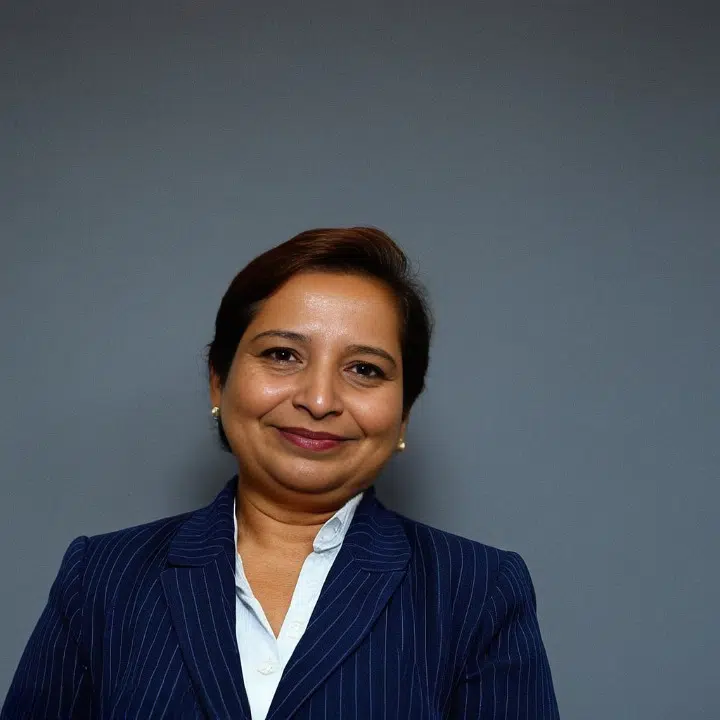
Vandana Goel, CPA
Senior Accountant
Gondaliya CPA Professional Corporation
Vandana handles the franchisor reconciliation, royalties, accruals, capital schedules and working papers.
What Our Clients Say
1300+ five-star reviews from franchise owners and business owners across Ontario and Canada.
Related Services for Franchise Owners
Franchise Accounting
- Monthly franchisor reconciliation
- Royalty and ad fund tracking
- From $100/month, including HST
CPA Compilation Report
- Statements for the franchisor
- Renewal and transfer support
- Prepared from clean books
Review Engagement
- Where a lender requires one
- Higher assurance than compilation
- Quoted upfront, flat fee
CFO Services
- Multi-location performance
- Expansion and financing
- Ongoing advisory
A Close That Confirms, Not One That Excavates.
Gondaliya CPA ties your books to the franchisor's own sales and royalty record, treats the franchise fee as the capital asset it is, costs the royalty and advertising fund so you see what the agreement runs to, capitalises your build-out and equipment correctly, separates your locations so you know which store earns, quantifies the shareholder loan, and files the T2 from a properly closed year. T2 from $400. All fees include HST.