



Tax Accountant for Public Speakers in Ontario and Across Canada
Half of what you spend feeding yourself on the road is not deductible, and most speakers learn it from a reassessment rather than from an accountant. Section 67.1 of the Income Tax Act cuts the deduction for food, beverages and entertainment to 50%, and it does not care that the gate sandwich was eaten because a 6:40 flight was the only way to make a 9:00 keynote. Flights, hotel nights, ground transport and checked bags sit outside that rule and come off in full — the error we correct most often is a bookkeeper who halved those too. The other half of a speaker’s tax life is money from abroad: an association in another country pays a fee, its own tax authority takes an amount off the top, and what lands is smaller than the contract. That fee is Canadian income at its gross figure, and section 126 of the Income Tax Act is where relief comes from. We keep the gross fee and the bureau’s commission on two lines, read your booking form before deciding what a deposit is, and put the laptop, camera and microphone in Class 50 at 55% with staging gear in Class 8 at 20%. AFFORDABLE flat fees.
AFFORDABLE Public Speaker Tax Accountant
Ask a working speaker what they spent on the road last year and you will get a figure accurate to a hundred dollars. Ask how much of it the Income Tax Act lets them deduct and the figure stops being reliable, because two rules pull in opposite directions and almost nobody applies both. Section 67.1 halves food, beverages and entertainment: the coffee at five in the morning, the sandwich at the gate, the dinner with the organising committee after the closing session. Nothing halves the flight, the room, the taxi, the parking or the bag fee, which come off in full where they earned the fee and the amount is reasonable. We routinely find the first rule ignored and the second applied too hard on the same file, in the same year, by the same bookkeeper. Then there is the recharged dinner, which is where speakers genuinely go wrong: a meal billed on to a client leaves the 50% restriction only where the amount is compensated and the compensation is reasonable and specifically identified in writing to the person paying it, so an invoice reading “expenses $900” keeps the restriction with you while “meals $148.60” does not. At Gondaliya CPA we work the receipts, the invoice wording and the schedules so the deduction you claim is the deduction you keep, on AFFORDABLE flat fees.
As a public speaker accountant we act for keynote speakers, workshop and breakout facilitators, conference MCs and panel moderators, and author-speakers running a book, an audiobook and a recorded-talk library alongside the dates, across Ontario and on engagements well outside it. We stay with the file through the year instead of meeting you once in April, because a fee with foreign tax taken off it and a dinner billed to a client are both settled when they happen, not nine months later.
Let us take the receipts, the slips and the schedules so you can get back to writing the talk.

Our Official Partners









Accounting That Understands How a Public Speaker Actually Works
A speaking business holds no stock, needs no premises worth the name and often has no staff, which leads owners to assume the tax side is simple. It is not. The money arrives in lumps, often from another country and often through an intermediary, and the largest expense category on the file — being somewhere else — is governed by two rules that treat meals and everything else quite differently. That is the ground Gondaliya CPA covers, for speakers throughout Ontario.
Stay Compliant and Minimize Your Public Speaking Tax
Two things a speaker wants from a return are that it arrives on time and that it does not overpay, and on this file those are the same piece of work. We keep the filings on schedule while claiming every night, flight, kilometre and dollar of equipment the Act allows — and while making sure the one genuinely restricted deduction is restricted by the right amount rather than by a guess in either direction.
Accounting & Tax Experts for Public Speakers

- AFFORDABLE + Registered CPA Firm
- Business and Corporate Tax Expert
- Small & Medium Business Expert
- Accounting, bookkeeping, and tax filing
- CPA (Chartered Professional Accountant)
- 1300+ 5-star Google reviews
- 30-Day Money-Back Guarantee
- 60-Day Fees Matching Policy
Why Choose Our Accounting Services for Public Speakers?
Tax Planning — Meals, Travel and the Lump Year
We work out the restriction before the year closes, model the equipment purchase against your year-end date, and plan the draw so a heavy conference season is not taxed personally in one go.
Consulting — Foreign Fees and Credits
Before you sign a date abroad we look at what the payer’s country is likely to take off at source and what can be recovered against the Canadian tax on that fee, so the wire is no surprise.
CRA Representation — Receipts and Reassessments
When a travel and meal review arrives we answer it with the engagement letter, the boarding pass, the folio and the calendar, and seek relief on Form RC4288 where an earlier error produced the penalties.
Bookkeeping — Every Date, Every Folio
Each engagement is a job carrying its fee, its commission and its costs, with meals split out from the first entry of the year, so the year-end schedule is a record rather than a reconstruction.
Google Reviews
Public Speaker Clients
Public Speaking Tax and Accounting Services in Ontario
Corporate Tax Filing (T2) for Public Speakers
T2 preparation with the 50% restriction under section 67.1 applied properly, travel claimed in full, foreign fees reported gross and the section 126 credit computed rather than assumed.
Bookkeeping & Accounting for Public Speakers
Engagement-by-engagement books with meals in their own account, hotel folios split, and gross fees kept apart from the commission a bureau takes out of them.
Payroll Services for Public Speakers
Payroll from the week a first assistant or researcher starts: WSIB coverage registered, deductions remitted and reconciled each period, and the T4 package in before the end of February.
GST/HST Filing for Public Speakers
AFFORDABLE HST filing with 13% on Ontario engagements, the $30,000 threshold measured on gross fees, and booking deposits read against the Excise Tax Act instead of guessed at.
Tax Planning for Public Speakers
Year-end date, the small-business limit, equipment timing, and how a heavy season followed by two quiet ones should be drawn down rather than taken all at once.
Corporate Catch-Up Filing for Public Speakers
File overdue T2 and HST years, rebuild each year’s dates from contracts and folios, and recover foreign tax that was withheld and never claimed.
CRA Audit Resolution for Public Speakers
Support on travel, meal and foreign credit reviews, answered with documents from the first letter through to the last one.
CPA Financial Statements (Notice to Reader) for Public Speakers
CPA-compiled statements lenders accept, with fees gross, commission shown as a cost and equipment carried at net book value by class.
Incorporation Services for Public Speakers
Incorporation handled from the NUANS search through the articles and share structure, with a section 85 rollover where equipment, goodwill and book rights have to move in.
Catch-Up Bookkeeping Services for Public Speakers
Months or years of contracts, bureau statements, airline confirmations and hotel folios reconstructed, so the books finally show what each date actually returned.
US Corporation & LLC Tax Filing for Public Speakers
Cross-border work where American organisers withhold from your fee or you have set up a US entity to invoice them, handled alongside the Canadian return.
Voluntary Disclosure Program for Public Speakers
Come forward on unreported honoraria, foreign fees never shown gross or meals claimed in full, cancelling penalties through a Voluntary Disclosures Program application.
Accounting & Tax Services Tailored for Public Speakers
Real, practitioner-level CPA expertise for keynote speakers, workshop facilitators, conference MCs and panel moderators, and author-speakers across Ontario — built for a business whose biggest cost is being somewhere else and whose best-paid dates are often abroad.
- Your T2 is built so the GIFI separates keynote fees, workshop days, MC and panel work, royalties, back-of-room book sales and recharged expenses onto lines of their own rather than into one revenue total.
- Food, beverages and entertainment are claimed at the 50% that section 67.1 of the Income Tax Act permits, worked out on the lesser of what you paid and a reasonable amount, in their own account.
- Flights, hotel nights, ground transport, checked bags and parking are claimed in full because section 67.1 never reaches them, and we have restored four-figure deductions on files where a bookkeeper had halved the whole travel account by reflex.
- Where a payer abroad took tax off a fee before the transfer left, the fee is reported gross in Canadian dollars and the section 126 foreign tax credit is computed rather than assumed.
- Capital cost allowance runs on Schedule 8: laptop, camera and microphone in Class 50 at 55%, staging gear and furniture in Class 8 at 20%, software in Class 12 at 100%, a car in Class 10 at 30%.
- Every engagement is set up as its own job carrying the contracted fee, the bureau’s commission, the airfare, the nights, the ground costs and the meals, so you can finally see what a single date returned rather than guessing.
- Meals go to a dedicated account from the first entry of the year and are never buried inside travel, which is the only arrangement that lets the restriction be applied without guesswork.
- A hotel folio is split instead of posted as one figure: room and parking to travel, breakfast and minibar to meals, because a folio total hides a restricted expense inside an unrestricted one.
- Fees from abroad are recorded at the gross contracted amount translated on the day of payment, with the tax the payer withheld shown on its own line rather than disappearing into the gap between the contract and the money that arrived.
- Royalty statements from publishers, audiobook distributors and recorded-talk platforms are reconciled to the money actually received, so an advance, an earned royalty and a platform’s own deduction stay three separate figures.
- Most speakers run with nobody on payroll until the diary forces a hire. The moment a researcher or assistant goes on the books, WSIB attaches and source deductions begin, and we set both up first.
- Remittances are reconciled to the PD7A each period. The penalty for sending one in late is graduated rather than flat and reaches 10%, and a two-person payroll is charged the same proportion as a large one.
- The T4 slips and their summary are filed before February closes, with every figure tied back to what was actually remitted during the year rather than to what the payroll software assumed had gone out on your behalf.
- Where you pay a genuine supplier instead — a videographer, a slide designer, a researcher on contract — the T4A side is handled separately, and we do not treat a supplier invoice as though it were a pay stub.
- If total payroll ever passes $1,000,000 the Ontario employer health tax enters the picture, and we tell you in the quarter you are heading toward that line rather than in the spring once the year has already closed.
- An engagement supplied in Ontario carries 13%, and registration stops being optional once your taxable supplies pass $30,000 across four consecutive calendar quarters, measured on the gross fee and not on what a bureau transfers you.
- That distinction catches working speakers: a diary holding $34,000 of contracted dates can transfer through as something nearer $27,000, and an owner watching the bank credits believes the threshold is still somewhere ahead of them.
- Subsection 168(9) of the Excise Tax Act keeps a genuine holding deposit out of the tax base while it is doing nothing but reserving the date, and brings it in on the day you credit the money against the fee itself.
- Where the same money is written up as a first instalment of the fee rather than a hold, the general timing rule governs and the tax travels with the payment. Your booking form decides which you hold.
- Input tax credits are recovered on equipment, software, the studio build, the commission a Canadian-registered bureau charges you and the hotel nights, with the food and beverage element restricted in step with the income tax treatment.
- Speaking income arrives in lumps. A $190,000 year followed by two thin ones is ordinary, and the question is not the headline rate but how to spread the draw across those years.
- Money left inside a speaking corporation is taxed at roughly 12.2% combined in Ontario on active business income up to $500,000, against a personal rate that reaches 53.53% once the top Ontario bracket is in play.
- We model the equipment purchase against your year-end date, because a camera bought in the last week of one fiscal year and the same camera bought in the first week of the next land in completely different returns.
- Where a date abroad is likely to have tax taken off it at source, the credit position is looked at before you sign rather than after a short wire arrives, since relief is limited and nothing about it happens automatically.
- The salary and dividend mix is reset each quarter against your draw, your RRSP position and what the corporation needs to hold back for the quiet stretch between one conference season and the next one.
- Overdue T2 and HST years are filed in order, with each year’s engagements rebuilt from contracts, calendar entries, boarding passes and hotel folios rather than estimated backwards out of the bank deposits.
- A late T2 carries a penalty computed on the unpaid balance that keeps growing for every month the return stays outstanding, and the scale is harsher again for a corporation already penalised once for the same failure.
- Fees from abroad in the unfiled years are the part that makes the exercise pay: tax withheld overseas and never claimed can often still be brought into a section 126 credit, which is money sitting in a drawer.
- Meal claims in the reconstructed years are re-struck at the statutory 50% before CRA does it, and travel the previous bookkeeper halved by mistake is restored, so the net correction frequently lands in your favour rather than against you.
- Relief from penalties and interest is applied for on Form RC4288 where there is a genuine reason, and a voluntary disclosure under RC199 is the route where the years are long past due and nothing has yet been raised.
- A travel and meal review is the letter speakers get, and it is answered with documents: the signed engagement letter, the boarding pass, the folio, the conference programme and the calendar entry for the date in question.
- Where a recharged meal was taken outside the 50% restriction we produce the invoice line that identified the amount in writing to the client, which is the condition the Act attaches to that treatment and the thing reviewers ask for.
- Where a trip mixed an engagement with personal days we present the allocation and the basis for it, because paragraph 18(1)(h) of the Income Tax Act puts personal and living expenses outside deduction altogether and no apportionment rescues them.
- A section 126 claim is supported with the payer’s withholding statement, the contract, the exchange rate used and the payment date, because a credit has to be evidenced rather than asserted.
- Subsection 152(7) of the Income Tax Act permits the Minister to assess without relying on a return as filed, and the practical answer is records that stand up before anybody asks for them.
- CPA-compiled statements that a bank, a landlord or a mortgage broker will accept, showing speaking fees, royalties and book sales separately instead of as one undifferentiated revenue line at the foot of the page.
- Gross fees are presented gross, with bureau and agent commission shown as the cost it is, because a lender reading net fee income is reading a materially smaller business than the one you actually run from week to week.
- Equipment is carried at net book value by class, so the Class 50 cameras and laptops, the Class 8 staging gear and furniture and the Class 12 software are each visible rather than collapsed into a single equipment figure.
- Fees earned abroad are shown in Canadian dollars with the tax withheld by the payer disclosed, which is what allows a reader to reconcile the statements against the foreign tax credit claimed on the corporate return.
- Money held against dates that have not yet been delivered is carried as deferred revenue rather than counted as earned, so the statements do not flatter a year whose engagements have not actually happened yet.
- Incorporation handled end to end — the NUANS name search, the articles, the share structure and the minute book — with the CRA business number and its payroll and HST accounts opened as part of the same job.
- Where you have been speaking personally for years, section 85 of the Income Tax Act on Form T2057 moves the equipment, the goodwill in your name and the book rights across at elected amounts.
- The share structure is set with an eye on section 110.6 and the $1.25 million lifetime capital gains exemption, in case a brand, a course library or a back catalogue is one day sold rather than simply allowed to wind down.
- We say plainly when incorporating is not yet worth it: a speaker drawing out everything they earn in order to live on it buys administration and filing fees rather than a saving, and we will tell you so before quoting.
- Opening class balances are set from the section 85 election itself rather than from a spreadsheet, so your first corporate Schedule 8 begins from figures that trace straight back to the documents behind them.
- Months or years of engagement contracts, bureau statements, airline confirmations, hotel folios and card statements are reconstructed into books that show each date, the fee it carried and what it genuinely cost to deliver.
- The meal account is separated out retroactively, which usually means working back through folios line by line, because a year of travel posted as one lump cannot support a 50% restriction in either direction.
- Section 230 of the Income Tax Act requires books and records kept for six years, and a credit card statement is not a record of what was bought: it names a merchant and an amount, nothing more.
- Gaps are closed with the documents that do exist: the conference programme, the signed agreement, the e-ticket, the calendar entry, the organiser’s email confirming the date and the folio emailed at checkout.
- Once the history is rebuilt, QuickBooks Online or Xero is set up so the same splits happen by default from your next engagement onward and the catch-up never has to be paid for a second time.
- A date in the United States usually means an amount taken off the fee at source before the transfer leaves, a short wire, and a question about what can be recovered against the Canadian tax on the very same income.
- We report the fee at its gross contracted amount in Canadian dollars, then compute the section 126 credit against the Canadian tax otherwise payable on that foreign income rather than treating the amount withheld as though it were a refund.
- A credit is limited. An amount withheld at a rate above the Canadian tax on that fee can leave a residue the credit will not absorb, and we say so before the engagement rather than afterwards.
- Where you have set up a US entity to invoice American organisers, the two systems can characterise it differently, and getting that wrong is far cheaper to prevent than to unpick two filing seasons later on.
- US filing obligations, state registrations and the forms that go with them are handled alongside the Canadian return, so both sides are prepared from one set of figures instead of two sets that never quite agree.
- Honoraria and small fees that never reached a return, fees from abroad never reported at their gross amount, and meals claimed in full for years are the three things speakers come forward about most often.
- An application under the Voluntary Disclosures Program on Form RC199 has to be voluntary, complete and at least a year past due, and it has to be made before CRA has contacted you about the very same matter.
- Done properly the penalties come off and a measure of interest relief follows. Done after the letter has already arrived, neither does, which is why the timing of a disclosure matters more than the size of the amount.
- We prepare the amended or missing returns alongside the application, so what CRA receives is a complete position rather than a confession with the arithmetic still to be worked out somewhere afterwards.
- Where the exposure is an error rather than an omission — a 50% calculation done wrong, a credit overclaimed on a foreign fee — relief on Form RC4288 is often the better route, and we will tell you which one fits.
Public Speaker Travel & Foreign Fee Check
Six questions on the 50% meal limit, recharged expenses, fees taxed at source abroad, the credit that relieves them, booking deposits and whether incorporating is overdue. No fee shown.
1. Are food and beverage costs posted to an account of their own, apart from flights and hotels?
2. Has every meal recharged to a client been identified in writing on the invoice?
3. Are fees from abroad recorded at the gross contract amount rather than the net transfer?
4. Has a foreign tax credit been claimed for every fee taxed at source in another country?
5. Does your booking form say whether a deposit holds the date or part-pays the fee?
6. Is your public speaking business incorporated?
Free CPA Consultation for Public Speakers
Case Studies: Public Speaking Accounting & Tax
Waterloo Keynote Speaker — Every Meal Claimed in Full, Every Flight Cut in Half
The problem: A Waterloo keynote speaker had claimed thirty months of road food at 100%: airport meals, room service and committee dinners. On the dates billed as fee plus expenses the recoveries sat in income and the meals were claimed whole, with nothing on any invoice identifying a meal amount. Meanwhile the bookkeeper had applied a blanket 50% to the whole travel account, halving airfare, hotel nights and bag fees too. Two errors in opposite directions, three years running.
What we did: We rebuilt the travel and meal accounts from folios and card records, re-struck the food and beverage claims at the limit section 67.1 of the Income Tax Act sets, restored flights, rooms and ground costs to a full deduction, and rewrote the invoice template.
The result:
- $9,800 of travel restored to a full deduction after being halved in error
- Meal claims corrected to the statutory limit before CRA raised them
- Invoicing changed so recharged meals are no longer cut in half
Kingston Author-Speaker — Two Fees Taxed Abroad, No Relief Claimed
The problem: A Kingston author-speaker delivered two association keynotes in the United States, contracted at US$9,000 and US$6,500. The payers withheld tax before the transfers left and the bookkeeper recorded the net amounts as revenue. No credit was claimed because nobody had read the contracts; the bank credits became the sales figure. The same had happened to the audiobook royalty statements, where a platform deduction and withholding were indistinguishable inside one payment.
What we did: We restated both fees at their gross contract amounts in Canadian dollars at the rate on the day each was paid, obtained the payers’ withholding statements, brought the amounts into a section 126 foreign tax credit claim across both years, and reconciled the royalty statements.
The result:
- $7,100 of foreign tax brought into a credit claim across two years
- Both fees restated gross in Canadian dollars with evidence behind them
- Royalty statements reconciled so withholding is no longer buried in the net
Niagara Falls Speaker — All-In Fees, No Split, No Receipts
The problem: A Niagara Falls speaker billed one all-in number per engagement, covering the talk and everything it took to get there, with nothing itemised behind any invoice. Believing the travel inside an all-in fee had become the organiser’s cost, the speaker claimed almost nothing for flights and hotels while claiming meals in full on the few dates billed separately. Receipts had not been kept; two years of substantiation was a stack of card statements.
What we did: We established that meal and travel costs inside an all-in fee remain the speaker’s own expenses, rebuilt two years of engagements from signed agreements, e-tickets, programmes and folios retrieved from hotels, applied the 50% restriction to food and beverages only, and rewrote the contract template.
The result:
- $14,200 of travel substantiated and claimed that had been left out entirely
- Two years rebuilt from agreements, e-tickets and retrieved hotel folios
- Contract template rewritten to split the fee from recharged expenses
Our clear, efficient process ensures every step is transparent, building trust and long-term client relationships.
Kickoff (Document Request)
Prior T2 and T1 returns, engagement contracts and booking forms, bureau and agent statements, airline and hotel records, withholding statements from payers abroad, royalty statements, equipment invoices and bank statements.
First 30 Days (Cleanup & Setup)
QuickBooks Online or Xero set up with a dedicated food and beverage account, engagements running as jobs, every capital cost allowance pool rebuilt from original invoices, and the invoice template rewritten.
Monthly Close
Each date posted with its gross fee, its commission and its costs, folios split between room and meals, fees from abroad entered gross with the withholding shown, HST reconciled, and payroll tied back to the PD7A.
Quarterly Planning Review
Salary and dividend mix against the draw, equipment timing against the year-end, the foreign credit position on dates already booked, the deposit question on anything newly contracted, and cash through the quiet season.
Year-End Close & T2 Filing
Trial balance, statements with fees gross and commission shown as a cost, the restriction applied and visible, equipment at net book value by class, T2 with GIFI, and the file ready if CRA asks.
Get Your Public Speaking Taxes Done Right Today
Affordable Pricing for Public Speakers
We believe in clear, upfront pricing so you know exactly what to expect. All fees include HST.
- Tax Preparation (Corporation) — From $400
- Tax Return Filing (Corporation) — From $400
- Tax Compliance Audit — FREE CRA audit support for our clients
- Tax Strategy — FREE for our clients
- Accounting Base Plan — From $100 per month
- Bookkeeping Management — Free for our Accounting clients
- Financial Reporting — Free for our Accounting clients
- Business Formation — Flat $35
- Incorporation Process — Flat $35
- Entity Setup Assistance — Flat $35
- Full-Service Payroll — From $125 per month
Payment is by Interac e-Transfer to info@gondaliyacpa.ca only. Security question: Not Applicable, as auto-deposit is enabled.
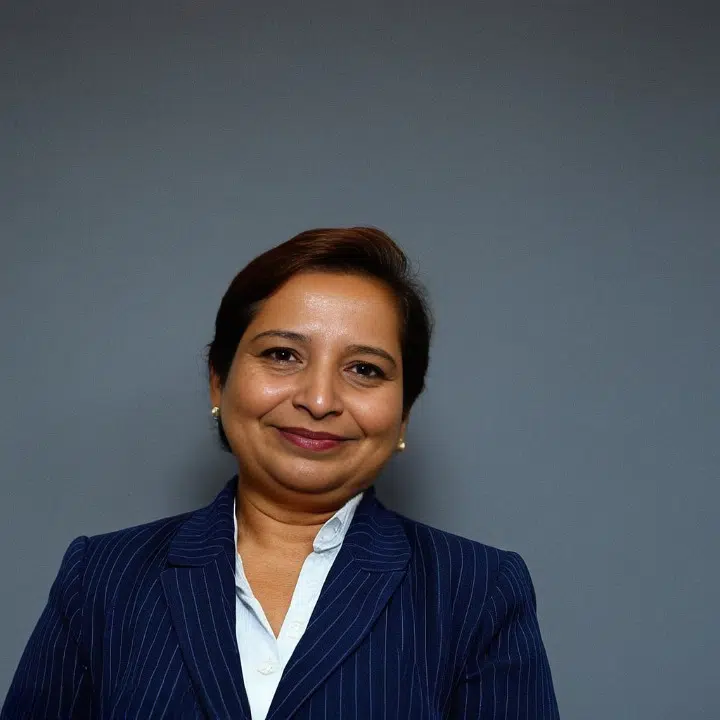
Meet Your Lead Public Speaking Accountant
The same two people handle your file every year: the meal and travel split, the fees taxed in other countries, and the corporate return, all in one place.

What Our Clients Say
Over 1300 five-star Google reviews, left by speakers, authors, consultants and owner-managed businesses in Ontario and well beyond it.
Serving Public Speakers Across Ontario
We act for speakers throughout Ontario, from a first paid keynote to a diary of forty dates a year with a bureau managing half of them. What we bring is the part that usually goes wrong: knowing exactly what the 50% restriction reaches and what it does not, getting a recharged expense worded so it stays deductible, and making sure a fee taxed in another country is relieved here instead of simply absorbed.
Toronto (ON)
55 Queen St E Ste 1205, Toronto, ON M5C 1R6, Canada
+1 (647) 212-9559
9:00 AM – 8:30 PM (Mon – Sun)
Mississauga (ON)
2100 Camilla Rd #716, Mississauga, ON L5A 2J8
+1 (647) 212-9559
9:00 AM – 8:30 PM (Mon – Sun)
Brampton (ON)
4 Starhill Crescent, Brampton, ON L6R 2P9, Canada
+1 (647) 212-9559
9:00 AM – 8:30 PM (Mon – Sun)
Scarborough (ON)
24 Clementine Square, Scarborough, ON M1G 2V7, Canada
+1 (647) 212-9559
9:00 AM – 8:30 PM (Mon – Sun)
Vaughan (ON)
19 Cabinet Crescent, Woodbridge, ON L4L 6H9, Canada
+1 (647) 212-9559
9:00 AM – 8:30 PM (Mon – Sun)
Oshawa (ON)
210 Durham St, Oshawa, ON L1J 5R3, Canada
+1 (647) 212-9559
9:00 AM – 8:30 PM (Mon – Sun)
Ottawa (ON)
2090 Neepawa Ave a314, Ottawa, ON K2A 3L6, Canada
+1 (647) 212-9559
9:00 AM – 8:30 PM (Mon – Sun)
Etobicoke (ON)
60 Stevenson Rd #1601, Etobicoke, ON M9V 2B4, Canada
+1 (647) 212-9559
9:00 AM – 8:30 PM (Mon – Sun)
Hamilton (ON)
70 Starling Dr, Hamilton, ON L9A 0C5, Canada
+1 (647) 212-9559
9:00 AM – 8:30 PM (Mon – Sun)
Guelph (ON)
1155 Gordon St, Guelph, ON N1L 1S8, Canada
+1 (647) 212-9559
9:00 AM – 8:30 PM (Mon – Sun)
Windsor (ON)
4387 Guppy Ct, Windsor, ON N9G 2N8, Canada
+1 (647) 212-9559
9:00 AM – 8:30 PM (Mon – Sun)
North York (ON)
150 Graydon Hall Dr #912, North York, ON M3A 3B2, Canada
+1 (647) 212-9559
9:00 AM – 8:30 PM (Mon – Sun)
Public Speaking Accounting & Tax FAQs
Related Industries We Serve
Accountant for Online Course Creators
- Course revenue recognised correctly
- Platform fees and payout timing
- T2 filing and monthly bookkeeping
Accountant for E-Learning Platforms
- Subscription and licence revenue
- Development costs and asset classes
- Corporate tax planning and T2 filing
Accountant for Administrative Service Businesses
- Retainer and hourly billing mix
- Contractor payments and slips
- T2 filing and compiled statements
Accountant for Immigration Consultants
- Fees held before work is done
- Disbursements recharged to clients
- Year-end statements and the T2
Public Speaking Accounting & Tax Done Right.
T2 filing with food, beverages and entertainment claimed at the 50% section 67.1 of the Income Tax Act allows, and flights, hotel nights, ground transport and bag fees claimed in full because that section never reached them; recharged meals identified in writing so the restriction moves to the party who paid; fees earned abroad reported gross in Canadian dollars with a section 126 foreign tax credit computed rather than assumed; the gross fee and the bureau’s commission on two lines, which is also how the $30,000 threshold is measured; booking money read against the deposit provision of the Excise Tax Act; laptop, camera and microphone in Class 50 at 55% with staging gear in Class 8 at 20%; and 13% on an Ontario engagement. AFFORDABLE flat fees instead of hourly billing. Licensed CPA Ontario. 1300+ five-star reviews. 30-Day Money-Back Guarantee.