



Tax Accountant for Esports Organizations in Ontario and Across Canada
Almost every figure on an esports balance sheet is set by a document, and roughly half of those documents have a party on the far side of a border. We book prize money the organization wins as the organization’s own income and the share handed on to players as compensation that follows the worker-status answer, test each player, coach, analyst and content agreement on its own facts for T4 or T4A, and put WSIB coverage in place from the first hire. Sponsorship and partnership money that lands ahead of the term it buys is deferred under ITA 12(1)(a) with the ITA 20(1)(m) reserve. Gaming rigs, peripherals and capture hardware belong in Class 50 at 55%, furnishings in Class 8 at 20%, and a fit-out of leased premises in Class 13. Where the organization pays somebody outside Canada, or is paid by a customer outside Canada, the treatment is settled on the facts of the contract and the parties before the payment is made. Single-title roster, multi-title org, content house or circuit operator — we handle the roster, the border and the books, with AFFORDABLE flat fees.
AFFORDABLE Esports Organization Tax Accountant
Stand in the middle of an esports organization and there is almost nothing there to count. No floor, no stock, no building — a rack of computers, a lease and a roster of people, most of whom could walk in March. What does exist is a stack of agreements: a partnership deal signed in January and paid up front, a circuit contract written by an organizer two time zones away, coaching fees, merchandise, and prize money that lands as one number and leaves as several. That inverts the usual questions. Nobody needs to argue about stock valuation here; they need to know what each document actually says, because the document decides when money becomes revenue, what tax attaches to it, and whether the person receiving it is staff or a supplier. Half of those answers also depend on where the other party sits, and that half cannot be worked out in April with the payment already gone. At Gondaliya CPA, our work on an esports file is the revenue agreements read, the roster status determinations made and written down, and the border question answered in advance — priced as an AFFORDABLE flat fee, with CRA compliance built into the routine instead of chased every April.
As an esports accountant our clients are single-title rosters, multi-title organizations, content houses, coaching operations and circuit organizers across Ontario, carried on a year-round footing rather than in one frantic month each spring. You are told what each revenue line really earned, which competitions paid for themselves, and what the roster genuinely costs to field.
Hand the books over and spend your hours on the roster instead.
Our Official Partners









Accounting That Understands How an Esports Organization Actually Works
Competitive gaming brings pressures an ordinary trading company never meets. The business owns barely anything it could sell, the people who generate its value may or may not be its employees, four or five income streams arrive from parties located somewhere else, and the money usually moves before anybody has asked what the movement means. Gondaliya CPA begins from that and gives owners across Ontario answers built for this industry rather than borrowed from retail.
Stay Compliant and Minimize Your Esports Organization Tax
Hitting CRA’s deadlines and paying the smallest legal amount turn out to be one exercise, not two. Returns go in on schedule while every roster, travel and hardware dollar the T2 permits is claimed, so nothing is left behind and nothing on the return reads as a reason to look closer.
Accounting & Tax Experts for Esports Organizations
- AFFORDABLE + Registered CPA Firm
- Business and Corporate Tax Expert
- Small & Medium Business Expert
- Accounting, bookkeeping, and tax filing
- CPA (Chartered Professional Accountant)
- 1300+ 5-star Google reviews
- 30-Day Money-Back Guarantee
- 60-Day Fees Matching Policy
Why Choose Our Accounting Services for Esports Organizations?
Tax Planning — Roster Cost & Hardware Timing
We know this trade: prize income stated in full, player compensation on the expense side, Class 50 at 55% on rigs and capture hardware against Class 8 at 20% on furnishings, with the $500,000 Small Business Deduction guarded year by year.
Consulting — Agreements, Currency and Event Costing
Our bookkeeping ties each income stream to the document behind it, translates foreign receipts on one documented basis, and costs every competition against the flights, entry fees and per diems it caused.
CRA Representation — Worker Status & HST Review
When CRA tests whether your roster is employed or engaged, or asks why deposits outrun reported revenue, we build the answer and, where penalties trace to an earlier error, seek relief on Form RC4288.
Bookkeeping — Cash Flow & Ownership
We build the cash flow that funds salaries and travel between partnership instalments, produce statements a partner or lender will accept, and model the ownership structure years ahead of any exit.
Google Reviews
Esports Clients
Esports Tax and Accounting Services in Ontario
Corporate Tax Filing (T2) for Esports Organizations
Professional T2 preparation with prize income and player compensation both stated, partnership money deferred across its term, hardware in the right class and CRA compliance on every line.
Bookkeeping & Accounting for Esports Organizations
Each income stream tied back to the agreement behind it, foreign receipts translated on one basis, travel costed per competition, and statements built from records that reconcile.
Payroll Services for Esports Organizations
Roster and staff payroll with worker status tested engagement by engagement, WSIB from the first hire, PD7A remittances, records of employment, and T4 or T4A filed on time.
GST/HST Filing for Esports Organizations
AFFORDABLE HST filing at 13% with the outside-Canada question determined per contract, deposits handled correctly, and every input tax credit on hardware and travel recovered.
Tax Planning for Esports Organizations
Planning that covers when hardware is bought, how the small-business limit is held, where employer health tax starts, and how ownership ought to look long before you step back.
Corporate Catch-Up Filing for Esports Organizations
Overdue T2 and HST years brought up to date, with prize income, deferred partnership revenue and capital pools rebuilt behind them, returning you to CRA compliance on real numbers.
CRA Audit Resolution for Esports Organizations
Expert support when CRA questions deferred partnership income, worker status across the roster, or the tax charged on an invoice that crossed a border, handled from the first letter.
CPA Financial Statements (Notice to Reader) for Esports Organizations
CPA-compiled financial statements a partner or lender will accept, with money received in advance stated as a liability and prize income shown in full against player compensation.
Incorporation Services for Esports Organizations
Everything from the NUANS search and the articles through to the share structure, with a section 85 rollover carrying hardware, fit-out, agreements and goodwill across at elected amounts.
Catch-Up Bookkeeping Services for Esports Organizations
Months or years of income, player payments, travel and hardware invoices reconstructed and reconciled, so the deferral schedule and the capital pools are finally right.
US Corporation & LLC Tax Filing for Esports Organizations
Cross-border filing where a United States entity sits in the structure or foreign property passes the reporting threshold, with each payment settled on its contract before it moves.
Voluntary Disclosure Program for Esports Organizations
Come forward on prize money never declared, partnership income left off a return or slips never issued, cancelling penalties through a Voluntary Disclosures Program application.
Accounting & Tax Services Tailored for Esports Organizations
Real, practitioner-level CPA expertise for single-title rosters, multi-title organizations, content houses, coaching operations and circuit organizers across Ontario — built for a business whose every material number is written into an agreement.
- Your T2 carries GIFI across Schedule 100 and Schedule 125 with partnership income, prize money, merchandise, coaching fees and content revenue each on a line of their own, so the return describes five income streams rather than one undifferentiated total.
- Prize money the organization wins goes in as the organization’s income, while the share handed on to players appears as compensation on the expense side, because netting one against the other hides both figures from anybody reading the return.
- Partnership money received ahead of the term it buys is deferred under ITA 12(1)(a) with the reserve at ITA 20(1)(m), so a $120,000 two-year deal is released across twenty-four months instead of being banked on the day it cleared.
- Capital cost allowance runs on Schedule 8 with gaming rigs, peripherals and capture hardware in Class 50 at 55%, furnishings and general equipment in Class 8 at 20%, and any fit-out of leased premises treated as a leasehold improvement in Class 13.
- Hardware turns over fast, so ITA 13(1) recapture is worked out every year a rig or capture unit is sold above its undepreciated capital cost, and a terminal loss is taken wherever a class empties below the balance left sitting in it.
- Every income line traces back to the document that created it, so partnership money, prize payments, merchandise, coaching fees and content revenue each reconcile to an agreement rather than to a bank narrative somebody guessed at.
- Money arriving in another currency is translated on one consistent, documented basis and the exchange difference is posted where it belongs, because across a $200,000 year of foreign partnership income that difference is real money, not rounding.
- Travel is captured against the competition that caused it — flights, accommodation, entry fees and per diems — so each event shows what it actually cost, rather than disappearing into one travel account nobody can take apart.
- Player and staff payments are coded by agreement and by status, which keeps the compensation total whole and stops fees, prize shares and expense reimbursements drifting into a single account that reconciles to nothing.
- Invoices, receipts and agreements are captured through Dext and reconciled monthly, which holds the six-year record ITA section 230 requires and stops input tax credits on hardware, connectivity and professional fees leaking away unclaimed.
- Whether a player, coach, analyst or content creator is an employee or a contractor is decided on the facts of that engagement — control, tools, financial risk and chance of profit — one agreement at a time rather than across the roster at once.
- The same individual can properly be an employee under one arrangement and a contractor under another, so each agreement is examined separately and a T4 or a T4A is issued according to what that arrangement genuinely is.
- WSIB coverage goes in from the first hire and records of employment are issued as engagements come to an end, which on a roster that turns over between circuits is a recurring job rather than a one-time setup.
- Deductions run through Wagepoint — income tax, CPP and EI — and we remit on the PD7A by the fifteenth day of the following month, because remitting late attracts a graduated charge that climbs as high as 10%.
- Slip filing closes on the last day of February, when the T4 Summary and every slip behind it is lodged, matched to what actually went across on the PD7A, so a $4,000 mismatch is caught in March rather than by CRA.
- Anything supplied in Canada — sponsorship and media rights, merchandise, coaching and event services — carries the Ontario rate of 13%, and we get you registered as soon as taxable revenue clears $30,000 over four consecutive calendar quarters.
- Where the recipient is not in Canada the question is a different one: it turns on the place-of-supply rules and on the status of the party you are dealing with, and it has to be determined contract by contract rather than presumed.
- Input tax credits are recovered on hardware, peripherals, connectivity, premises, travel and professional fees, which for an organization refitting a practice room can be a five-figure recovery in the very period the spending lands.
- Until a deposit is actually applied it is not consideration for anything, and ETA subsection 168(9) fixes the tax point at the moment it is set against a partnership or event invoice rather than the day it arrived.
- Each return is tied back to the income ledger and the agreements underneath it before we file, so an $18,000 remittance rests on records that answer a reviewer’s opening question without anybody rebuilding the year from scratch.
- Owners are paid a T4 salary big enough to keep RRSP room building, with the rest taken as dividends; that mix holds the combined cost close to the 12.2% Ontario small-business figure instead of a personal rate topping out at 53.53%.
- Active income is watched against the $500,000 limit so the Small Business Deduction at ITA section 125 survives the year, and the associated-corporation rules are checked wherever the same owners also sit behind a separate content company.
- When hardware gets bought matters: we place the purchase on the right side of your fiscal year-end so the 55% Class 50 pool covering rigs, peripherals and capture equipment and the 20% Class 8 pool on furnishings each deliver where they help most.
- Ontario employer health tax begins once total payroll passes the $1,000,000 exemption, a line an organization with a coaching bench, content staff and a second roster can cross before anybody notices it was close.
- Qualifying for the $1.25M Lifetime Capital Gains Exemption at ITA 110.6 takes two clean years in advance, so the planning begins early and anything sitting on the balance sheet that would fail the asset test is dealt with first.
- Across the unfiled years we rebuild partnership, prize, merchandise and coaching income from bank records, the agreements themselves and the invoices raised under them, restoring the six-year record ITA section 230 demands of you.
- A late return attracts 5% of the balance owing and another 1% per month outstanding to a maximum of twelve, so the earliest year is filed first, which halts the accumulation and limits what the arrears interest can build on.
- Where prize money had been netted against player payouts through the backlog, both figures are put back, because a return showing neither the win nor the compensation understated what the organization was doing on both sides.
- Through the missing years the capital pools are reconstructed, moving rigs, peripherals and capture hardware from Class 8 into Class 50 and recovering the deduction that had been understated for as long as the error went unnoticed.
- A Voluntary Disclosures Program application on Form RC199 goes in ahead of any CRA contact, which on a $70,000 arrears position cancels the penalties outright and brings partial relief on the interest for the older years.
- When CRA asks why deposits run well ahead of reported revenue, we produce the deferral schedule showing which of that cash belonged to a term not yet delivered, and that is where most reviews of this business begin.
- When a reviewer tests worker status, we hand over each agreement together with the facts that supported the answer — control, tools, financial risk and chance of profit — instead of leaving an auditor to pick one position for the whole roster.
- When the tax charged on an invoice to a party outside Canada is examined, we show the determination that was made at the time, the contract it rested on, and the same treatment applied consistently through the period.
- With a full audit running we hold the file ourselves and turn around every income, payroll and hardware question inside the deadline given, which stops a single-year review broadening into the earlier years CRA is entitled to open.
- An objection must be lodged within 90 days of a reassessment, and taxpayer relief is applied for on Form RC4288 — on $22,000 of penalties and interest traced to an earlier adviser’s error, that request frequently succeeds once the sequence of events is documented.
- For a partner running diligence before it commits, or a lender sizing an operating line ahead of a busy competitive calendar, we produce CSRS 4200 compilation engagement financial statements covering two full fiscal years.
- The statement of financial position carries money received in advance as the liability it is, so nobody mistakes cash paid for a term still to be delivered for margin the organization has already earned.
- Prize income is presented in full with player compensation set out on the expense side, because a reader looking at $310,000 of winnings and $190,000 paid out to players needs both figures to understand one business.
- Gaming rigs, peripherals and capture hardware are stated at net book value by class, keeping the Class 50 equipment that loses value quickly apart from Class 8 furnishings and the Class 13 leasehold improvement.
- You have the statements inside 30 days of us receiving the records and settling the year’s T2 figures, because a partnership negotiation or a credit decision ahead of a major competition cannot be held up by a slow accountant.
- Incorporating in Ontario puts limited liability between you and the player agreements and partnership commitments you sign, and brings the combined rate on active earnings to roughly 12.2% where a personal top rate can reach 53.53%.
- Form T2057 carries out the section 85 rollover, so hardware, fit-out, agreements and goodwill transfer into the company at elected amounts and the gain that a straight sale of those assets would crystallise is deferred instead.
- Those elected amounts set the opening Class 50, Class 8 and Class 13 balances directly, which means the corporation carries an accurate asset base from its very first day rather than one reassembled from memory when somebody finally asks.
- Inside the first month the corporation’s CRA business number, HST account and payroll account are opened, and we confirm that each player agreement, partnership deal and the lease itself have genuinely been assigned across.
- The chart of accounts is set with deferred partnership income, prize money, player compensation and per-event travel cost centres built in from the very first entry, so the records accumulate correctly instead of needing a $7,000 cleanup.
- We rebuild months or years of neglected books out of bank records, card settlements, agreements and invoices, so an organization that competed through two full circuits without bookkeeping finally holds a ledger that reconciles.
- Foreign currency income is retranslated across the backlog on one consistent basis with the exchange difference recorded, because a year assembled from whatever rate happened to be handy reports a margin nobody is able to defend.
- Player, coach and content payments are separated from expense reimbursements and prize shares through the caught-up period, which regularly turns up amounts paid twice over and others still owing eighteen months after the event.
- Input tax credits buried in unentered hardware, connectivity, travel and professional-fee invoices are recovered, which for an organization travelling to international events twice a year can reach $16,000 over a couple of periods.
- Each competition is rebuilt as its own cost centre, with entry fees, flights, accommodation and per diems set against what it brought back, replacing a single blended number that told the owner nothing about where to compete next.
- Where the organization has registered a United States entity, or a member of the group sits on the other side of the border, both sets of returns have to be prepared and reconciled rather than filed as though the other did not exist.
- Where a payment is made to a party outside Canada, or received from one, the treatment is determined on the facts of the contract and the parties before the money moves, which is the only moment it can be settled cheaply.
- Once foreign property exceeds the $100,000 cost threshold, Form T1135 is required and we file it; the penalty attaches to the failure to report rather than to any tax, which makes silence expensive even where nothing was owing.
- Where a United States corporation or LLC sits inside the structure, we coordinate the two filing calendars so a deadline on one side of the border is not discovered a month after it has already passed.
- We reconcile the two returns so that credit for tax paid on one side is claimed on the other wherever it is available, rather than the same $90,000 of cross-border income being reported twice with no relief sought at all.
- We disclose income that never reached a return — prize money, partnership payments settled by transfer, merchandise sales and coaching fees — because a $110,000 gap between deposits and reported income is the first thing a reviewer measures.
- We correct HST charged on the wrong basis over several years, where tax went onto some invoices and not onto others with nothing left on file to explain why either of those choices was made.
- Everything reaches CRA on Form RC199 with a reconstruction built from bank records, the income ledger and the agreements underneath each line, which means an organization whose bookkeeping simply fell behind is not assessed on somebody’s estimate.
- We bring forward T4 and T4A reporting never done, once the status behind each payment has been tested on the facts of that engagement rather than assumed to match whatever happened to be done the year before.
- A disclosure only works where it is genuinely voluntary, complete rather than partial, and reaches back at least one full year beyond the due date; we confirm all three of those before the package leaves our office.
Esports Contract & Tax Check
Six quick questions on your agreements, your prize income, your roster status determinations, payments that cross a border, currency translation and whether it is time to incorporate. No fee shown.
1. Does a signed agreement sit behind every partnership and prize payment you receive?
2. Is prize money recorded as the organization’s income rather than netted against player payouts?
3. Has each player, coach and content agreement been tested on its facts for employee or contractor status?
4. Is the treatment of a payment crossing a border settled before the money is sent?
5. Is income received in another currency translated on a consistent, documented basis?
6. Is your esports organization incorporated?
Free CPA Consultation for Esports Organizations
Case Studies: Esports Accounting & Tax
Newmarket Esports Organization — A Win That Vanished on the Way Through
The problem: A Newmarket organization fielding two rosters had spent three years recording prize money net of what it handed on to players. Only the remainder ever touched the ledger, so a year in which the teams took just over $340,000 in winnings appeared as roughly $95,000 of income and no player cost at all. The compensation side of the business was simply missing, the payroll and slip position underneath it had never been looked at, and the owner was judging whether competing paid by reading a number that had been cancelled out before it arrived.
What we did: We restated three years so the full prize amount stands as the organization’s income with every payout shown as compensation, then tested each player agreement on its own facts and put the correct slips and remittances behind the amounts already paid.
The result:
- $245,000 of prize income and player cost restored to the books
- Roster status determined agreement by agreement and documented
- Slips and source deductions brought current for three years
Markham Esports Organization — Two Years of Money Booked in One
The problem: A Markham organization signed a two-year partnership worth $260,000 and was paid the whole amount on signature. The full sum went into revenue the week it cleared. The first year therefore reported a profit the business had not made and paid tax on money that was still owed as service for the following twelve months, while the second year showed a partnership programme running at nothing against the same salaries, hardware and travel. Nobody could tell from the statements whether the deal had been worth signing, and the owner had begun planning the next one from that distorted picture.
What we did: We deferred the receipt under ITA 12(1)(a) with the ITA 20(1)(m) reserve and released it across the twenty-four months the agreement actually covers, amended the year already filed, and built a deferral schedule that runs forward automatically.
The result:
- $130,000 of revenue moved into the year it was earned
- Tax recovered on the amended prior-year return
- Deferral schedule now runs across every signed term
Oakville Esports Organization — Four Currencies and No Written Basis
The problem: An Oakville organization drew income from partners and circuits paying in three currencies besides Canadian dollars, and converted each receipt at whatever rate somebody found on the day the entry was made. There was no written basis, no consistency between months, and no exchange difference recorded anywhere. Separately, payments out to coaching and analyst staff located abroad were being sent first and asked about afterwards, with the terms of each engagement never written down. The bookkeeper had been left to invent a method, and two competitions had been entered on the strength of margins that the currency treatment had quietly manufactured.
What we did: We set one documented translation basis, retranslated the open year, recorded the exchange difference properly, and moved the organization to settling the treatment of every cross-border payment on the contract and the parties before it is sent.
The result:
- One documented translation basis across all currencies
- Exchange difference recorded rather than buried in revenue
- Cross-border treatment now determined before payment
Our clear, efficient process ensures every step is transparent, building trust and long-term client relationships.
Kickoff (Document Request)
Collect prior T2 returns, every partnership and circuit agreement, prize records, player, coaching and content agreements, merchandise and invoice history, travel files by event, hardware purchase records, the lease, payroll records and bank statements.
First 30 Days (Cleanup & Setup)
Set up QuickBooks Online or Xero with separate income streams, a deferral schedule, player compensation and per-event travel cost centres, fix one documented currency basis, and rebuild the Class 50, Class 8 and Class 13 schedules.
Monthly Close
Income reconciled to the agreements behind it, deferred partnership revenue released across its term, exchange difference recorded, event travel costed, GST34 filed on the treatment each contract supports, plus payroll and PD7A reconciliation.
Quarterly Planning Review
Salary and dividend mix, hardware timing across Class 50 and Class 8, payroll against the employer health tax exemption, and cash flow against the salaries and travel falling due before the next partnership instalment.
Year-End Close & T2 Filing
Trial balance, financial statements with money received in advance stated as a liability and prize income shown in full against player compensation, recapture settled, T2 with GIFI, and CRA preparation.
Get Your Esports Organization Taxes Done Right Today
Affordable Pricing for Esports Organizations
We believe in clear, upfront pricing so you know exactly what to expect. All fees include HST.
- Tax Preparation (Corporation) — From $400
- Tax Return Filing (Corporation) — From $400
- Tax Compliance Audit — FREE CRA audit support for our clients
- Tax Strategy — FREE for our clients
- Accounting Base Plan — From $100 per month
- Bookkeeping Management — Free for our Accounting clients
- Financial Reporting — Free for our Accounting clients
- Business Formation — Flat $35
- Incorporation Process — Flat $35
- Entity Setup Assistance — Flat $35
- Full-Service Payroll — From $125 per month
Payment is by Interac e-Transfer to info@gondaliyacpa.ca only. Security question: Not Applicable, as auto-deposit is enabled.
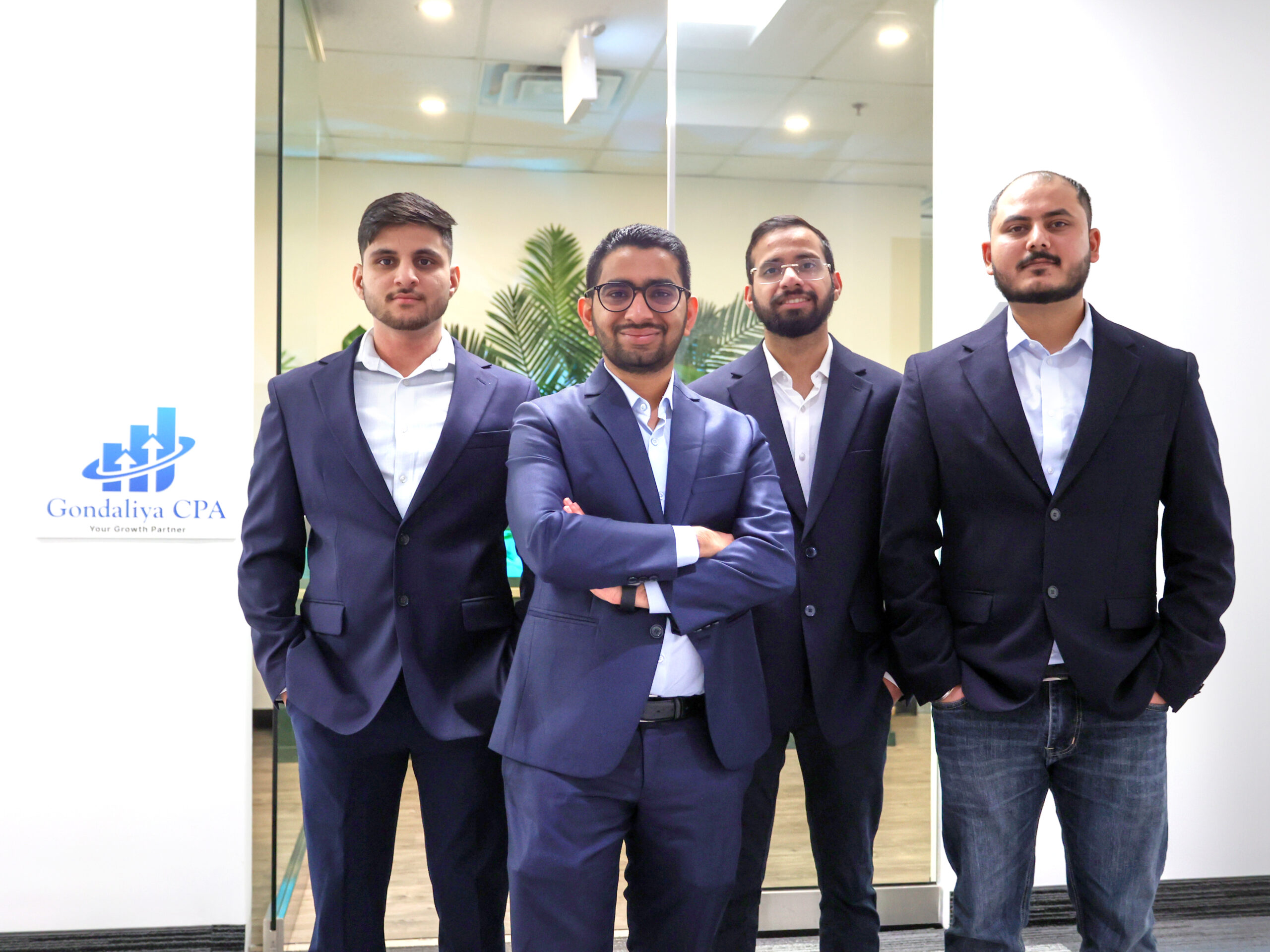
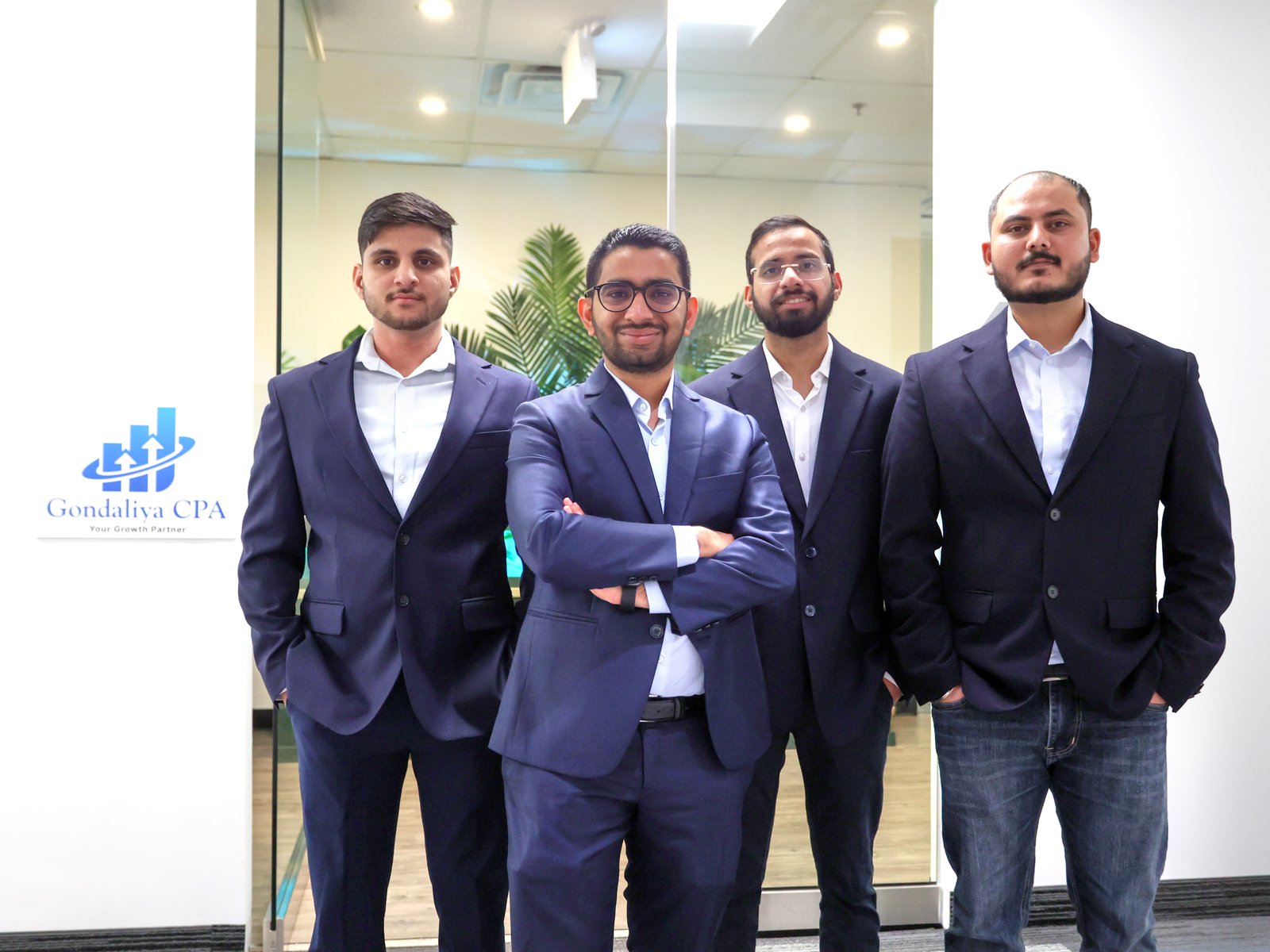
Meet Your Lead Esports Accountant
Two named people run your file from one year to the next. Nobody hands it to a fresh preparer each spring, and the pair who set up your income streams are the pair who sign off the return.

What Our Clients Say
Competitive gaming, content and event business owners have written us more than 1300 five-star reviews.
Serving Esports Organizations Across Ontario
We look after competitive gaming organizations the length of Ontario. Our team knows why a win belongs to the organization before any of it reaches a player, where the worker-status question is really decided, what has to be settled before money crosses a border, and what CRA reaches for first when an esports file is opened.
Toronto (ON)
55 Queen St E Ste 1205, Toronto, ON M5C 1R6, Canada
+1 (647) 212-9559
9:00 AM – 8:30 PM (Mon – Sun)
Mississauga (ON)
2100 Camilla Rd #716, Mississauga, ON L5A 2J8
+1 (647) 212-9559
9:00 AM – 8:30 PM (Mon – Sun)
Brampton (ON)
4 Starhill Crescent, Brampton, ON L6R 2P9, Canada
+1 (647) 212-9559
9:00 AM – 8:30 PM (Mon – Sun)
Scarborough (ON)
24 Clementine Square, Scarborough, ON M1G 2V7, Canada
+1 (647) 212-9559
9:00 AM – 8:30 PM (Mon – Sun)
Vaughan (ON)
19 Cabinet Crescent, Woodbridge, ON L4L 6H9, Canada
+1 (647) 212-9559
9:00 AM – 8:30 PM (Mon – Sun)
Oshawa (ON)
210 Durham St, Oshawa, ON L1J 5R3, Canada
+1 (647) 212-9559
9:00 AM – 8:30 PM (Mon – Sun)
Ottawa (ON)
2090 Neepawa Ave a314, Ottawa, ON K2A 3L6, Canada
+1 (647) 212-9559
9:00 AM – 8:30 PM (Mon – Sun)
Etobicoke (ON)
60 Stevenson Rd #1601, Etobicoke, ON M9V 2B4, Canada
+1 (647) 212-9559
9:00 AM – 8:30 PM (Mon – Sun)
Hamilton (ON)
70 Starling Dr, Hamilton, ON L9A 0C5, Canada
+1 (647) 212-9559
9:00 AM – 8:30 PM (Mon – Sun)
Guelph (ON)
1155 Gordon St, Guelph, ON N1L 1S8, Canada
+1 (647) 212-9559
9:00 AM – 8:30 PM (Mon – Sun)
Windsor (ON)
4387 Guppy Ct, Windsor, ON N9G 2N8, Canada
+1 (647) 212-9559
9:00 AM – 8:30 PM (Mon – Sun)
North York (ON)
150 Graydon Hall Dr #912, North York, ON M3A 3B2, Canada
+1 (647) 212-9559
9:00 AM – 8:30 PM (Mon – Sun)
Esports Accounting & Tax FAQs
Related Industries We Serve
Accountant for Arcades
- Equipment capital cost allowance
- GST/HST registration and returns
- Corporate tax filing and payroll
Accountant for Family Entertainment Centres
- Deferred revenue and deposits
- Multi-stream revenue reporting
- Year-end statements and T2 filing
Accounting and Tax Services for Small Businesses
- Bookkeeping and monthly reporting
- GST/HST returns and compliance
- Year-end statements and T2 filing
Accountant for Incorporated Businesses
- Salary and dividend planning
- Small Business Deduction protection
- Corporate structure and succession
Esports Accounting & Tax Done Right.
T2 filing with prize money standing as the organization’s own income and player payouts shown as the compensation they are, partnership money deferred under ITA 12(1)(a) with the ITA 20(1)(m) reserve across the term it buys, gaming rigs, peripherals and capture hardware in Class 50 at 55% beside furnishings in Class 8 at 20% and a leased fit-out in Class 13, worker status decided engagement by engagement with T4 or T4A issued accordingly, foreign receipts translated on one documented basis, and every cross-border payment settled on its contract before the money moves. AFFORDABLE flat fees, no hourly billing. Licensed CPA Ontario. 1300+ five-star reviews. 30-Day Money-Back Guarantee.