



Tax Accountant for Limousine Companies in Ontario and Across Canada
We run the ITA subsection 248(1) automobile test on every car in your fleet, because a sedan or SUV is not excluded the way a bus is, and an automobile above the prescribed cost limit goes into its own Class 10.1 where neither recapture nor terminal loss arises on disposal. We cost each job with the deadhead run loaded against the fare, split a mandatory service charge from a voluntary gratuity, test your chauffeurs against the CRA guide RC4110 factors, and reconcile the dispatch system to your deposits. Whether you run airport transfers, corporate black car work, wedding and prom packages or an affiliate farm-out book, we handle the fleet, the drivers and the accounts — with AFFORDABLE flat fees.
AFFORDABLE Limousine Company Tax Accountant
A limousine company owns the one kind of vehicle the Income Tax Act treats most harshly, and almost nobody in the trade is told so. Under ITA subsection 248(1) an automobile is a motor vehicle designed primarily to carry individuals with seating for not more than the driver and eight passengers, and the definition expressly excludes a bus used in the business of transporting passengers. A motor coach is outside it. A sedan or an SUV is not automatically outside it. Once a vehicle is an automobile and it cost more than the prescribed limit, it goes into Class 10.1, where it sits in its own class, the capital cost is capped, and neither recapture nor terminal loss arises when you sell it. That last part is the one that costs real money: sell a high-value car for less than its remaining balance and there is no loss to claim at all. At Gondaliya CPA, we run that test vehicle by vehicle and build the fleet schedule around the answer, providing AFFORDABLE flat-fee support that keeps you CRA-compliant and stops you paying more tax than you owe.
As a limousine accountant, we work with airport limousine services, corporate black car and executive sedan operators, wedding and prom limousine companies, and stretch and SUV fleet owners across Ontario, with year-round support rather than a once-a-year scramble. We tell you what each job earned after the deadhead, where your chauffeur classification exposure sits, and what the fleet is actually worth.
Let us handle the numbers so you can focus on the cars and the calls.

Our Official Partners









Accounting That Understands How a Limousine Company Actually Works
Chauffeured ground transportation carries financial pressures a freight fleet never faces. Your vehicles may be automobiles in the tax sense, your drivers are dispatched and licensed rather than independent, your corporate accounts pay monthly while your retail jobs are paid on the night, and every car is positioned empty before it earns a dollar. At Gondaliya CPA, we understand that reality and provide practical, trade-focused solutions across Ontario.
Stay Compliant and Minimize Your Limousine Company Tax
For a limousine operator, staying onside with the MTO, your municipality, the airport authority and CRA and paying the least legal tax are the same job. We keep every filing on schedule while claiming every fleet, driver and fuel dollar the T2 allows, so nothing is missed and nothing invites a reassessment.
Accounting & Tax Experts for Limousine Companies

- AFFORDABLE + Fully Registered CPA Firm
- Business and Corporate Tax Expert
- Small & Medium Business Expert
- Accounting, bookkeeping, and tax filing
- Certified CPA
- 1300+ 5-star Google reviews
- 30-Day Money-Back Guarantee
- 60-Day Fees Matching Policy
Why Choose Our Accounting Services for Limousine Companies?
Tax Planning — The Automobile Test
We know the trade: ITA 248(1) run per vehicle, Class 10.1 where it applies, Class 10 at 30% where it does not, and disposals planned around the loss you cannot claim. We protect the $500,000 Small Business Deduction.
Consulting — Job Costing & Utilization
Our bookkeeping costs each job with deadhead loaded against the fare, reports revenue per vehicle per day, and shows which cars and which job types actually pay for themselves.
CRA Representation — Drivers & Deposits
When CRA challenges the subcontractor line or tests trip counts against deposits, we prepare the response and pursue relief on Form RC4288 where a prior error caused the penalties.
Bookkeeping — Cash Flow & Sale
We build the cash flow that funds fuel, chauffeurs and insurance while corporate accounts sit on terms, produce the statements your vehicle lender reads, and model the exit years ahead.
Google Reviews
Limousine Clients
Limousine Company Tax and Accounting Services in Ontario
Corporate Tax Filing (T2) for Limousine Companies
Professional T2 preparation with the ITA 248(1) automobile test run per vehicle, Class 10.1 cars stated separately, and CRA compliance on every line.
Bookkeeping & Accounting for Limousine Companies
Job-by-job costing with deadhead loaded against the fare, revenue per vehicle per day, and financial statements built from clean reconciled records.
Payroll Services for Limousine Companies
Chauffeur payroll with WSIB coverage, PD7A remittances, gratuities handled correctly, and driver classification tested against the CRA guide RC4110 factors.
GST/HST Filing for Limousine Companies
AFFORDABLE HST filing at 13% on domestic passenger transportation, mandatory service charges taxed correctly, and every input tax credit recovered.
Tax Planning for Limousine Companies
Smart tax planning on vehicle purchase and disposal timing across Class 10.1 and Class 10, the Small Business Deduction, and the exit structure years ahead.
Corporate Catch-Up Filing for Limousine Companies
File overdue T2 and HST years, rebuild the fleet schedules and trip records, and get back into CRA compliance with accurate catch-up support.
CRA Audit Resolution for Limousine Companies
Expert support for driver classification, trip-count-to-deposit and shareholder vehicle benefit audits, handled with confidence from the first letter.
CPA Financial Statements (Notice to Reader) for Limousine Companies
CPA-compiled financial statements that vehicle lenders accept, carrying each Class 10.1 car in its own class at net book value.
Incorporation Services for Limousine Companies
Full incorporation including NUANS, articles, share structure, and the section 85 rollover of your vehicles and corporate account book into the company.
Catch-Up Bookkeeping Services for Limousine Companies
Months or years of fares, fuel cards, affiliate payments and vehicle purchases reconstructed and reconciled, so your fleet schedule is finally accurate.
US Corporation & LLC Tax Filing for Limousine Companies
Cross-border filing on US client work and where owners or shareholders are non-resident or American, covering withholding and T1135 reporting.
Voluntary Disclosure Program for Limousine Companies
Come forward on unfiled T4A slips, terminal losses wrongly claimed on Class 10.1 cars or HST missed on service charges, cancelling penalties through a Voluntary Disclosures Program application.
Accounting & Tax Services Tailored for Limousine Companies
Real, practitioner-level CPA expertise for airport limousine services, corporate black car and executive sedan operators, wedding and prom limousine companies, and stretch and SUV fleet owners across Ontario — built for a business whose vehicles may be automobiles in the tax sense.
- We prepare your T2 with GIFI on Schedule 100 and Schedule 125, separating hourly charter work, airport transfers, corporate account billing and affiliate farm-out revenue onto their correct lines so CRA’s matching reads your limousine file properly.
- We test every vehicle against the ITA subsection 248(1) automobile definition before it goes anywhere, because a sedan or SUV seating the driver and no more than eight passengers is not excluded the way a bus is.
- Where a vehicle is an automobile costing more than the prescribed limit, we file it in its own Class 10.1 with the capital cost capped, rather than burying it in the Class 10 pool at 30%.
- On a Class 10.1 disposal neither recapture nor terminal loss arises, so we tell you before you sell that the loss on that vehicle is not deductible, rather than claiming one CRA will reverse.
- We claim capital cost allowance on Schedule 8 with detailing and shop equipment in Class 8 at 20%, dispatch computers in Class 50 at 55%, reservation software in Class 12, and the garage leasehold in Class 13.
- We cost every job in Limo Anywhere or Livery Coach with the chauffeur hours, the fuel, the tolls and the deadhead run to and from the pickup loaded against the fare the client actually paid.
- We track revenue per vehicle per day and utilization by car, because a fleet where each unit costs a great deal cannot carry a vehicle that sits in the garage four nights a week.
- We keep affiliate farm-out payments and affiliate revenue gross on both sides rather than netting them, because netting hides how much of your season runs on somebody else’s cars and drivers.
- We reconcile the dispatch system trip count to bank and card deposits every month, because retail work paid on the night at the kerb is exactly where CRA starts when it tests a limousine operator’s revenue.
- We capture fuel, detailing, tire, parking and 407 ETR receipts through Dext into QuickBooks Online or Xero and reconcile monthly, keeping the six years of records ITA section 230 requires so no input tax credit is lost.
- We test whether your chauffeurs are employees or contractors against the CRA guide RC4110 factors, because a driver dispatched by your office in your licensed car takes no risk of loss and rarely looks like a contractor.
- We separate a mandatory service charge written into a contract from a voluntary tip the customer chose to add, because the two are not the same thing for payroll, for CPP and EI, or for HST.
- We run chauffeur payroll in Wagepoint, withholding income tax, CPP and EI and remitting on the PD7A by the 15th of the following month, because CRA’s late-remittance penalty on source deductions reaches 10%.
- We register your WSIB coverage before the first chauffeur is hired, because a driver on the road every night is exactly the exposure an unregistered employer cannot afford to carry after a collision.
- We file your T4 slips and T4 Summary by the last day of February, reconcile them to the PD7A remittances made, file T4A slips for genuine contractors, and watch Ontario payroll against the $1,000,000 Employer Health Tax exemption.
- A domestic passenger transportation service is taxable at 13% in Ontario, so the hourly charter, the airport transfer and the wedding package all carry tax, and we file the GST34 with every fare accounted for.
- A mandatory service charge added to a contract is part of the consideration for the supply and carries HST, while a voluntary tip the customer adds is not consideration for a supply at all.
- An international passenger transportation service is zero-rated under Schedule VI Part VII of the Excise Tax Act, so on a cross-border run we review the actual itinerary rather than assuming the border settles it.
- We register you once taxable revenue passes $30,000 over four consecutive calendar quarters, and we file on time, because an operator billing corporate accounts monthly crosses that threshold long before the owner notices.
- We claim the input tax credits on fuel, detailing, tires, parts, garage rent, tolls and the dispatch software subscription, which on a fleet running every night recovers a substantial amount every single filing period.
- We time vehicle purchases against your fiscal year-end and against the automobile test, because a car that lands in Class 10.1 with a capped capital cost is a very different deduction from one pooled in Class 10 at 30%.
- We plan the fleet replacement cycle around the fact that a Class 10.1 vehicle gives no terminal loss when it is sold below its remaining balance, so the disposal decision is made with the cost known in advance.
- We set the salary-versus-dividend mix for the owners, paying enough T4 salary to build RRSP room while the balance flows as dividends, so combined tax stays near the 12.2% Ontario small-business rate instead of 53.53%.
- We keep active income under the $500,000 Small Business Deduction limit using ITA section 125 and watch the associated-corporation rules where the owner also holds the garage or the plates in a second company.
- We plan at least two years ahead so your shares qualify for the $1.25M Lifetime Capital Gains Exemption under ITA 110.6, purifying the balance sheet of the cash and surplus assets that would otherwise fail the asset test.
- We reconstruct charter fares, airport transfers, corporate account billing and affiliate farm-out revenue from bank deposits, the dispatch system and issued invoices across your unfiled years, rebuilding the record CRA expects to find on a limousine file.
- Late filing costs 5% of the balance owing plus 1% per month up to twelve months, so we file your oldest unfiled T2 first to stop the penalty compounding and limit the arrears interest CRA charges.
- We rebuild the capital cost pools across the missing years and run the automobile test on each vehicle, moving above-limit cars out of the Class 10 pool into their own Class 10.1 where they belong.
- We correct terminal losses claimed in prior years on vehicles that were actually Class 10.1 property, because a deduction CRA will reverse on review is worse than one never claimed and it carries penalties with it.
- We file a Voluntary Disclosures Program application on Form RC199 before CRA contacts you, because a disclosure accepted under the general program cancels penalties in full and gives roughly 50% interest relief on the older years.
- When CRA challenges the subcontractor line, we produce the dispatch records, the contracts and the CRA guide RC4110 analysis for each chauffeur, because that line is where a limousine company’s payroll audit almost always begins.
- When CRA tests your revenue, we tie the dispatch system trip count to bank and card deposits job by job, because retail night work paid at the kerb is the first thing a reviewer asks a limousine operator to prove.
- Where an owner drives a company car personally, we compute the standby charge under ITA paragraph 6(1)(e) and the operating cost benefit under paragraph 6(1)(k) and report it, rather than waiting for a reviewer to assess it.
- When CRA opens a full audit, we manage the file and answer the revenue, fleet and payroll queries inside the deadlines, so a one-year review does not expand across the three prior years CRA can reopen.
- We file the Notice of Objection within 90 days of a reassessment and pursue taxpayer relief on Form RC4288, cancelling penalties and interest that can top $15,000 where a prior accountant’s error caused them, protecting your Tax Court rights.
- We prepare the CSRS 4200 compilation engagement financial statements a lender requires across two fiscal years for vehicle financing, a fleet refresh, or the operating line that funds fuel, chauffeurs and insurance between corporate account payments.
- Your compiled statement of financial position carries the fleet at net book value with each Class 10.1 vehicle listed in its own class rather than buried in a pool, which is how a vehicle lender wants to read it.
- We show the lease and financing obligations against the fleet they funded, because a limousine company’s balance sheet is meaningless to a lender when the cars and the debt behind them are not read together.
- We present receivables against corporate account payment terms, because an operator whose account clients pay monthly while its chauffeurs and fuel are paid weekly needs the lender to see exactly where that gap sits.
- We deliver the compiled statements within 30 days of receiving your records and the year’s T2 figures, because a vehicle finance approval ahead of a wedding or prom season does not wait for a slow accountant.
- We incorporate your limousine company under the Ontario Business Corporations Act, giving you limited liability on a fleet carrying passengers every night and roughly the 12.2% Ontario small-business rate against 53.53% personally.
- We complete the section 85 rollover on Form T2057, transferring your existing vehicles, corporate account book and goodwill into the corporation at elected amounts, deferring the capital gain a straight sale would trigger.
- We set the opening capital cost schedules from the rollover with each above-limit automobile in its own Class 10.1 and the rest of the fleet in Class 10, so the corporation starts with an asset base that is correct.
- We open the corporation’s CRA Business Number, HST and payroll accounts within the first 30 days and confirm the CVOR registration, the municipal vehicle-for-hire licences and the airport ground transportation permit move to the new entity.
- We set the chart of accounts with job costing, deadhead, gratuities and affiliate farm-out separated from the first night, so the records accumulate correctly rather than being rebuilt from a dispatch export three years later.
- We rebuild months or years of neglected books from bank deposits, card settlements, the dispatch system and fuel card statements, so an operator who ran three seasons without bookkeeping finally has a ledger that ties.
- We rebuild the fleet schedule vehicle by vehicle from purchase and financing documents, running the automobile test on each one, which is almost always the thing nobody did when we inherit a limousine file.
- We recover the input tax credits buried in unentered fuel, detailing, parts, tolls and garage rent invoices, because a fleet running nightly can hide five figures of credits across a couple of unreconciled years.
- We reconstruct job costing across the backlog so the caught-up statements show gross margin by vehicle and by job type, rather than one blended number that tells the owner nothing about which work to chase.
- We reconcile chauffeur payroll, gratuity distributions and affiliate payments to the PD7A and T4A filings across the caught-up months, so an accurate T2 can be filed without guessing at what the drivers were actually paid.
- On a cross-border run for a US client, we review the international passenger transportation rules against the actual itinerary rather than treating a foreign billing address as an automatic answer on the HST.
- Where a non-resident owns shares in your company, we handle the Part XIII withholding on dividends paid out of Canada and the NR4 reporting that follows, so nothing is missed at 25% or the treaty rate.
- We file Form T1135 where the owners’ foreign property passes the $100,000 threshold, avoiding a penalty regime CRA applies whether or not any tax was actually owing on the holding itself.
- Where a US citizen is a shareholder or an owner of the company, we coordinate the Canadian and US returns, because their reporting obligations reach into a Canadian corporation in ways most families discover too late.
- We reconcile the Canadian and US returns so foreign tax credits actually land, ensuring tax paid on the same income in one country offsets tax in the other rather than being written off as a cost.
- We bring your company forward on chauffeurs paid for years with no T4A slips filed, because the per-slip penalties and the employee-versus-contractor exposure both sit behind that one subcontractor line on the return.
- We disclose terminal losses wrongly claimed on Class 10.1 vehicles across several years, because a deduction that was never available does not disappear and the penalty on catching it late is what a disclosure removes.
- We file your VDP submission on Form RC199 with a full reconstruction from the dispatch system, card settlements and bank records, so an operator who outgrew its bookkeeping is not left facing an arbitrary assessment.
- We correct HST never charged on mandatory service charges treated as tips, which is a quiet and cumulative error on an operator running contract and corporate work and one CRA finds on the first review.
- We confirm your disclosure is genuinely voluntary before CRA contacts you — the single condition that makes it valid — and secure the roughly 50% interest relief on the older years, turning a prosecution risk into a managed correction.
Limousine Company Fleet & Tax Check
Six quick questions on your automobile test, your Class 10.1 exposure, your chauffeur classification, your service charges, your deadhead costing and whether it is time to incorporate. No fee shown.
1. Has each vehicle been tested against the ITA 248(1) automobile definition?
2. Is each above-limit automobile in its own Class 10.1 rather than the Class 10 pool?
3. Have your chauffeurs been tested against the CRA guide RC4110 factors?
4. Is a mandatory service charge separated from a voluntary gratuity in your books?
5. Is deadhead and positioning time costed against the job that caused it?
6. Is your limousine company incorporated?
Free CPA Consultation for Limousine Companies
Case Studies: Limousine Accounting & Tax
Toronto Airport Limousine — The Loss That Was Never Available
The problem: A Toronto airport limousine operator had sold four high-value sedans over three years, each one for less than the balance remaining in the fleet pool, and the prior accountant had claimed a terminal loss on every disposal. No one had ever run the ITA subsection 248(1) automobile test. Each of those cars was an automobile above the prescribed cost limit, which meant each belonged in its own Class 10.1, where neither recapture nor terminal loss arises. The deductions had never been available.
What we did: We ran the automobile test vehicle by vehicle, rebuilt the fleet schedule with the above-limit cars in separate Class 10.1 classes and the remainder in the Class 10 pool, corrected the disposals across the open years, and brought the position forward voluntarily before CRA reached it.
The result:
- Four wrongly claimed terminal losses corrected before assessment
- Each above-limit automobile moved to its own Class 10.1
- Disposal cost now known before a car is sold, not after
Mississauga Corporate Black Car — The Subcontractor Line
The problem: A Mississauga corporate black car operator ran almost entirely on drivers invoicing as contractors. The same nine chauffeurs took most of the work, drove the company’s licensed and insured cars, were dispatched by the company’s office, wore the company’s uniform and took no risk of loss on any job. No CRA guide RC4110 analysis had ever been done and no T4A slips had ever been filed. The subcontractor line was the largest expense on the T2, with nothing behind it, which is precisely the profile a payroll audit is built to find.
What we did: We ran the classification analysis driver by driver against the control, tools, subcontracting and risk factors, moved the ones who were plainly employees onto payroll with WSIB and PD7A remittances, filed T4A slips for the genuine contractors, and separated the mandatory service charge from voluntary gratuities in the ledger.
The result:
- Every chauffeur classified on documented factors
- Historical T4A slips filed through a disclosure
- Payroll and WSIB in place before an audit, not after
Vaughan Wedding Limousine — The Empty Miles Nobody Counted
The problem: A Vaughan wedding and prom limousine company quoted every job on the hours the client was in the car. Revenue climbed each season and the bank balance did not. The owner assumed the long out-of-town wedding runs were carrying the company. Once we loaded the positioning run out to the pickup, the wait, the run home empty, the fuel, the tolls and the chauffeur hours against each job, the out-of-town work turned out to consume two paid-for hours of deadhead for every three billed, and the airport transfers nobody was proud of were the profitable ones.
What we did: We built job costing in the reservation system with deadhead as its own cost line, reported revenue per vehicle per day, and gave the owner a gross margin report by job type before the next season’s rate card was set.
The result:
- Deadhead costed against the job that caused it
- Margin visible by vehicle and by job type
- Out-of-town rate card repriced for the empty miles
Our clear, efficient process ensures every step is transparent, building trust and long-term client relationships.
Kickoff (Document Request)
Collect prior T2 returns, vehicle purchase and financing documents, the dispatch system export, corporate account contracts, CVOR and municipal vehicle-for-hire licences, airport permits, fuel card statements, payroll records, and bank statements.
First 30 Days (Cleanup & Setup)
Set up QuickBooks Online or Xero against Limo Anywhere or Livery Coach, run the ITA 248(1) automobile test on every vehicle, rebuild the Class 10.1, 10, 8, 50, 12 and 13 schedules, and analyse every chauffeur on CRA guide RC4110.
Monthly Close
Job costing with deadhead loaded against the fare, revenue per vehicle per day, dispatch trip count reconciled to deposits, GST34 with service charges taxed and gratuities separated, and payroll and PD7A reconciliation.
Quarterly Planning Review
Salary and dividend mix, vehicle purchase and disposal timing across Class 10.1 and Class 10, the fleet replacement cycle, utilization by car, and cash flow against corporate account payment terms.
Year-End Close & T2 Filing
Trial balance, financial statements with each Class 10.1 vehicle stated separately at net book value, recapture and terminal loss settled on the Class 10 pool only, T2 with GIFI, and CRA preparation.
Get Your Limousine Company Taxes Done Right Today
Affordable Pricing for Limousine Companies
We believe in clear, upfront pricing so you know exactly what to expect. All fees include HST.
- Tax Preparation (Corporation) — From $400
- Tax Return Filing (Corporation) — From $400
- Tax Compliance Audit — FREE CRA audit support for our clients
- Tax Strategy — FREE for our clients
- Accounting Base Plan — From $100 per month
- Bookkeeping Management — Free for our Accounting clients
- Financial Reporting — Free for our Accounting clients
- Business Formation — Flat $35
- Incorporation Process — Flat $35
- Entity Setup Assistance — Flat $35
- Full-Service Payroll — From $125 per month
Payment is by Interac e-Transfer to info@gondaliyacpa.ca only. Security question: Not Applicable, as auto-deposit is enabled.
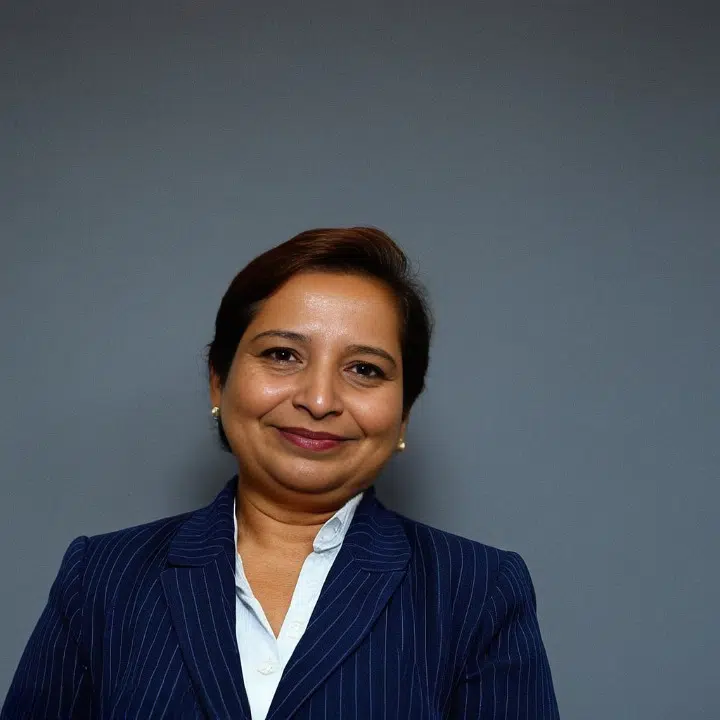
Meet Your Lead Limousine Accountant
Meet your lead limousine accountant. As your fleet and corporate tax adviser, you deal with the same two people every year.

What Our Clients Say
1300+ five-star reviews from transportation, fleet and passenger service business owners across Ontario and Canada.
Serving Limousine Companies Across Ontario
Our CPA team provides specialized accounting and tax solutions for limousine and chauffeured ground transportation companies throughout Ontario. We understand why the automobile definition decides your capital cost allowance, what a Class 10.1 disposal costs you, where the chauffeur classification exposure sits, and what CRA looks at first when it opens a limousine file.
Toronto (ON)
55 Queen St E Ste 1205, Toronto, ON M5C 1R6, Canada
+1 (647) 212-9559
9:00 AM – 8:30 PM (Mon – Sun)
Mississauga (ON)
2100 Camilla Rd #716, Mississauga, ON L5A 2J8
+1 (647) 212-9559
9:00 AM – 8:30 PM (Mon – Sun)
Brampton (ON)
4 Starhill Crescent, Brampton, ON L6R 2P9, Canada
+1 (647) 212-9559
9:00 AM – 8:30 PM (Mon – Sun)
Scarborough (ON)
24 Clementine Square, Scarborough, ON M1G 2V7, Canada
+1 (647) 212-9559
9:00 AM – 8:30 PM (Mon – Sun)
Vaughan (ON)
19 Cabinet Crescent, Woodbridge, ON L4L 6H9, Canada
+1 (647) 212-9559
9:00 AM – 8:30 PM (Mon – Sun)
Oshawa (ON)
210 Durham St, Oshawa, ON L1J 5R3, Canada
+1 (647) 212-9559
9:00 AM – 8:30 PM (Mon – Sun)
Ottawa (ON)
2090 Neepawa Ave a314, Ottawa, ON K2A 3L6, Canada
+1 (647) 212-9559
9:00 AM – 8:30 PM (Mon – Sun)
Etobicoke (ON)
60 Stevenson Rd #1601, Etobicoke, ON M9V 2B4, Canada
+1 (647) 212-9559
9:00 AM – 8:30 PM (Mon – Sun)
Hamilton (ON)
70 Starling Dr, Hamilton, ON L9A 0C5, Canada
+1 (647) 212-9559
9:00 AM – 8:30 PM (Mon – Sun)
Guelph (ON)
1155 Gordon St, Guelph, ON N1L 1S8, Canada
+1 (647) 212-9559
9:00 AM – 8:30 PM (Mon – Sun)
Windsor (ON)
4387 Guppy Ct, Windsor, ON N9G 2N8, Canada
+1 (647) 212-9559
9:00 AM – 8:30 PM (Mon – Sun)
North York (ON)
150 Graydon Hall Dr #912, North York, ON M3A 3B2, Canada
+1 (647) 212-9559
9:00 AM – 8:30 PM (Mon – Sun)
Limousine Accounting & Tax FAQs
Related Industries We Serve
Accountant for Bus and Coach Companies
- Coach fleet capital cost allowance
- Driver payroll and hours records
- Corporate tax filing and statements
Accountant for Fleet Owners
- Vehicle pools, recapture and disposals
- Fuel, maintenance and insurance costing
- Corporate tax planning and bookkeeping
Accountant for Tour Operators
- Deposits and deferred revenue
- Passenger transportation HST review
- Corporate tax filing and advisory
Accountant for Wedding Venues
- Deposits and seasonal cash flow
- Service charges and gratuities
- Corporate tax planning and payroll
Limousine Accounting & Tax Done Right.
T2 filing with the ITA subsection 248(1) automobile test run vehicle by vehicle, each above-limit automobile in its own Class 10.1 with the capital cost capped and no terminal loss on disposal, the rest of the fleet pooled in Class 10 at 30%, every job costed with the deadhead run loaded against the fare, chauffeurs tested against the CRA guide RC4110 factors with T4A slips filed, and a mandatory service charge taxed while a voluntary gratuity is not. AFFORDABLE flat fees, no hourly billing. Licensed CPA Ontario. 1300+ five-star reviews. 30-Day Money-Back Guarantee.