



Common Tax and Accounting Mistakes Car Rental Businesses Make in Canada and How to Avoid Costly CRA Problems
Car Rental Tax Mistakes Canada and CRA Compliance Tips from Gondaliya CPA for Accurate Accounting
Avoiding car rental tax mistakes Canada is essential for meeting CRA compliance and managing accurate financial records. Gondaliya CPA provides practical tips on preventing car rental bookkeeping mistakes while ensuring full adherence to Canadian tax regulations for rental businesses.
A fleet of eight cars can easily carry two different capital cost allowance classes, a deposit balance that never reaches the balance sheet, and revenue reported at whatever the platform happened to deposit that month. Untangling those three is most of what car rental accounting and tax work actually involves, and it is where we start on every file.
Quick Summary
Car rental businesses in Canada make a predictable set of errors that cause real problems with the CRA. Vehicle classification, deposit treatment and platform revenue reporting account for most of them, and each one distorts both the reported profit and the tax owing.
Reading time: 49 minutes.
Table of Contents
- The Mistakes and Their Impact
- Vehicle Classification and CCA
- Deposits, Platform Revenue and Costing
- Filing Errors and Deadlines
- Payroll, GST/HST and Taxable Benefits
- Fixing Past Errors and Working With Us
- Frequently Asked Questions
- Key Points to Avoid Mistakes
- Rental Operations We Serve
- Professional Guidance and Quick Reference
The Numbers That Matter
This article covers Canada, with Ontario and Toronto context, and reflects rules current to 2026. It applies to incorporated car rental businesses, fleet operators, peer-to-peer platform hosts and mixed lease-and-rent operations. Figures marked illustrative are examples, not quotes, and any masked engagement notes end with “Figures changed for privacy.” This is educational information only and not tax or legal advice. Provincial vehicle licensing, rental industry regulation and insurance requirements sit outside accounting scope.
The Mistakes and Their Impact on CRA Compliance
The Mistakes and Their Impact
The Problems
The Four That Cost the Most
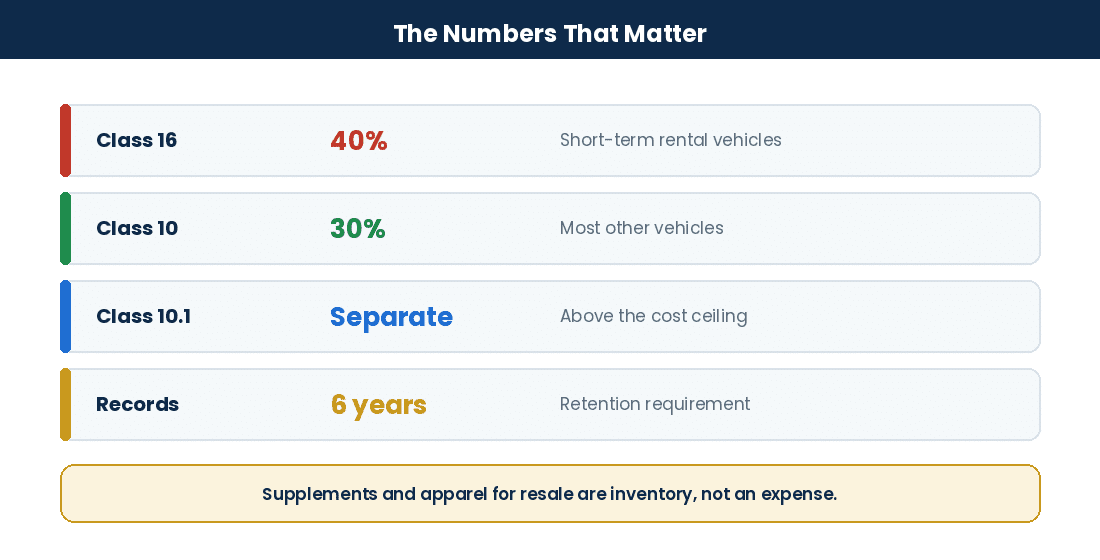
- Wrong capital cost allowance class: Vehicles acquired for short-term rental may qualify for Class 16 at 40% rather than Class 10 at 30%. Defaulting to the ordinary vehicle class understates the deduction every year the vehicle is held.
- Ignoring the passenger vehicle cost ceiling: Where a vehicle is a passenger vehicle, the capital cost is capped at the prescribed ceiling and each vehicle above it goes into its own separate class. Claiming on the full purchase price overstates the deduction.
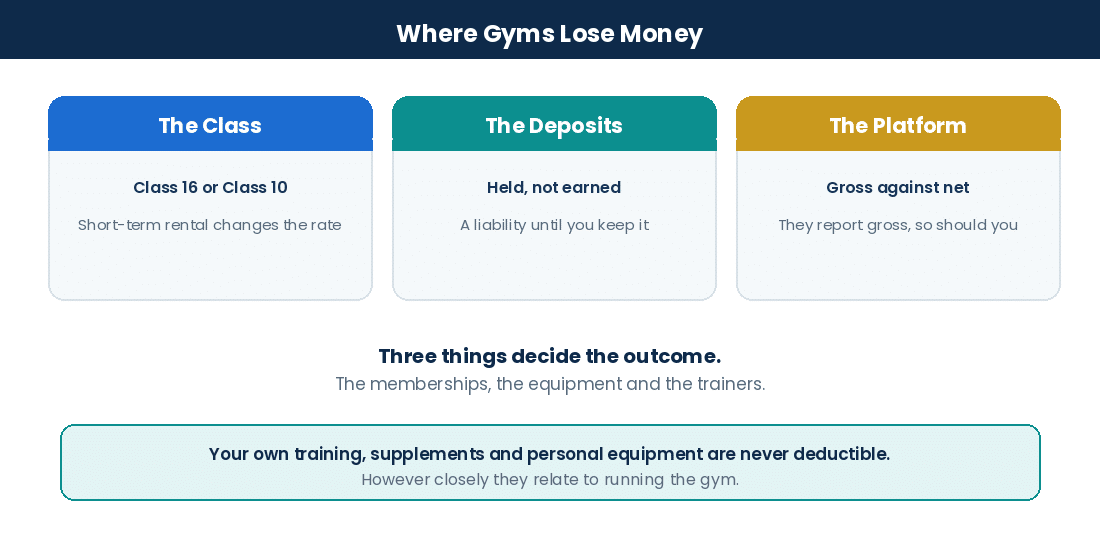
- Treating security deposits as revenue: A refundable deposit is a liability until you keep it for damage or return it. Booking it as income overstates revenue and distorts the GST/HST position.
- Recording only the net platform payout: Reporting what lands in your account rather than the gross rental with the platform fee shown as an expense understates both revenue and costs.
Why the CRA Notices
These are not neutral errors. Each one creates a visible inconsistency:
- Penalties on incorrect filings: Adjustments follow when the review finds overclaimed capital cost allowance or understated revenue
- Higher review risk from missed deadlines: Late T2 returns and GST/HST filings draw attention on their own
- Compounding over years: The same error repeated across several years produces a larger adjustment and a harder conversation
Platform reporting is the specific pressure point. Where a platform reports gross bookings and your return shows net, the gap is arithmetic rather than judgement.
Net platform payouts recorded as revenue is the error we see most on peer-to-peer files. The platform reports the gross figure, and the difference between the two numbers is the first question asked. Figures changed for privacy.
Risk Warning: Rental platforms report gross bookings. Please record gross revenue with the platform fee as a separate expense, not the net deposit.
Vehicle Classification and Capital Cost Allowance
Vehicle Classification and CCA
The Classes
Classification is where car rental businesses lose the most money, and it is also where they most often overclaim. Both directions cause problems.
Which Class Applies
| Situation | Class | Rate |
|---|---|---|
| Automobiles acquired for short-term rental | Class 16 | 40% |
| Most other vehicles used in the business | Class 10 | 30% |
| Passenger vehicles above the prescribed ceiling | Class 10.1, one per vehicle | 30% |
| Trailers and general equipment | Class 8 | 20% |
| Computers and booking hardware | Class 50 | 55% |
Class 16 is the one operators miss. It covers automobiles acquired for the purpose of renting or leasing to others on a short-term basis, which is precisely what a rental fleet does. The 40% rate against 30% compounds meaningfully across a fleet held for several years.
The classification depends on the actual use of each vehicle. A car held for long-term lease is not in the same position as one rented by the day, so please have the fleet reviewed rather than applying one class across everything.
The Passenger Vehicle Ceiling and Separate Classes
Where a vehicle meets the definition of a passenger vehicle and costs more than the prescribed capital cost ceiling, two things happen. The capital cost is limited to the ceiling, and the vehicle goes into its own separate Class 10.1 rather than being pooled.
Separate classes change the arithmetic on disposal. There is no recapture and no terminal loss on a Class 10.1 vehicle, and a half-year style claim is available in the year of disposal. Pooling those vehicles with the rest of the fleet gets both the annual claim and the disposal wrong.
The ceiling is revised periodically, so please confirm the current figure before calculating rather than relying on a number from an earlier year.
The Half-Year and Available-for-Use Rules
The half-year rule generally limits your claim to half the normal amount in the year a vehicle becomes available for use. A car delivered in December that does not go on the rental line until January does not start its claim in the earlier year.
For a business buying vehicles continuously, this is a timing question worth planning around your fiscal year end.
Disposals, Recapture and Terminal Loss
Fleet turnover means constant disposals, and this is where reporting goes wrong most often.
| Disposal Mistake | Consequence | Correct Treatment |
|---|---|---|
| Sale price not recorded accurately | Understated income and possible reassessment | Record proceeds at the actual amount received |
| Recapture ignored | Overclaimed depreciation and an unexpected assessment | Calculate recapture where proceeds exceed the class balance |
| Trade-in treated as no disposal | Missed gain and an overstated asset value | Record the trade-in allowance as proceeds |
| Class 10.1 pooled with the fleet | Wrong claim and wrong disposal treatment | Keep each Class 10.1 vehicle in its own class |
Recapture arises where proceeds exceed the remaining balance in the class, and it is income. A terminal loss arises where a class is emptied for less than its balance, and it is a deduction. Neither happens on Class 10.1.
An operator holding twelve vehicles classified in Class 10 at 30% would have claimed materially more each year had the fleet qualified for Class 16 at 40%. The deduction is not lost permanently, but the timing difference across a multi-year holding period is substantial. Figures changed for privacy.
The Asset Register
Every claim rests on the register. It should list each vehicle with the VIN, purchase date, cost, assigned class, capital cost allowance claimed to date, and the disposal details when it leaves.
Without it, the fleet becomes a single number nobody can defend, and disposals get missed entirely.
The first thing we build on a rental file is the asset register. Operators know what they paid; almost none can say what class each vehicle sits in or what remains to claim. Figures changed for privacy.
Key Stat: Vehicles acquired for short-term rental may qualify for Class 16 at 40%. Please have the classification confirmed rather than defaulting to Class 10.
Deposits, Platform Revenue and Per-Vehicle Costing
Deposits, Platform Revenue and Costing
The Bookkeeping
Security Deposits
A refundable security deposit is not revenue. It is money you hold that belongs to the customer until something happens to change that.
The deposit becomes income only when you retain it, typically for damage, fuel or a late return. At that point it converts from a liability to revenue, and the GST/HST treatment follows the reason it was retained.
Practical handling:
- Record deposits received in a liability account, not in sales
- Release each deposit when returned or when retained, with a note explaining which
- Reconcile the deposit liability balance monthly against outstanding rentals
- Keep the damage assessment or charge documentation for anything retained
Where deposits are held on a payment card as a pre-authorisation rather than taken, the accounting differs again, so the mechanism matters.
Platform Revenue
Peer-to-peer platforms deposit net proceeds after their commission, insurance charge and any other deduction. Recording that figure as revenue hides both the true rental income and a legitimate expense.
A host bills $2,000 in gross rentals through a platform in a month. The platform retains commission and charges, depositing $1,500. Revenue is $2,000 and the platform charges are a $500 expense. Recording $1,500 as revenue understates the top line, loses the deduction, and creates a mismatch against what the platform reports. Figures changed for privacy.
Reconcile the platform statement to your books monthly. The gross figure on the statement is the number that should appear in revenue.
Expense Records That Hold Up
Rental fleets generate a constant stream of small costs: fuel, cleaning, tolls, parking, minor repairs and roadside charges. These are legitimate business expenses, but only where you can show them.
Weak documentation here is the quiet cost. The individual amounts are small, the annual total is not, and a review disallowing the category removes all of it at once.
- Capture receipts at the point of purchase rather than reconstructing later
- Code each cost to the specific vehicle where possible
- Keep toll and fuel card statements alongside the itemised charges
- Separate personal use of any vehicle from business use
Per-Vehicle Costing
Allocating costs to individual vehicles rather than pooling them changes what you can see. Depreciation, maintenance, insurance and revenue by vehicle shows which cars earn and which quietly lose money.
| Tracked Per Vehicle | What It Tells You |
|---|---|
| Rental revenue and utilisation days | Whether the vehicle earns its place in the fleet |
| Maintenance and repair cost | When a vehicle has become uneconomic to keep |
| Insurance allocated by unit | True cost per rental day |
| Capital cost allowance claimed | Remaining deduction available on disposal |
Fleet businesses that pool everything discover the problem vehicle only when it fails. Per-vehicle costing surfaces it while you can still sell.
Per-vehicle costing usually finds two or three cars carrying the fleet and one quietly consuming the margin. Owners are rarely surprised by which, but they had never seen the number. Figures changed for privacy.
Risk Warning: A refundable deposit booked as revenue overstates income and misstates GST/HST. Please hold deposits in a liability account until retained or returned.
Filing Errors and Deadlines
Filing Errors and Deadlines
The Filings
What Gets Missed
The recurring filing errors in this sector are consistent: T2 returns filed late, GST/HST returns missed, taxable benefits on personal vehicle use unreported, and fleet disposals handled incorrectly on the return.
The corporate late-filing penalty is 5% of the unpaid balance plus 1% for each complete month the return is late, to a maximum of twelve, with higher amounts for repeat failures. Interest runs separately.
| Obligation | Deadline | Applies To | If Missed |
|---|---|---|---|
| T2 corporate return | Six months after fiscal year-end | Incorporated operators | Penalty plus interest |
| Balance owing | Two or three months after year-end | Incorporated operators | Interest from the due date |
| GST/HST return | Per your assigned reporting period | Registrants | Penalty plus interest |
| T4 and T4A slips | Last day of February | Employers and payers | Penalty by slip count |
| Payroll remittances | Per your remitter type | Employers | Penalty and director liability |
A calendar with every date on it, set at the start of the fiscal year, prevents most of this.
Taxable Benefits on Personal Use
Where an owner or employee uses a fleet vehicle personally, a taxable benefit arises. Two components apply: a standby charge reflecting availability, and an operating expense benefit reflecting the costs you paid.
The standby charge turns on availability rather than actual use, which surprises people. A vehicle sitting available to an employee generates the charge whether or not they drove it.
A logbook recording business and personal kilometres is what supports a reduced standby charge where business use is high. Without it, the full charge applies and the deduction side looks weak too.
For a rental business this matters twice over, because the CRA can see that reported rental revenue does not account for all the vehicle time.
Disposal Reporting on the Return
Fleet disposals affect several parts of the return at once. Recapture is income, terminal loss is a deduction, and a capital gain can arise where proceeds exceed the original cost.
The GST/HST side also matters, since the sale of a fleet vehicle is generally a taxable supply requiring tax to be collected and remitted.
Selling several vehicles in one year without modelling the result first produces assessments that could have been timed differently.
Fleet turnover concentrated in one fiscal year generates recapture large enough to erase the deduction the replacement vehicles were meant to create. Timing the disposals across year ends changes the outcome. Figures changed for privacy.
Key Stat: The standby charge applies on availability, not on actual driving. Please keep a logbook if a fleet vehicle is available to anyone personally.
Payroll, GST/HST and Record Retention
Payroll, GST/HST and Taxable Benefits
The Compliance
Payroll and Worker Classification
Rental operations use a mix of staff: counter and administrative employees, cleaners, and delivery or shuttle drivers who may be engaged either way.
Employees receive T4 slips and have income tax, CPP and EI withheld. Genuine self-employed contractors are paid gross and reported on a T4A where applicable. The CRA decides which applies by looking at control, tools, chance of profit and integration, not at what the agreement says.
Getting this wrong is expensive. Paying a driver as a contractor when the relationship is employment means the CRA can assess the source deductions that should have been withheld, plus penalties and interest, with directors carrying personal exposure on unremitted amounts.
GST/HST on Rentals
Vehicle rental is a taxable supply. You must register for GST/HST once taxable revenue exceeds $30,000 across four consecutive calendar quarters, which a rental business passes quickly.
Several points need attention:
- Charge the rate applying to the place of supply, which is generally where the vehicle is made available
- Account for tax on the gross rental, not the net platform payout
- Retained deposits carry tax treatment depending on what they were retained for
- The sale of a fleet vehicle is generally taxable
Filing frequency is assigned by the CRA based on your taxable supplies. Annual filing applies below $1.5 million, quarterly between $1.5 million and $6 million, and monthly above that.
Late filing brings a penalty calculated by reference to the amount owing and how many months the return is late, with interest running separately.
Input Tax Credits on Vehicles
Input tax credits recover the tax you pay on business purchases, but passenger vehicles carry a specific restriction. The credit is capped by reference to the same prescribed capital cost ceiling that limits the depreciation claim.
Vehicles that are not passenger vehicles under the definition are not subject to that cap, which is another reason classification matters. Claiming the full tax on a vehicle above the ceiling is a straightforward overclaim.
Every credit needs a supplier invoice showing the registration number. A bank entry showing a payment is not documentation.
Record Retention
Records must be kept for six years from the end of the tax year they relate to. For a rental business that means:
- Vehicle purchase and sale documents with VINs
- Rental agreements and deposit records
- Platform statements showing gross bookings and fees
- Fuel, cleaning, toll and repair receipts
- Insurance policies and premium records
- Payroll records and slips
- Logbooks where any vehicle has personal use
Digital copies satisfy the requirement provided they stay legible and can be produced when asked.
Delivery drivers paid as contractors is the payroll exposure in this sector. The schedule and the vehicle both belong to the business, which is usually enough to settle the question. Figures changed for privacy.
Pro Tip: Please account for GST/HST on gross platform bookings rather than the net deposit. The platform reports gross, and the two figures should agree.
Fixing Past Errors and Working With Gondaliya CPA
Fixing Past Errors and Working With Us
The Cleanup
Voluntary Disclosure or Wait
If you are behind on filings or have found errors in past returns, you have a choice: come forward or wait for the CRA to raise it.
The Voluntary Disclosures Program may reduce penalties where the disclosure is complete, made in good faith and, critically, made before the CRA contacts you about the issue. Once they have written to you, that route is generally closed.
The calculation is straightforward. Disclosing costs the tax plus interest with relief on penalties. Being found costs the tax, the interest, the penalties and a considerably harder relationship going forward.
What a Cleanup Involves
Rebuilding a rental business position follows a set order:
- Construct the asset register from purchase and sale documents, assigning the correct class to each vehicle
- Recalculate capital cost allowance across the affected years, including recapture on any disposals
- Separate deposits from revenue and restate the liability balance
- Reconcile platform statements to gross revenue with fees expensed
- File or amend the outstanding corporate returns
- Bring GST/HST returns current with the corrected revenue figures
- Prepare any missing payroll slips
- Submit a taxpayer relief request where circumstances support one
The order matters. Correcting the returns before the asset register is rebuilt produces numbers that need correcting again.
Responding to CRA Correspondence
Ignoring a CRA letter is the most expensive decision available. The file moves from a question you can answer to an assessment based on their assumptions, and the burden shifts to you to displace it.
Respond within the deadline given, even if only to request more time. Once you authorize a representative, we deal with the correspondence, the assessments and any dispute directly. Our CRA audit guide covers what a review involves.
How We Work With Rental Businesses
We support incorporated car rental operators on a flat annual fee covering:
- Bookkeeping with per-vehicle costing and deposit liability tracking
- Asset register construction and maintenance by capital cost allowance class
- Classification review against Class 16, Class 10 and Class 10.1
- Disposal and recapture modelling before vehicles are sold
- Platform reconciliation to gross revenue
- GST/HST registration, filing and input tax credit review
- Payroll, slips and worker classification
- Standby charge and operating benefit calculations
- Financial statements and the corporate return
Pricing is quoted before any work begins, including HST, with a one-business-day response commitment. Catch-up work is quoted separately once we have seen the scope.
Getting Started
Bring three things to the first conversation: a list of your vehicles with purchase dates and prices, a recent platform or rental statement, and your last filed corporate return. Those show us how the fleet should be classified, whether revenue is being recorded correctly, and what needs fixing.
Contact Gondaliya CPA at info@gondaliyacpa.ca, call 647-212-9559, or send us a message.
Operators who come forward before the CRA writes almost always end up better off. The ones who wait spend the same money on tax and considerably more on penalties. Figures changed for privacy.
Pro Tip: Please build the asset register before amending any return. Correcting filings on top of an unreliable register means doing the work twice.
FAQs on Car Rental Tax and Accounting Mistakes
Frequently Asked Questions
FAQ
Which capital cost allowance class applies to my rental fleet?+
Automobiles acquired for short-term rental may qualify for Class 16 at 40%. Other vehicles generally sit in Class 10 at 30%, and passenger vehicles above the prescribed ceiling go into their own Class 10.1.
What happens if I ignore the separate class rule and the cost ceiling?+
You overclaim capital cost allowance and get the disposal treatment wrong, since Class 10.1 vehicles produce no recapture and no terminal loss. Reassessment and penalties follow.
How do I track personal use of fleet vehicles?+
Keep a logbook or GPS record separating business from personal kilometres. This supports a reduced standby charge and the operating expense benefit calculation.
Why does per-vehicle costing matter?+
It shows which vehicles earn and which consume margin. Pooled costs hide the problem vehicle until it fails, by which point selling it is harder.
Are security deposits taxable when received?+
No. A refundable deposit is a liability until you retain it. It becomes revenue at the point you keep it, and the GST/HST treatment follows the reason.
Should I report gross or net platform revenue?+
Gross. The rental amount is your revenue and the platform commission is an expense. Platforms report gross figures, so a net entry creates a visible mismatch.
What records do I need for fuel, cleaning, repairs and tolls?+
Receipts and statements coded to the vehicle where possible. Without documentation the whole category can be disallowed on review.
Can I pay drivers without payroll documentation?+
Not where they are employees. The CRA can assess the source deductions that should have been withheld plus penalties, and directors carry personal exposure.
What penalties apply for missing filing deadlines?+
The corporate late-filing penalty is 5% of the unpaid balance plus 1% per complete month, to twelve, with interest separately. Slips and GST/HST carry their own penalties.
What should I do if I receive a CRA letter and have not responded?+
Respond within the deadline, even if only to request more time. Ignoring correspondence produces an assessment based on the CRA’s assumptions.
What is voluntary disclosure and when does it help?+
It allows correction of past errors with potential penalty relief, but only where the disclosure is complete and made before the CRA raises the issue with you.
Should I fix past mistakes myself or engage a CPA?+
Rebuilding an asset register across several years and restating returns in the right order is where most self-corrections go wrong, usually requiring a second correction.
How is a fleet vehicle sale treated for GST/HST?+
The sale of a fleet vehicle is generally a taxable supply, so tax is collected on the sale price and remitted with the return for that period.
How long must a car rental business keep records?+
Six years from the end of the tax year they relate to, covering vehicle documents, rental agreements, deposits, platform statements and payroll records.
Fourteen questions and two underneath most of them: which class does this vehicle sit in, and whose money is this. Those two settle nearly every rental file. Figures changed for privacy.
Key Points to Avoid Car Rental Tax Mistakes
Key Points to Avoid Mistakes
Quick Reference
Classification and Assets
- Class 16 at 40%: Automobiles acquired for short-term rental may qualify.
- Class 10 at 30%: Most other vehicles used in the business.
- Class 10.1: Passenger vehicles above the ceiling, one class each, no recapture or terminal loss.
- Cost ceiling: Prescribed and revised periodically, so confirm before calculating.
- Half-year rule: Applies in the year a vehicle becomes available for use.
- Recapture: Arises where proceeds exceed the class balance, and it is income.
- Asset register: VIN, purchase date, cost, class, claims to date and disposal details.
- Disposal timing: Model recapture before selling several vehicles in one year.
Revenue and Deposits
- Record platform revenue gross with commission shown as an expense.
- Reconcile platform statements to the books every month.
- Hold security deposits in a liability account until retained or returned.
- Document the reason for any deposit retained and apply the right tax treatment.
- Track utilisation and revenue by individual vehicle.
- Allocate maintenance, insurance and depreciation per vehicle rather than pooling.
- Collect GST/HST on the gross rental and on fleet vehicle sales.
Compliance and Records
- Diarise the T2, GST/HST, slip and payroll deadlines at the start of the year.
- Keep a logbook wherever a fleet vehicle is available for personal use.
- Calculate the standby charge on availability, not on actual driving.
- Classify drivers and staff correctly as employees or contractors.
- Cap input tax credits on passenger vehicles by reference to the prescribed ceiling.
- Hold supplier invoices with registration numbers for every credit claimed.
- Respond to every CRA letter within the deadline given.
- Consider voluntary disclosure before the CRA raises an issue, not after.
- Keep six years of records covering vehicles, rentals, deposits, platforms and payroll.
For support avoiding car rental tax mistakes, contact Gondaliya CPA at info@gondaliyacpa.ca, call 647-212-9559, or book a free consultation.
Twenty-four points and one underneath them: know which class each vehicle sits in and whose money is in your bank account. Every rental correction we make starts with one of those two. Figures changed for privacy.
Rental Operations We Serve
Industry Expertise
Which issue dominates differs by the model you run. Here are ten and the usual focus.
| Rental Operation | Where the Exposure Sits |
|---|---|
| Traditional counter-based fleet | Class 16 against Class 10 across the whole fleet |
| Peer-to-peer platform host | Gross against net revenue reporting |
| Operator holding premium vehicles | Cost ceiling and separate Class 10.1 treatment |
| High deposit volume | Deposit liability against revenue |
| Fleet turning over annually | Recapture on concentrated disposals |
| Business with delivery drivers | Employee against contractor classification |
| Owner using a fleet vehicle personally | Standby charge and operating benefit |
| Mixed lease and short-term rental | Different classes for different use |
| Multi-province operation | Place of supply on the rental |
| Behind on filings | Voluntary disclosure before CRA contact |
- Traditional counter-based fleet: One wrong class applied fleet-wide compounds every year.
- Peer-to-peer platform host: The platform reports gross; your return should too.
- Operator holding premium vehicles: Above the ceiling, each vehicle stands alone.
- High deposit volume: Money held is not money earned.
- Fleet turning over annually: Disposals can generate more income than expected.
- Business with delivery drivers: Your schedule and your vehicle usually means employee.
- Owner using a fleet vehicle personally: Availability triggers the charge, not mileage.
- Mixed lease and short-term rental: Actual use decides the class, not the fleet average.
- Multi-province operation: The rate follows where the vehicle is made available.
- Behind on filings: Coming forward first costs far less than being found.
The model changes where the exposure sits. It does not change the method, which is classify each vehicle correctly, keep deposits out of revenue, then report platform income gross. Figures changed for privacy.
Professional Guidance and Quick Reference
Guidance
Professional Guidance for Operators: How Gondaliya CPA Handles Your File
Car rental businesses lose money in a predictable set of ways: the whole fleet classified in Class 10 when vehicles acquired for short-term rental may qualify for Class 16 at 40%, premium vehicles pooled instead of held in separate Class 10.1 classes, refundable security deposits booked as revenue, platform payouts recorded net so both the income and the commission expense disappear, fleet disposals concentrated in one year generating recapture nobody modelled, and delivery drivers paid as contractors on the company schedule in company vehicles. Gondaliya CPA handles car rental accounting on a fixed annual fee.
We handle what decides the outcome: confirming the capital cost allowance class for each vehicle against its actual use, applying the passenger vehicle ceiling and separate class rules, building and maintaining the asset register with VINs and claims to date, modelling recapture before disposals are timed, holding deposits in a liability account until retained or returned, reconciling platform statements to gross revenue with fees expensed, capping input tax credits on passenger vehicles correctly, and calculating standby charges where any vehicle has personal use.
Our team starts with the asset register and the platform statement, because those two decide both your deduction and your reported revenue. Counter-based fleet, platform host or mixed lease operation, you get clear advice and a fixed price before we start.
Quick Answers
- Corporate return: T2, six months after year end
- Late filing: 5% plus 1% per month, to twelve
- Short-term rental vehicles: May qualify for Class 16 at 40%
- Other vehicles: Class 10 at 30%
- Above the ceiling: Class 10.1, one per vehicle
- Deposits: A liability until retained or returned
- Platform revenue: Recorded gross, fees expensed
- Slips: T4 and T4A by end of February
- GST/HST: $30,000 registration threshold
- Records: Six years retention
Who This Is For
- For: Incorporated car rental businesses, counter-based fleets, peer-to-peer platform hosts and mixed lease and rental operations across Canada.
- Not For: Provincial vehicle licensing, rental industry regulation and insurance requirements, which sit with the relevant authority rather than accounting.
People Also Ask
Does Class 16 apply to a vehicle I rent out long term?+
Class 16 covers vehicles acquired for short-term rental or leasing. A vehicle on long-term lease sits differently, so the actual use decides it.
Can I claim the full input tax credit on an expensive vehicle?+
Not where it is a passenger vehicle above the prescribed ceiling. The credit is capped by reference to the same limit that caps the depreciation claim.
Do I charge GST/HST on a retained damage deposit?+
It depends what the amount was retained for. Damage recoveries and service charges are treated differently, so please have the specific charge reviewed.
Glossary of Key Terms
- T2: The corporation income tax return.
- Capital cost allowance: Tax depreciation on vehicles and equipment.
- Class 16: The 40 percent class covering vehicles acquired for short-term rental.
- Class 10: The 30 percent class covering most other vehicles.
- Class 10.1: A separate class for each passenger vehicle above the cost ceiling.
- Cost ceiling: The prescribed limit on the capital cost of a passenger vehicle.
- Half-year rule: The first-year restriction on CCA claims.
- Available for use: When a vehicle becomes eligible for depreciation.
- Recapture: Income arising where proceeds exceed the class balance.
- Terminal loss: A deduction where a class is emptied below its balance.
- Security deposit: Refundable customer funds held as a liability.
- Gross reporting: Recording full rental revenue with platform fees as an expense.
- Standby charge: The taxable benefit arising from a vehicle being available.
- Operating benefit: The taxable benefit from operating costs paid by the employer.
- Input tax credit: GST/HST recoverable on business purchases.
- Voluntary Disclosures Program: The route to correcting past errors with reduced penalties.
Car Rental Readiness Check
This quick self-check indicates where your operation most likely has room. Please answer the six questions below.
Car Rental Readiness Check
Six quick questions on your fleet. No fee shown.
Points to raise with us:
This is a general prompt, not tax or legal advice or a quote. Your position depends on your full facts. For a real review, please book a free consultation.
Want a checklist to work from? You can download our free car rental compliance checklist before your consultation.
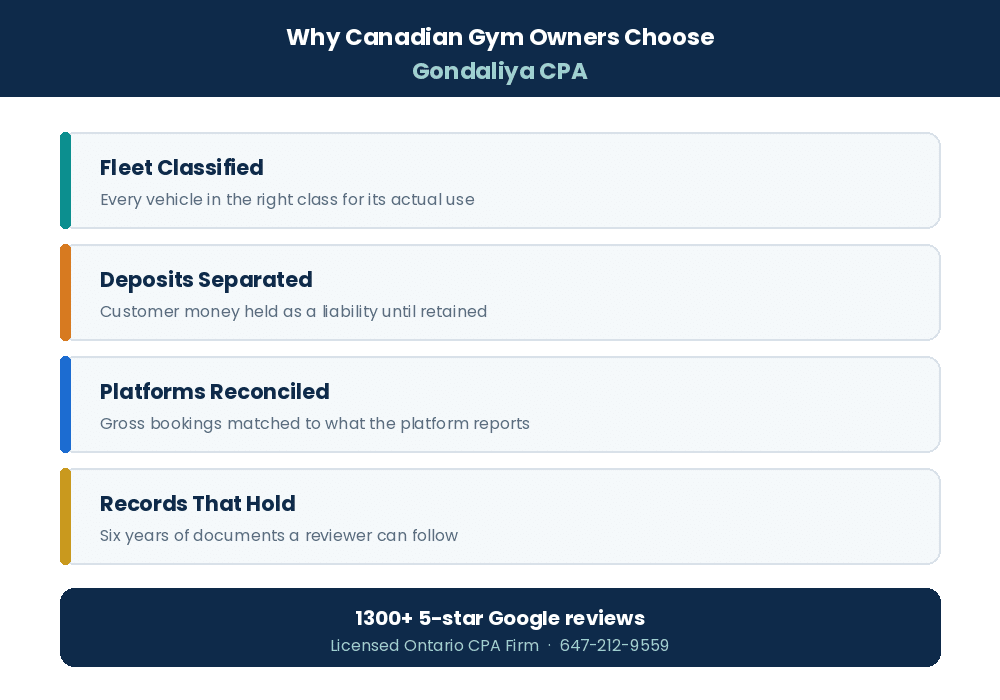
Confirm the capital cost allowance class for each vehicle against its actual use. Hold security deposits in a liability account until retained or returned. Record platform revenue gross with fees expensed. Apply the cost ceiling and separate class rules to premium vehicles. Model recapture before timing disposals. Keep a logbook wherever a vehicle has personal use. Cap input tax credits on passenger vehicles correctly. Please keep six years of records.
2026 Update — what is current: This article reflects rules current to 2026. The Class 16 rate of 40%, the Class 10 rate of 30%, the separate class treatment of passenger vehicles above the prescribed ceiling under Class 10.1, the half-year and available-for-use rules, the $30,000 GST/HST registration threshold measured across four consecutive calendar quarters, the 5% plus 1% per month corporate late-filing penalty, the end-of-February slip deadline and the six-year retention requirement are unchanged. Please note that automobiles acquired for the purpose of short-term rental may qualify for Class 16 rather than Class 10, which many operators miss; that the passenger vehicle cost ceiling is revised periodically and should be confirmed before calculating either the depreciation claim or the capped input tax credit; that no recapture or terminal loss arises on a Class 10.1 vehicle; that GST/HST monthly filing is required above $6 million in taxable supplies rather than $1.5 million, which is the quarterly threshold; and that T5018 contract payment reporting applies to construction rather than vehicle rental.
Car Rental Tax Mistakes Canada: How Gondaliya CPA Keeps Operators Compliant
Start with the asset register
Gondaliya CPA confirms the capital cost allowance class for each vehicle against its actual use, applies the passenger vehicle ceiling and separate class rules, builds and maintains the asset register with VINs and claims to date, models recapture before disposals are timed, holds deposits in a liability account until retained or returned, reconciles platform statements to gross revenue with fees expensed, caps input tax credits correctly and calculates standby charges where any vehicle has personal use, on a flat annual fee including HST with a one-business-day response. Please book a free consultation.
Next Steps
Please book a free consultation with Gondaliya CPA and bring a list of your vehicles with purchase dates and prices, a recent platform or rental statement, and your last filed return. Those three tell us immediately how the fleet should be classified, whether revenue is being recorded correctly, and what remains to claim on the equipment, and where the documentation is thin. You will get a flat annual fee including HST before any work begins. If our content helps, please add gondaliyacpa.ca as a preferred source on Google.
Sharad Gondaliya, CPA — Founder & Managing Director, Gondaliya CPA Professional Corporation
Sharad Gondaliya, CPA, has over 15 years of experience serving incorporated car rental businesses, fleet operators and peer-to-peer platform hosts, covering capital cost allowance class determination for short-term rental vehicles, the passenger vehicle cost ceiling and separate class rules, recapture and terminal loss on fleet disposals, security deposit liability treatment, gross against net platform revenue reporting, per-vehicle costing, input tax credit limits on passenger vehicles, standby charges and operating benefits, payroll and slip preparation, catch-up filing, voluntary disclosure and CRA audit representation. Gondaliya CPA is a CPA Ontario Registered Firm, serving clients across Toronto, Etobicoke, Vaughan, Mississauga, Brampton, Scarborough, Ottawa, Oshawa, Guelph, Hamilton, North York, Windsor, and Canada-wide. Verify our firm on the CPA Ontario public firm directory.
CPA Ontario | US CPA licences in Washington and Montana | CPA Ontario Registered Firm | 1450+ 5-star Google reviews
Published: · Last updated:
Editorial policy: We research against CRA and CPA Ontario sources, fact-check the figures, and Sharad Gondaliya, CPA, reviews the content, which we update as the rules change.
Disclaimer: This article is educational information only and is not tax, legal, or financial advice. Figures marked illustrative are examples rather than quotes or guarantees. It reflects CRA rules current to 2026, including the $30,000 GST/HST threshold, the Class 8 rate, Class 13 leasehold treatment, the half-year rule, and the six-year retention requirement. Rates, limits and expensing rules change and outcomes depend on your specific facts. Please consult a CPA Ontario member before acting.

Sharad Gondaliya is a CPA Canada & CPA USA with 15 Years+ experience of Accounting, Tax, Payroll of Corporate Small Businesses as Tax Accountant. He is a CPA Ontario member (61040184) and holds US CPA licences in Washington and Montana and is well known among corporate small businesses for tax planning, efficient tax solutions, and affordable CPA services. Sharad is the Principal (Director) of Gondaliya CPA – Affordable CPA Firm in Canada. Licenses: CPA Ontario: 61040184 | CPA USA (MT): PAC-CPAP-LIC-033176 | CPA USA (WA): 57629 | CPA Firm License: 61330051 View Full Author Bio