



Tax Accountant for Used-Car Dealerships in Ontario and Across Canada
We carry your vehicles as inventory under section 10 rather than expensing them, capitalize reconditioning into each unit’s cost, match your floor-plan interest to the cars you actually sell, charge 13% HST on the price net of every trade-in allowance, and separate your F&I reserve, extended-warranty and insurance-product commission income from vehicle sales. Whether you run an independent used-car lot, a pre-owned superstore, a wholesale operation buying at Adesa and Manheim, or a buy-here-pay-here dealership, we handle the unit-inventory and floor-plan accounting, the HST and trade-in credits, the OMVIC-compliant records reconciled to your DMS, and the salary, dividends and eventual sale of your corporation — with AFFORDABLE flat fees.
AFFORDABLE Used-Car Dealership Tax Accountant
A used-car dealership is an inventory business with a finance overlay, so the books turn on how each vehicle is costed and when the tax is charged. Your cars are inventory valued under section 10 of the Income Tax Act at the lower of cost or net realizable value, the reconditioning you put into a unit is capitalized into its cost rather than expensed, the whole lot usually sits on floor-plan financing whose interest is deductible against the units it carries, and every retail sale charges 13% HST calculated on the price net of the trade-in allowance. That is why you need an accountant who works the lot, not a generalist. At Gondaliya CPA, we specialize in vehicle-inventory, floor-plan and F&I bookkeeping and corporate tax planning for pre-owned dealers, with AFFORDABLE flat-fee support that keeps you CRA- and OMVIC-compliant and stops you paying more tax than you owe.
As a dealership accountant, we work with independent used-car lots, pre-owned superstores, wholesale and auction buyers, and buy-here-pay-here operators across Ontario, with year-round support rather than a once-a-year scramble. We tell you plainly what you can deduct, what capitalizes into a unit, and where the real gross sits on each vehicle sold.
Let us handle the numbers so you can focus on turning inventory and closing deals.
Our Official Partners









Accounting That Understands How a Used-Car Dealership Actually Works
Running a used-car dealership comes with financial pressures a desk-bound company never faces. Your vehicles are inventory carried at the lower of cost or net realizable value, the reconditioning you invest in a unit capitalizes into its cost, the lot rides on floor-plan financing whose interest has to be matched to the cars sold, and your F&I reserve, warranty and commission income are separate revenue streams from the metal. At Gondaliya CPA, we understand the financial reality of a pre-owned dealership and provide practical, trade-focused solutions across the GTA and all of Ontario.
Stay Compliant and Minimize Your Used-Car Dealership Tax
For a used-car dealership, staying onside with CRA and OMVIC and paying the least legal tax are the same job. We keep every filing on schedule while capturing every inventory, floor-plan and reconditioning dollar the T2 allows, so nothing is missed and nothing invites a reassessment.
Accounting & Tax Experts for Used-Car Dealerships
- AFFORDABLE + Registered CPA Firm
- Business and Corporate Tax Expert
- Small & Medium Business Expert
- Accounting, bookkeeping, and tax filing
- CPA (Chartered Professional Accountant)
- 1450+ 5-star Google reviews
- 30-Day Money-Back Guarantee
- 60-Day Fees Matching Policy
Why Choose Our Accounting Services for Used-Car Dealerships?
Tax Planning — Inventory & Floor-Plan Expertise
We know the lot: vehicles as section 10 inventory, reconditioning capitalized into cost, floor-plan interest matched to units, shop equipment in Class 8 at 20%, DMS software in Class 50 at 55%, lot leaseholds in Class 13. We protect the $500,000 Small Business Deduction.
Consulting — Inventory, F&I & Trade-In Bookkeeping
Our bookkeeping values each unit under section 10, keeps HST correct on the net-of-trade-in price, and separates F&I reserve, warranty and commission income. We cost each vehicle so you see the real gross and tie HST to revenue.
CRA Representation — Cash-Deal & Inventory Audit
When CRA reviews your cash deals, your unit inventory, or your HST and trade-in credits, we prepare the response, reconcile the DMS to the books, and pursue relief on Form RC4288 where penalties came from a prior error.
Bookkeeping — Payroll, DMS & Sale
We run your salesperson and manager payroll, reconcile the DMS to QuickBooks, and get you ready to sell. We model the profit level where incorporating pays off and handle the eventual disposition of your dealership.
Google Reviews
Used-Car Dealership Clients
Used-Car Dealership Tax and Accounting Services in Ontario
Corporate Tax Filing (T2) for Used-Car Dealerships
Professional T2 preparation with unit inventory under section 10, floor-plan interest matched to sales, reconditioning capitalized, and CRA compliance on every line.
Bookkeeping & Accounting for Used-Car Dealerships
Unit-inventory, floor-plan and F&I bookkeeping with financial statements, clean records, and monthly reporting built for a pre-owned dealer.
Payroll Services for Used-Car Dealerships
Salesperson, manager and detailer payroll with commission tracking, PD7A remittances, T4s, and clean records reconciled to your DMS.
GST/HST Filing for Used-Car Dealerships
AFFORDABLE HST filing with 13% on retail sales, the trade-in credit applied correctly, and full input tax credits, matched to your T2 to avoid penalties.
Tax Planning for Used-Car Dealerships
Smart tax planning to protect the Small Business Deduction, time reconditioning and equipment, separate F&I income, and plan salary, dividends and sale.
Corporate Catch-Up Filing for Used-Car Dealerships
File overdue T2 and HST years, rebuild missing inventory, floor-plan and F&I records, and get back into CRA compliance with accurate catch-up support.
CRA Audit Resolution for Used-Car Dealerships
Expert support for cash-deal, inventory, trade-in HST and F&I audits, with indirect-verification-of-income reviews handled with confidence.
CPA Financial Statements (Notice to Reader) for Used-Car Dealerships
CPA-compiled financial statements that floor-plan providers and banks accept for your dealership corporation.
Incorporation Services for Used-Car Dealerships
Full incorporation including NUANS, articles, share structure, and the section 85 rollover from your unincorporated dealership.
Catch-Up Bookkeeping Services for Used-Car Dealerships
Rebuild months of unposted deals — vehicle cost, floor-plan payoff, reconditioning and F&I income — into clean unit-level books so your lot is ready for HST and T2 filing.
US Corporation & LLC Tax Filing for Used-Car Dealerships
Cross-border filing for dealers buying at US auctions or selling stateside, covering Form 1120, 5472 and treaty relief so your export deals stay compliant on both sides.
Voluntary Disclosure Program for Used-Car Dealerships
Come forward on unreported cash deals or unfiled HST through the Voluntary Disclosures Program, cancelling penalties before CRA audits your pre-owned lot.
Accounting & Tax Services Tailored for Used-Car Dealerships
Real, practitioner-level CPA expertise for independent used-car lots, pre-owned superstores, wholesale and auction buyers and buy-here-pay-here operators across Ontario — built for how a pre-owned dealership actually runs.
- At fiscal year-end we prepare your T2 with GIFI on Schedule 100 and Schedule 125, splitting retail vehicle sales, wholesale auction proceeds and F&I income on their own lines, so CRA’s matching program never assesses your lot on the $9,300 of HST-taxable revenue it misread.
- We carry your vehicles as inventory under section 10 at the lower of cost or net realizable value, so cost of goods on your T2 reflects only the units delivered by year-end; on one lot we wrote down $14,000 of aged stock.
- We capitalize reconditioning — safety, detailing, parts, labour — into each unit’s section 10 cost at the lower of cost or net realizable value, not expensing it at purchase, so $2,300 of recon matches the sale and one dealer’s $18,000 error was corrected.
- We match your floor-plan financing interest to the units it carries as a deductible cost, not a period lump, so on a lot rotating $600,000 of inventory we tied $22,000 of interest to the cars sold on Schedule 125 at year-end.
- We report demo and loaner units as section 10 inventory with a standby-charge adjustment for personal use rather than a depreciating class, and we place lot leaseholds in Class 13 at year-end, so a $40,000 leasehold amortizes and CRA does not disallow it.
- We reconcile Frazer, DealerTrack or AutoManager to QuickBooks Online so every deal posts vehicle cost, reconditioning, floor-plan payoff and F&I income to the right account and meets the six-year record rule in section 230; one sync caught a lost $1,900 recon cost.
- We maintain your unit-level section 10 inventory in QuickBooks or Xero and reconcile it to a physical lot count at year-end, so the $480,000 carried as inventory ties to the cars actually on the ground and CRA cannot reassess a phantom cost of sales.
- We separate F&I reserve, extended-warranty sales and insurance-product commission income into their own QuickBooks accounts, because folding a $1,400 dealer reserve into vehicle sales overstates your metal gross and distorts the HST base CRA matches against your T2.
- We capture every supplier, auction and reconditioning invoice through Dext and reconcile monthly, so the 13% HST input tax credit on wholesale buys, parts and lot expenses is never lost to a missing Adesa or Manheim gate pass worth hundreds per unit.
- We book consignment units as agent sales in QuickBooks, recording only your commission not the full price, so a $25,000 consignment car does not inflate revenue or the HST on Schedule 125 you appear to owe on the owner’s money.
- We set up salesperson, manager and detailer payroll in Wagepoint, withholding income tax, CPP and EI and remitting on the PD7A by the 15th of the following month, so a busy dealership never eats CRA’s 10% late-remittance penalty on source deductions.
- We handle commission and draw structures in Wagepoint, grossing a $500 per-unit spiff into pensionable and insurable earnings each pay period, so pay is taxed properly on the T4 and CRA does not reassess unremitted CPP and EI.
- We manage Ontario Employer Health Tax once annual payroll passes the $1,000,000 exemption, file the T4 and T4 Summary by the last day of February, and reconcile them to the PD7A so year-end slips never trip a CRA payroll review of your dealership.
- We report the standby charge and operating benefit where an owner or manager drives a lot vehicle for personal use, so a demo unit’s benefit is added to the T4 by year-end and CRA does not later assess $4,200 plus interest.
- We reconcile your DMS payroll export to the general ledger every pay run so commissions paid on delivered deals match the units recognized, keeping T4 wages defensible and stopping a $6,000 discrepancy from surfacing as a reassessment at year-end.
- A registered dealer charges 13% HST on every retail sale, so we set the right code in your DMS and confirm the tax is collected on the full price and reported on your HST return each period, or CRA assesses tax you should have charged.
- On a trade-in we compute HST in your DMS on the price net of the trade-in allowance, so a $30,000 car against an $8,000 trade is taxed on $22,000; done right each period, this saved $6,400 of over-remitted tax.
- You must register for a GST/HST Business Number once taxable revenue passes the $30,000 threshold, which any dealer crosses immediately, and we register within 30 days so CRA cannot assess back-tax on sales where HST was never charged.
- We claim the input tax credits your wholesale purchases, reconditioning, parts and lot overhead carry, recovering the 13% on line 108; on one dealer we recovered $7,900 of ITCs left unclaimed in QuickBooks across four filing periods.
- We distinguish a dealer’s 13% HST sale from a private-sale RST on Red Book value, and we reconcile HST to the revenue on your T2 each period, because CRA’s matching program pulls a mismatch — one cost a lot a $12,000 reassessment.
- We set the salary-versus-dividend mix each year, paying enough T4 salary to build RRSP room while the balance flows as dividends, so combined tax stays near the 11.2% (from July 1, 2026) Small Business Deduction rate rather than your 53.53% personal rate.
- We keep your active income under the $500,000 Small Business Deduction limit using section 125, and each year we watch CRA’s associated-corporation and passive-income rules that grind the limit toward the higher general rate once your F&I portfolio earns investment income.
- We time your reconditioning spend and shop-equipment purchases before your fiscal year-end so lifts and diagnostic gear in Class 8 at 20% and DMS software in Class 50 at 55% deliver the largest first-year deduction against a profitable selling season.
- We manage the inventory write-down to net realizable value at year-end under section 10, so a $12,000 hit on aged or damaged units lands in the right year and lowers taxable income instead of being missed until a later reassessment.
- We plan at least two years ahead so your shares qualify for the $1.275M Lifetime Capital Gains Exemption under section 110.6, purifying the company of excess cash and non-active assets so selling your dealership defers the tax on the gain.
- We reconstruct vehicle sales, unit costs, HST and F&I income from bank deposits, auction statements and your DMS where no bookkeeping exists across your unfiled years, so CRA cannot arbitrarily assess your lot on its own estimate and overcharge you $15,000.
- Late filing costs 5% of the balance owing plus 1% per month up to twelve months, so we file your oldest unfiled T2 and HST return first to stop the penalty compounding and limit the arrears interest CRA charges your dealership.
- We file the missing HST returns in QuickBooks and reconcile the 13% you charged on retail sales, net of trade-in allowances, against what you remitted each period, so CRA cannot assess back-tax with interest on the gap.
- We rebuild the inventory and undepreciated capital cost pools across the unfiled years so missed section 10 valuations, Class 8 equipment, Class 50 DMS software and Class 13 leaseholds are recovered instead of surfacing later as a $20,000 reassessment.
- We file a Voluntary Disclosures Program application on Form RC199 before CRA contacts you, because a disclosure accepted under the general program cancels penalties in full and gives 50% interest relief on the prior years’ T2 and HST filings.
- When CRA opens an audit, we manage the whole file and answer the section 10 inventory, trade-in HST and F&I queries inside the deadlines, so a review of one year does not expand into a reassessment of three prior years and a $30,000 bill.
- When CRA runs indirect verification of income on a cash-heavy lot, comparing bank deposits and lifestyle to reported vehicle sales, we prepare the source-and-application-of-funds reconciliation in QuickBooks within the 30-day deadline before CRA assesses a $40,000 gap.
- We defend your trade-in HST position from the DMS records, showing 13% was charged on the price net of the allowance each period, so CRA does not reassess the gross and bill your dealership on the credit you properly applied.
- We answer inventory and cost-of-sales reviews with the section 10 lower of cost or net realizable value, year-end lot counts and auction invoices, because a deduction disallowed for missing records cannot be restored at objection and becomes a permanent $9,000 of tax.
- We file the Notice of Objection within 90 days of an HST or T2 reassessment and pursue taxpayer relief on Form RC4288 where a prior accountant’s error caused the penalties, protecting your Tax Court right and clawing back $7,500 of interest.
- We prepare the CSRS 4200 compilation engagement financial statements, the Notice to Reader a floor-plan provider and a bank require across two fiscal years before they approve or renew the $500,000 floor-plan line your inventory rides on.
- Your compiled statement of financial position presents unit inventory at the lower of cost or NRV, the floor-plan liability and F&I reserve receivables at fiscal year-end, giving a lender the working-capital a bare T2 cannot, so a $500,000 floor-plan line is approved faster.
- We build the statement of operations with vehicle-sales revenue, F&I income and cost of vehicles classified consistently across two years and tied to the T2 and HST filed with CRA, so a lender approves the operating line behind a $250,000 request.
- The CSRS 4200 communication discloses that no audit or review was performed each fiscal year, and without it a bank and the floor-plan lender reject the file and the roughly $500,000 of credit your dealership needs to carry its inventory.
- We deliver the compiled statements within 30 days of receiving your records and the year’s T2 figures, because a dealership’s $500,000 floor-plan renewal or lease approval collapses when the lender’s conditional offer expires before the file is produced.
- We incorporate your dealership under the Ontario Business Corporations Act, filing the first T2 and moving you to the roughly 11.2% Small Business Deduction rate each year, against the warranty and comeback exposure an unincorporated lot never sheltered you from.
- We complete the section 85 rollover on Form T2057, transferring your inventory, shop equipment, DMS and goodwill into the corporation at elected amounts, deferring the $60,000 capital gain and recapture a straight sale of those assets would trigger for CRA.
- We transfer or re-apply your OMVIC registration under the Motor Vehicle Dealers Act to the new corporation before your first deal closes, reconciling your DMS records to support it, because selling without valid registration can cost $25,000 in fines and your licence.
- We open the corporation’s CRA Business Number, HST and payroll accounts within the first 30 days, set the source-deduction remittance schedule, and close the old accounts so your dealership never remits the same $10,000 of HST twice.
- We structure the share classes and set the first fiscal year-end up to 53 weeks after incorporation of the OMVIC-registered corporation, so dividends can later be split among family shareholders and the first T2 and CRA balance-due date are deferred to save the dealership $8,000.
- We rebuild months of unentered deals from Frazer, DealerTrack and bank statements, posting each unit’s cost, floor-plan payoff, reconditioning and F&I income, so a lot that fell $80,000 behind on its books lands on clean, filing-ready records.
- We reconstruct your section 10 unit inventory from auction invoices and physical lot counts where no records exist, so the $420,000 sitting on your ground finally ties to the books and no phantom cost of sales survives a later CRA review.
- We separate F&I reserve, warranty and insurance commission income that was dumped into one sales account, restoring the true metal gross so a hidden $30,000 of back-end income is reported correctly and your HST base is never overstated.
- We recover unclaimed 13% input tax credits buried in months of missing supplier and reconditioning invoices, so a dealer who never posted them reclaims $9,500 of HST on line 108 before the four-year claim window quietly closes.
- We reconcile every bank and floor-plan account across the catch-up period and hand you month-end statements, so your books support the next T2 and HST filing and CRA cannot arbitrarily assess your lot on its own inflated $18,000 estimate.
- We file the US Form 1120 when your dealership runs a cross-border lot or branch, applying the Canada-US treaty so profit on vehicles sold stateside is not taxed twice and a $50,000 gain is sheltered by the foreign tax credit.
- We prepare Form 5472 for the 25% foreign-owned US corporation or LLC you use to buy at Manheim and Adesa auctions south of the border, because a missed information return carries a flat $25,000 penalty that dwarfs the tax at stake.
- We handle the LLC’s pass-through reporting and your Canadian T1135 disclosure once the US holding crosses the $100,000 cost threshold, so income from buying and flipping American units is reported on both sides of the border without penalty.
- We manage US sales-and-use tax registration in states where you retail or wholesale units, because nexus from a single out-of-state lot can expose your dealership to years of uncollected tax and a painful five-figure back assessment.
- We reconcile the US and Canadian returns so the same vehicle profit is never taxed twice, claiming the foreign tax credit on your T2 so a lot earning $200,000 across the border pays the higher single rate rather than both.
- We assess whether your lot qualifies for the general or limited VDP track, then submit Form RC199 with a complete disclosure package, so unreported cash deals and skimmed F&I income are corrected before an audit strips the relief away.
- We disclose the HST never charged or remitted on retail sales across your unfiled periods, so bringing $45,000 of back-tax forward voluntarily cancels the gross-negligence penalty instead of facing it plus compounding interest after CRA finds the gap.
- We quantify unreported income from cash-heavy curbside sales and rebuild it from deposits and auction records, because an incomplete disclosure is rejected and the dealer loses every dollar of penalty relief on the $60,000 that was at stake.
- We time the application to land before any CRA audit letter or enforcement contact, because the program accepts only a disclosure that is genuinely voluntary, and one day too late costs the dealer the full penalty cancellation RC199 secures.
- We negotiate a payment arrangement on the tax and reduced interest that survives the disclosure, so a dealership coming forward on $70,000 of arrears keeps its OMVIC licence and clears the balance without a lien registered on the lot.
Used-Car Dealership Tax & Inventory Check
Six quick questions on your vehicle inventory, reconditioning, trade-in HST, floor-plan interest, F&I reserve income and whether it is time to incorporate. No fee shown.
1. Are you carrying your vehicles as inventory under section 10 at year-end?
2. Are your reconditioning costs capitalized into each vehicle’s cost?
3. Are you charging HST on the price net of every trade-in allowance?
4. Is your floor-plan interest matched to the units you have sold?
5. Is your F&I reserve and warranty income separated from vehicle sales?
6. Is your dealership incorporated?
Free CPA Consultation for Used-Car Dealerships
Case Studies: Used-Car Dealership Accounting & Tax
Toronto Used-Car Dealer — Inventory, Reconditioning & Trade-In HST
The problem: A Toronto used-car dealer was expensing whole vehicles and their reconditioning the moment cash went out, so nothing was carried as section 10 inventory and the gross on every unit was fiction. Worse, HST was being charged on the full sticker even when a customer traded a car in, so the dealership was over-remitting tax on the gross instead of on the price net of the trade-in allowance, and floor-plan interest was booked as one period lump with no link to the cars actually sold.
What we did: We set up unit-level inventory at the lower of cost or net realizable value, capitalized reconditioning into each car’s cost, corrected the HST to the net-of-trade-in price, matched floor-plan interest to delivered units in QuickBooks Online, and reconciled the DMS to the books so each deal’s cost, HST and floor-plan payoff finally agreed unit by unit.
The result:
- Corrected trade-in HST and recovered over-remitted tax
- Reconditioning capitalized into each unit’s cost
- A five-figure swing in the dealer’s favour at year-end
Mississauga Dealership — Incorporation & F&I Separation
The problem: A Mississauga dealership was operating as a sole proprietor, so a strong year of vehicle and F&I gross was landing on the owner’s personal return at Ontario’s top 53.53% rate with no way to defer the surplus left in the business. Its dealer-reserve income from lenders and its extended-warranty sales were mixed straight into vehicle sales, so the true metal gross was impossible to read and the HST base looked overstated period after period.
What we did: We incorporated the dealership under the Ontario Business Corporations Act, moved the inventory, equipment and goodwill across on a section 85 rollover with no gain triggered, applied the $500,000 Small Business Deduction so active income is taxed near 12.2%, separated F&I reserve and warranty revenue into their own accounts, and set a salary-and-dividend mix so surplus could stay in the company and defer tax.
The result:
- Cut the combined tax bill materially at the 12.2% rate
- F&I reserve and warranty income out of vehicle sales
- Incorporated with a section 85 rollover and no gain triggered
Ottawa Dealer — Consignment, Owned Units & DMS Reconciliation
The problem: An Ottawa dealer was mixing consignment vehicles with owned inventory, booking the full price of consigned cars as its own revenue instead of recording only the commission, which inflated both sales and the HST it appeared to owe. The DMS had never been reconciled to the accounting file, so unit counts, floor-plan payoffs and deal gross never agreed. Auction purchases from Adesa and Manheim were entered inconsistently, so the cost base of owned units could not be trusted, and the books could not have stood up to a CRA review of inventory or income.
What we did: We built owned-inventory and consignment (agent) accounting so consigned units record only the dealer’s commission, reconciled the DMS to QuickBooks unit by unit, tied floor-plan payoffs, HST and deal gross together, and flagged each incoming car as owned or consigned at intake, producing clean, audit-ready records.
The result:
- Consignment units booked as agent sales, not principal
- DMS reconciled to the books unit by unit
- Clean, audit-ready records the dealer can rely on
Our clear, efficient process ensures every step is transparent, building trust and long-term client relationships.
Kickoff (Document Request)
Collect prior T2 returns, a lot inventory list with costs and reconditioning, floor-plan statements, deal jackets and DMS exports, F&I reserve and warranty records, HST filings, OMVIC registration, payroll records and bank statements.
First 30 Days (Cleanup & Setup)
Set up QuickBooks Online or Xero, integrate Frazer, DealerTrack or AutoManager, build unit inventory and floor-plan schedules, separate F&I income, classify CCA, and configure payroll and commission tracking.
Monthly Close
Monthly reconciliations, receipt capture, per-unit deal costing, HST with trade-in credits, and inventory reconciled to the DMS.
Quarterly Planning Review
Salary and dividend mix, HST and inventory review, F&I reserve treatment, reconditioning and equipment purchase timing.
Year-End Close & T2 Filing
Trial balance, financial statements with unit inventory, floor-plan and F&I, T2 with GIFI, and CRA preparation.
Get Your Used-Car Dealership Taxes Done Right Today
Affordable Pricing for Used-Car Dealerships
We believe in clear, upfront pricing so you know exactly what to expect. All fees include HST.
- Tax Preparation (Corporation) — From $400
- Tax Return Filing (Corporation) — From $400
- Tax Compliance Audit — FREE CRA audit support for our clients
- Tax Strategy — FREE for our clients
- Accounting Base Plan — From $100 per month
- Bookkeeping Management — Free for our Accounting clients
- Financial Reporting — Free for our Accounting clients
- Business Formation — Flat $35
- Incorporation Process — Flat $35
- Entity Setup Assistance — Flat $35
- Full-Service Payroll — From $125 per month
Payment is by Interac e-Transfer to info@gondaliyacpa.ca only. Security question: Not Applicable, as auto-deposit is enabled.
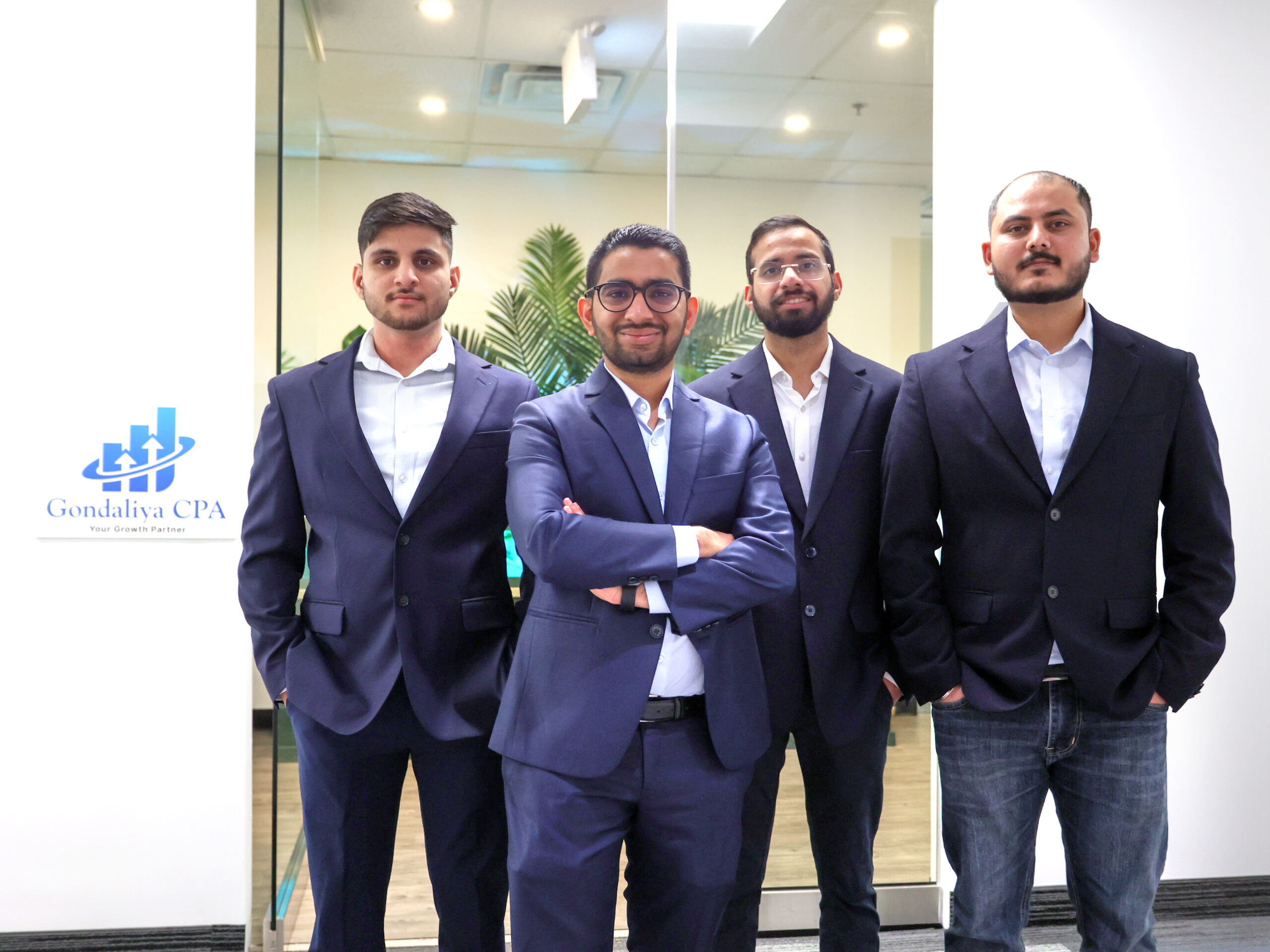
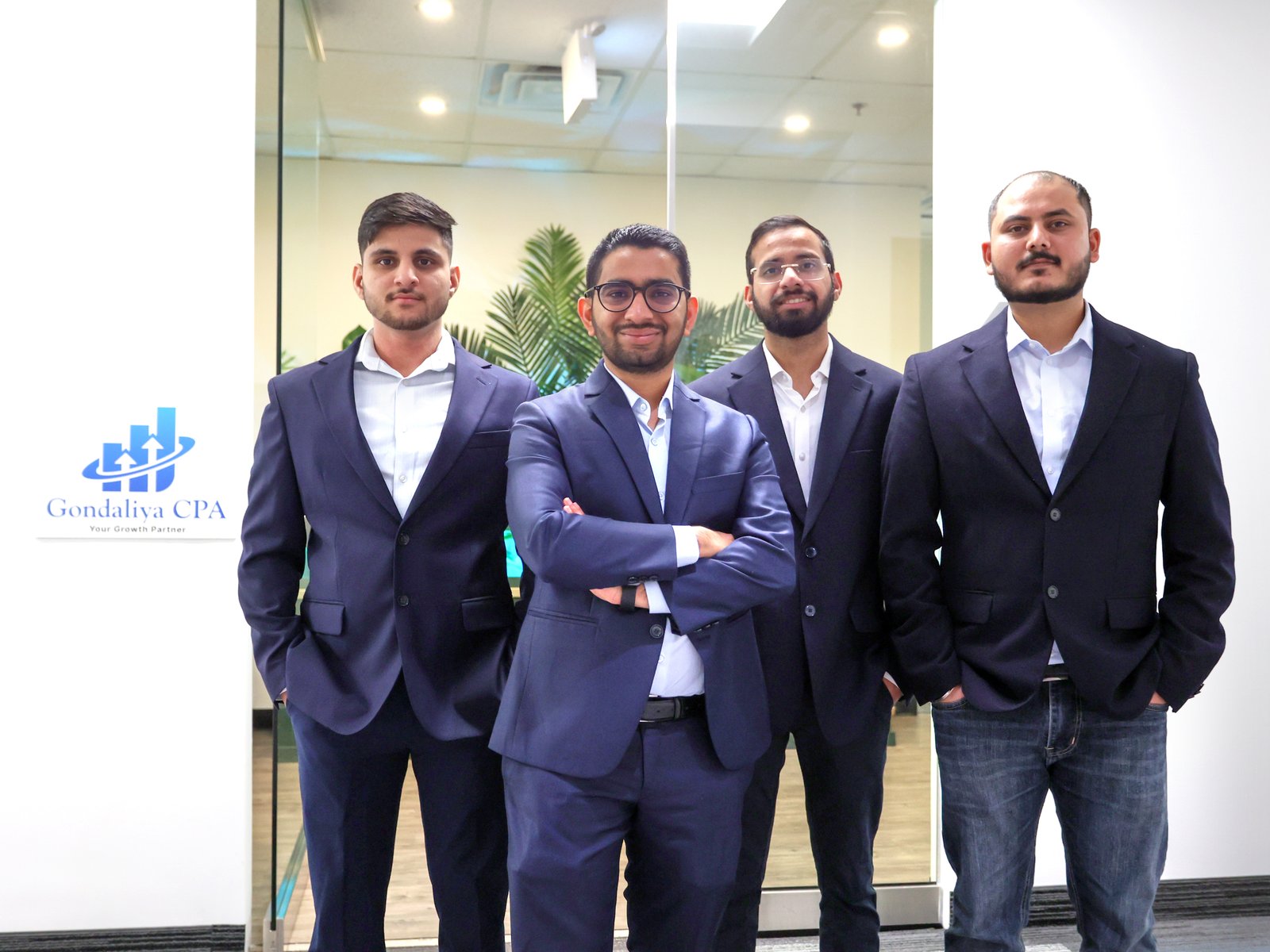
Meet Your Lead Used-Car Dealership Accountant
Meet your lead used-car dealership accountant. As your automotive and corporate tax adviser, you deal with the same two people every year.


What Our Clients Say
1450+ five-star reviews from used-car dealership and automotive business owners across Ontario and Canada.
Serving Used-Car Dealerships Across Ontario
Our CPA team provides specialized accounting and tax solutions for used-car dealerships throughout Ontario. We understand how vehicle inventory, floor-plan financing, trade-in HST and F&I income actually flow through a pre-owned dealership, what CRA looks at on a cash-intensive file, and how to keep your DMS reconciled and your units costed correctly.
Toronto (ON)
55 Queen St E Ste 1205, Toronto, ON M5C 1R6, Canada
+1 (647) 212-9559
9:00 AM – 8:30 PM (Mon – Sun)
Mississauga (ON)
2100 Camilla Rd #716, Mississauga, ON, Canada
+1 (647) 212-9559
9:00 AM – 8:30 PM (Mon – Sun)
Brampton (ON)
4 Starhill Crescent, Brampton, ON L6R 2P9, Canada
+1 (647) 212-9559
9:00 AM – 8:30 PM (Mon – Sun)
Scarborough (ON)
24 Clementine Square, Scarborough, ON M1G 2V7, Canada
+1 (647) 212-9559
9:00 AM – 8:30 PM (Mon – Sun)
Vaughan (ON)
19 Cabinet Crescent, Woodbridge, ON L4L 6H9, Canada
+1 (647) 212-9559
9:00 AM – 8:30 PM (Mon – Sun)
Oshawa (ON)
210 Durham St, Oshawa, ON L1J 5R3, Canada
+1 (647) 212-9559
9:00 AM – 8:30 PM (Mon – Sun)
Ottawa (ON)
2090 Neepawa Ave a314, Ottawa, ON K2A 3L6, Canada
+1 (647) 212-9559
9:00 AM – 8:30 PM (Mon – Sun)
Etobicoke (ON)
60 Stevenson Rd #1601, Etobicoke, ON M9V 2B4, Canada
+1 (647) 212-9559
9:00 AM – 8:30 PM (Mon – Sun)
Hamilton (ON)
70 Starling Dr, Hamilton, ON L9A 0C5, Canada
+1 (647) 212-9559
9:00 AM – 8:30 PM (Mon – Sun)
Guelph (ON)
1155 Gordon St, Guelph, ON N1L 1S8, Canada
+1 (647) 212-9559
9:00 AM – 8:30 PM (Mon – Sun)
Windsor (ON)
4387 Guppy Ct, Windsor, ON N9G 2N8, Canada
+1 (647) 212-9559
9:00 AM – 8:30 PM (Mon – Sun)
North York (ON)
150 Graydon Hall Dr #912, North York, ON M3A 3B2, Canada
+1 (647) 212-9559
9:00 AM – 8:30 PM (Mon – Sun)
Used-Car Dealership Accounting & Tax FAQs
Related Industries We Serve
Accountant for Auto Repair Shops
- Parts inventory and repair revenue
- HST on labour and parts, and ITCs
- Shop-equipment CCA and corporate tax filing
Accountant for Towing Companies
- Truck and equipment CCA and fuel costs
- HST, dispatch and storage revenue
- Payroll, bookkeeping and corporate tax
Accounting for Small Businesses
- Corporate tax planning for small businesses
- Business tax filing and financial statements
- Payroll and bookkeeping services
Accountant for Incorporated Businesses
- T2 corporate returns and GIFI
- Salary, dividend and SBD planning
- Compilation statements and incorporation
Used-Car Dealership Accounting & Tax Done Right.
T2 filing, vehicle inventory under section 10, capitalized reconditioning, floor-plan interest matched to units, HST with trade-in credits, F&I reserve, extended-warranty and commission income, DMS reconciliation, and shop, software and leasehold CCA under one roof. AFFORDABLE flat fees, no hourly billing. Licensed CPA Ontario. 1450+ five-star reviews. 30-Day Money-Back Guarantee.