



Tax Accountant for Angel Investors in Ontario and Across Canada
Most of your positions go to zero, and the tax treatment of the failures is worth more than the tax treatment of the wins. A loss on shares or debt of a small business corporation is a business investment loss under ITA paragraph 39(1)(c), and the allowable half comes off employment, business and interest income — not just capital gains. We claim it properly, file the ITA subsection 50(1) election in the right year, keep an adjusted cost base schedule per company per round, build the two-year runway your shares need for the $1.25M Lifetime Capital Gains Exemption, and move the non-taxable half of a gain out of your holding company on a Form T2054 election. Whether you invest personally, through a holdco, at seed stage or as a syndicate lead, we handle the portfolio, the losses and the exit — with AFFORDABLE flat fees.
AFFORDABLE Angel Investor Tax Accountant
An angel portfolio is built to fail. You know that going in: most of the companies you back will not make it, a few will return the money, and one or two are supposed to carry the entire book. The accounting problem is that almost every angel we meet has the wins handled and the losses handled badly. A failed position gets written onto Schedule 3 as an ordinary capital loss, where the allowable half can only shelter capital gains that may never arrive. But a loss on shares or debt of a small business corporation is a business investment loss under ITA paragraph 39(1)(c), and its allowable half is deductible against any income at all, including the salary or professional income that funded the cheque in the first place. The second failure is quieter. When a company simply stops operating, nobody sells anything, so no disposition occurs and the loss is never claimed at all unless the election under ITA subsection 50(1) is filed for the correct year. At Gondaliya CPA, we specialize in loss claims, cost base schedules and exit planning for angel investors, providing AFFORDABLE flat-fee support that keeps you CRA-compliant and stops you paying more tax than you owe.
As an angel investor accountant, we work with seed-stage angels, syndicate leads, angel group members and founders who have exited and now write cheques, across Ontario and the rest of Canada, with year-round support rather than a once-a-year scramble. We tell you what each position actually cost, which losses are claimable this year, and what has to be true two years before a term sheet arrives.
Let us handle the numbers so you can focus on the deals and the founders.
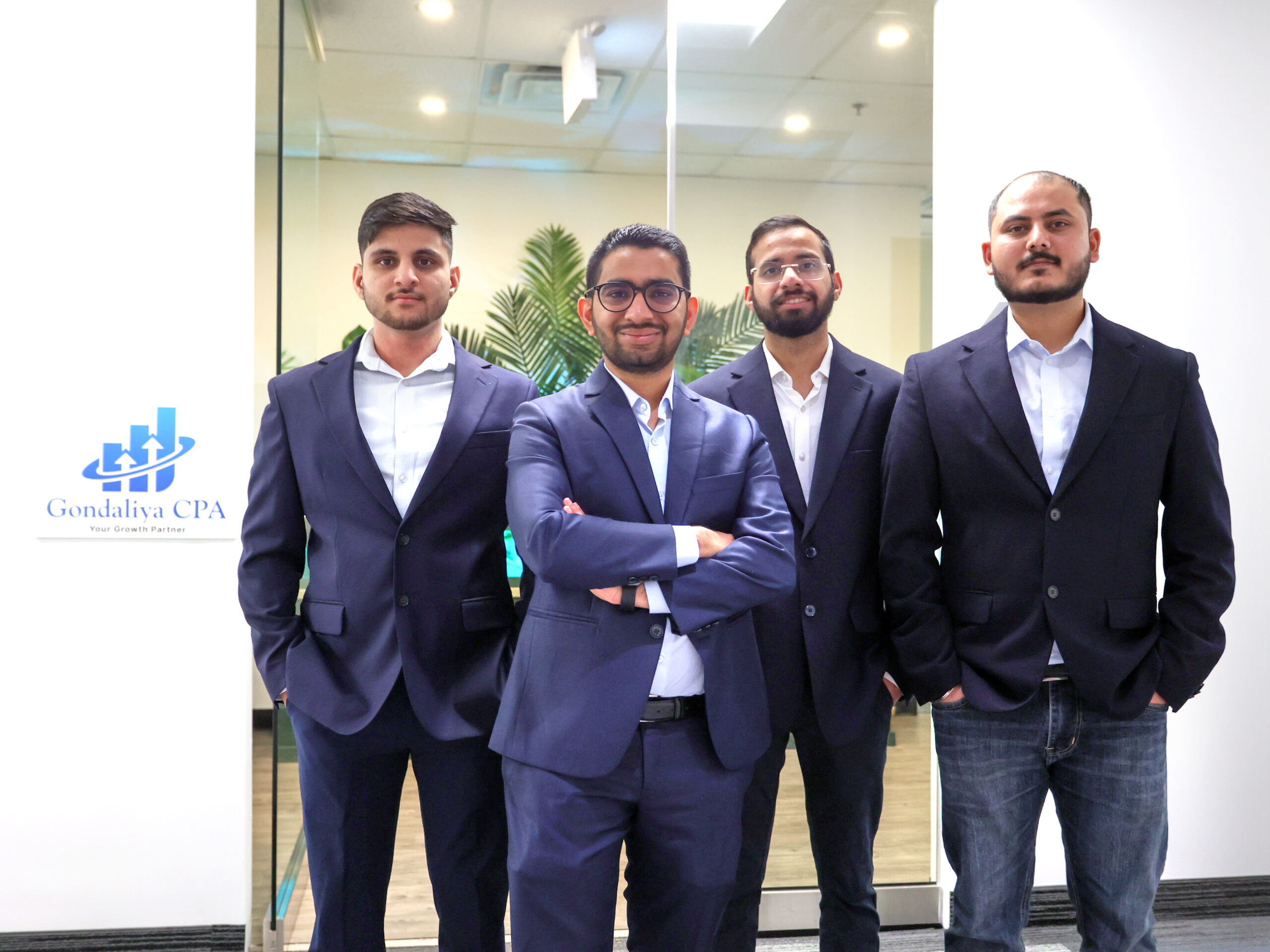
Our Official Partners









Accounting That Understands How Angel Investing Actually Works
Angel investing carries tax pressures an operating business never faces. Your portfolio is capital property rather than depreciable property, so there is no fleet and no CCA schedule to hide behind. Your biggest annual tax event is usually a write-off, not a gain. Your HST on legal and diligence fees is unrecoverable. And the structure you hold through decides how much of an exit you keep. At Gondaliya CPA, we understand that reality and provide practical, portfolio-focused solutions across Ontario.
Stay Compliant and Minimize Your Angel Investing Tax
For an angel investor, staying onside with CRA and paying the least legal tax are the same job. We keep every filing on schedule while claiming every loss, cost base adjustment and exemption the law allows, so nothing is missed and nothing invites a reassessment.
Accounting & Tax Experts for Angel Investors

- AFFORDABLE + Fully Registered CPA Firm
- Business and Corporate Tax Expert
- Small & Medium Business Expert
- Accounting, bookkeeping, and tax filing
- Certified CPA
- 1300+ 5-star Google reviews
- 30-Day Money-Back Guarantee
- 60-Day Fees Matching Policy
Why Choose Our Accounting Services for Angel Investors?
Tax Planning — Losses, Exemption & CDA
We know the provisions: the business investment loss under ITA paragraph 39(1)(c), the subsection 50(1) election, the $1.25M exemption under ITA 110.6, and the capital dividend account on Form T2054.
Consulting — Structure & Cost Base
We model personal versus holding company on your actual deal pace, keep an adjusted cost base schedule per round, and price what a convertible note or SAFE conversion does before the round closes.
CRA Representation — Loss & Character Audits
When CRA challenges a loss claim or questions whether your gains are business income, we produce the evidence and pursue relief on Form RC4288 where a prior error caused the penalties.
Bookkeeping — Portfolio & Exit
We build the position ledger your bank and your next round need, reconcile every T5, T3 and T5008 slip, and model the exit years ahead of the term sheet.
Google Reviews
Angel Investor Clients
Angel Investor Tax and Accounting Services in Ontario
Corporate Tax Filing (T2) for Angel Investors
Professional T2 preparation for your holding company with dispositions on Schedule 6, the passive income grind tracked, and CRA compliance on every line.
Bookkeeping & Accounting for Angel Investors
An adjusted cost base schedule per company and round, convertible notes tracked with their terms, and financial statements built from evidence.
Corporate Tax Cleanup for Angel Investors
Cost base rebuilt round by round, the capital dividend account recomputed, and capital losses reviewed against the business investment loss rules.
GST/HST Filing for Angel Investors
AFFORDABLE HST filing with exempt financial services separated from taxable board and advisory fees, and the credit allocation documented.
Tax Planning for Angel Investors
Business investment losses, the subsection 50(1) election, the $1.25M Lifetime Capital Gains Exemption runway, and the capital dividend account.
Corporate Catch-Up Filing for Angel Investors
File overdue T2 and T1135 years, rebuild the missing dispositions and cost base, and get back into CRA compliance with accurate catch-up support.
CRA Audit Resolution for Angel Investors
Expert support on loss claims, income-versus-capital character queries and capital dividend elections, handled with confidence from the first letter.
CPA Financial Statements (Notice to Reader) for Angel Investors
CPA-compiled statements a bank accepts for an investment line of credit, carrying every position at adjusted cost base.
Incorporation Services for Angel Investors
Full incorporation of your holding company including NUANS, articles, share structure, and the section 85 rollover of existing positions.
Catch-Up Bookkeeping Services for Angel Investors
Years of subscription agreements, note conversions and closing documents reconstructed, so your position ledger is finally accurate.
US Corporation & LLC Tax Filing for Angel Investors
Cross-border filing on US startup positions and non-resident shareholders, covering Form T1135, withholding and foreign tax credits.
Voluntary Disclosure Program for Angel Investors
Come forward on unreported exits, unfiled T1135 years or a capital dividend paid without support, cancelling penalties through a Voluntary Disclosures Program application.
Accounting & Tax Services Tailored for Angel Investors
Real, practitioner-level CPA expertise for seed-stage angels, syndicate leads, angel group members and exited founders across Ontario — built for a portfolio where the losses are worth more than most people realize.
- We prepare your holding company’s T2 with GIFI on Schedule 100 and Schedule 125, keeping portfolio dividends, convertible note interest, advisory fees and realized gains on separate lines so CRA reads the character of each stream correctly.
- A corporation can claim a business investment loss too, so where your holdco’s shares or notes in a failed small business corporation go bad we claim it under ITA paragraph 39(1)(c) against the company’s other income.
- We report dispositions on Schedule 6 with the adjusted cost base of every round evidenced from the subscription agreements, because a gain computed from bank proceeds alone overstates income on any position you funded across three financings.
- We track adjusted aggregate investment income against the $50,000 threshold in ITA subsection 125(5.1), because the portfolio inside a company that also runs an operating business will grind the $500,000 business limit away and is eliminated entirely at $150,000.
- We compute the dividend refund under ITA section 129 when the holdco pays a taxable dividend, recovering $38.33 of refundable tax for every $100 paid, and we report Part IV tax on portfolio dividends received.
- We keep an adjusted cost base schedule per company per round, reconciled to your Carta or Pulley cap table and the signed subscription agreements, so the gain on an exit is computed from evidence rather than reconstructed years later.
- We record convertible notes and SAFEs at cost with their discount, cap and maturity terms carried alongside, so the question of whether conversion is a disposition is answered before the round closes rather than after.
- We post legal fees, due diligence and abandoned-deal costs against the position they belong to, reviewing each against the capital and current line rather than expensing everything, because the treatment changes what your cost base actually is.
- We produce a quarterly position statement in Seraf or Visible.vc showing cost, follow-on reserve and status per company, and we flag every issuer that has stopped carrying on business so the loss year is never missed.
- We capture share certificates, note agreements, cap table exports and closing statements through Dext into QuickBooks Online or Xero, keeping the six years of records ITA section 230 requires and the evidence a loss claim will need.
- We rebuild the adjusted cost base of every position from the subscription agreements and cap table history, because an inherited file that carries one blended number per company cannot support a gain calculation or a loss claim.
- We recompute the capital dividend account under ITA subsection 89(1) from the first realized gain forward, because a balance nobody tracked is the reason an excess election attracts Part III tax on the amount paid out.
- We review every capital loss claimed on a failed startup to see whether it should have been a business investment loss under ITA paragraph 39(1)(c), then adjust the open years, which is usually the largest single recovery on a cleanup.
- We separate the money you moved between yourself and the holding company, because shareholder advances used to fund deals and never documented become an income inclusion under ITA subsection 15(2) if they sit there past the second year end.
- We rebuild the refundable dividend tax on hand pools across the restated years and split them into their eligible and non-eligible parts, so the dividend refund you were entitled to is actually recovered instead of quietly lost.
- Selling shares and earning interest are financial services under ETA subsection 123(1) and exempt under Part VII of Schedule V, which means you cannot claim input tax credits and the 13% HST on legal and diligence fees is a real cost.
- A board seat is a different supply from an investment, so where you charge a portfolio company an advisory or board fee we register you for HST once taxable revenue passes $30,000 over four consecutive calendar quarters.
- We review what each fee actually buys before classifying it, because whether a management, referral or performance fee is an exempt financial service or a taxable service decides both the tax you charge and the credits you keep.
- Where your company makes both exempt and taxable supplies we build a defensible input tax credit allocation and file it on GST34, so you recover credits on the advisory side without claiming any against the exempt investment side.
- Where a management fee moves between your holding company and an operating company you control, we document the supply and apply HST correctly, because an undocumented intercompany charge is the first thing a GST/HST auditor asks you to justify.
- Most of your positions will go to zero, and a loss on shares or debt of a small business corporation is a business investment loss under ITA paragraph 39(1)(c) whose allowable half comes off employment, business and interest income.
- Where a company has become insolvent or stopped carrying on business and there is nothing left to sell, we file the election under ITA subsection 50(1) so the shares are deemed disposed and the loss year is fixed.
- We plan the exit at least two years ahead so your shares meet the 24-month holding and asset tests for the $1.25M Lifetime Capital Gains Exemption under ITA 110.6, because purification cannot be done after a term sheet lands.
- On a realized gain inside the holdco, the non-taxable half lands in the capital dividend account under ITA subsection 89(1) and we file Form T2054 before the dividend becomes payable, so that money reaches you tax-free.
- We model investing personally against investing through a holding company on your actual deal pace, weighing the ABIL against employment income personally, the deferral inside the company, and what the portfolio does to a $500,000 small business limit.
- We file every outstanding T2 for a holding company that was left dormant on paper while it held real positions, starting with the oldest year, because late filing costs 5% of the balance owing plus 1% per month.
- We rebuild the unfiled years’ dispositions from your T5008 and T5 slips, broker statements and closing documents, so the catch-up return reports proceeds CRA already has on file rather than inviting a matching query.
- We look for business investment losses that were never claimed in the catch-up years and carry the allowable amount back on Form T1A where an earlier year had income to shelter, recovering tax already paid.
- We file the Form T1135 years you missed where foreign holdings, including US startup shares, cost more than $100,000, because that penalty regime applies whether or not any tax was owing on the holding.
- We file a Voluntary Disclosures Program application on Form RC199 before CRA contacts you, because a disclosure accepted under the general program cancels the penalties in full and gives roughly 50% interest relief on the older years.
- When CRA challenges a business investment loss, we produce the articles, financial statements and share register showing the issuer met the small business corporation test at the relevant time, which is the evidence that decides the claim.
- Where CRA questions whether your gains are business income under ITA section 9 rather than capital gains, we document intention, holding period, deal frequency and financing, because that characterization is decided on facts and never simply asserted.
- When a capital dividend election is reviewed, we reconstruct the capital dividend account balance gain by gain and show the T2054 was filed before the dividend became payable, which is what keeps the election valid and Part III tax off the excess.
- We manage the whole audit file and answer the disposition, cost base and foreign property queries inside the deadlines, so a single-year review does not expand across the prior years CRA is entitled to reopen.
- We file the Notice of Objection within 90 days of a reassessment and pursue taxpayer relief on Form RC4288, cancelling penalties and interest that a prior accountant’s missed election caused, and protecting your Tax Court rights.
- We prepare CSRS 4200 compilation engagement financial statements for your holding company across two fiscal years, which is what a bank asks for before it underwrites an investment line of credit secured against the portfolio.
- Your compiled statement of financial position carries each position at adjusted cost base with a supporting schedule per company and round, so the lender sees what was actually deployed rather than a single investments line.
- We present convertible notes and shareholder loans receivable separately from equity positions, because debt into a portfolio company carries different recovery rights on a wind-up and a lender prices those two things very differently.
- We tie the compiled statements to the T2 and its GIFI schedules filed with CRA, so the figures the bank reads and the figures CRA holds agree and no reviewer has to reconcile them for you.
- We deliver the compiled statements within 30 days of receiving your records, because a follow-on round rarely waits, and an investor who cannot produce statements on request loses the allocation to somebody who can.
- We incorporate your holding company under the Ontario Business Corporations Act with a share structure built for the exit, so the vehicle that holds your positions is in place before the next subscription agreement is signed.
- Where you already hold shares personally, we complete the section 85 rollover on Form T2057 at elected amounts so the transfer into the holdco does not trigger the gain a straight sale would.
- We review ITA section 84.1 on any transfer of shares to a corporation you do not deal with at arm’s length, because that provision can convert what you expected to be a capital gain into a deemed dividend.
- We open the corporation’s CRA business number and register for HST only where it genuinely makes taxable supplies, because registering an exempt investment holdco creates filing obligations and recovers nothing against the credits it cannot claim.
- We set the chart of accounts with the cost base schedule, the capital dividend account and the refundable pools built in from day one, and review family share classes against the TOSI rules in ITA section 120.4.
- We rebuild years of neglected records from bank statements, signed subscription agreements, note agreements and closing documents, so an investor with thirty positions and no ledger finally has one schedule that shows what is actually owned.
- We reconstruct the adjusted cost base round by round in Sharesight or against your Carta records, including bridge notes that converted, because a cost base built from memory is the fastest way to overpay tax on an exit.
- We identify which issuers dissolved, became insolvent or quietly stopped operating and pin the year each event happened, because a subsection 50(1) election has to be made for the right taxation year to work.
- We separate the positions you hold personally from the ones held by the holding company, because a mixed file makes both the T1 and the T2 wrong and puts the loss claim on the wrong return.
- We reconcile every T5, T3 and T5008 slip CRA already holds against the rebuilt ledger, so the caught-up returns match the agency’s own matching data and no unreported disposition surfaces two years later.
- Where you back US startups, we file Form T1135 once the total cost of foreign property passes $100,000, because the penalty regime there applies to the failure to report rather than to any tax owing.
- US qualified small business stock relief is a United States question, so we coordinate with your US counsel on it and report the Canadian side correctly rather than assuming a US exemption carries across the border.
- Where a non-resident holds shares in your holding company, we handle the Part XIII withholding on dividends paid out of Canada and the NR4 reporting behind it, so nothing is missed at 25% or the treaty rate.
- Where a US citizen is a shareholder or the investor is American, we coordinate the Canadian and US filings, because a Canadian holding company full of startup positions reaches into their US reporting in ways families discover late.
- We reconcile the two countries’ returns so foreign tax credits actually land, ensuring tax paid on the same gain in one country reduces tax in the other instead of being written off as a cost of the exit.
- We bring you forward on exits that were never reported, because the T5008 slips sitting in CRA’s system make an unreported disposition one of the easiest things the agency finds on a review.
- We disclose unfiled Form T1135 years on US and other foreign startup holdings, which is the most common failure in this portfolio and one where the penalty, not the tax, is the whole exposure.
- We correct capital dividends paid on a balance nobody ever computed, because a Form T2054 election filed without a supporting capital dividend account is the error that turns a tax-free distribution into an expensive one.
- We file the submission on Form RC199 with a full reconstruction of the portfolio, the cost base and the dispositions, so an investor who outgrew a shoebox is not left facing an arbitrary assessment from CRA.
- We confirm the disclosure is genuinely voluntary before CRA contacts you, the single condition that makes it valid, and secure the roughly 50% interest relief that turns a prosecution risk into a managed correction.
Angel Investor Loss & Exit Check
Six quick questions on your loss claims, your write-off elections, your cost base records, your exit runway, your capital dividend account and whether it is time to hold through a company. No fee shown.
1. Have your failed positions been reviewed as business investment losses rather than ordinary capital losses?
2. Has a subsection 50(1) election been filed for every company that stopped operating?
3. Do you have an adjusted cost base schedule per company and per round?
4. Have your shares been tested against the 24-month runway for the $1.25M exemption?
5. Is your capital dividend account computed and current after every realized gain?
6. Do you hold your angel portfolio through a holding company?
Free CPA Consultation for Angel Investors
Case Studies: Angel Investor Accounting & Tax
Toronto Angel Investor — The Loss in the Wrong Column
The problem: A Toronto angel with a day job in technology had written nine cheques over six years. Four of the companies were gone. His prior accountant had reported every one of them as an ordinary capital loss on Schedule 3, where the allowable half could only be applied against capital gains, and he had none. The losses sat unused while he paid tax at the top marginal rate on employment income, and two of the four dead companies had never been reported at all because nobody had ever sold anything.
What we did: We pulled the articles, financial statements and share registers for each issuer, established that they met the small business corporation test at the relevant time, refiled the open years claiming business investment losses under ITA paragraph 39(1)(c), and filed the subsection 50(1) election for the two positions where no sale had occurred.
The result:
- $186,000 of losses moved from capital to business investment losses
- Allowable half applied against employment income instead of waiting for gains
- Two write-offs claimed that had never been reported at all
Markham Angel Holdco — The Capital Dividend Nobody Elected
The problem: A Markham investor held her portfolio through a holding company and had a clean exit when a portfolio company was acquired. The gain went onto the T2 correctly, the corporate tax was paid, and then she took the cash out as an ordinary taxable dividend and paid personal tax on the whole amount. Nobody had ever computed a capital dividend account, so the non-taxable half of that gain, which could have reached her tax-free, was taxed a second time on the way out of the company.
What we did: We reconstructed the capital dividend account under ITA subsection 89(1) from the first realized gain forward, confirmed the balance available, and filed the Form T2054 election before the next dividend became payable so the remaining balance was paid out tax-free rather than taxed again.
The result:
- $97,500 of capital dividend account balance identified and documented
- Form T2054 election filed before the dividend became payable
- Capital dividend account now recomputed after every realized gain
Hamilton Syndicate Lead — Thirty Positions, No Ledger
The problem: A Hamilton syndicate lead had backed thirty-one companies across eight years, often through a seed round, a bridge note and a follow-on in the same company, and had never kept a position ledger. Cost base existed as a folder of PDFs and an inbox. Two convertible notes had converted at a discount and nobody could say at what price. He could not answer his bank’s questions about the portfolio, and he could not tell which of his dead positions still had a claimable loss year available.
What we did: We reconstructed the adjusted cost base round by round from subscription agreements, note agreements and the Carta records, built a single position schedule in Sharesight with follow-on reserves and status per company, and pinned the year each dissolved issuer stopped operating.
The result:
- Thirty-one positions rebuilt to a documented cost base per round
- 52 hours a year of reconstruction work removed from the owner
- Every dead position dated for its correct loss year
Our clear, efficient process ensures every step is transparent, building trust and long-term client relationships.
Kickoff (Document Request)
Collect prior T1 and T2 returns, every subscription agreement, note and SAFE, share certificates, cap table exports, closing and secondary sale documents, T5, T3 and T5008 slips, and holding company records.
First 30 Days (Cleanup & Setup)
Set up QuickBooks Online or Xero for the holdco against Carta, Pulley or Seraf, rebuild the adjusted cost base per company and round, and date every issuer that has stopped operating.
Monthly Close
New positions recorded at cost with their terms, note conversions priced, deal and diligence costs allocated, advisory fee HST handled on GST34, and the position schedule reconciled.
Quarterly Planning Review
Loss claims available this year, subsection 50(1) elections due, the passive income position under ITA subsection 125(5.1), capital dividend account balance, and the exemption runway on every position you expect to exit.
Year-End Close & T2 Filing
Trial balance, financial statements with every position at adjusted cost base, dispositions reported against the slips CRA holds, T1135 where required, T2 with GIFI, and CRA preparation.
Get Your Angel Investing Taxes Done Right Today
Affordable Pricing for Angel Investors
We believe in clear, upfront pricing so you know exactly what to expect. All fees include HST.
- Tax Preparation (Corporation) — From $400
- Tax Return Filing (Corporation) — From $400
- Tax Compliance Audit — FREE CRA audit support for our clients
- Tax Strategy — FREE for our clients
- Accounting Base Plan — From $100 per month
- Bookkeeping Management — Free for our Accounting clients
- Financial Reporting — Free for our Accounting clients
- Business Formation — Flat $35
- Incorporation Process — Flat $35
- Entity Setup Assistance — Flat $35
- Full-Service Payroll — From $125 per month
Payment is by Interac e-Transfer to info@gondaliyacpa.ca only. Security question: Not Applicable, as auto-deposit is enabled.
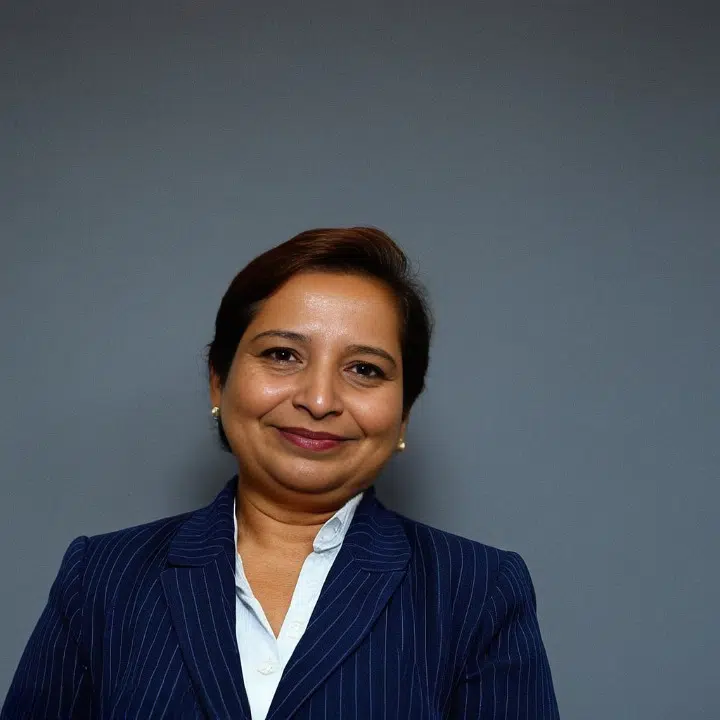
Meet Your Lead Angel Investor Accountant
Meet your lead angel investor accountant. As your portfolio and corporate tax adviser, you deal with the same two people every year.

What Our Clients Say
1300+ five-star reviews from investors, business owners and professionals across Ontario and Canada.
Serving Angel Investors Across Ontario
Our CPA team provides specialized accounting and tax solutions for angel investors and investment holding companies throughout Ontario. We understand why a failed position belongs under ITA paragraph 39(1)(c) rather than on Schedule 3, why a company that quietly stopped operating still needs an election, what has to be true two years before a term sheet, and what CRA looks at first when it opens an investor file.
Toronto (ON)
55 Queen St E Ste 1205, Toronto, ON M5C 1R6, Canada
+1 (647) 212-9559
9:00 AM – 8:30 PM (Mon – Sun)
Mississauga (ON)
2100 Camilla Rd #716, Mississauga, ON L5A 2J8
+1 (647) 212-9559
9:00 AM – 8:30 PM (Mon – Sun)
Brampton (ON)
4 Starhill Crescent, Brampton, ON L6R 2P9, Canada
+1 (647) 212-9559
9:00 AM – 8:30 PM (Mon – Sun)
Scarborough (ON)
24 Clementine Square, Scarborough, ON M1G 2V7, Canada
+1 (647) 212-9559
9:00 AM – 8:30 PM (Mon – Sun)
Vaughan (ON)
19 Cabinet Crescent, Woodbridge, ON L4L 6H9, Canada
+1 (647) 212-9559
9:00 AM – 8:30 PM (Mon – Sun)
Oshawa (ON)
210 Durham St, Oshawa, ON L1J 5R3, Canada
+1 (647) 212-9559
9:00 AM – 8:30 PM (Mon – Sun)
Ottawa (ON)
2090 Neepawa Ave a314, Ottawa, ON K2A 3L6, Canada
+1 (647) 212-9559
9:00 AM – 8:30 PM (Mon – Sun)
Etobicoke (ON)
60 Stevenson Rd #1601, Etobicoke, ON M9V 2B4, Canada
+1 (647) 212-9559
9:00 AM – 8:30 PM (Mon – Sun)
Hamilton (ON)
70 Starling Dr, Hamilton, ON L9A 0C5, Canada
+1 (647) 212-9559
9:00 AM – 8:30 PM (Mon – Sun)
Guelph (ON)
1155 Gordon St, Guelph, ON N1L 1S8, Canada
+1 (647) 212-9559
9:00 AM – 8:30 PM (Mon – Sun)
Windsor (ON)
4387 Guppy Ct, Windsor, ON N9G 2N8, Canada
+1 (647) 212-9559
9:00 AM – 8:30 PM (Mon – Sun)
North York (ON)
150 Graydon Hall Dr #912, North York, ON M3A 3B2, Canada
+1 (647) 212-9559
9:00 AM – 8:30 PM (Mon – Sun)
Angel Investor Accounting & Tax FAQs
Related Industries We Serve
Accountant for Investment Companies
- Passive income and the small business limit
- Capital dividend account and refundable pools
- Corporate tax filing and statements
Accountant for Scale-Up Companies
- Cap table and share structure support
- Bookkeeping and payroll through a raise
- Corporate tax filing and advisory
Accountant for Private Lenders
- Interest income and loan loss treatment
- Bookkeeping on a loan and note portfolio
- Corporate tax planning and filing
Accountant for Equipment Finance Companies
- Capital deployment and lease structuring
- Bookkeeping and financial statements
- Corporate tax filing and advisory
Angel Investor Accounting & Tax Done Right.
Failed positions claimed as business investment losses under ITA paragraph 39(1)(c) so the allowable half comes off employment income instead of waiting for capital gains, the ITA subsection 50(1) election filed for the right year on every company that stopped operating, an adjusted cost base schedule per company and per round, the $1.25M Lifetime Capital Gains Exemption runway planned two years ahead, the capital dividend account computed and paid out on Form T2054, and the passive income position watched under ITA subsection 125(5.1). AFFORDABLE flat fees, no hourly billing. Licensed CPA Ontario. 1300+ five-star reviews. 30-Day Money-Back Guarantee.