



Corporate Tax Planning for Restaurants
Year-end strategies, salary-dividend optimization, SBD threshold management, equipment timing, renovation deductions, multi-location structuring, holding companies and succession planning built specifically for Canadian restaurant corporations. From $400.
Google Reviews
Restaurant Clients
A Restaurant That Does Not Tax Plan Before Year-End Overpays by $8,000 to $25,000 Every Single Year
Restaurant owners focus on food cost, labour and rent. Tax is an afterthought that arrives 6 months after year-end when the CPA calls with the bill. By then every planning opportunity is gone. The bonus that could have kept income under the $500,000 SBD threshold was never declared. The kitchen equipment that could have generated $15,000 in CCA was purchased in January instead of December. The salary-dividend split was never modelled. The renovation that qualifies for leasehold CCA was not documented properly. Every one of these missed opportunities costs real money and the window closes the moment your fiscal year ends.
We provide corporate tax planning for restaurants across Ontario and Canada. Year-end strategy sessions 60 days before fiscal year-end. Salary-dividend optimization. SBD threshold management. Equipment purchase timing. Renovation CCA. Multi-location structuring. Holding company evaluation. From $400. AFFORDABLE flat fees.
Book Free Consultation
Tax Planning Services for Restaurant Corporations
Year-End Tax Strategy
Pre-year-end review 60 days out. Bonus declaration, equipment timing, income deferral.
Salary-Dividend Optimization
RRSP room, CPP savings, seasonal cash flow modelling. Updated annually.
SBD Threshold Management
Keep active income under $500,000. 12.2% vs 26.5%. $14,300 saved per $100K.
Equipment and Renovation CCA
Kitchen equipment, leasehold improvements, POS, signage. Purchase timing for maximum Year 1 deduction.
Multi-Location Structuring
Same corp vs separate corps. Liability isolation. SBD allocation. Franchise considerations.
Succession and Exit Planning
LCGE on sale. Holding company. Goodwill valuation. Family transition.
How We Plan Corporate Tax for Restaurant Owners
A proactive 6-step planning process. Not reactive. Not at year-end. AFFORDABLE flat fees.
60-Day Pre-Year-End Review
Tax planning that happens after year-end is not planning. It is damage control.
- Year-to-date income estimated from monthly bookkeeping 60 days before fiscal year-end.
- Projected corporate taxable income calculated after salary, expenses and CCA.
- SBD threshold check: will income exceed $500,000? If yes, bonus or salary adjustment modelled.
- Equipment purchases identified. Buy before year-end for CCA in the current year.
- Renovation and leasehold improvement CCA documented before the window closes.
Salary-Dividend Optimization for Restaurant Owners
Restaurant cash flow is seasonal. Your compensation strategy must account for that.
- Base salary set to create RRSP room (approximately $180,500 for maximum $32,490 room).
- Dividend top-up planned for months with strong cash flow (summer, holidays).
- CPP savings calculated: $4,056/year saved by shifting from salary to dividends where possible.
- Year-end bonus modelled to reduce corporate income to SBD threshold if needed.
- Spousal salary for legitimate duties (bookkeeping, management, hosting) documented and set at reasonable rate.
Equipment Purchase Timing
When you buy equipment matters as much as what you buy.
- Kitchen equipment purchased before year-end: CCA claimed in the current fiscal year.
- Class 8 (20%): ovens, fryers, refrigerators, dishwashers, prep tables, furniture.
- Class 50 (55%): POS systems, computers, kitchen display systems, security cameras.
- Leasehold improvements (Class 13): kitchen buildout, HVAC, plumbing, patio construction.
- Accelerated Investment Incentive: up to 1.5x CCA in Year 1. $60,000 in equipment = $18,000+ CCA deduction.
Multi-Location and Franchise Structuring
Opening a second location changes everything about your tax structure.
- Same corporation: simpler, one T2 filing, but liabilities from one location affect the other.
- Separate corporations: liability isolation, but SBD shared ($500,000 total across associated corps).
- Holding company above operating corporations: protects retained earnings and real estate.
- Franchise-specific: royalty payments, advertising fund contributions and franchise fee amortization planned.
- Inter-corporate management fees structured to optimize income allocation between entities.
Loss Utilization and COVID Cleanup
COVID-era losses and subsidies still affect your tax position in 2026.
- Non-capital losses from 2020-2022 carried forward to offset current profitable years.
- CEWS and CERS reported as taxable income in the year received. T2s filed correctly.
- CEBA loan forgiveness: $20,000 forgivable portion is taxable income in the forgiveness year.
- Loss carryback to prior profitable years evaluated for immediate refund.
- Transition from loss years to profitable years: instalment planning to avoid interest.
Succession and Exit Planning
The time to plan for selling your restaurant is 3 to 5 years before you sell.
- Lifetime Capital Gains Exemption: $971,190 (2024) tax-free on qualifying share sale.
- LCGE multiplied if spouse and adult children hold shares (requires advance planning).
- Goodwill valuation: restaurant goodwill (recipes, brand, customer base) is a capital property.
- Asset sale vs share sale: buyer prefers assets (CCA), seller prefers shares (LCGE). We negotiate both.
- Holding company set up to receive sale proceeds tax-efficiently. Investment portfolio managed inside corp.
Free Restaurant Tax Planning Consultation
Free Restaurant Tax Planning Consultation
Case Studies: Restaurant Tax Planning
Italian Restaurant, Toronto ($580K Revenue)
Full-service restaurant approaching $500K SBD threshold. No year-end planning in prior years. We declared a $45K bonus to the owner before year-end, keeping all income at 12.2%. Restructured compensation: $130K salary + $80K dividend. Timed a $72,000 kitchen renovation before year-end for Class 13 CCA. Annual savings: $16,400. Get Started →
2-Location Shawarma Chain, Mississauga ($1.1M Combined)
Two locations under one corporation. Income at $520K, $20K over SBD. We restructured: holding company above, two separate operating corporations below. SBD allocated $350K and $150K respectively. Holding company receives management fees and retained earnings. Tax saved in Year 1: $12,600. Liability isolated between locations.
Sushi Restaurant, Markham ($320K Revenue)
Owner paying all income as salary. No RRSP contributions in 4 years. No CCA on $38,000 in equipment. We restructured: $100K salary (creating $18,000 RRSP room) + $50K dividend. Claimed CCA on equipment. RRSP contribution at 43% marginal rate saved $7,740 in personal tax. CPP savings: $2,800/year. Tax Planning →
Pizza Franchise, Brampton (Succession Planning)
Franchise owner planning to sell in 3 years. No holding company. No LCGE planning. We set up a holding company, transferred shares using Section 85 rollover, issued shares to spouse and two adult children. At sale: 4 individuals each claiming $971,190 LCGE. Potential tax-free gain on sale: $3.88 million. Planning cost: $4,200. Potential tax saved: over $800,000.
Restaurant Tax Planning Opportunities by Revenue Level
| Revenue | Key Planning Strategy | Typical Annual Savings |
|---|---|---|
| Under $150K | Salary-dividend split + CCA on equipment | $3,000 to $6,000 |
| $150K to $300K | RRSP maximization + dividend top-up + CCA | $6,000 to $12,000 |
| $300K to $500K | SBD threshold + bonus declaration + equipment timing | $10,000 to $18,000 |
| $500K to $1M | Multi-corp structuring + holding company + LCGE setup | $15,000 to $30,000 |
| $1M+ | Full restructuring + IPP + succession + investment strategy | $25,000+ |
The Savings Compound: $12,000 saved annually and reinvested at 7% for 10 years becomes $175,000. Tax planning is not a cost. It is the highest-return investment your restaurant makes each year.
The $500,000 SBD Threshold: Restaurant Owner's Guide
| Scenario | Corporate Income | Tax Rate | Tax Paid |
|---|---|---|---|
| All under SBD (with planning) | $480,000 | 12.2% | $58,560 |
| $20K over SBD (without planning) | $520,000 | 12.2% on $500K + 26.5% on $20K | $66,300 |
| $100K over SBD (without planning) | $600,000 | 12.2% on $500K + 26.5% on $100K | $87,500 |
$45K Bonus Saves $7,740: If your restaurant income is $545,000, a $45,000 bonus to the owner before year-end brings corporate income to $500,000. The $45,000 above the SBD line would have been taxed at 26.5% ($11,925). Instead it is taxed as personal salary at a lower effective rate. Net savings depend on your personal bracket but typically $5,000 to $8,000.
What Our Restaurant Tax Planning Includes
| Service | What We Do |
|---|---|
| Pre-year-end review | 60-day review. Income projection, SBD check, bonus modelling. |
| Salary-dividend modelling | 3 scenarios: all salary, all dividend, optimal mix. Updated annually. |
| SBD threshold management | Bonus or salary adjustment to keep active income under $500K. |
| Equipment purchase timing | Buy before year-end for CCA. Class 8, 50, 13 rates applied. |
| Renovation CCA planning | Leasehold improvements documented for Class 13. Patio, kitchen, HVAC. |
| Multi-location structuring | Same corp vs separate. Holding company evaluation. SBD allocation. |
| Loss utilization | COVID losses carried forward. Carryback for immediate refund. |
| Holding company evaluation | When it makes sense. Setup cost vs long-term savings. |
| Succession and LCGE planning | Share structure, family shareholders, goodwill valuation. |
| Ongoing quarterly check-ins | Income tracked quarterly. Adjustments made in real time, not after year-end. |
Does Your Restaurant Need Better Tax Planning?
- You have never had a pre-year-end tax planning meeting with your CPA
- Your salary-dividend split has not been modelled for the current year
- Corporate income is approaching or exceeding $500,000 with no strategy
- You purchased equipment in January when buying in December would have saved tax
- Renovations were done but CCA was not claimed or was claimed incorrectly
- You are considering a second location but have not evaluated the tax structure
- Your CPA does not discuss holding company benefits at your income level
- You have COVID-era losses sitting unused on prior T2 returns
- You plan to sell your restaurant within the next 5 years and have not set up LCGE
- You do not know whether your franchise fees are being amortized correctly
- Spousal salary or dividend has not been evaluated for income splitting
- You want proactive tax planning, not reactive tax filing
Restaurant Tax Planning from $400. Fixed Fee.
Year-end strategy, compensation modelling, SBD management. 30-Day Money-Back.
Why Restaurant Owners Choose Gondaliya CPA for Tax Planning
Restaurant Strategists
Seasonal cash flow, multi-location, franchise, COGS-driven planning.
Proactive, Not Reactive
60-day pre-year-end review. Quarterly check-ins. Adjustments in real time.
Fixed-Fee Pricing
No hourly. 30-Day Money-Back. 60-Day Fees-Matching.
1300+ Reviews
Canada's most AFFORDABLE CPA. Flat fees for every service.







Restaurant Tax Planning Pricing
| Service | Fee | Includes |
|---|---|---|
| Tax planning (under $100K revenue) | From $400 | Year-end strategy, salary-dividend, CCA optimization |
| Tax planning ($100K-$500K) | From $2,450 | Full planning, SBD management, equipment timing, quarterly check-ins |
| Tax planning ($500K-$1.5M) | From $4,900 | Multi-location, holding company, succession, LCGE |
| Holding company setup | From $1,200 | Incorporation, share structure, Section 85 rollover coordination |
| Monthly bookkeeping | From $150/month | Foundation for all planning. HST filing and T2 FREE. |
| Standalone year-end review | From $500 | One-time pre-year-end strategy session with action plan. |
Know Your Exact Fee Before We Start
AFFORDABLE flat fee. 30-Day Money-Back. 60-Day Fees-Matching.
Frequently Asked Questions: Restaurant Tax Planning
Meet Your Restaurant Tax Planning Specialists

Sharad Gondaliya, CPA
Founder & Managing Director
Gondaliya CPA Professional Corporation
Sharad leads restaurant tax planning engagements, multi-location structuring, holding company setups and succession planning for restaurant owners.
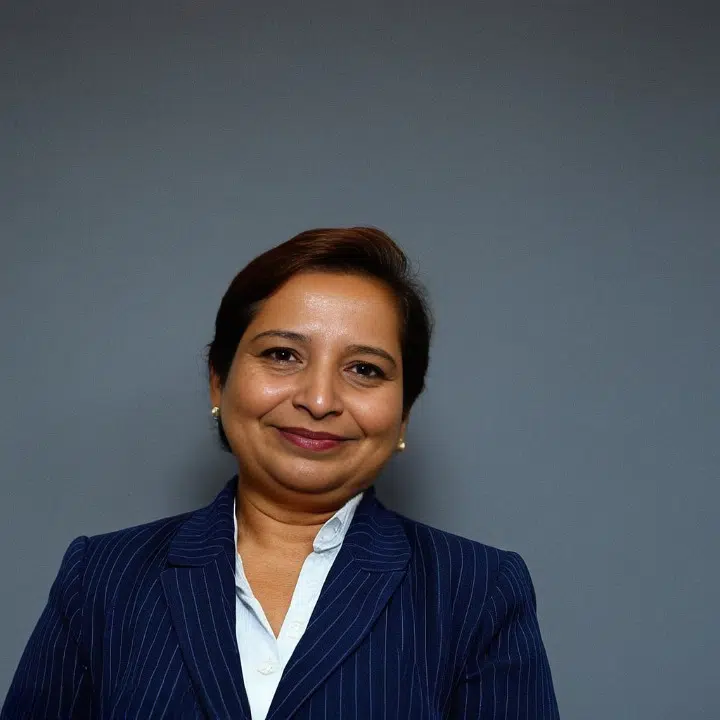
Vandana Goel, CPA
Senior Accountant
Gondaliya CPA Professional Corporation
Vandana handles restaurant bookkeeping, quarterly income tracking, compensation modelling and CCA schedule preparation for tax planning.
What Our Clients Say
1300+ five-star reviews from business owners across Ontario and Canada.
10 Smart Tax Planning Strategies for Restaurant Corporations
| # | Strategy | Why It Saves You Money |
|---|---|---|
| 1 | Pre-year-end planning meeting 60 days out | Every opportunity identified before the window closes. |
| 2 | Keep corporate income under $500K SBD | 12.2% vs 26.5%. $14,300 saved per $100K under threshold. |
| 3 | Salary-dividend split optimized annually | RRSP room + CPP savings. Changes each year with income. |
| 4 | Buy equipment before year-end, not after | CCA claimed immediately. 12-month head start on deduction. |
| 5 | Document renovations for Class 13 CCA | $80K kitchen renovation = CCA deduction over lease term. |
| 6 | Declare year-end bonus before fiscal year-end | Reduces corporate income. Pay within 180 days. |
| 7 | Set up holding company before accumulating $200K+ | Protects earnings. Preserves SBD. Enables LCGE. |
| 8 | Carry forward COVID losses | Offset current profits. Pay zero or minimal tax until used. |
| 9 | Plan LCGE 3-5 years before selling | $971,190 x family members = millions tax-free. |
| 10 | Quarterly income check-ins, not annual | Catch changes early. Adjust strategy mid-year. |
Browse Our AFFORDABLE CPA Services
- Accounting & Bookkeeping
- Bookkeeping Services
- Bookkeeping for Small Businesses
- Catch-Up Bookkeeping
- Management Accounting
- Past Account Clean-Up
- Accounting Advisory
- Medium-Sized Business Accounting
- Cloud Accounting Setup
- Cloud & Virtual Bookkeeping
- Virtual Accounting
- Accounts Receivable & Invoicing
- Accounts Payable
- QuickBooks Online Setup
- Xero Setup & Support
- Accounting Systems Design
- Workflow Automation
- Review Engagement
Stop Overpaying Tax. Start Planning.
Restaurant tax planning from $400. Year-end strategy, SBD, compensation, equipment, succession. AFFORDABLE flat fees.