Why a Non-Resident-Owned Corporation Is Not a CCPC: The 26.5% Corporate Tax Rate Explained
A Canadian corporation controlled by non-residents is not a CCPC and pays 26.5% in Ontario. A CPA explains the test, the cost and what to plan for.
 Skip to content



We prepared the best quality materials for you
Gondaliya CPA Blog Categories:
A Canadian corporation controlled by non-residents is not a CCPC and pays 26.5% in Ontario. A CPA explains the test, the cost and what to plan for.
Non-resident directors of Canadian corporations can be personally liable for payroll, GST/HST and withholding tax. A CPA explains the rules and protections.
A CPA explains why non-residents choose an Ontario or BC corporation over a federal one: no resident director, same tax, same expansion process.

Newcomer business owner tax filing in Canada for 2026: why the corporate balance of tax is due at two months rather than three under 157(1)(b), why Form T1135 sits in the Income Tax Act at section 233.3 and is not required at all in your first year of residency under 233.7, why deemed acquisition at fair market value on arrival is paragraph 128.1(1)(c), why non-refundable credits are prorated under 118.91, why subsection 18(12) gives two alternative home workspace tests, and why the Canada Workers Benefit is generally unavailable in the year of arrival.
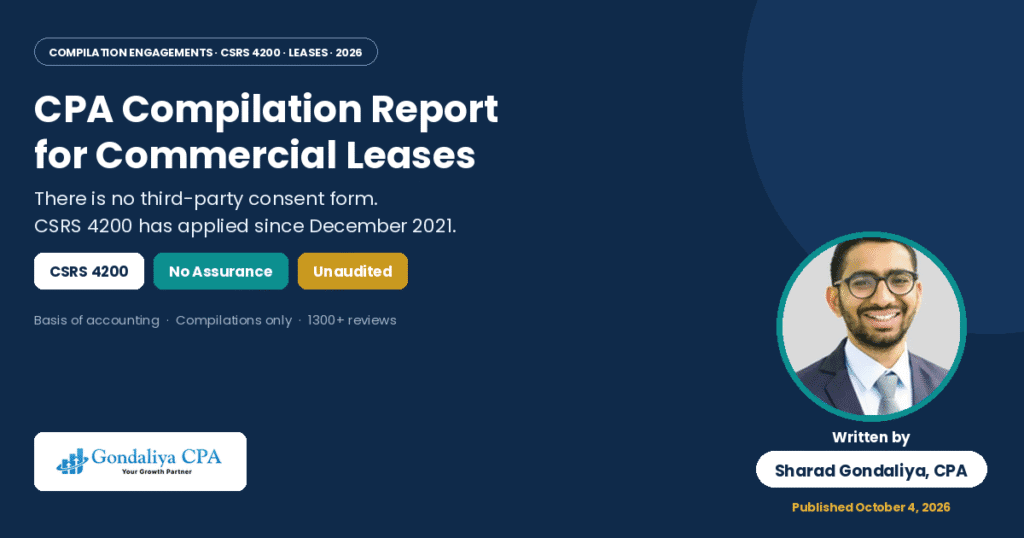
CPA compilation reports for commercial lease applications in Canada for 2026: why “third-party usage consent” does not exist and the acceptance condition is whether the landlord can request and obtain further information, why CSRS 4200 has applied since fiscal periods ending on or after 14 December 2021 with no 2026 amendment, why audits give reasonable and reviews give limited assurance rather than high and moderate, why CSAE does not govern compilations, and why the basis of accounting note decides what the numbers mean.
Truck dispatch business tax deductions in Canada for 2026: why dividends are never deductible while salary is, when Regulation 105 withholding actually applies to offshore staff and why a treaty does not relieve it, why test (a) of subsection 18(12) requires no exclusive room, why there is no $500 outright expensing rule for software or equipment, and why the corporate balance of tax falls months before the return.

Grant writing consultant tax in Canada for 2026: why a retainer is included in income on receipt under 12(1)(a) with the deferral coming from a claimed 20(1)(m) reserve, why self-employed consultants file 15 June and pay 30 April, why a registered charity client does not make your supply exempt, where the $30,000 threshold actually sits in section 148 rather than Schedule V, and why computers belong in Class 50 at 55%.
Corporate tax return mistakes in Canada for 2026: the actual late filing penalty of 5% plus 1% per month under subsection 162(1), why accrued remuneration has 179 days rather than 180 under 78(4), the shareholder loan repayment exception in 15(2.6), how the business limit is shared under 125(3) and ground down by passive income, why foreign property goes on a T1135 rather than a T1134, and the three and four year reassessment windows in 152(3.1).
Third-party logistics tax planning in Canada for 2026: why prepaid storage is included in income on receipt under 12(1)(a) with the deferral coming from a claimed 20(1)(m) reserve, why customs duty is never an input tax credit and only the Division III GST is recoverable, why warehouse racking belongs in Class 8 or 13 rather than Class 43, the four payroll remittance bands, and the two-factor provincial allocation in Regulation 402.