



Winding Down a Corporation in Ontario: Final Returns, Wind-Up and Dissolution
Closing a corporation is not one filing. Before an Ontario or federal corporation can be dissolved, it has to file a final T2, pay out or settle what it owns and owes, close its GST/HST, payroll and other CRA program accounts, issue final T4 and T5 slips, and file Articles of Dissolution. The order matters: distribute before the tax is planned and shareholders can pay more than they need to; dissolve before CRA has assessed the final returns and directors can stay personally liable. Our corporate wind-down service plans the steps, prepares every return and closes the corporation in the right sequence, for a fixed flat fee.

1450+
5-Star Google Reviews
1,450+ five-star Google reviews | 50+ Years Combined Experience | Corporate wind-downs for a fixed flat fee
At a glance
- What we filethe final T2 and its schedules, the final GST/HST return and registration cancellation, final T4 slips and ROEs, T5 slips for wind-up dividends, any Form T2054 capital dividend election, and Articles of Dissolution with Ontario or Corporations Canada.
- What you sendbank statements to the closing date, access to your accounting software, the last T2 and notice of assessment, a list of assets, debts and leases, and the minute book.
- What you receivea written wind-down plan and timeline, the filed returns with CRA confirmation numbers, closing financial statements, the distribution working paper, CRA account closure confirmations and the certificate of dissolution.
- How the fee worksfrom $1,800 CAD plus HST, one fixed flat fee, set before the work starts, covering the wind-down filings listed in your engagement letter.
Winding down a corporation means bringing its affairs to a clean end: collecting receivables, paying creditors, selling or distributing assets, filing the last tax returns and formally dissolving it with the Ontario Business Registry or Corporations Canada. At Gondaliya CPA, we provide affordable, CPA-led corporate wind-down services for owner-managed corporations, professional corporations and holding companies across Toronto, the GTA and Ontario.
Our CPAs prepare the final T2 corporate tax return, plan how retained earnings come out of the company (capital dividends, eligible and non-eligible dividends, return of paid-up capital), recover refundable tax through the dividend refund, and close each CRA program account so no filing obligation is left open after the business stops.
Because the cost of a wind-down is mostly the tax on the final distribution, we plan before anything is paid out, and give you a written step-by-step plan and a fixed fee before the work starts.
CPA Ontario Registered Firm, ID 61330051
1450+ ★★★★★ Google Reviews
Final personal returns for directors and shareholders included where needed
Weekend and evening support until 9 PM
Just a call away when you need us
- AFFORDABLE + CPA Ontario Registered Firm
- Corporate Wind-Up and Dissolution Specialists
- Small & Medium Business Expert
- Final T2, GST/HST, payroll and dissolution filings
- Certified CPA
- 1450+ 5-stars Google reviews
- 30-Day Money-Back Guarantee
- 60-Day Fees Matching Policy
A corporation that simply stops operating does not stop owing returns. CRA keeps expecting a T2 every year, GST/HST returns for every reporting period and payroll remittances until each account is closed, and late-filing penalties keep building on a company the owner thought was finished. Dissolving without a plan can also leave money on the table: an unused capital dividend account, a refundable tax balance that was never recovered, or a distribution taxed as a non-eligible dividend when part of it could have come out tax-free.
A planned wind-down puts the steps in order: close the books, pay the creditors, plan and pay the final distributions, file and get assessed on the final returns, obtain a clearance certificate where property is being distributed, close the CRA accounts and only then file Articles of Dissolution. Directors finish with clear records and no surprise liability.
Final T2 Corporate Tax Return
Final-year T2 prepared and e-filed, with every schedule closed out before dissolution.
Wind-Up Distribution & Dividend Planning
Capital dividend, dividend refund and paid-up capital planned before cash goes out.
GST/HST, Payroll & CRA Account Closure
Final GST/HST return, last T4s and closure of every CRA program account.
Articles of Dissolution & Ontario Filings
Ontario Business Registry or Corporations Canada dissolution filed in the right order.
CRA Clearance Certificate Support
Form TX19 request so directors are protected before property is distributed.
Holding Company & Section 88 Wind-Ups
Tax-deferred wind-up of a subsidiary into its parent company where it qualifies.
Corporate Wind-Down Services in Ontario
CPA-led wind-down and dissolution services for Ontario and federal corporations: the final T2, tax-efficient wind-up distributions, GST/HST and payroll account closures, clearance certificates and Articles of Dissolution, sequenced correctly and priced at an AFFORDABLE fixed flat fee.
Final T2 Corporate Tax Return
The last T2 covers the period up to the wind-up and tells CRA the corporation is closing. It has to reflect every disposal, distribution and final adjustment, because once the corporation is dissolved there is no one left to fix it.
- We close the books to the wind-down date and prepare closing financial statements, mapping them to the GIFI schedules filed with the final T2.
- We report assets sold or distributed to shareholders at fair market value, as subsection 69(5) requires on a wind-up, including recapture of capital cost allowance and capital gains on Schedule 6 and Schedule 8.
- We claim the dividend refund on refundable tax on hand (RDTOH) for the taxable dividends paid on the wind-up, so refundable tax is recovered rather than lost.
- We answer the final-return questions on the T2 and file it electronically, then check the notice of assessment before any further step is taken.
Wind-Up Distribution & Dividend Planning
Most of the cost of closing a corporation is the personal tax on the money that comes out of it. The amount, type and timing of each distribution is planned before anything is paid.
- We calculate the capital dividend account and file Form T2054 so that balance is paid to shareholders tax-free before the final distribution.
- We designate eligible dividends up to the general rate income pool (GRIP) and treat the rest as non-eligible, matching each to the RDTOH pool that refunds it.
- We confirm paid-up capital from the share register so it is returned tax-free, and calculate the subsection 84(2) deemed dividend on the balance.
- We model paying distributions across more than one tax year where that keeps shareholders in lower brackets, and compare a wind-up with a share sale where a buyer exists.
GST/HST, Payroll & CRA Account Closure
Every CRA program account under the business number keeps expecting returns until it is closed. We file the last return on each one and close it.
- We file the final GST/HST return, account for tax on inventory and capital property still held under subsection 171(3) of the Excise Tax Act, and cancel the RT registration.
- We run the final payroll, remit the last source deductions, issue ROEs and file T4 slips and the T4 Summary within 30 days of the business ending.
- We file T5 slips for dividends paid on the wind-up and close the RZ information-return account once they are processed.
- We close the RP and RC accounts, and the Ontario Employer Health Tax and WSIB accounts where they exist, and keep the confirmations in your file.
Articles of Dissolution & Ontario Filings
Dissolution is the last step, not the first. We file it only after the corporation has no property left and CRA has assessed its final returns.
- For Ontario corporations, we bring Ontario annual returns up to date and file Articles of Dissolution through the Ontario Business Registry under the Business Corporations Act (Ontario).
- For federal corporations, we file Articles of Dissolution with Corporations Canada, or a Statement of Intent to Dissolve first where the corporation still has property or liabilities.
- We prepare the shareholder special resolution authorizing the dissolution and update the minute book so the corporate record is complete.
- We confirm bank accounts are empty and refunds received before filing, because property left in a dissolved Ontario corporation generally forfeits to the Crown.
CRA Clearance Certificate Support
Directors who distribute a corporation's property before its taxes are cleared can become personally liable for them. A clearance certificate removes that risk.
- We prepare the Form TX19 request with the documents CRA asks for, once the final T2 has been assessed.
- We hold back enough to cover any tax still to be assessed, and plan the last distribution for after the certificate is issued.
- We answer CRA's questions during its review, since outstanding returns on any program account will delay the certificate.
- We close source deductions and GST/HST balances, which directors can otherwise be personally assessed for up to two years after they resign.
Holding Company & Section 88 Wind-Ups
When one corporation owns another, the subsidiary can often be wound up into its parent without immediate tax. The conditions are specific, and the paperwork must match them.
- We confirm the parent owns at least 90% of each class of the subsidiary's shares, as subsection 88(1) requires for a tax-deferred wind-up.
- We move the subsidiary's assets to the parent at their tax cost and check whether the cost of non-depreciable capital property, such as land or shares, can be bumped under paragraph 88(1)(d).
- We carry non-capital and net capital losses into the parent under subsection 88(1.1) where the conditions are met.
- We file the subsidiary's final T2, prepare the wind-up resolutions and update the parent's books so both corporations' records agree.
Free Corporate Wind-Down Consultation for Business Owners
Typical scenario, shown to explain the process. It does not describe a specific client or result.
Situation: A one-owner consulting corporation stops billing when the owner retires. It holds cash and a small investment account built from retained earnings, and still has open GST/HST and payroll accounts.
Approach: Final payroll and T4s within 30 days of the last pay, GST/HST registration cancelled with a final return, capital dividend account calculated and elected on Form T2054 before the remaining cash is paid out over the owner’s lower-income retirement years where that saves tax.
What the owner receives:
✅ A written wind-down plan and timeline
✅ Final T2, T5 slips and CRA account closures
✅ Articles of Dissolution filed once CRA has assessed
Typical scenario, shown to explain the process. It does not describe a specific client or result.
Situation: A family group has an operating company that sold its business and a parent holding company that owns 100% of its shares. The operating company now only holds cash and has unused non-capital losses.
Approach: A subsection 88(1) wind-up of the subsidiary into the parent, so assets move at tax cost instead of fair market value, with the remaining losses carried into the parent under subsection 88(1.1) where the conditions are met.
What the owners receive:
✅ Wind-up resolutions and a section 88 working paper
✅ Final T2 for the subsidiary
✅ Dissolution filed and the parent’s books updated
Typical scenario, shown to explain the process. It does not describe a specific client or result.
Situation: A Toronto retail corporation closes its store. It still has inventory, equipment, a lease to exit, employees to lay off and a shareholder loan on the books.
Approach: Inventory and equipment sold or distributed at fair market value with GST/HST charged or self-assessed, final payroll with ROEs and T4s, the shareholder loan settled before the final distribution, and a clearance certificate requested before any remaining property goes to the shareholders.
What the owners receive:
✅ A creditor and asset checklist
✅ Final GST/HST, payroll and T2 filings
✅ CRA accounts closed and dissolution filed
At Gondaliya CPA, our CPAs make closing a corporation orderly and predictable. Our 4-step process puts the tax planning before the distributions and the CRA assessments before the dissolution, so nothing is filed out of order and no liability is left with the directors.
Start with a free, no-obligation consultation to review what the corporation owns and owes, its tax balances and the fastest compliant route to dissolution.
We close the books to the wind-down date and give you a written plan for paying creditors and distributing what remains to shareholders.
We prepare and file the final T2, GST/HST, payroll and slip filings, then close each CRA program account once its last return is processed.
After CRA assesses, we request the clearance certificate where needed and file Articles of Dissolution with Ontario or Corporations Canada.

Final T2, GST/HST, payroll, slips and dissolution are sequenced so CRA assessments come before the corporation ceases to exist.

From $1,800 CAD plus HST: one fixed flat fee, set before the work starts, covering the wind-down filings listed in your engagement letter. No hourly billing.

Capital dividends, the dividend refund, paid-up capital and the timing of payments are planned so shareholders keep more of what the corporation built.

We close out source deductions and GST/HST and support the clearance certificate request, reducing the personal exposure directors can carry after dissolution.









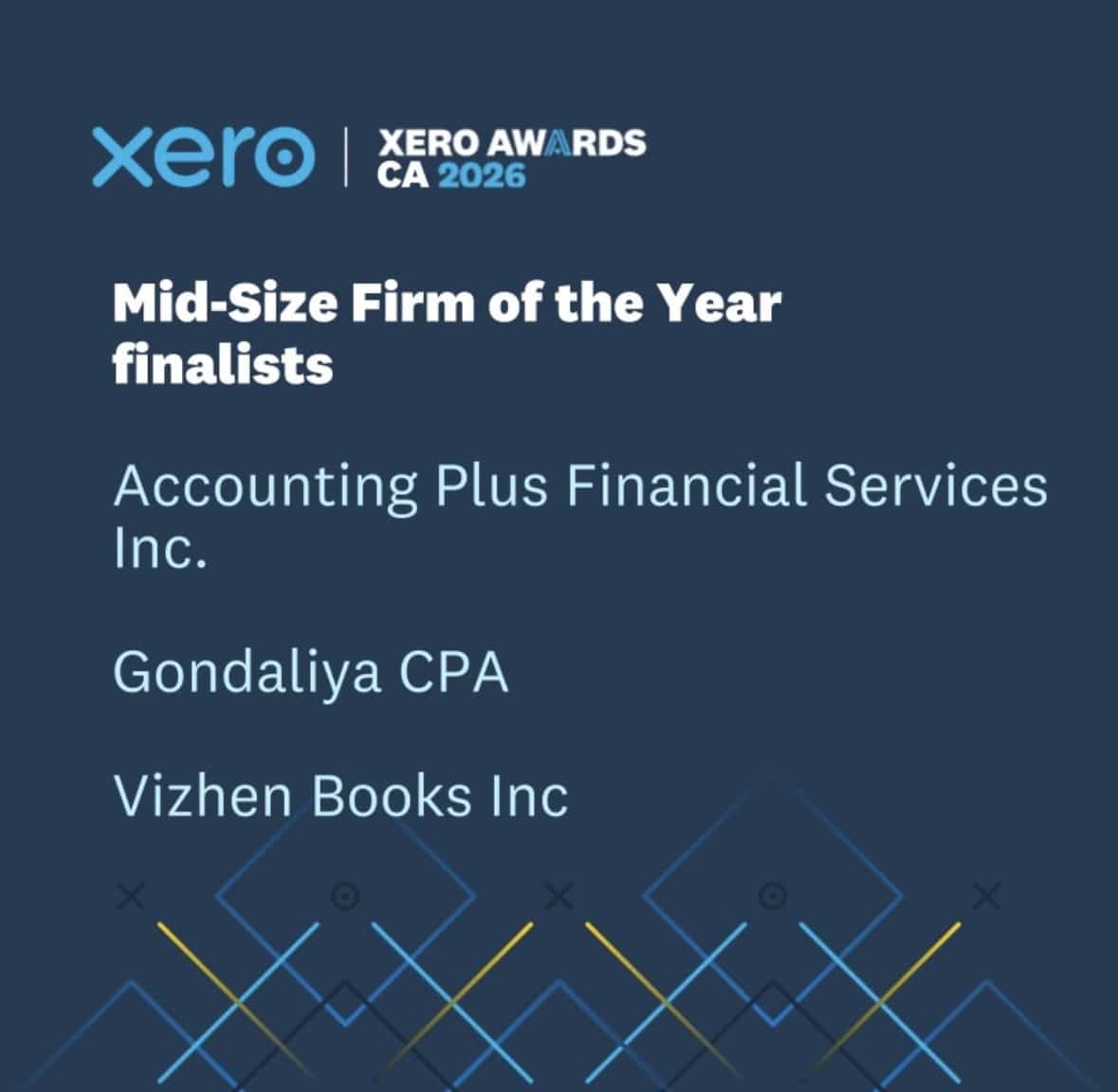
Xero Awards Canada 2026 Finalist
Proud Finalist – Mid-Size Firm of the Year
Gondaliya CPA has been recognized as a finalist for the Xero Awards Canada 2026 in the Mid-Size Firm of the Year category, reflecting our commitment to innovation, cloud accounting excellence, and exceptional client service.
We believe in clear, upfront pricing so you know exactly what closing your corporation will cost.
- Corporate wind-down and final filings: from $1,800 CAD plus HST, one fixed flat fee
- CRA review support – FREE CRA audit support for our clients
What Is Included When We Wind Down Your Corporation
Complete corporate wind-down from $1,800 CAD plus HST. Your engagement letter lists every filing your fixed fee covers.
| Wind-down step | When it applies | Gondaliya CPA |
|---|---|---|
| Closing books and final T2 | Every corporation | Fixed fee |
| Distribution plan, T2054 and T5 slips | Cash or assets paid to shareholders | Fixed fee |
| Final GST/HST return and cancellation | GST/HST registrants | Fixed fee |
| Final payroll, ROEs and T4s | Corporations with employees | Fixed fee |
| Clearance certificate (TX19) | Property distributed to shareholders | Fixed fee |
| Articles of Dissolution | Every corporation (government fee at cost) | Fixed fee |
| No hourly billing. No hidden charges. Estimate your cost with our dissolution cost calculator. 60-Day Fees-Matching Policy: if you find the same service cheaper from a licensed Ontario CPA, we match it. | ||
Our CPA team winds down and dissolves corporations for owners throughout Ontario. We handle Ontario corporations through the Ontario Business Registry and federal corporations through Corporations Canada. Wind-down services are available in person at our Toronto office and virtually to corporations across Ontario and Canada.
Toronto (ON)
55 Queen St E Ste 1205, Toronto, ON M5C 1R6, Canada
+1 (647) 212-9559
9:00 AM – 8:30 PM (Mon – Sun)
Mississauga (ON)
2100 Camilla Rd #716, Mississauga, ON L5A 2J8, Canada
+1 (647) 212-9559
9:00 AM – 8:30 PM (Mon – Sun)
Brampton (ON)
4 Starhill Crescent, Brampton, ON L6R 2P9, Canada
+1 (647) 212-9559
9:00 AM – 8:30 PM (Mon – Sun)
Scarborough (ON)
24 Clementine Square, Scarborough, ON M1G 2V7, Canada
+1 (647) 212-9559
9:00 AM – 8:30 PM (Mon – Sun)
Vaughan (ON)
19 Cabinet Crescent, Woodbridge, ON L4L 6H9, Canada
+1 (647) 212-9559
9:00 AM – 8:30 PM (Mon – Sun)
Oshawa (ON)
210 Durham St, Oshawa, ON L1J 5R3, Canada
+1 (647) 212-9559
9:00 AM – 8:30 PM (Mon – Sun)
Ottawa (ON)
2090 Neepawa Ave a314, Ottawa, ON K2A 3L6, Canada
+1 (647) 212-9559
9:00 AM – 8:30 PM (Mon – Sun)
Etobicoke (ON)
60 Stevenson Rd #1601, Etobicoke, ON M9V 2B4, Canada
+1 (647) 212-9559
9:00 AM – 8:30 PM (Mon – Sun)
Hamilton (ON)
70 Starling Dr, Hamilton, ON L9A 0C5, Canada
+1 (647) 212-9559
9:00 AM – 8:30 PM (Mon – Sun)
Guelph (ON)
1155 Gordon St, Guelph, ON N1L 1S8, Canada
+1 (647) 212-9559
9:00 AM – 8:30 PM (Mon – Sun)
Windsor (ON)
4387 Guppy Ct, Windsor, ON N9G 2N8, Canada
+1 (647) 212-9559
9:00 AM – 8:30 PM (Mon – Sun)
North York (ON)
150 Graydon Hall Dr #912, North York, ON M3A 3B2, Canada
+1 (647) 212-9559
9:00 AM – 8:30 PM (Mon – Sun)
Industry-Specific CPA Handling
Industry-Specific CPA Handling. Your wind-down file is matched with a team member who has worked with corporations in your industry, whether you are closing a dental or medical professional corporation, restaurant, construction company, e-commerce store, trucking company, real estate holding company or consulting firm. Industry details such as inventory, equipment, leases, HST on the sale of assets and final payroll are handled by someone who knows them. A CPA reviews your wind-down work before anything is filed with CRA, the Ontario Business Registry or Corporations Canada.
Winding Down Startups
Closing startups and shell companies
Winding Down Healthcare Corporations
Medical and dental professional corporations
Winding Down Consulting Corporations
Consultants retiring or going employed
Winding Down Small Businesses
Owner-managed corporations of every kind
Winding Down Restaurants
Inventory, equipment, staff and lease exits
Winding Down Franchises
Franchise exits and asset sales
Winding Down Self-Employed Corporations
Returning to sole proprietor or employment
Winding Down Manufacturing
Equipment, inventory and CCA recapture
Winding Down Grocery Stores
Inventory, HST and final payroll
Winding Down Import & Export
Customs accounts and final GST/HST
1. Close the Corporation or Keep It Dormant?
- Dormant is not free. A corporation that stops operating but is not dissolved still files a T2 every year, an Ontario annual return, and a return for every GST/HST period while it stays registered. Keeping it makes sense when it holds assets you want to keep inside it, or you may restart; our dormant corporation service covers that route.
- Selling instead of closing. If someone wants to buy the business, a sale of shares may let each shareholder claim the lifetime capital gains exemption on qualified small business corporation shares, which a wind-up cannot. We compare the after-tax result of a share sale, an asset sale followed by a wind-up and a straight wind-up before you decide.
- Holding companies. A holding company with investments can often be kept open longer and paid out gradually, or wound up into a parent under section 88. Closing it in one year can cost more personal tax than spreading the distributions.
- Professional corporations. A medical, dental or other professional corporation is closed when the professional retires, moves to employment or stops practising. The governing college's rules on the corporation's name and certificate of authorization are dealt with alongside the tax steps.
- Our recommendation. We give you a short written comparison of keeping, selling and closing, with the estimated tax on each, so the decision is made on numbers rather than on the annual filing fee alone.
2. The Wind-Down Steps, in the Order We Do Them
- 1. Stop and collect. Stop operations, collect receivables, return deposits and cancel contracts, leases and subscriptions in the corporation's name.
- 2. Pay creditors. Pay suppliers, lenders and CRA balances, or settle them, before shareholders receive anything. Creditors rank ahead of shareholders on a wind-up.
- 3. Close the payroll and GST/HST accounts. Run the final payroll and file the final T4s, then file the final GST/HST return and cancel the registration.
- 4. Plan and pay distributions. Elect the capital dividend, pay taxable dividends that release refundable tax, return paid-up capital and settle shareholder loans, keeping a holdback for any tax still to be assessed.
- 5. File the final T2 and slips. File the final T2 and the T5 slips, then wait for CRA's notice of assessment.
- 6. Clearance and dissolution. Request a clearance certificate where property is being distributed, pay out the holdback, close the bank account and file Articles of Dissolution.
3. Closing Books and Final Financial Statements
- Wind-down date. We choose a closing date that suits the plan, often the end of a month after the last sale and the last payroll, and close the books to that date.
- Reconciliations. Every bank, credit card, loan and GST/HST account is reconciled to its statement, so the final balance sheet shows exactly what is left to pay or distribute.
- Fair market values. Equipment, vehicles, inventory and investments that will be sold or distributed are valued at fair market value, using quotes, appraisals or brokerage statements, because the tax on the wind-up is calculated on those values.
- Shareholder account. Owner withdrawals and personal expenses paid by the company are posted to the shareholder account before the final distribution, so any amount owed by the owner can be repaid or set off correctly.
- Closing statements. Where included in your engagement, we prepare compiled financial statements under CSRS 4200 for the final period, matching the GIFI schedules filed with the T2.
4. The Final T2 Corporate Tax Return
- What it covers. The final T2 covers the last tax year, ending on or before the wind-up, and reports the corporation is winding up. It is due six months after that year-end, with the balance owing due two or three months after year-end.
- Deemed disposition. Property distributed to shareholders on a wind-up is treated as sold at fair market value under subsection 69(5). Capital gains go on Schedule 6, and recapture or terminal loss on equipment and vehicles is calculated on Schedule 8.
- Losses. Non-capital and net capital losses can be applied against income and gains in the final year, but whatever is left is lost on dissolution unless it moves to a parent under subsection 88(1.1).
- Dividend refund. Taxable dividends paid on the wind-up, including the subsection 84(2) deemed dividend, release refundable tax on hand. The refund is claimed on the final T2.
- Schedule-by-schedule detail. Our Corporate Tax Return Filing (T2) page explains the T2 schedules in more depth.
5. Getting Money Out: Wind-Up Distributions
- Paid-up capital first. The paid-up capital on the shares, often a nominal $1 or $100 for owner-managed companies, is returned tax-free. We confirm it from the share register and the corporation's records, not from memory.
- Deemed dividend. Anything a shareholder receives above paid-up capital on the wind-up is a deemed dividend under subsection 84(2). It is taxed as a dividend, not a capital gain.
- Eligible or non-eligible. Part of the deemed dividend can be designated as an eligible dividend, taxed at a lower personal rate, up to the corporation's general rate income pool. The rest is a non-eligible dividend.
- Shareholder loans. A balance the owner owes the corporation is settled before or against the final distribution, with a resolution recording the set-off, so it is not left as a debt to a company that no longer exists.
- Timing. Where the timeline allows, distributions can be split across two calendar years to keep shareholders in lower brackets. Our wind-up distribution tax calculator gives a first estimate.
Not sure how much tax your wind-up will cost? Book a consultation to go over your corporation, or see your fixed fee first.
6. Capital Dividend Account and Refundable Tax
- Capital dividend account. The non-taxable half of capital gains, capital dividends received and certain life insurance proceeds build the capital dividend account. It can be paid out tax-free to Canadian-resident shareholders.
- Form T2054. The capital dividend election is filed on Form T2054 with a directors' resolution and a schedule of the account balance, on or before the dividend is paid. We calculate the balance first, because electing more than the balance attracts a penalty tax.
- Gains in the final year. The capital gain realized when assets are sold or distributed in the final year can itself add to the capital dividend account. We sequence the election so that the new balance is paid out too.
- Refundable tax. Investment income earned in the corporation creates eligible and non-eligible refundable dividend tax on hand. Each is refunded only when the matching type of taxable dividend is paid, so dividend designations are planned against both pools.
- Nothing left behind. Any capital dividend account or refundable tax not used before dissolution is lost permanently.
7. Final GST/HST Return and Cancelling the Registration
- Final return. The corporation files a final GST/HST return for the period ending on the date it stops being a registrant, and asks CRA to cancel the registration. Corporations that need only this step can use our HST return filing service.
- Deemed sale on cancellation. Under subsection 171(3) of the Excise Tax Act, a registrant that stops being registered is generally treated as having sold its remaining inventory and capital property at fair market value, and must account for GST/HST on it.
- Selling assets. Equipment, vehicles and inventory sold to third parties during the wind-down are taxable supplies. GST/HST is charged and reported on the final return.
- Distributing assets. Assets transferred to shareholders on the wind-up can also be taxable supplies at fair market value. We confirm the treatment before the transfer so the tax is accounted for once, correctly.
- Input tax credits. Unclaimed input tax credits on wind-down costs, such as professional fees, are claimed on the final return so they are not lost.
8. Final Payroll, T4 and T5 Slips
- Last pay. Final wages, vacation pay and any termination or severance pay are paid under the Employment Standards Act, 2000, and the last source deductions are remitted to CRA.
- ROEs. A Record of Employment is issued for each employee, generally within five days of the end of the last pay period, so employees can apply for Employment Insurance.
- 30-day T4 deadline. When the business stops operating, the T4 slips and T4 Summary are due within 30 days of the day it ends, not at the end of February. We then close the RP payroll account. Our T4, T4A and T5 preparation service covers the slips.
- T5 slips. Dividends paid during the wind-up, including deemed dividends and capital dividends, are reported on T5 slips by the last day of February after the year they were paid.
- Ontario accounts. The Employer Health Tax account and WSIB account, where they exist, are closed with final returns.
9. CRA Clearance Certificate (Form TX19)
- Why it matters. Under subsection 159(2) of the Income Tax Act, a person who distributes a corporation's property without a clearance certificate can be personally liable for its unpaid taxes, interest and penalties, up to the value of the property distributed.
- When to apply. The request is made on Form TX19 after the final T2 has been filed and assessed and all other returns are up to date. Outstanding returns on any program account delay it.
- The holdback. We plan the last distribution for after the certificate is issued and keep enough in the corporation to cover any tax still to be assessed.
- When it is not needed. A corporation that has no property left to distribute, after paying its creditors, generally does not need a certificate. We confirm this with you in writing.
10. Articles of Dissolution: Ontario and Federal Corporations
- Ontario corporations. An Ontario corporation is dissolved by filing Articles of Dissolution through the Ontario Business Registry under the Business Corporations Act (Ontario), authorized by a special resolution of the shareholders. Its annual returns must be up to date first.
- Federal corporations. A federal corporation with no property and no liabilities files Articles of Dissolution with Corporations Canada. One that still has property or liabilities first files a Statement of Intent to Dissolve, then distributes, then files the articles.
- Last, not first. We file the dissolution only after the final returns are assessed, refunds are received and the bank account is empty. Property left in a dissolved Ontario corporation generally forfeits to the Crown, and a refund cheque issued to a dissolved corporation can need a revival to cash.
- Minute book. The resolutions, the certificate of dissolution and the final share register are placed in the minute book, which a director keeps.
- Estimate the cost. Our cost to dissolve a corporation calculator gives an estimate for Ontario and federal corporations.
11. Winding Up a Subsidiary Into a Parent (Section 88)
- The 90% test. Where a taxable Canadian corporation owns at least 90% of the issued shares of each class of a subsidiary, the subsidiary can be wound up into it under subsection 88(1) without immediate tax.
- Tax cost rollover. The subsidiary's assets move to the parent at their tax cost, and the parent's shares of the subsidiary are generally treated as disposed of without a gain.
- The bump. The cost of non-depreciable capital property, such as land or shares of other companies, may be increased under paragraph 88(1)(d) where the conditions are met.
- Losses carried over. The subsidiary's non-capital and net capital losses can generally be used by the parent under subsection 88(1.1), subject to the acquisition-of-control rules.
- Related planning. Section 88 wind-ups often follow a section 85 rollover or a business sale; our holding company tax planning team handles the group structure.
12. Protecting Directors From Personal Liability
- Source deductions. Directors can be personally liable for unremitted income tax, CPP and EI deductions under section 227.1 of the Income Tax Act.
- GST/HST. The same applies to unremitted net GST/HST under section 323 of the Excise Tax Act.
- Two-year limit. CRA generally cannot assess a director for these amounts more than two years after the person last ceased to be a director, which includes dissolution. Clearing the accounts before closing ends the exposure rather than leaving it running.
- Employee wages. Under the Business Corporations Act (Ontario), directors can also be liable for certain unpaid wages and vacation pay, so final payroll is settled in full.
13. After Dissolution: Records, Revival and Personal Returns
- Records. CRA generally allows a dissolved corporation's books and records to be destroyed two years after dissolution. We give a director a complete digital file before closing.
- Personal returns. Shareholders report the wind-up dividends from their T5 slips on their personal returns, and any capital gain or loss on the shares. Where included in your engagement, we prepare those returns from the same figures.
- Revival. If property, a refund or a liability turns up after dissolution, an Ontario corporation can generally be revived with Articles of Revival, and a federal corporation with a certificate of revival.
- Late filings first. A corporation behind on its filings is brought up to date before it is closed; our catch-up corporate tax filing service covers the overdue years.
What We Need From You
- Bank and credit card statements for every corporate account to the closing date, and access to your accounting software, such as QuickBooks Online or Xero.
- The last filed T2, notice of assessment and any CRA letters, plus the GST/HST, payroll and corporate account statements from My Business Account.
- A list of receivables, payables, loans, leases and contracts still in the corporation's name.
- Details of assets: equipment, vehicles, inventory, real estate and investments, with purchase records and current values or quotes.
- Brokerage and investment statements, and any T5, T3 or T5008 slips issued to the corporation.
- Payroll registers, the last pay dates and any termination or severance agreements.
- The minute book: articles, share register, paid-up capital records and every dividend resolution.
- The confirmation of your last Ontario annual return from the Ontario Business Registry, or your federal annual return.
- Each shareholder's name, address, SIN and shareholding, for the T5 slips and the distribution plan.
What You Receive
Depending on the steps listed in your engagement letter, you receive:
- A written wind-down plan with each step, the order and the expected dates.
- Closing financial statements and a distribution working paper showing paid-up capital, capital dividend, eligible and non-eligible dividends for each shareholder.
- The final T2, filed electronically with CRA's confirmation number, and a check of the notice of assessment.
- Form T2054 capital dividend election and directors' resolutions, where applicable.
- The final GST/HST return, payroll filings, T4 and T5 slips, and confirmation that each CRA program account is closed.
- The Form TX19 clearance certificate request and CRA's certificate, where required.
- Articles of Dissolution filed with the Ontario Business Registry or Corporations Canada, and the certificate of dissolution.
- A complete digital file of the corporation's records for a director to keep.
Overdue returns for earlier years, Voluntary Disclosures Program applications, revival filings and non-resident shareholder withholding are quoted separately in your engagement letter.
How it works
- See your fixed fee in our online pricing calculator, or book a consultation to go over your corporation first.
- Sign the engagement letter, which lists every filing the fee covers.
- Authorize us in My Business Account, or confirm our Represent a Client request, and send the records listed under What We Need From You.
- We close the books, prepare the distribution plan and review it with you before anything is paid out.
- We file the final payroll, GST/HST, slips and T2. A CPA reviews the work before anything is filed, and an authorized signing officer signs Form T183CORP before we e-file the T2.
- Once CRA has assessed, we request the clearance certificate where needed, close the CRA accounts and file Articles of Dissolution.
Want to know what closing your corporation will cost? See your fixed fee, or book a consultation to go over the steps first.
Illustrative Example: Winding Down a Corporation With Cash
This example is hypothetical. It shows how the steps connect; it does not describe a client or a result, and personal tax depends on each shareholder's situation.
- Starting point. An Ontario CCPC owned 100% by one shareholder stops operating on June 30, 2027. After paying all creditors, it has $500,000 of cash and no other assets. Paid-up capital is $100, the capital dividend account is $60,000, the general rate income pool is nil and non-eligible refundable dividend tax on hand is $30,000.
- Capital dividend. The corporation elects on Form T2054 and pays a $60,000 capital dividend, which the shareholder receives tax-free.
- Wind-up distribution. The remaining $440,000 is paid on the wind-up. $100 is a tax-free return of paid-up capital and $439,900 is a deemed dividend under subsection 84(2), reported on a T5 as a non-eligible dividend.
- Dividend refund. The dividend refund is 38 1/3% of taxable dividends paid, limited to the refundable tax balance. 38 1/3% of $439,900 is about $168,600, so the refund is limited to the $30,000 balance. That $30,000 is claimed on the final T2 and, once received, is paid to the shareholder as a further taxable dividend, with no further refund.
- Timing choice. If the shareholder has little other income, paying part of the distribution in December 2027 and the rest in January 2028 can spread the dividend across two personal tax years and lower the total tax.
- Closing. Final returns are filed and assessed, the clearance certificate is requested before the final payment, the CRA accounts are closed, and Articles of Dissolution are filed once the bank account is empty.
Book Your Free Corporate Wind-Down Consultation
Frequently Asked Questions About Winding Down a Corporation
What is the difference between winding down, winding up and dissolving a corporation?
Winding down is the practical process of ending the business: collecting receivables, paying creditors and selling or distributing assets. Winding up is the legal and tax step of distributing what remains to the shareholders, which triggers the deemed dividend rules in subsection 84(2) of the Income Tax Act. Dissolution is the final step: filing Articles of Dissolution so the corporation legally ceases to exist. A corporation should be wound down and wound up before it is dissolved.
What filings does a corporation have to make when it closes?
At a minimum, a final T2 corporate income tax return, and Articles of Dissolution with the Ontario Business Registry or Corporations Canada. A GST/HST registrant files a final return and cancels its registration, an employer files final T4 slips and its summary within 30 days of the business ending and closes its payroll account, and dividends paid on the wind-up are reported on T5 slips. Ontario annual returns must also be up to date before an Ontario corporation can be dissolved.
How much does it cost to wind down a corporation?
Our corporate wind-down service starts from $1,800 CAD, a fixed flat fee set before the work starts. Fees are quoted before tax, and GST/HST is charged separately. The fee depends on how many returns and slips are needed, whether property is being distributed and whether a clearance certificate is required. You can estimate it first with our cost to dissolve a corporation calculator, and your engagement letter lists exactly which filings the fee covers. Government filing fees are passed through at cost.
Can I simply stop filing and let the corporation be dissolved by the province?
It is not recommended. If annual returns stop, Ontario can eventually cancel the corporation, but CRA program accounts stay open and late-filing penalties keep accruing on unfiled T2, GST/HST and payroll returns. Directors can remain personally liable for unremitted source deductions and GST/HST. In Ontario, property still owned by a dissolved corporation, including bank balances, generally forfeits to the Crown. A planned voluntary dissolution avoids all of this.
How is money taken out of a corporation when it winds up?
Paid-up capital on the shares can be returned tax-free. Any amount distributed above paid-up capital is a deemed dividend under subsection 84(2). Part of it can come out tax-free as a capital dividend if the corporation has a capital dividend account balance and files Form T2054, part can be designated as an eligible dividend up to the general rate income pool, and the rest is a non-eligible dividend. The timing and order of these payments are what we plan before anything is paid out.
What is a clearance certificate and do I need one?
A clearance certificate confirms that the corporation’s taxes, interest and penalties have been paid or secured. Under subsection 159(2) of the Income Tax Act, a person who distributes a corporation’s property without one can be personally liable for its unpaid taxes up to the value of the property distributed. Directors request it on Form TX19 once the final returns have been assessed. Where the corporation has no property left to distribute, a certificate is usually not needed.
How long does it take to wind down and dissolve a corporation?
A simple corporation with no property left can be closed in a few weeks once the final returns are filed. A corporation that is distributing property usually takes several months, because the final T2 must be assessed and, where needed, the clearance certificate issued before the last distribution and the dissolution. We give you a timeline with each step and date at the start of the engagement.
What happens to unused tax losses when a corporation is dissolved?
They generally disappear. Non-capital losses, net capital losses and unclaimed capital cost allowance cannot be transferred to the shareholders. The main exception is a subsection 88(1) wind-up of a subsidiary that is at least 90% owned by a parent corporation, where the losses can flow to the parent under subsection 88(1.1). We check for losses early, because they can change which wind-down route is best.
What types of corporations do you wind down?
We wind down owner-managed operating companies, medical, dental and other professional corporations, holding and investment companies, real estate holding corporations, startups that never got going and dormant corporations that stopped filing. We handle both Ontario corporations, through the Ontario Business Registry, and federal corporations, through Corporations Canada.
Do you provide support if CRA reviews the final returns?
Yes. We offer free CRA review and audit support for our wind-down clients. As your authorized representative, we answer CRA letters on the final T2, GST/HST and payroll accounts, including the questions CRA often asks before issuing a clearance certificate.
Can you reduce the tax on winding up my corporation?
Often, yes, by planning before money is paid out. Common steps include electing a capital dividend for the full capital dividend account balance, paying eligible dividends up to the general rate income pool, recovering refundable tax through the dividend refund, repaying shareholder loans and paid-up capital correctly, and spreading distributions across tax years where that keeps shareholders in lower brackets. Where the shares, not the assets, are sold instead, the lifetime capital gains exemption may also be available.
Does a closing corporation still have to file GST/HST returns?
Yes, until its registration is cancelled. When a registrant stops making taxable supplies, it files a final return and asks CRA to cancel the registration. On ceasing to be a registrant, it is generally treated as having sold its remaining inventory and capital property at fair market value under subsection 171(3) of the Excise Tax Act, so GST/HST may be owing on assets still held. Distributing assets to shareholders on the wind-up can also be a taxable supply.
When are the final T4 and T5 slips due?
When a business stops operating, its T4 slips and T4 Summary are due within 30 days of the day the business ends, not at the end of February. Final ROEs are issued to employees as well. T5 slips for dividends paid during the wind-up, including deemed dividends under subsection 84(2), are due by the last day of February after the calendar year in which they were paid.
How long must records be kept after a corporation is dissolved?
CRA generally allows the books and records of a dissolved corporation to be destroyed two years after the date of dissolution, instead of the usual six years. Records for the years before dissolution can still be needed for a reassessment or for a shareholder’s personal return, so we deliver a complete digital file at the end of the engagement and recommend a director keeps it.
What if the corporation is dissolved too early?
An Ontario corporation that was dissolved can generally be revived by filing Articles of Revival, and a federal corporation by applying for a certificate of revival. Revival is often needed when a bank account, a tax refund or property is discovered after dissolution. It costs time and filing fees, so we sequence the wind-down to avoid it: final returns assessed, refunds received and accounts emptied before the dissolution is filed.
Our corporation has not filed for several years. Can it still be wound down?
Yes, but the missing filings come first. CRA expects a T2 for every year the corporation existed, and Ontario expects its annual returns, before the corporation can be closed cleanly. We prepare the overdue returns, request penalty relief or use the Voluntary Disclosures Program where it applies, and then complete the wind-down. Our catch-up corporate tax filing service covers the overdue years.
What documents do you need to wind down a corporation?
Bank and credit card statements to the closing date and access to your accounting software, the last filed T2 and notice of assessment, GST/HST and payroll account statements, a list of receivables, payables, loans and leases, details of assets such as equipment, vehicles, inventory and investments, and the minute book with the share register and any dividend resolutions. The full list is in the What We Need From You section above.
How do I schedule a consultation?
You can schedule a free consultation call directly through our website, or contact us via our Contact Us page, and our team will reach out to review your corporation and the steps needed to close it.
Close Your Corporation Cleanly, in the Right Order
We wind down and dissolve corporations across Ontario from our office at 55 Queen St E, Suite 1205, Toronto.
If your corporation is staying open but has stopped operating, our page on accounting for dormant corporations explains how to keep it compliant at the lowest cost. If you are selling the business instead, see accounting for business sellers, and for an industry view of closing a business, see accounting for businesses winding down.
Book a consultation to go over your corporation and the steps to close it, or see your fixed fee first.
This page explains general rules for winding down and dissolving a corporation in 2026 and 2027. Provincial items are Ontario’s; a corporation in another province follows that province’s rules. It is not advice for a specific corporation: how each rule applies to yours is confirmed only after your records are reviewed.
Written and reviewed by Sharad Gondaliya, CPA. Gondaliya CPA Professional Corporation, CPA Ontario Firm ID 61330051. Last reviewed: November 25, 2026.
Meet Your Corporate Wind-Down Experts


Google Reviews
See all on Google
Google Reviews
See all on Google


 Trustindex verifies that the original source of the review is Google.
 Trustindex verifies that the original source of the review is Google.
 Trustindex verifies that the original source of the review is Google.
 Trustindex verifies that the original source of the review is Google.
 Trustindex verifies that the original source of the review is Google.
 Trustindex verifies that the original source of the review is Google.
 Trustindex verifies that the original source of the review is Google.
 Trustindex verifies that the original source of the review is Google.
 Trustindex verifies that the original source of the review is Google.
 Trustindex verifies that the original source of the review is Google.
 Trustindex verifies that the original source of the review is Google.
 Trustindex verifies that the original source of the review is Google.
 Trustindex verifies that the original source of the review is Google.
 Trustindex verifies that the original source of the review is Google.
 Trustindex verifies that the original source of the review is Google.
 Trustindex verifies that the original source of the review is Google.
 Trustindex verifies that the original source of the review is Google.
 Trustindex verifies that the original source of the review is Google.
 Trustindex verifies that the original source of the review is Google.
 Trustindex verifies that the original source of the review is Google.
 Trustindex verifies that the original source of the review is Google.
 Trustindex verifies that the original source of the review is Google.
 Trustindex verifies that the original source of the review is Google.
 Trustindex verifies that the original source of the review is Google.
 Trustindex verifies that the original source of the review is Google.
 Trustindex verifies that the original source of the review is Google.
 Trustindex verifies that the original source of the review is Google.
 Trustindex verifies that the original source of the review is Google.
 Trustindex verifies that the original source of the review is Google.
 Trustindex verifies that the original source of the review is Google.
 Trustindex verifies that the original source of the review is Google.
 Trustindex verifies that the original source of the review is Google.
 Trustindex verifies that the original source of the review is Google.
 Trustindex verifies that the original source of the review is Google.
 Trustindex verifies that the original source of the review is Google.
 Trustindex verifies that the original source of the review is Google.
 Trustindex verifies that the original source of the review is Google.
 Trustindex verifies that the original source of the review is Google.
 Trustindex verifies that the original source of the review is Google.
 Trustindex verifies that the original source of the review is Google.
 Trustindex verifies that the original source of the review is Google.
 Trustindex verifies that the original source of the review is Google.
 Trustindex verifies that the original source of the review is Google.
 Trustindex verifies that the original source of the review is Google.
 Trustindex verifies that the original source of the review is Google.
 Trustindex verifies that the original source of the review is Google.
 Trustindex verifies that the original source of the review is Google.
 Trustindex verifies that the original source of the review is Google.
 Trustindex verifies that the original source of the review is Google.
 Trustindex verifies that the original source of the review is Google.
 Trustindex verifies that the original source of the review is Google.
 Trustindex verifies that the original source of the review is Google.
 Trustindex verifies that the original source of the review is Google.
 Trustindex verifies that the original source of the review is Google.
 Trustindex verifies that the original source of the review is Google.
 Trustindex verifies that the original source of the review is Google.
 Trustindex verifies that the original source of the review is Google.
 Trustindex verifies that the original source of the review is Google.
 Trustindex verifies that the original source of the review is Google.
 Trustindex verifies that the original source of the review is Google.
 Trustindex verifies that the original source of the review is Google.
 Trustindex verifies that the original source of the review is Google.
 Trustindex verifies that the original source of the review is Google.
 Trustindex verifies that the original source of the review is Google.
 Trustindex verifies that the original source of the review is Google.
 Trustindex verifies that the original source of the review is Google.
 Trustindex verifies that the original source of the review is Google.
 Trustindex verifies that the original source of the review is Google.
 Trustindex verifies that the original source of the review is Google.
 Trustindex verifies that the original source of the review is Google.
 Trustindex verifies that the original source of the review is Google.
 Trustindex verifies that the original source of the review is Google.
 Trustindex verifies that the original source of the review is Google.
 Trustindex verifies that the original source of the review is Google.
 Trustindex verifies that the original source of the review is Google.
 Trustindex verifies that the original source of the review is Google.
 Trustindex verifies that the original source of the review is Google.
 Trustindex verifies that the original source of the review is Google.
 Trustindex verifies that the original source of the review is Google.
 Trustindex verifies that the original source of the review is Google.
 Trustindex verifies that the original source of the review is Google.
 Trustindex verifies that the original source of the review is Google.
 Trustindex verifies that the original source of the review is Google.
 Trustindex verifies that the original source of the review is Google.
 Trustindex verifies that the original source of the review is Google.
 Trustindex verifies that the original source of the review is Google.
 Trustindex verifies that the original source of the review is Google.
 Trustindex verifies that the original source of the review is Google.
 Trustindex verifies that the original source of the review is Google.
 Trustindex verifies that the original source of the review is Google.
 Trustindex verifies that the original source of the review is Google.
 Trustindex verifies that the original source of the review is Google.
 Trustindex verifies that the original source of the review is Google.
 Trustindex verifies that the original source of the review is Google.
 Trustindex verifies that the original source of the review is Google.
 Trustindex verifies that the original source of the review is Google.
 Trustindex verifies that the original source of the review is Google.
 Trustindex verifies that the original source of the review is Google.
 Trustindex verifies that the original source of the review is Google.
 Trustindex verifies that the original source of the review is Google.
 Trustindex verifies that the original source of the review is Google.
 Trustindex verifies that the original source of the review is Google.
 Trustindex verifies that the original source of the review is Google.
 Trustindex verifies that the original source of the review is Google.
 Trustindex verifies that the original source of the review is Google.
 Trustindex verifies that the original source of the review is Google.
Dissolving Before the Final T2 Is Assessed
Filing Articles of Dissolution first leaves no corporation to receive a refund or respond to CRA. A refund cheque or a reassessment after dissolution can force a revival, with extra filing fees and delay. File, get assessed, then dissolve.
Forgetting the Capital Dividend Account
The non-taxable half of capital gains and certain life insurance proceeds build a capital dividend account that can be paid out tax-free with Form T2054. Once the corporation is dissolved, any unused balance is gone for good.
Leaving Refundable Tax Behind
Investment income taxed in the corporation creates refundable dividend tax on hand. It is recovered only when taxable dividends are paid. A wind-up that skips the dividend refund on the final T2 pays tax that should have come back.
Distributing Property Without a Clearance Certificate
Under subsection 159(2), anyone who distributes a corporation's property before its taxes are cleared can be personally liable for them. A TX19 request protects directors before the last dollar goes out.
Leaving GST/HST Registration Open
An open RT account keeps generating filing deadlines and late penalties, even with no sales. Cancelling the registration also triggers a deemed sale of assets still held, which needs to be calculated, not ignored.
Missing the 30-Day T4 Deadline
When a business stops operating, its T4 slips and summary are due within 30 days, not at the end of February. Late slips carry penalties per slip, and employees need them for their own returns.
Ignoring Shareholder Loan Balances
An amount the owner owes the corporation does not vanish on dissolution. Settling it against the final distribution, with the right paperwork, avoids an income inclusion under subsection 15(2) and a mismatch on the final T2.
Paying Everything Out in One Year
A large final dividend in one calendar year can push shareholders into the top bracket. Where the timeline allows, spreading distributions across two tax years can lower the combined tax on the wind-up.
Losing Tax Losses That Could Have Been Used
Unused non-capital losses disappear on dissolution. A subsection 88(1) wind-up into a parent corporation, or using the losses against gains before closing, can preserve value that a simple dissolution throws away.
Letting Ontario Annual Returns Lapse
An Ontario corporation must have its annual returns up to date on the Ontario Business Registry before it can be dissolved. Catching up years of missed returns at the end only delays the closing.
Browse Our Affordable CPA Services
Corporate Tax Services
Accounting & Bookkeeping
- Accounting & Bookkeeping
- Bookkeeping Services
- Bookkeeping for Small Businesses
- Catch-Up Bookkeeping Services
- CPA Compilation Report
- Management Accounting and Reporting
- Past Account Clean-Up Services
- Accounting Advisory Services
- Accounting Services for Medium-Sized Businesses
- Cloud Accounting Setup & Support
- Cloud and Virtual Bookkeeping Services
- Virtual Accounting Services
- Accounts Receivable & Invoicing Support
- Accounts Payable Services
- QuickBooks Online Setup & Support
- Xero Setup & Support
- Accounting Systems Design & Implementation
- Accounting Workflow Automation
Incorporation & Business Setup
Payroll Services
International & Non-Resident Tax
CRA Audit & Tax Resolution
| CPA Ontario Membership Number | 61040184 |
| CPA Firm Registration Number | 61330051 |
| Verify Member | Verify on CPA Ontario |
| Verify Firm | Verify on CPA Ontario |